Friends World Committee for Consultation Receives $1.125 Million Grant for Quaker Connect

The Friends World Committee for Consultation, Section of the Americas—the global fellowship association for the Religious Society of Friends—has received a $1.125 million grant from Lilly Endowment Inc. through its Thriving Congregations Initiative to help establish Quaker Connect, a program designed to reinvigorate the Quaker movement. 

FWCC Americas recently hired Jade Rockwell as the program director. Jade joins FWCC Americas from West Elkton (OH) Friends Meeting, where she serves as Co-Pastor. She is pursuing a Masters of Divinity with an emphasis on Pastoral Ministry from Earlham School of Religion. 

“I’m pleased to join FWCC Americas as the program director for Quaker Connect,” Jade said. “In this role I’m thrilled to dedicate my life work toward revitalizing Quakerism to reflect its beautiful diversity.”

“Quaker Connect is responding to the need of local Friends to develop a spirit of experimentation in partnership with God to support the members of their meetings and engage in issues important to their communities,” said Robin Mohr, Executive Secretary for FWCC Americas. “Quaker Connect will equip Quaker churches to be more clearly who they are meant to be: profoundly Quaker, deeply rooted, and highly visible in their local community. We are very pleased that Jade Rockwell has joined us at this pivotal point.”

Friends meetings and churches who wish to be considered for the first cohort of the Quaker Connect program should check the FWCC Americas website, QuakerConnect.org, for updates. The application period is planned to open in September 2024. 

In the United States, the project is being funded through Lilly Endowment’s Thriving Congregations Initiative. An additional $200,000 grant from the Thomas H. and Mary Williams Shoemaker Fund will extend the program to Friends outside of the United States—from Canada to Bolivia—and enhance collaboration among Quaker organizations to support the growth and vitality of the Society of Friends.

Quaker Connect will be a structured network of Quaker meetings across the branches of Friends in the Americas. Each participating local meeting will nominate two to three Friends to join a cohort of other energized Friends in virtual workshops over a two year period. At the heart of the program, each meeting will choose one signpost of renewal that is lacking in their meeting, one Quaker, Christian, or FWCC practice to address the need, and take three months to try the experiment, and then initiate further experiments. Robust evaluation and communication processes are essential parts of the program. Quaker Connect is designed to adapt and seed the continuing revitalization of the Religious Society of Friends. 
FWCC Americas is one of 104 organizations that has received grants through a competitive round of Lilly Endowment’s Thriving Congregations Initiative. Reflecting a wide variety of Christian traditions, the organizations represent mainline Protestant, evangelical, Catholic, Orthodox, peace church and Pentecostal faith communities.

“Congregations play an essential role in deepening the faith of individuals and contributing to the vitality of communities,” said Christopher L. Coble, Lilly Endowment’s vice president for religion. “We hope that these programs will nurture the vibrancy and spark the creativity of congregations, helping them imagine new ways to share God’s love in their communities and across the globe.”
About Lilly Endowment Inc.

Lilly Endowment Inc. is a private foundation created in 1937 by J.K. Lilly Sr. and his sons Eli and J.K. Jr. through gifts of stock in their pharmaceutical business, Eli Lilly and Company. While those gifts remain the financial bedrock of the Endowment, it is a separate entity from the company, with a distinct governing board, staff and location. In keeping with the founders’ wishes, the Endowment supports the causes of community development, education and religion and maintains a special commitment to its hometown, Indianapolis, and home state, Indiana. A principal aim of the Endowment’s religion grantmaking is to deepen and enrich the lives of Christians in the United States, primarily by seeking out and supporting efforts that enhance the vitality of congregations and strengthen the pastoral and lay leadership of Christian communities. The Endowment also seeks to improve public understanding of diverse religious traditions by supporting fair and accurate portrayals of the role religion plays in the United States and across the globe.

About Shoemaker

The Thomas H. and Mary Williams Shoemaker Fund, established by the 1936 and 1953 wills of Thomas Howard Shoemaker and Mary Williams Shoemaker, is a private, trustee-managed foundation with five volunteer, self-perpetuating distributing trustees. Since the death of Mary Shoemaker, approximately $9 million has been distributed to selected charities, including Friends meetings and Quaker-related organizations primarily in the Philadelphia area.

In recent years, the Shoemaker Trustees have become increasingly concerned about the future vitality and membership of the Religious Society of Friends. As a result, the  Fund has shifted its focus to organizations that are investing specifically in the growth and development of the Society of Friends. In this spirit, the Fund is providing major support for new and collaborative initiatives developed by organizations that provide leadership, innovation and resources which address this strategic goal.

About FWCC Americas

The Friends World Committee for Consultation (FWCC) is the global fellowship association for the Religious Society of Friends, or Quakers, also known as the Friends Church. In the Americas, the Quaker community extends from the Arctic to the Andes, spanning a rich diversity of regional cultures, beliefs and styles of worship. www.fwccamericas.org 

Hubs for the FWCC World Plenary Meeting 2024

The 2024 World Plenary Meeting (WPM) will take place on site in South Africa and online. (See more general information about the WPM and register here) Some Friends will join the WPM online as individuals, and others in groups. We are describing groups of people joining the WPM (and the locations they are joining from) as hubs. Everyone who plans to attend your hub should be encouraged to register so they have access to advance materials here: Registration

A hub is any group of Friends joining the World Plenary Meeting online from another location, from a single internet connection. The group size could be from 3 to 300+, but in many cases will be about 10 or 20 people. They may participate in the complete WPM from August 5-12, 2024 or just in some sessions. You can register to become a hub here

What is needed to be a hub?

Firstly, a hub needs more than two people wanting to join the World Plenary Meeting from another place or country. On registration, we will ask for at least one person to be named as a facilitator/elder for the hub, and a second to be the tech lead. There will be a ‘tech rehearsal’ for tech leads prior to the World Plenary Meeting, and regular check-ins to see how it is going.For larger groups of people, we recommend that a hub has access to:

  • a projector, large screen or monitor
  • a laptop, or tablet
  • a reliable internet, WiFi or data connection
  • a reliable supply of electricity
  • speakers
  • a web camera
  • a microphone

A group of up to about five people could gather around a computer or tablet. They could use the computer screen, microphone, camera and speaker. For the best experience of the WPM, a larger group would need a larger screen, external speakers and an external microphone.

How can I receive support as a Hub?

Limited technical support, for example on connectivity issues, will be provided to hubs through by the World Plenary Meeting Tech Working Group. The contact information for support persons will be provided after your registration as a hub is approved.

  • If you require interpretation for you event, be aware that the World Plenary Meeting official languages include Spanish and Swahili. If you need interpretation in another language, we do recommend finding a local person able to attend your hub and participate in simultaneous interpretation during the event

Now Hiring: Quaker Census Data Researcher – Remote Worker

Update: This work is completed. Thanks for your interest!

The goal of this grant funded project is to analyze data on Quakers in the US collected in the 2020 US Religion Census in order to find Meetings/Churches that have closed since 2010 (or which may have been erroneously not included in the census data), correct the data, collect the missing data, and perform an analysis of the corrected/updated data to better articulate current trends in Quakerism in the US through a written and oral report. This contract starts as soon as filled, and will be performed in 10 – 40 hour work weeks or 400 total hours to be completed by August 31,2023.

Researcher can expect to:
● Initiate contact with Yearly/Monthly Meetings throughout the United States to collect and/or gain access
to updated statistical data via email and telephone.
● Follow up with non-responders, searching for additional contacts
● Compare existing data with 2010 data to discern what is missing
● Keep the Operations Manager informed of all progress or roadblocks
● Maintain and submit records of hours worked and expenses incurred on the job
● Meet weekly with supervisor to review procedures, report issues or concerns, and receive guidance as
needed

Skills needed:
Applicants must be proficient in using word processing, spreadsheets, slideshows, and be able to present their
findings in both oral and written forms. Familiarity with Google Suite and DonorPerfect are pluses.
Applicants must also be proficient in the use of communications technology including email, SMS, Zoom,
Google Meet, and telephone.
Applicants must be proficient in time management, able to outline and articulate a schedule of work.
The ideal candidate will have deep familiarity with the varied branches of Quakers in the US and experience with similar research projects.

Compensation:
This is a $25/hr short-term contract position tied to grant funding which ends in September 2023.
Candidates must be U.S. citizens 18 years or older by April 1, 2023 and be able to pass a background check.

To apply, please send a resume, cover letter, and a writing sample of a past research project, demographic
report, or other presentation of data you have researched to: jobs@fwccamericas.org
#GIVEQUAKER this Giving Tuesday

Every Friend knows or is involved with a Quaker nonprofit. This Giving Tuesday, we’re asking Quaker organizations to come together and raise awareness of all Quaker nonprofits that need fundraising support.

If you are involved in a Quaker nonprofit, please ask them to post on their social media feeds a message of either giving to the charity that is posting or to all Quaker nonprofits and use the hashtag #givequaker.

We created some graphics you may use on any Quaker nonprofit social media page and they are available below. This could be a Meeting or Church, a Yearly Meeting, or any nonprofit Friends organization.

By raising our voices together, we will have a much stronger voice.

Who: All Quaker nonprofit organizations, and all Friends

What: Post a #givequaker message on social media

When: On Giving Tuesday – Tuesday, November 29, 2022

Where: Facebook, Twitter, Instagram, and more

Why: To raise awareness of the many Quaker nonprofits. If you search this hashtag, you’ll see all the Quaker nonprofits that participated.

How: Post on social media and use the hashtag #givequaker. To download an image below, right click on the image and choose, “save as” and you should be able to use it.

Facebook
Instagram
Story (FB or Instagram)

Interactive World Quaker Map Project

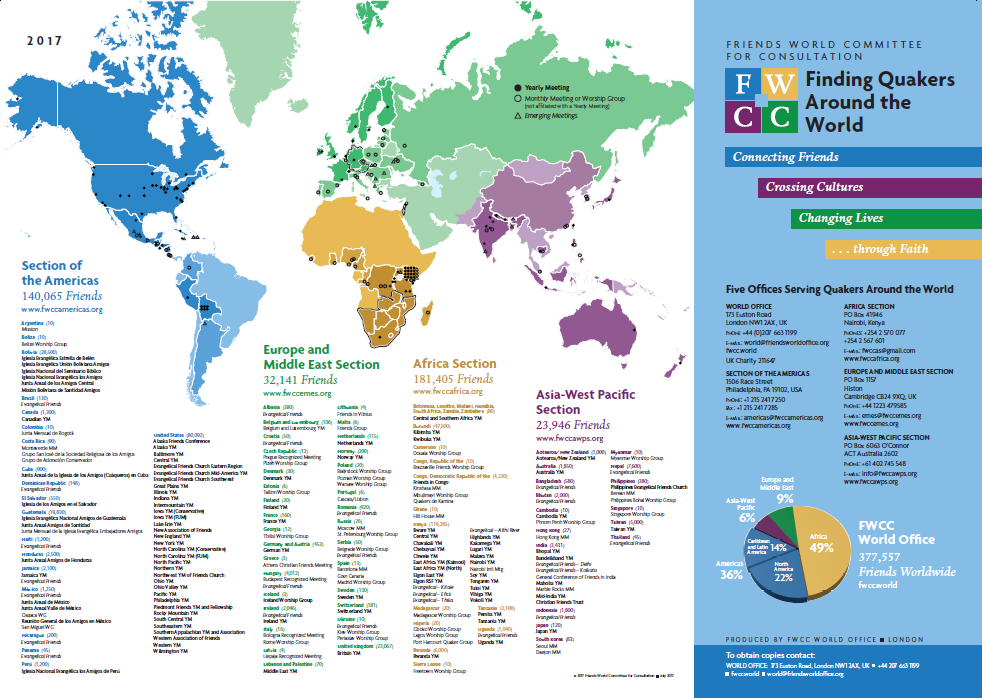
Map

Current Project Status: Seeking Proposals

We are accepting proposals in order to find a qualified source to provide a touch screen and mobile-friendly map of all countries where Friends are present, with statistics and stories and the locations of Quaker meetings and churches (and potentially other Quaker institutions), that would be cloud-based and accessible on screens in Quaker lobbies everywhere (including rural areas in developing nations) and websites (our virtual lobbies) so Quakers can find each other and seekers can find Quakers. 

Our goal with the Interactive World Quaker Map is to provide a global answer to the following questions: 

  1. Where is the nearest Quaker meeting?
  2. When is the next online Quaker meeting?

FWCC Census of Friends Shows Declines, but More Research is Needed

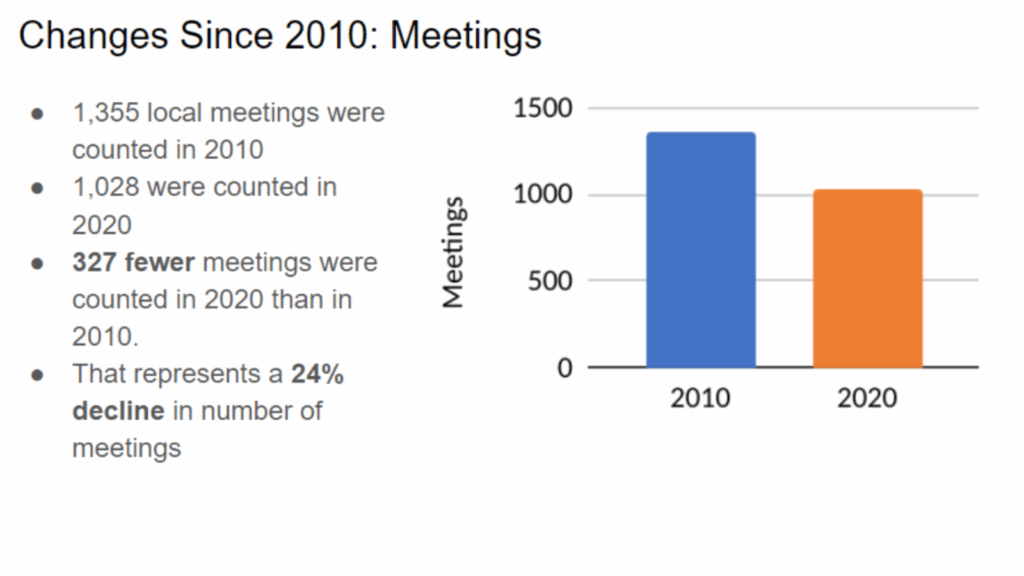
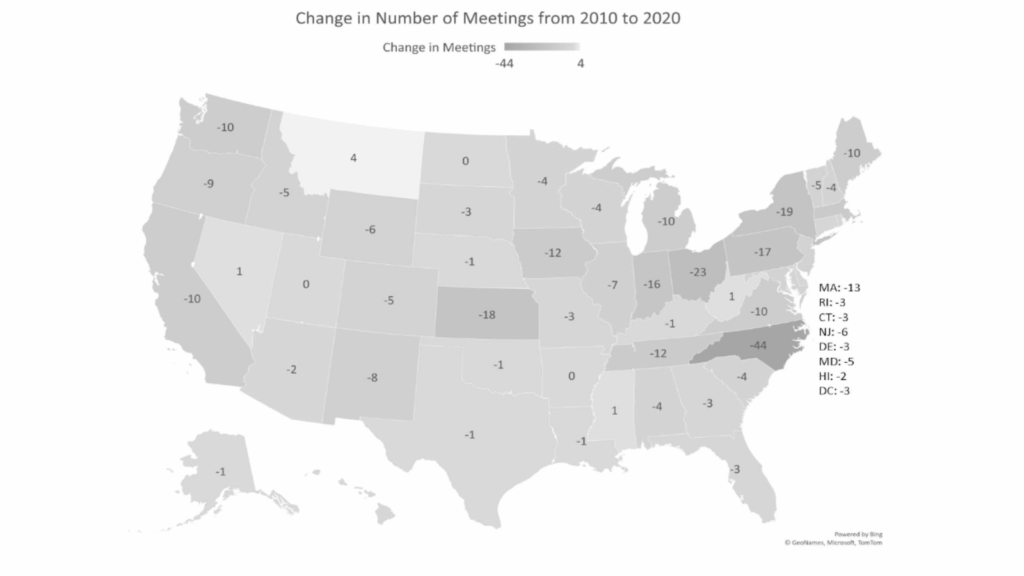
The Friends World Committee for Consultation collects membership data from yearly meetings around the world. Initial research from the most recent 2021 census suggests a decline of 24% in the number of Friends meetings and churches in the United States between 2010 and 2020. In addition, in that 10 year period there was a 12% decline in individual members and attenders, and an undocumented rise in Meetings that have no physical location and are held virtually. 

Every ten years, FWCC Section of the Americas assists the Association of Statisticians of American Religious Bodies (ASARB) to conduct the US Religion Census. This is separate from the federal government’s population census, yet aims to be just as comprehensive in its reporting on religious congregations in the United States. Due to the pandemic, the data collection for the 2020 US Religion Census extended into early 2022.

From November 2021 until January 2022, FWCC gathered data on Friends of all branches throughout the United States. When possible, we received data on local congregations from the Yearly Meeting to which they belong. When that proved difficult, we contacted the local meetings themselves. Among the data we requested were counts of members and attenders. Some meetings reported both of these figures; some only reported one or the other. Some meetings didn’t report any figures at all.

So, here are the important things to keep in mind as we look at this data:

  • While we did our best to contact Friends, there may be congregations that were not counted. 
  • Much of the data we collected came from Yearly Meeting offices. In some cases, local congregations hadn’t submitted updated counts to those offices for a year or two.
  • Among some Yearly Meetings that have split in the past ten years, we encountered some confusion about who was keeping track of membership data. We noticed that some meetings we know still exist weren’t reported at all.
  • FWCC plans to continue this research and analysis in the coming year.

With those things in mind, here is a comparison of the 2010 and 2020 counts for Meetings:

FWCC is raising funds to further this work, identify trends, and build new online resources for Friends. In order to promote healthy growth in the future, Quakers need to understand our truth today. 

A version of this article will appear in New York Yearly Meeting’s Spark to be released in September. 

Bogert Fund Announces 2022 Grant Recipients for Christian Mysticism Programs

The Kairos experience these retreatants found so meaningful was led by Francisco Burgos, Pendle Hill’s Executive Director, and held virtually August 20-23, 2020. A substantial part of the funding was provided by the Elizabeth Ann Bogert Memorial Fund for the Study and Practice of Christian Mysticism (Bogert Fund), which is administered by the Friends World Committee for Consultation, Section of the Americas (FWCC Americas).

The annual Pendle Hill Kairos retreats have received such positive responses that the Bogert Fund has helped fund several of them, including in 2022. This year’s retreat is scheduled for July 29-31 and will take place in person on Pendle Hill’s campus in Wallingford, PA. Again led by Francisco Burgos, it will include “extended periods of intentional silence, contemplative reflection on Biblical texts, walking meditation, worship sharing, group chanting/singing to support centering prayer, and individual guidance.” The $1,000 grant from the Bogert Fund will support scholarships and program subsidies so the program is affordable to more potential participants.

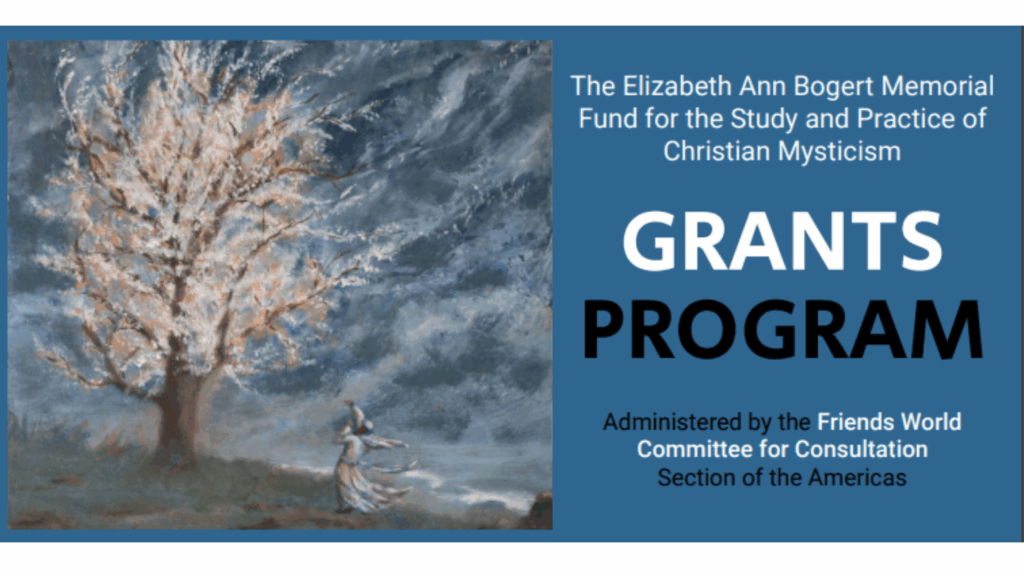
The purpose of the Bogert Fund is to support the study and practice of Christian mysticism. Recognizing the rich variety of mystical experience within Christianity, the Bogert Fund understands the mystical element in Christianity to be that aspect of its belief and practices that relates to an immediate and direct sense of the presence of the Divine. The Bogert Fund seeks to further both experiential and scholarly exploration of Christian mysticism.

In 2022, the Bogert Fund also gave grants of $1,000 each to Quaker Earthcare Witness (QEW) for virtual Exploring Eco-Spirituality workshops and to Forward in Faithfulness for a Supporting Mystics workshop. Quaker Earthcare Witness seeks to engage new audiences and link eco-spirituality “to the realities of these pandemic times of climate crisis, economic inequality, threatened democracy, and structural racism in an accessible and embodied way.” Hayley Hathaway, QEW’s Communications Coordinator and an experienced workshop leader, will use the Bogert Fund grant to research the foundations of eco-spirituality, plan the workshop, create marketing materials, and offer the workshop virtually to Friends.

Forward in Faithfulness is a ministry of faithfulness, revitalization, and deep listening offered by Johanna Jackson and JT Dorr-Bremme, who carry a Letter of Introduction from Upper Susquehanna Quarterly Meeting in Philadelphia Yearly Meeting. The Supporting Mystics workshop they are planning with partial funding from the Bogert Fund will be offered initially to a network of some twenty younger Quaker mystics with whom they have worshiped and who carry gifts of healing, discernment, eldering, prophecy, gentleness, and service. The workshop is designed to encourage a mutually supportive sense of belonging and allow space for participants to share prayer requests and stories about their mystical experiences and practices, including those of transformation.

While all the 2022 grants went to Quaker organizations for experiential programming, the Bogert Fund also supports academic research related to Christian mysticism and provides grants to applicants of many faiths. In 2020 the Bogert Fund helped further research for a book on the mystic Thérèse of Lisieux. The grant recipient, a Sister of the Order of Julian of Norwich, wrote, “I was able to purchase several books which helped directly with this project…. I have been thrilled to find some excellent, very new French scholarship….” The literature she discovered proved useful in furthering the writing of her book.

The Bogert Fund was established in 1983 in memory of Elizabeth Ann Bogert who, while reading William James’s The Varieties of Religious Experience, had a powerful, profound change of consciousness that transformed her life. Previously self-centered, she became sensitive to other’s needs, enrolled in a theological school, and became a Congregational minister and prize-winning painter of mystical scenes. Walter Houston Clark, one of her professors who became her counselor and friend, played a key role in founding the Bogert Fund and working with FWCC to set up its administration. Today, as from the Fund’s inception, a board of five members, three of whom are Quakers, makes decisions regarding grants at their annual meeting in May.

For information on applying for a grant, please see the brochure, available via a link from FWCC’s Our Work webpage. The deadline for 2023 grants is March 1, 2023. Please share this information with scholars, retreat leaders, or anyone you believe might be interested.

FWCC-COAL Report on Working with Right Sharing of World Resources

by Karen Gregorio de Calderon, Coordinator for COAL-FWCC

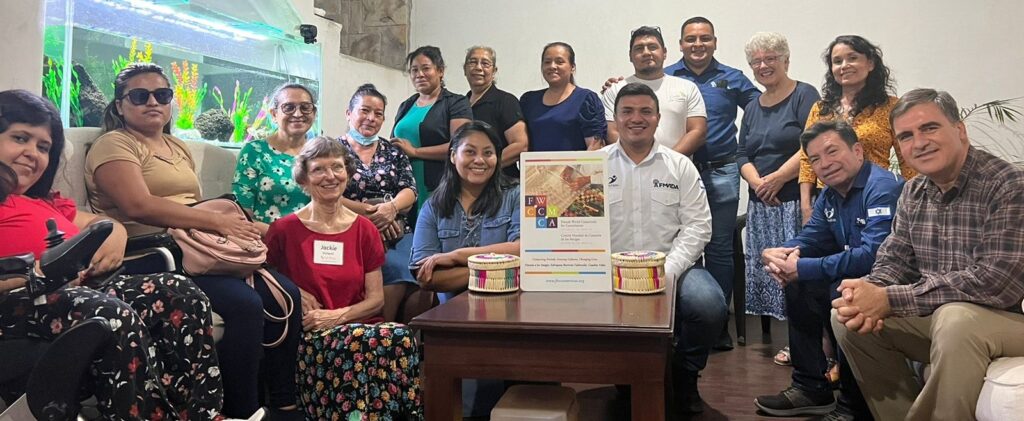
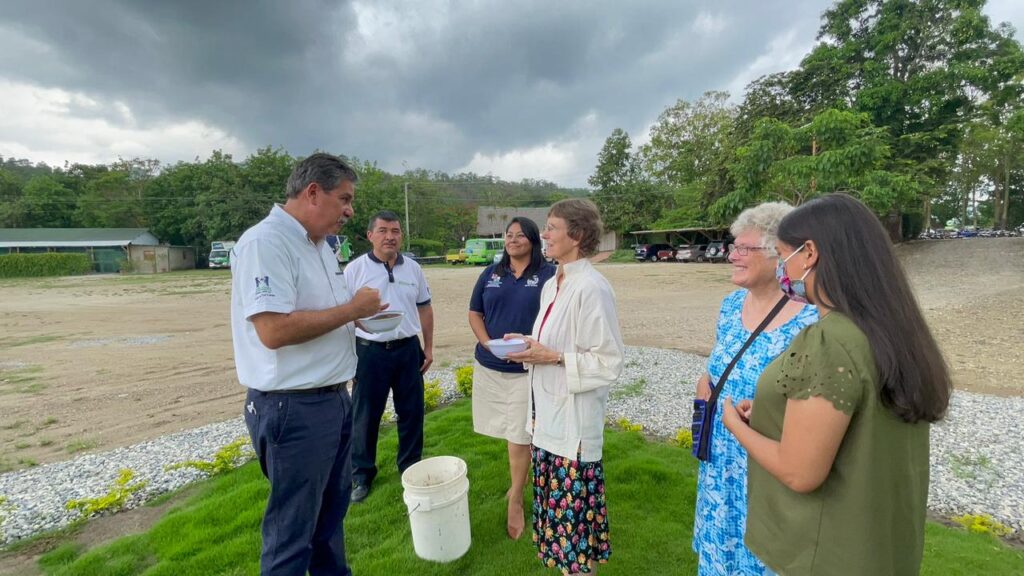
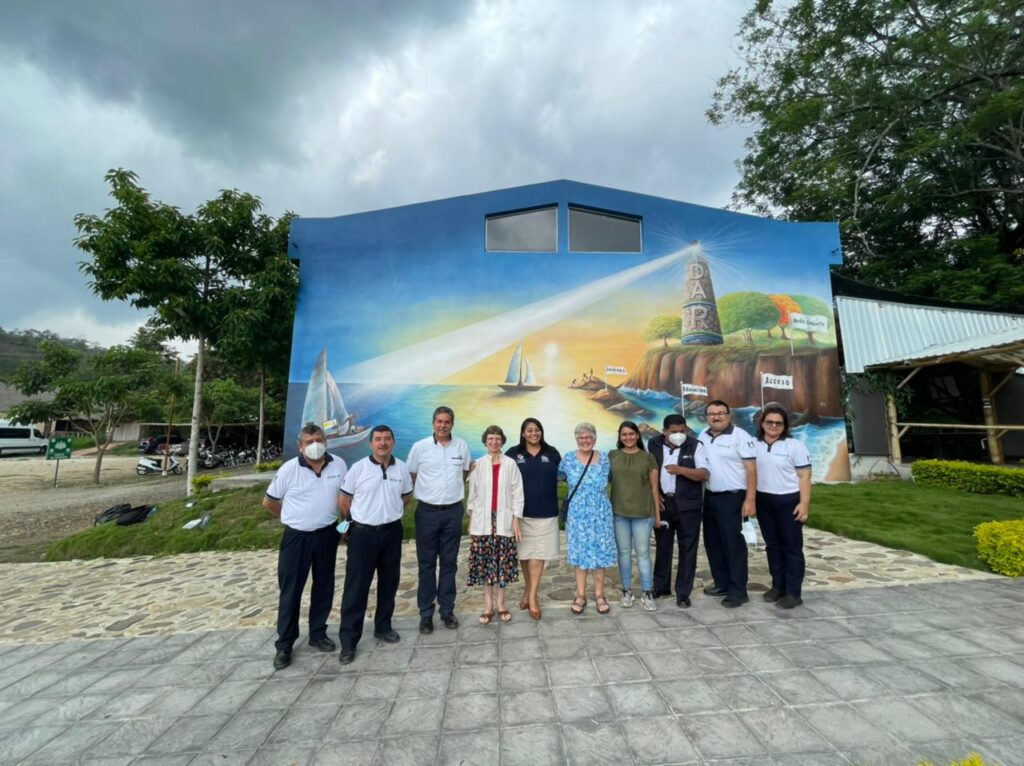
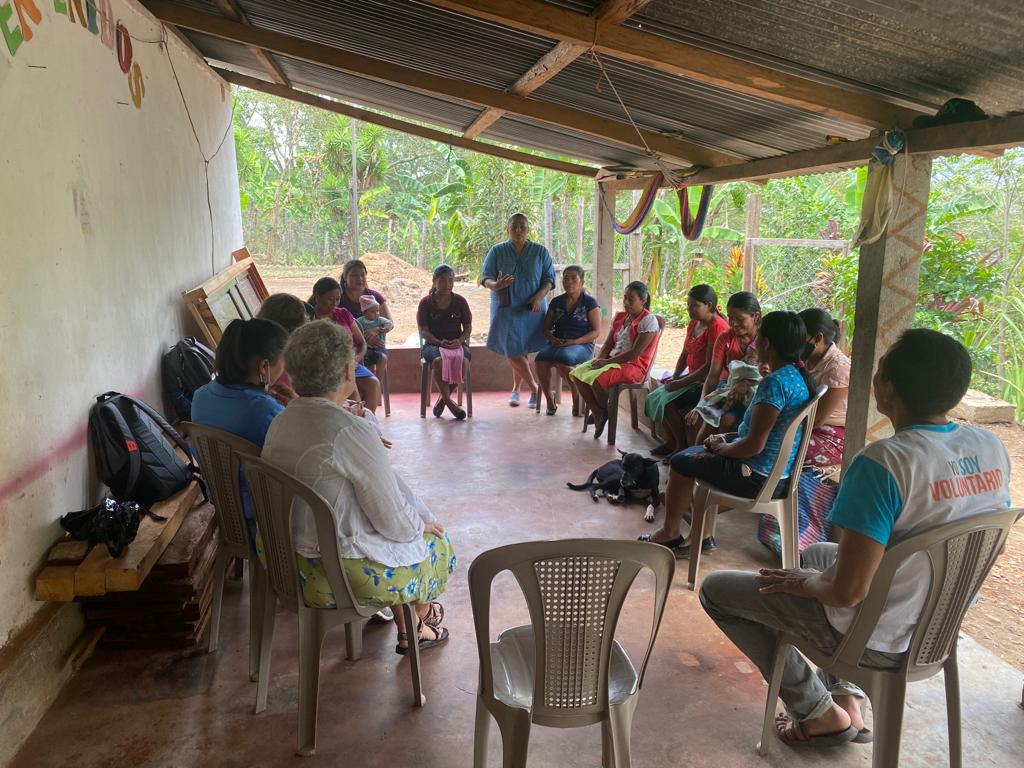
Right Sharing of World Resources (RSWR), a Quaker nonprofit, came to Guatemala from May 23-29, 2022 to investigate the potential for doing projects in Latin America and using Guatemala as a pilot project. For FWCC-COAL, it was beneficial for us to be a part of the working process for this visit because one of our objectives is to work on joint projects with a community improvement focus with Quaker organizations that wish to do this work in Latin American countries.

RSWR was for many years a program of the Friends World Committee for Consultation, but has now been an independent organization for over 20 years. RSWR works with marginalized women, offering them seed capital so that they can start their own businesses and become productive women, thus changing the lives of themselves and their families. This project would bring great benefits to the people of Guatemala. 

How would work be done in Guatemala?

RSWR would work in conjunction with the COOSAJO Savings and Credit Cooperative located in Esquipulas, Chiquimula in eastern Guatemala. With this institution, the pilot project could be executed in the eastern region of the country. The staff of the Cooperative had the opportunity to learn who Quakers are worldwide and the work that Quakers do.

It is important to emphasize that the cooperative already carries out community work in the region with women, the pilot project would be a further development of their work. Two field technicians would be hired, who would form and train the women’s groups and accompany them in their training process, which is similar to RSWR’s work in Sierra Leone and India.

What activities were carried out during the visit?

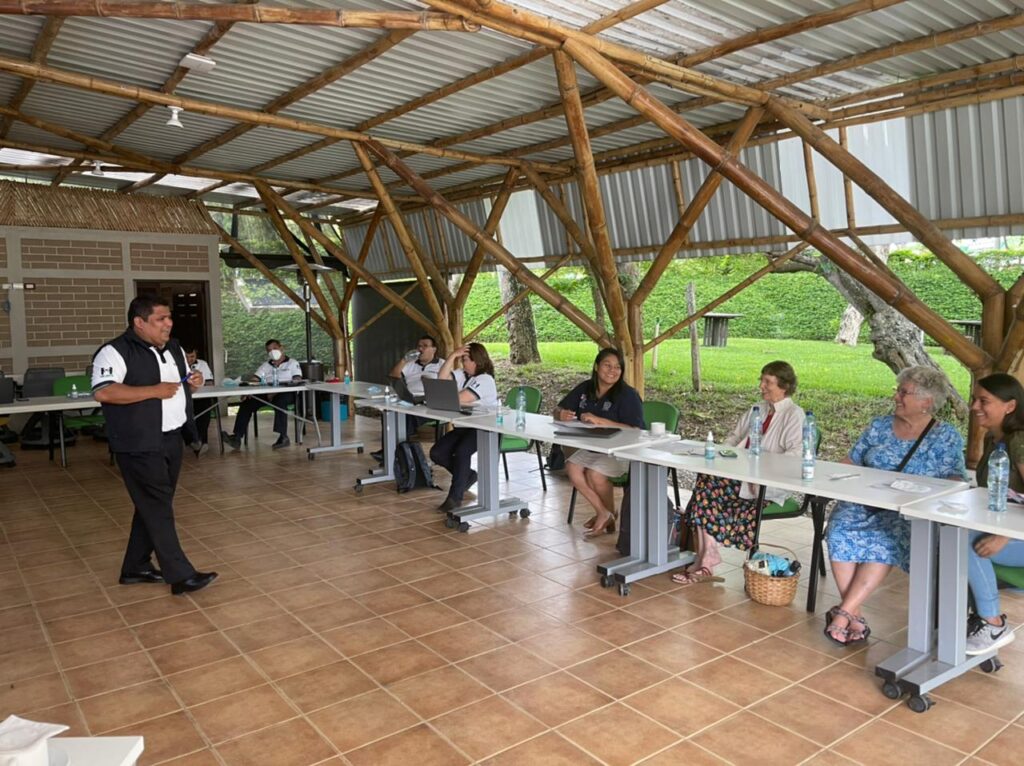
  • Meetings with the management of the Guatemalan institution COOSAJO, to learn more about its work, its achievements and its values.
  • Meeting with the middle managers of the institution to share information about the projects and both organizations.
  • Meeting with the COOSAJO Board of Directors. We introduced FWCC and RSWR.
  • Meetings with leading employees of the institution: To learn about their testimony, their achievements and how the institution has been part of the change in their lives with the value of inclusion of women.
  • Field visits to the villages, where we were able to share with women who need to be taken into account and be benefited.
  • Meeting with young women leaders: to learn about the work COOSAJO has done with them, providing study scholarships, scholarships to study English, etc.

What did COAL-FWCC contribute during the RSWR visit to Guatemala?

  • Lodging
  • Food for two people.
  • General orientation on the region to be worked in (Statistical data and cultural information)
  • General information on Quakers in Guatemala, how they are organized and where they are most concentrated in the country and how Quakers work in this area.
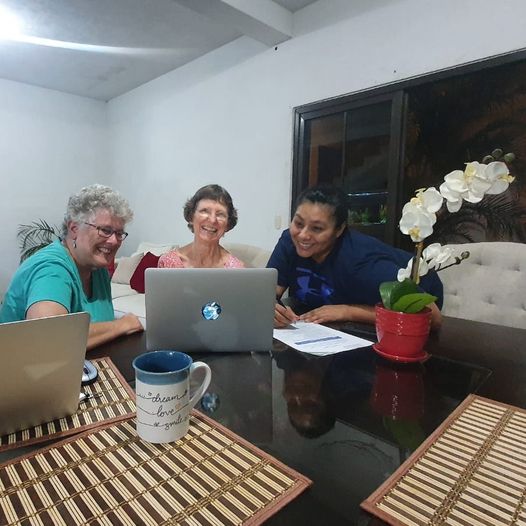
  • Review of the information in PowerPoint and translation of the same, to present it in Spanish to the organization. Focus on the objectives with correct Spanish vocabulary.
  • Intervention in meetings, when it was necessary to make the idea of ​​RSWR clear.
  • Support in decision-making processes when help was required.
  • Clarification of ideas
  • Accompany RSWR in each planned meeting, to support them in these processes (with the language, with small translations, synthesize the information, etc.)
  • Lead and facilitate scheduled meetings, to obtain the necessary information from each group.
  • Work meetings (RSWR-FWCC-COAL) at the end of the day to draw conclusions and learn from each scheduled activity.
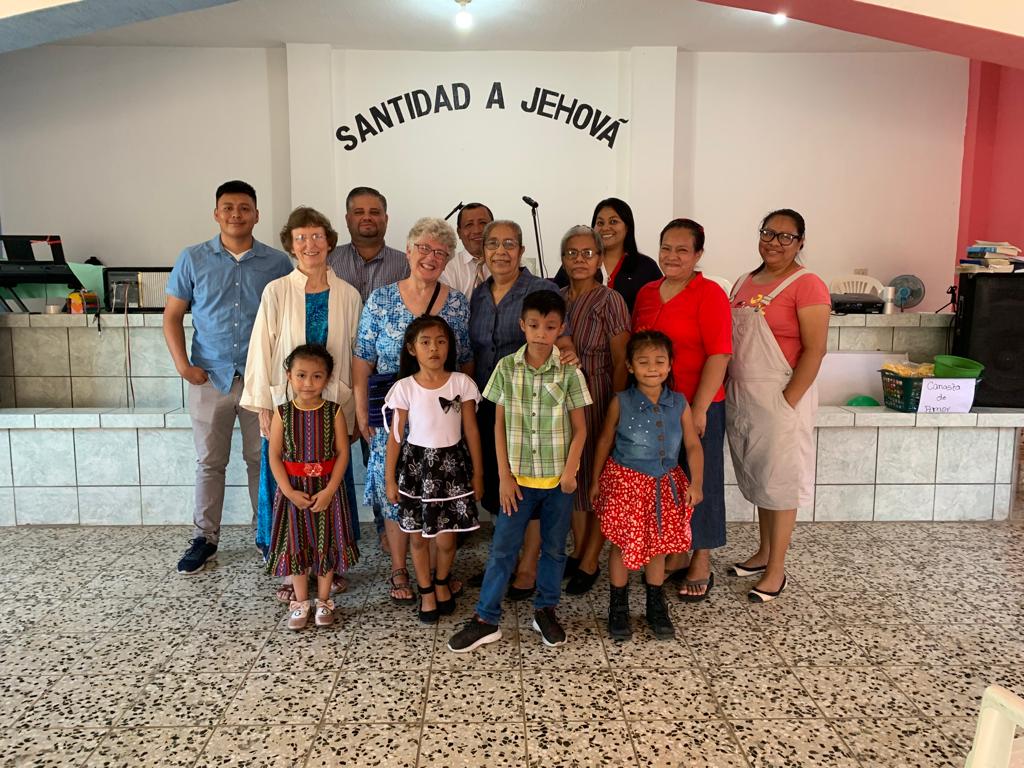
  • Coordinate and manage meetings with Quakers in the region
  • Coordinate visits to the churches in the region
  • Coordinate a visit to the largest Friends campus in the Region. National Friends Church.
  • And the most important thing is that due to the support that can be provided by COAL and the Quakers in the region, Guatemala is a potential country for RSWR to start a pilot project in Latin America and that could later be extended to other countries.

What benefit do local Quakers have with this project?

  • Job opportunity: One of the benefits is that they will be considered in the process of hiring field facilitators. In other words, when the call to hire people is launched, it will also be sent to the Quakers in the region so that they can apply.
  • Opportunity for the women of our churches: The women of our Friends Churches will also have the opportunity to be taken into account, to provide them with seed capital, according to the RSWR processes.

What did COAL achieve during the RSWR visit?

  • First, connecting the affiliated and non-affiliated yearly meetings.

During RSWR’s visit, representatives and leaders from our affiliated and unaffiliated Yearly Meetings were invited to a meeting. At the meeting, the work of FWCC, the work of COAL, the future plans and an invitation to work together were announced. In addition, the RSWR project was presented to them, as a fulfillment of the mission and objectives of FWCC, making our slogan a reality: Connecting friends, crossing cultures and changing lives. This meeting was fruitful; we were together in harmony sharing the love of God that unites us.

 Among attendees were:

  • Ambassadors Friends Monthly Meeting, represented by Susy Ramirez
  • Holiness Friends Yearly Meeting: With the participation of two representatives to FWCC, Teresa de Hernandez and Abner Garcia. In addition, 4 women leaders from the different churches of the yearly meeting participated.
  • National Friends Church: It was represented by its president Rigoberto Vargas and by 3 more members of one of the churches. That they are also part of the Shalom Jiréh Organization, who distributed the funds that FWCC collected, for the victims of Hurricanes Eta and Iota
  • We also achieved the participation of two disabled women entrepreneurs, who have not been supported by other organizations.
  • Total, we achieved attendance of 16 people.

All attendees were pleased and grateful for having been invited to the meeting and expressed their desire to be taken into account in the process of this project or others that we can work together as a region and as a church through FWCC.

What potential do we have after the RSWR visit to develop other projects with the Guatemalan institution COOSAJO for the benefit of local Quakers and society in general?

  • The institution has community development programs, with established processes.
  • Provide entrepreneurship training
  • They carry out projects to take care of the environment
  • They design training processes according to the needs of the projects to be worked on.
  • Provide scholarships to people with limited resources.
  • They have an agreement with the US embassy for young people who want to study English in a free program. This with the purpose of curbing migration, since Chiquimula is a department bordering Honduras and El Salvador vulnerable to the formation of migrant caravans. There are many bilingual youth who benefited from these programs.
  • Recruit new interpreter volunteers who already have command of the English language and who serve as interpreters among the international cooperatives.

Conclusions:

  • FWCC has the opportunity to start a closer relationship with this institution and manage benefits that are possible for our Quaker community. In this way, achieve that the yearly meetings have something in common and gradually break down the communication barrier between them.
  • An important point to emphasize is that the yearly meetings are interested in working together on projects for the benefit of the community.

[Translation by Diane Zappas and Robin Mohr]

Strengthening our Community of Friends: Visit to the Yearly Meetings of Bolivia

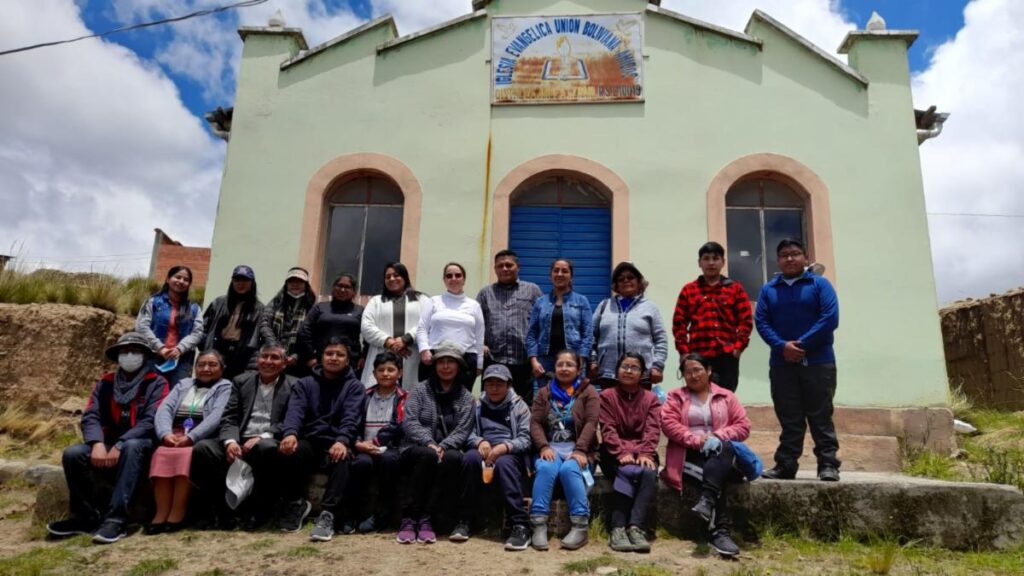
Pastor Gualberto Torrez and his congregation in one of their churches in the Andes region.

By Karen Gregorio de Calderon, Coordinator of Latin American Programs


In the month of January, God allowed us the privilege of making a visit to the affiliated yearly meetings of Bolivia, with the objective of strengthening our community and sharing the love of God that unites us. It was a wonderful experience to be able to greet the brothers of the different congregations to share with them, in the worship services and multiple scheduled activities, in which we were able to live together in harmony, worship our Lord Jesus Christ, share our cultures and our common heritage. We thank God for this privilege and for what it will allow us to continue doing in the near future with each of the Meetings. We are sure that God will direct the plans for the growth and expansion of his work.


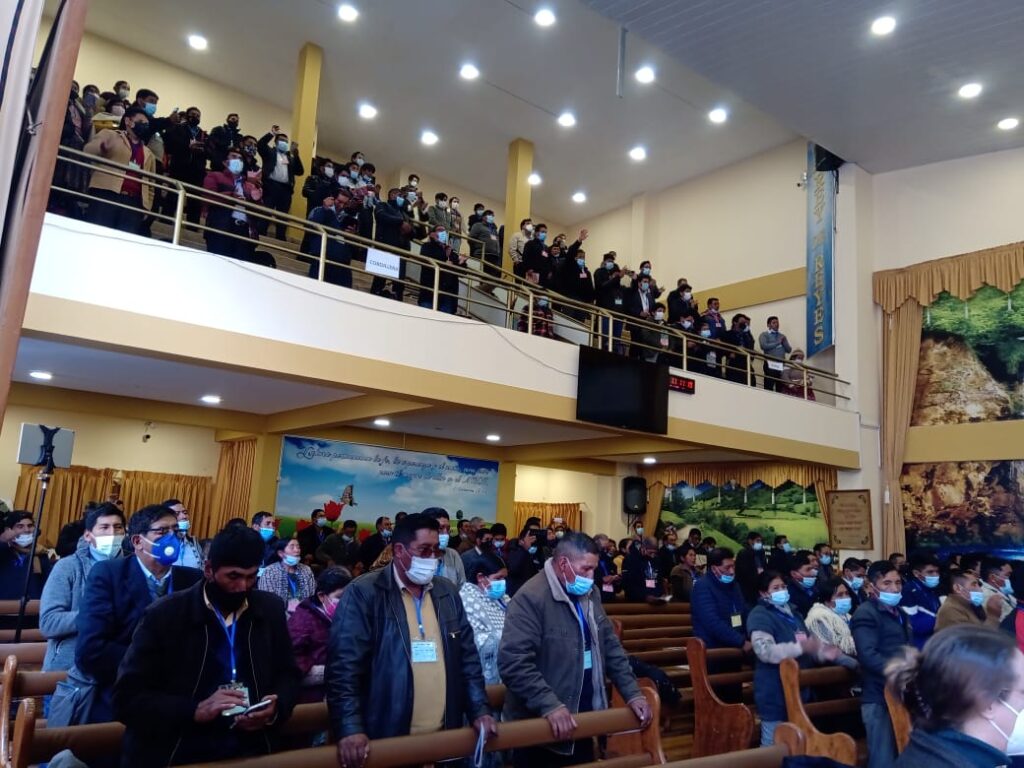
I traveled with Raúl Pérez, member of the Executive Committee of FWCC-Section of the Americas and member of El Salvador Yearly Meeting and Robin Mohr, Executive Secretary for the Section of the Americas. We had the opportunity to visit the yearly meeting annual sessions of INELA Bolivia, the Bolivian Union Friends and the Central Friends yearly meetings.


We particularly want to thank Pr. Gualberto Torrez, of the Iglesia Evangelica Union Boliviana Amigos for his support and taking us to visit some of the rural churches of their yearly meeting.
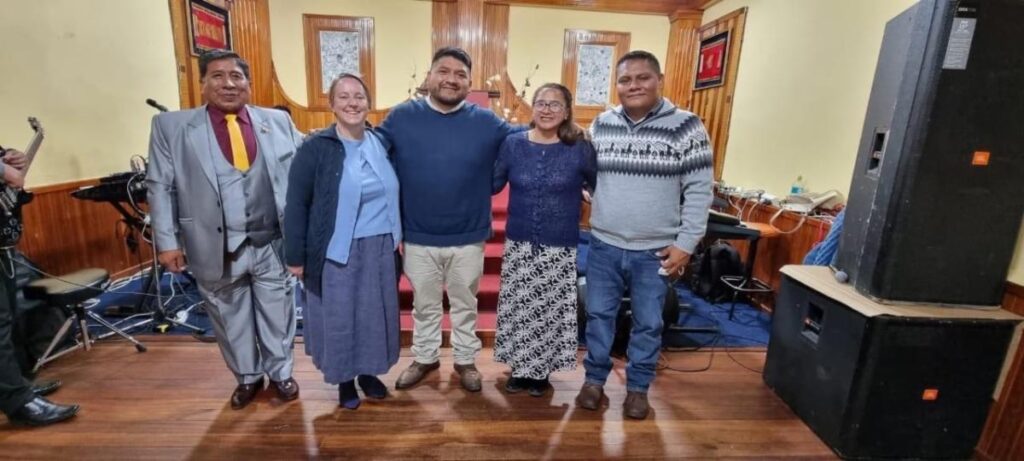
We also had the opportunity to visit with Friends of Central Yearly Meeting. It was a blessing to share the message of God’s word and participate in the worship services. We thank its president Armando Mamani and the Congregation for the organization of the activities and their development.

Raúl Pérez, member of El Salvador Yearly Meeting and member of the Executive Committee of FWCC Americas, shared the experience of Central American yearly meetings with missionary work in Nicaragua and Cambodia.
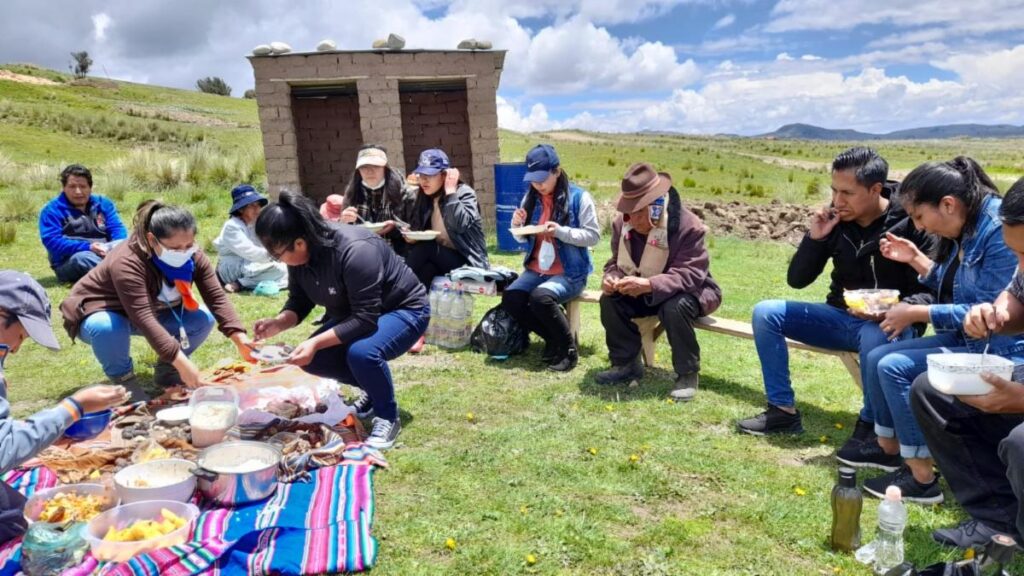
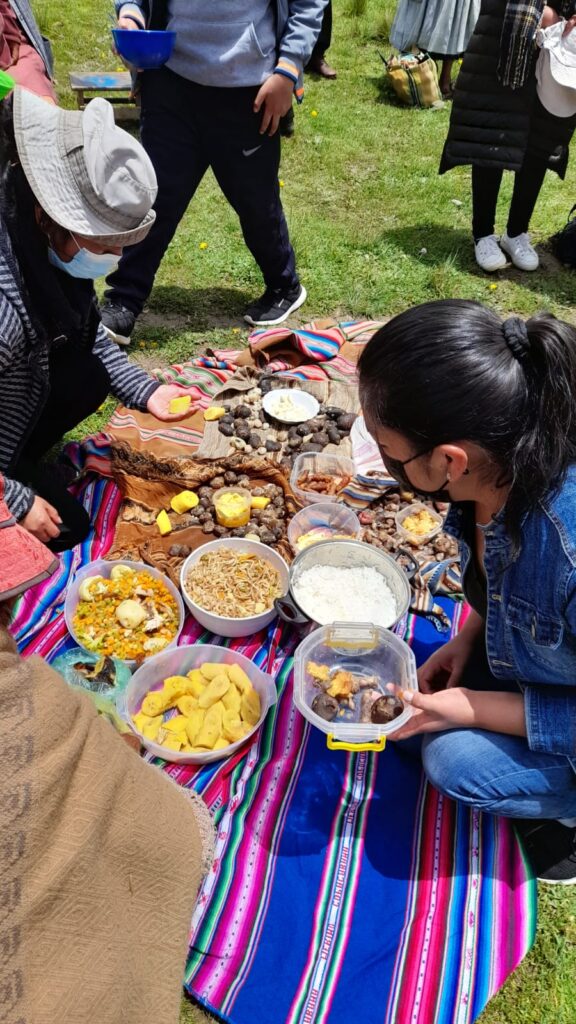
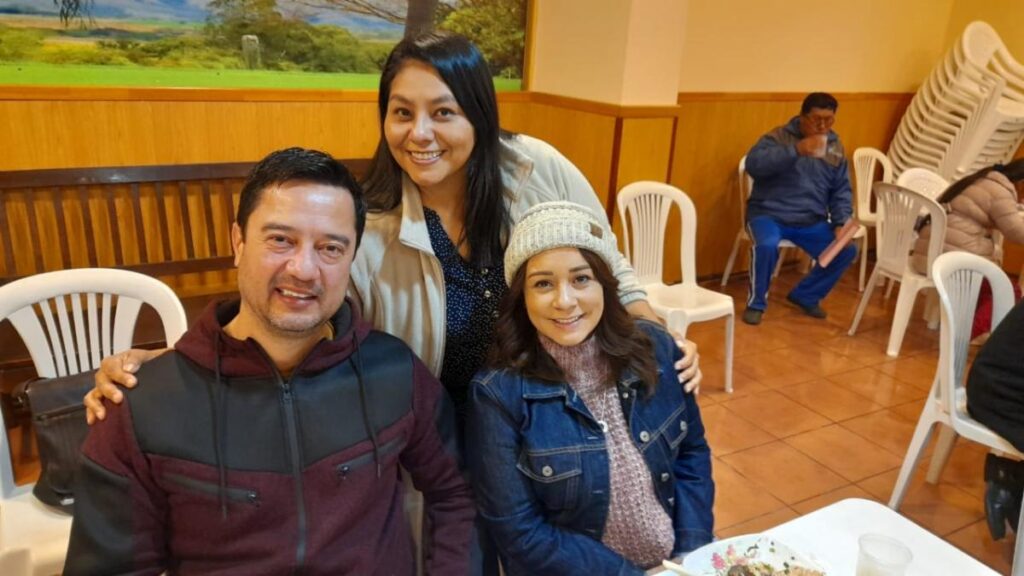
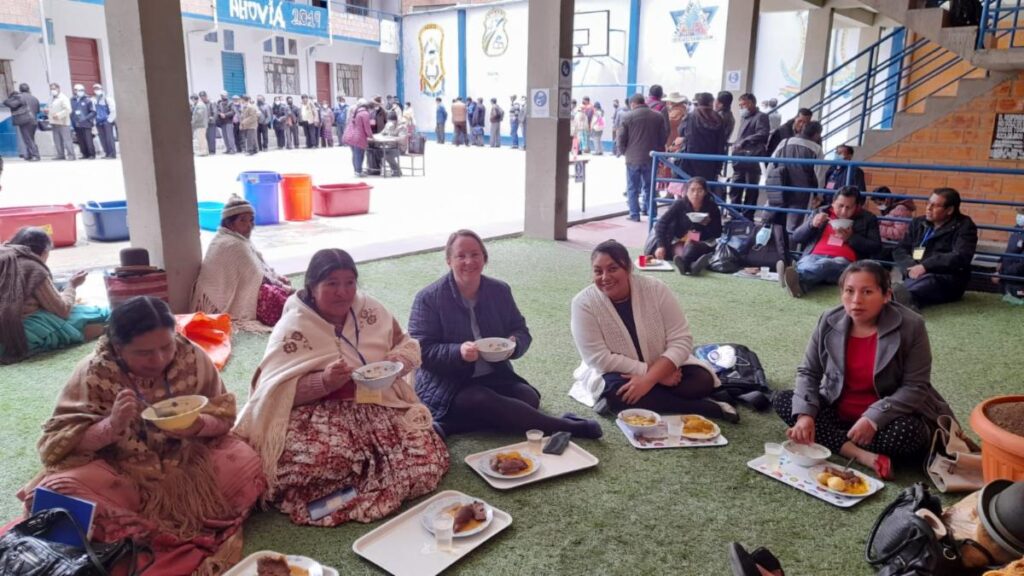
In the Aymara culture, “Apthapi” is the name of the Aymara celebration in which food and knowledge are shared. It is derived from the verb apthapiña, which means to bring. The celebration attendees bring food to share with the group. We thank the sisters of Unión Boliviana and their churches in the Andes region for this wonderful experience.
Attendees at the INELA Bolivia Yearly Meeting.
Sharing experiences with Northwest YM Friends: Daniel Cammack, David Thomas, Roy Lujan, Ken Comfort.
Sharing with the leaders of the Amigos Central Yearly Meeting, at the Villa Victoria church.
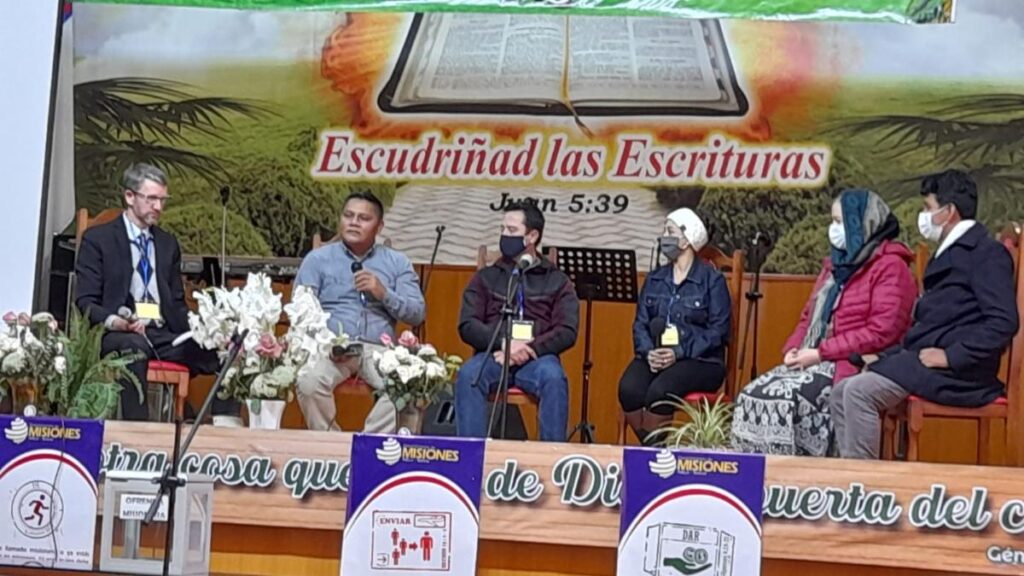
Sharing with: Edwin and María Girón. They were also part of a panel presentation about modern approaches to missionary work.
Visit to Escobar-Uria Friends Church
Pleasant moments with the sisters of UFINELA. (INELA Women’s Union) during lunch, during the activities of the yearly meeting.
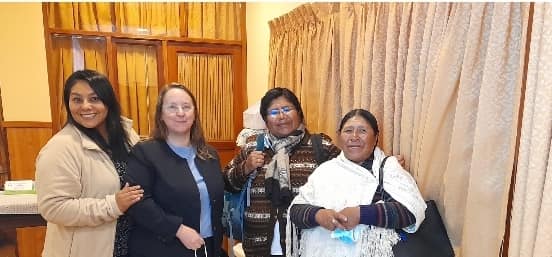
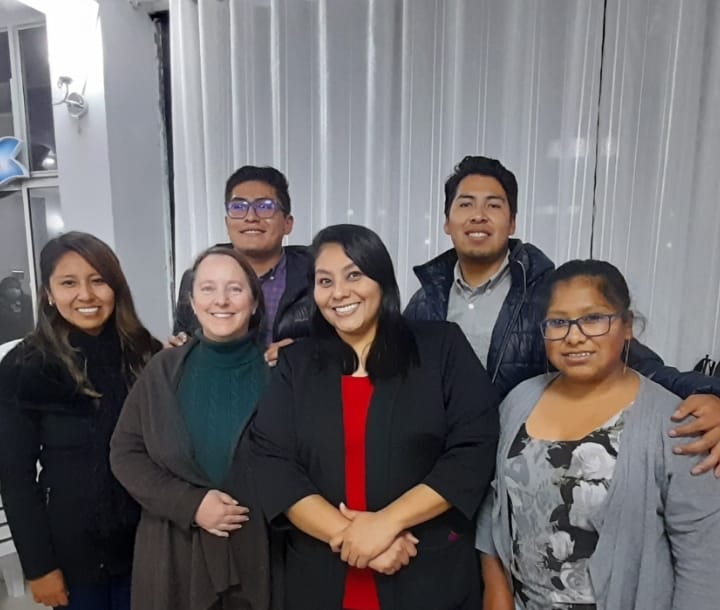
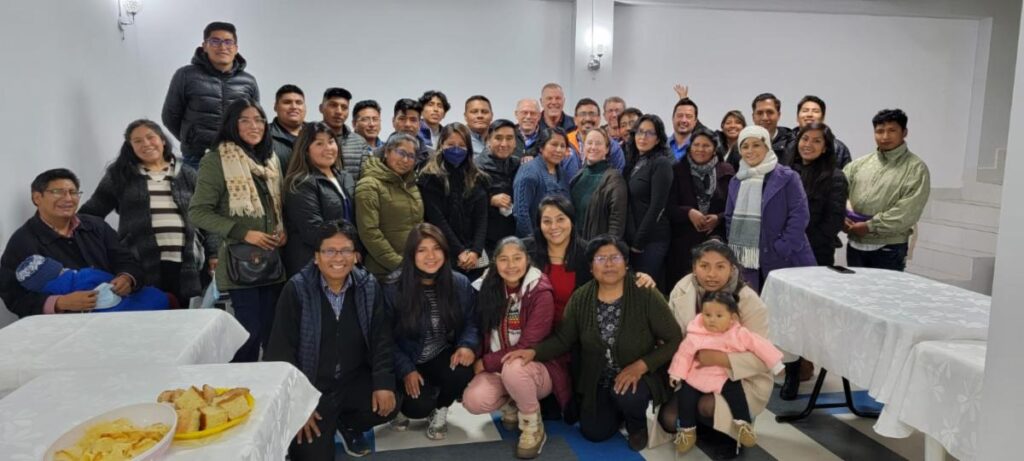
With the South American members of the Traveling Ministry Corps In the first row: Jhoana Ramos (INELA Peru), Robin Mohr (Executive Secretary of CMCA) Karen Gregorio de Calderón (Coordinator for Latin America of CMCA-COAL) Carmen Rosa Paye (Bolivian Friends Union) In the back row: Jhimmy Roque (INELA Bolivia) and Juan Daniel Mamani (INELA Bolivia). Thank you for your service to our community of Friends!
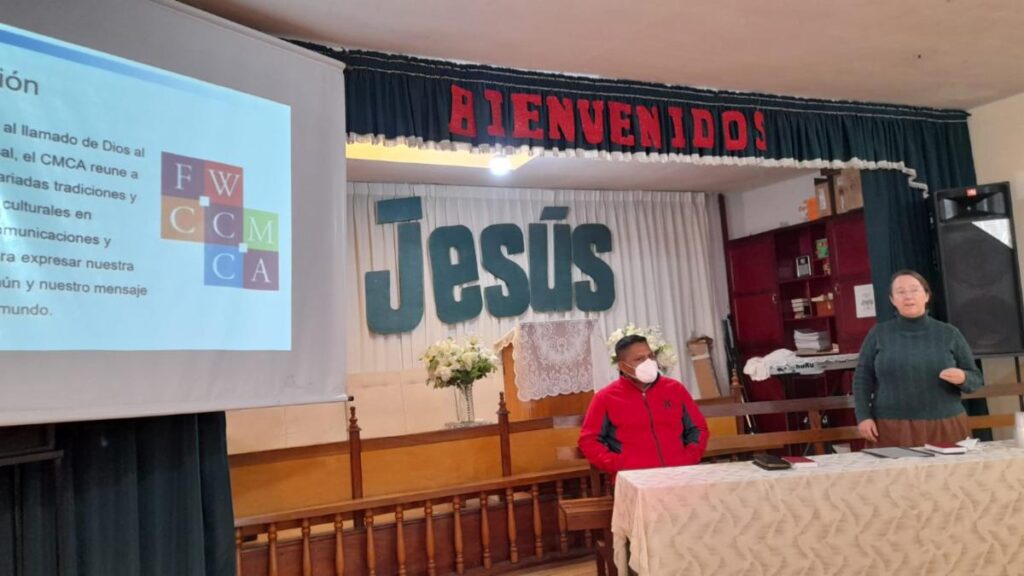
Youth Leadership of Bolivian Friends: One of the main objectives of the visit to Bolivia was to share with the young leaders of the affiliated meetings. We were able to meet and share with around 25 young people from Amigos Central, Unión Boliviana Amigos and INELA Bolivia. We had the opportunity to share the vision and mission of FWCC, future plans and projects, and share ideas of plans that we can work on together.
The FWCC-COAL deeply thanks the local arrangements committee, who did an excellent job coordinating travel to the different Annual Meeting. They include: Jhoana Ramos, member of the Section’s Nominating Committee, (INELA Peru), Milena Villca, FWCC Executive Committee (Union Boliviana Amigos), Carmen Rosa Paye, (Bolivian Friends Union), Timoteo Choque and family (INELA-Bolivia), Agustina Callejas and family, (INELA Bolivia) Ruben Maydana (INELA Bolivia), and Florentino Ramos and family (INELA Peru). We appreciate and value their support.

2020 US Religion Survey

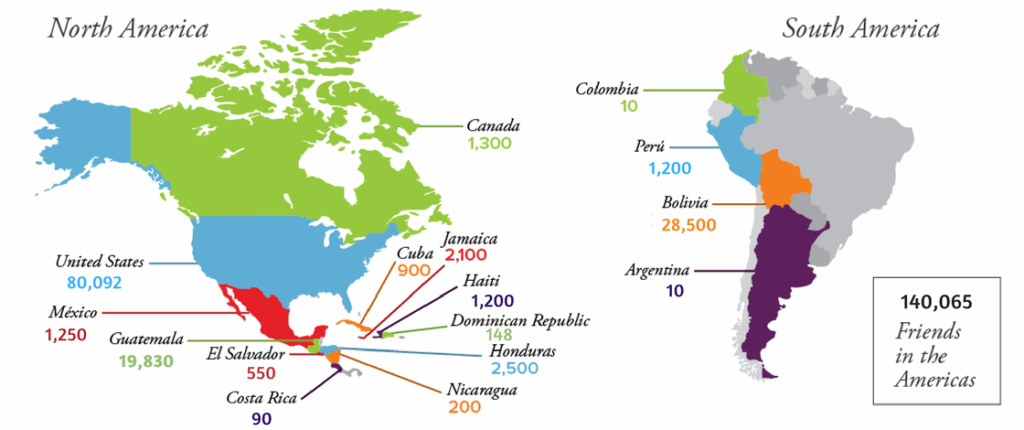
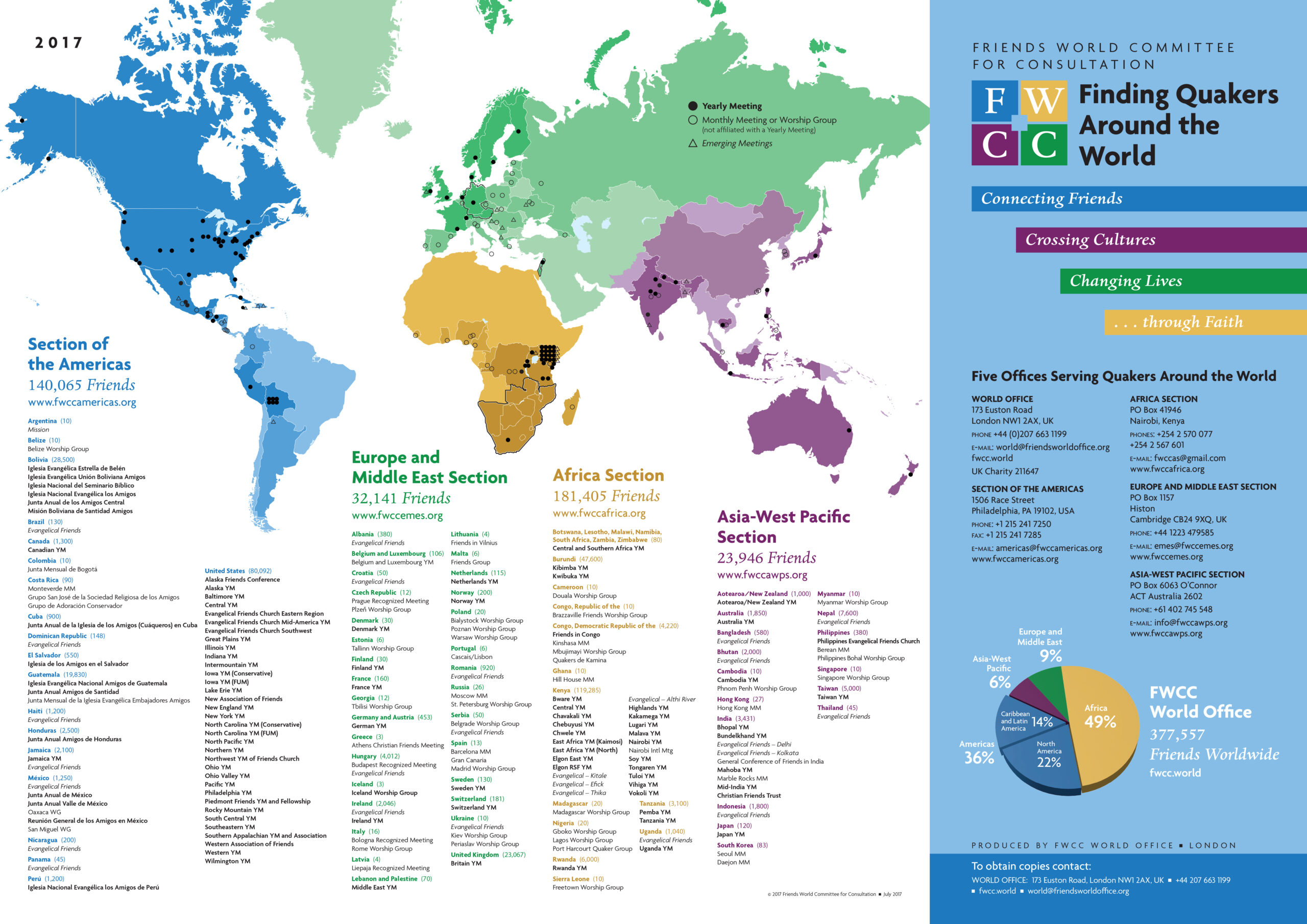
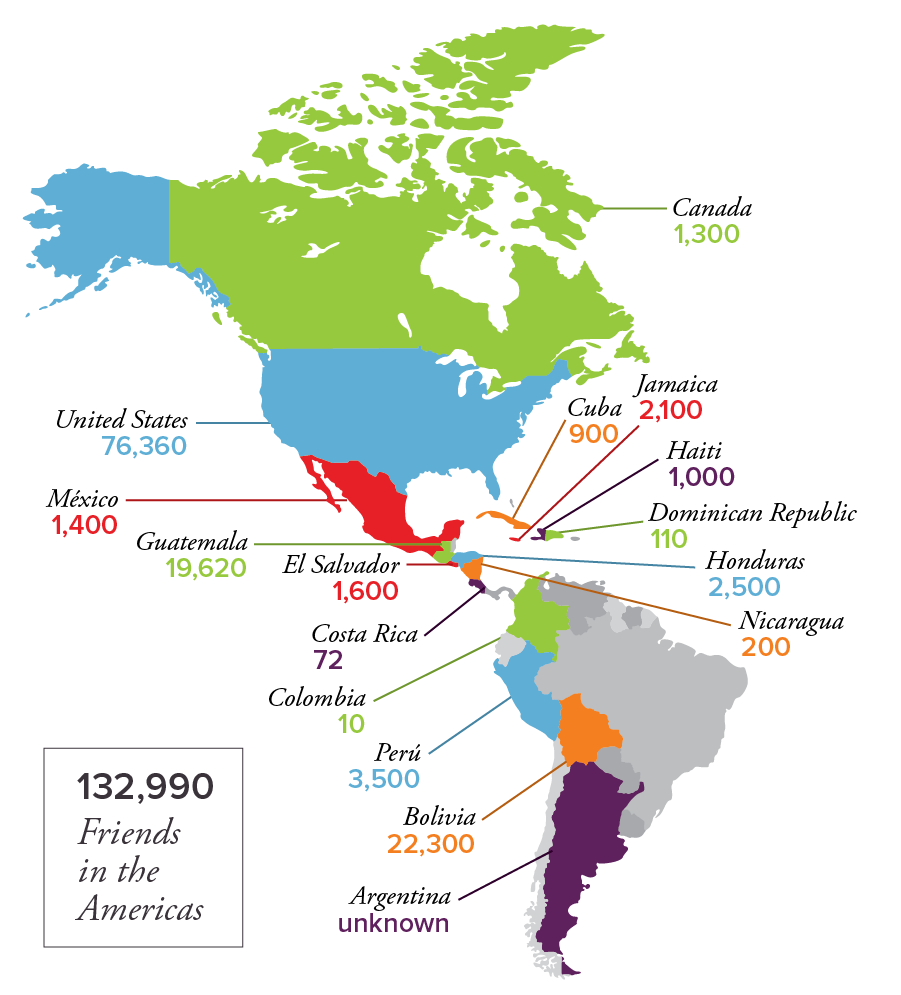
Have you ever asked, “How many Quakers are there in the world? In the United States? And how do we really know?” Most years, FWCC Section of the Americas asks each yearly meeting in the Americas for their membership statistics. This data is used to produce a statistical map of Friends Around the World every five years. This year, FWCC Americas is collecting more precise data on Quakers in the US in collaboration with the Association of Statisticians of American Religious Bodies.

The U.S. Religion Census was originally conducted by the U.S. government in five special reports from 1890 through 1936. In 1952, the National Council of Churches organized its own religion census, which was repeated in 1971 and 1980 with strong support from Glenmary Research Center.

Since 1990, this decadal census has been conducted by the Association of Statisticians of American Religious Bodies. Coverage now includes many non-Christian groups as well as special counts for religious traditions that do not have central data collection points, such as non-denominational churches or Muslim and Jewish communities. For more information about the census please visit them online at http://www.usreligioncensus.org/

All Yearly Meetings, Friends Churches, Monthly Meetings, Preparatory Meetings, Worship Groups, Independent Meetings, and Online Only gatherings are encouraged to participate in order for the Quaker/Friends testimony and presence to be accurately reflected to the world around us. To see the listings we have, please visit our Find Friends webpage. To update your Meeting’s information, please contact directory@fwccamericas.org

Data collected will not be used for purposes outside the work of the 2020 US Religious Census or the Friends World Committee for Consultation. We hope to expand this effort in coming years to include all the countries in the Americas.
If you are interested in helping us, connecting with other Quakers, and collecting this important data please check the job description and apply today by emailing a resume and cover letter to jobs@fwccamericas.org!