FWCC joins consultation with organizations focused on Bolivia

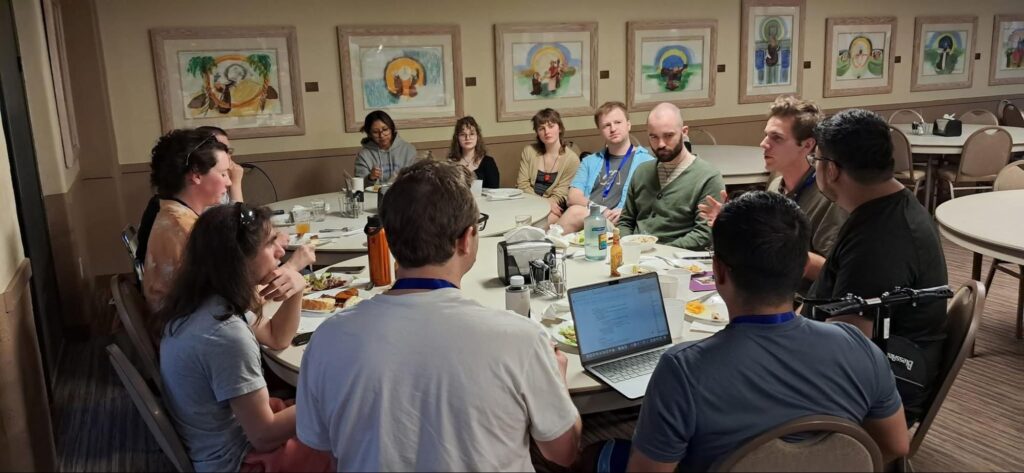
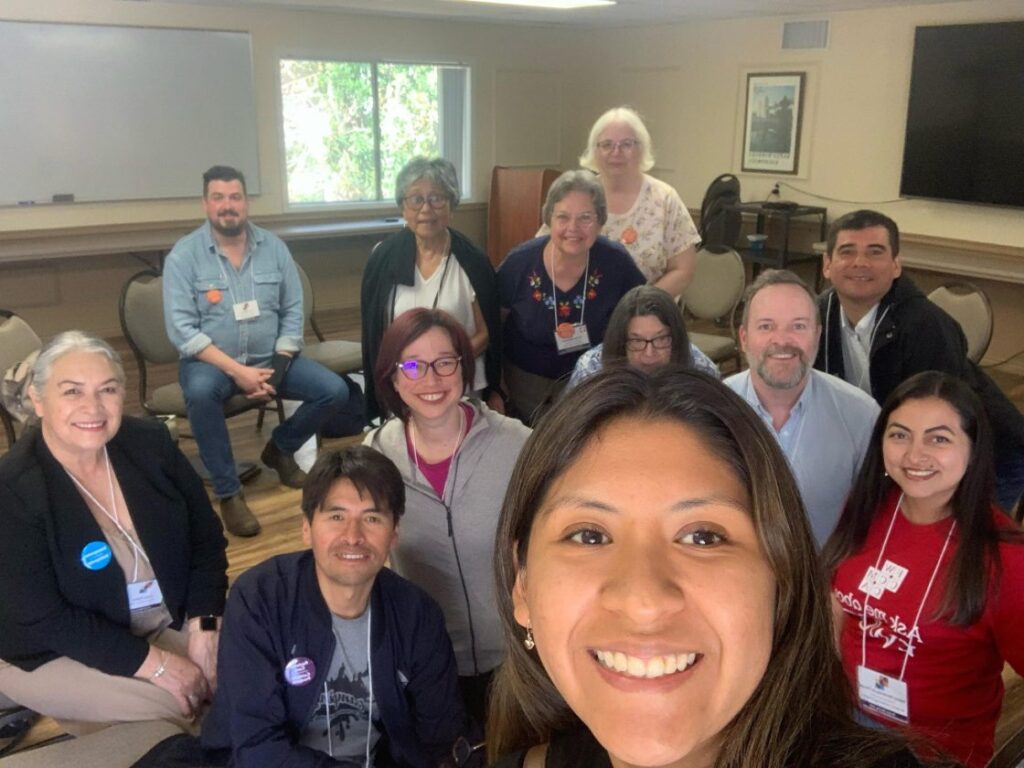
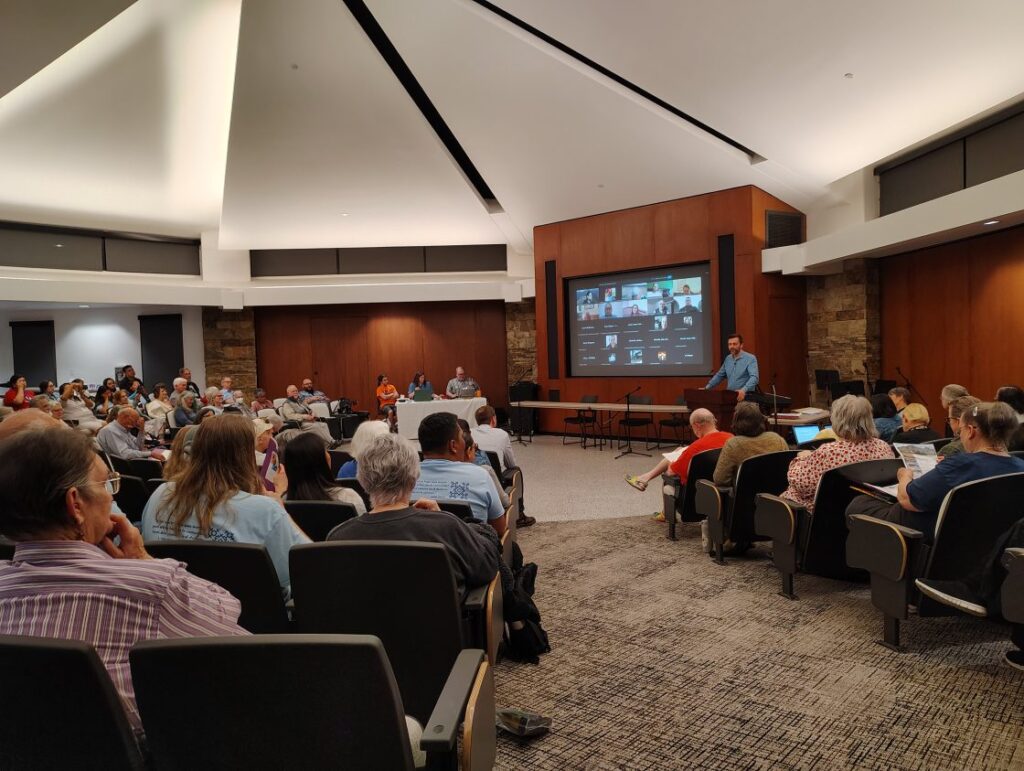
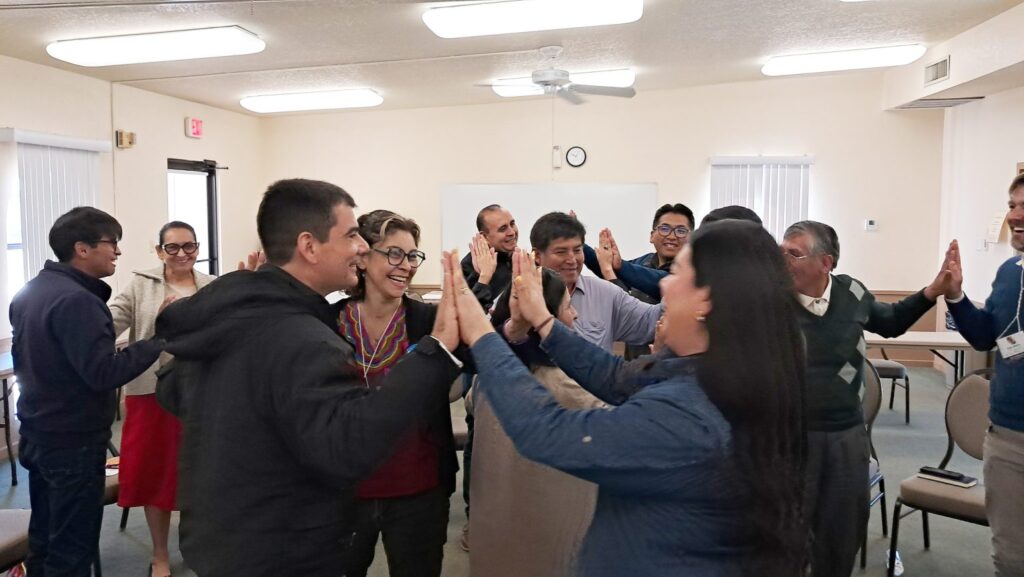
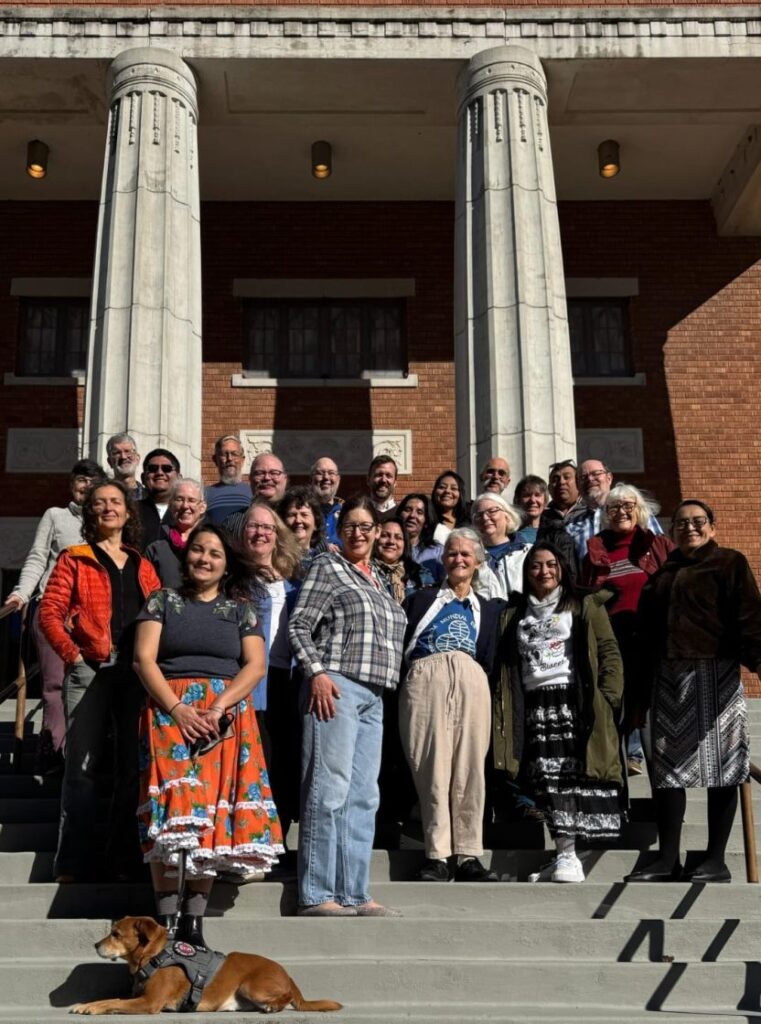
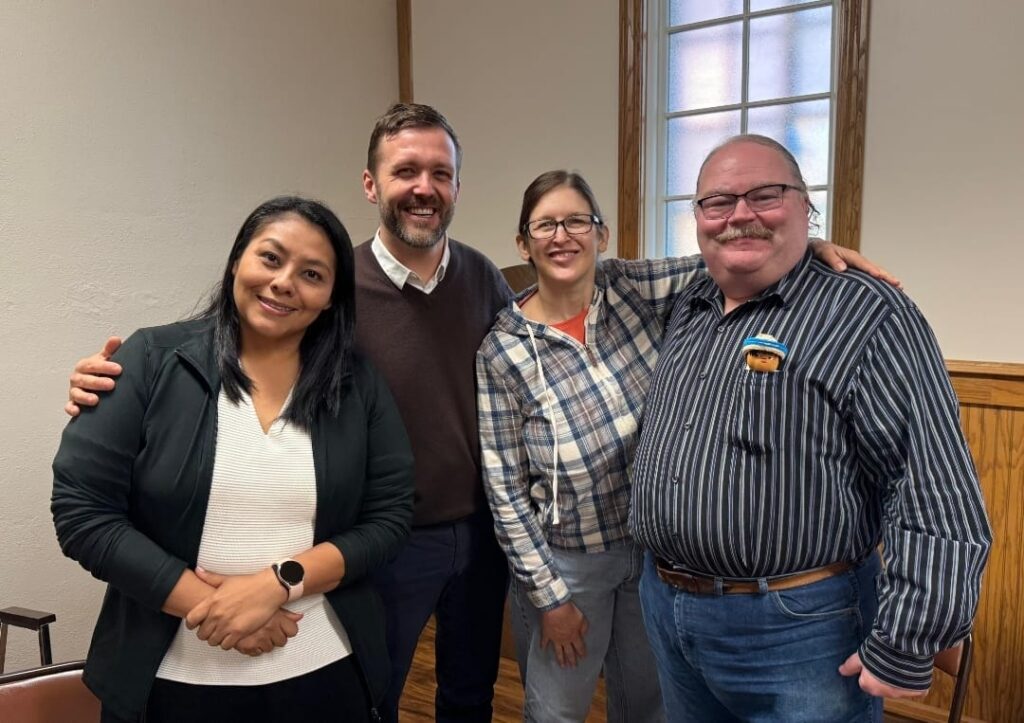
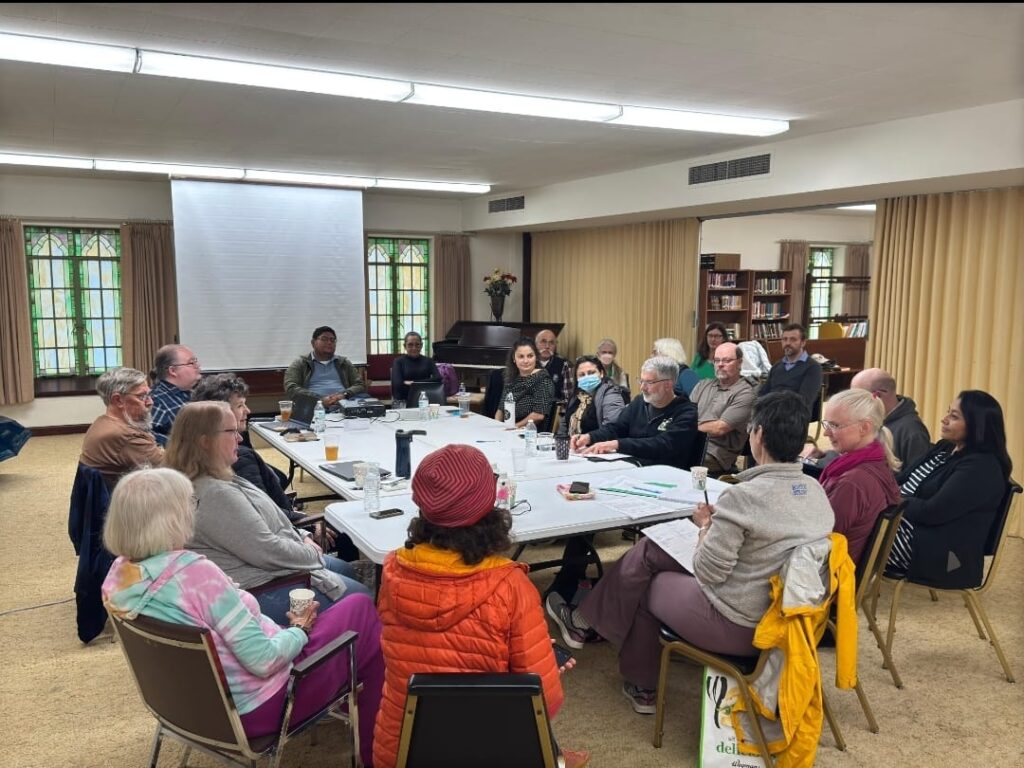
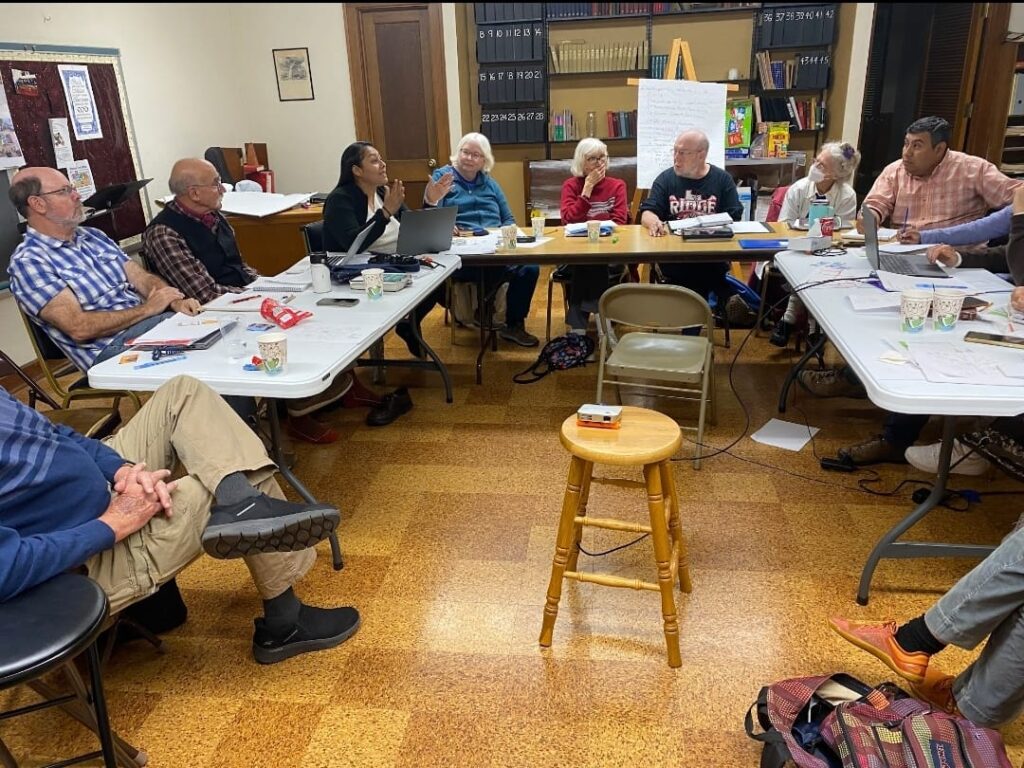
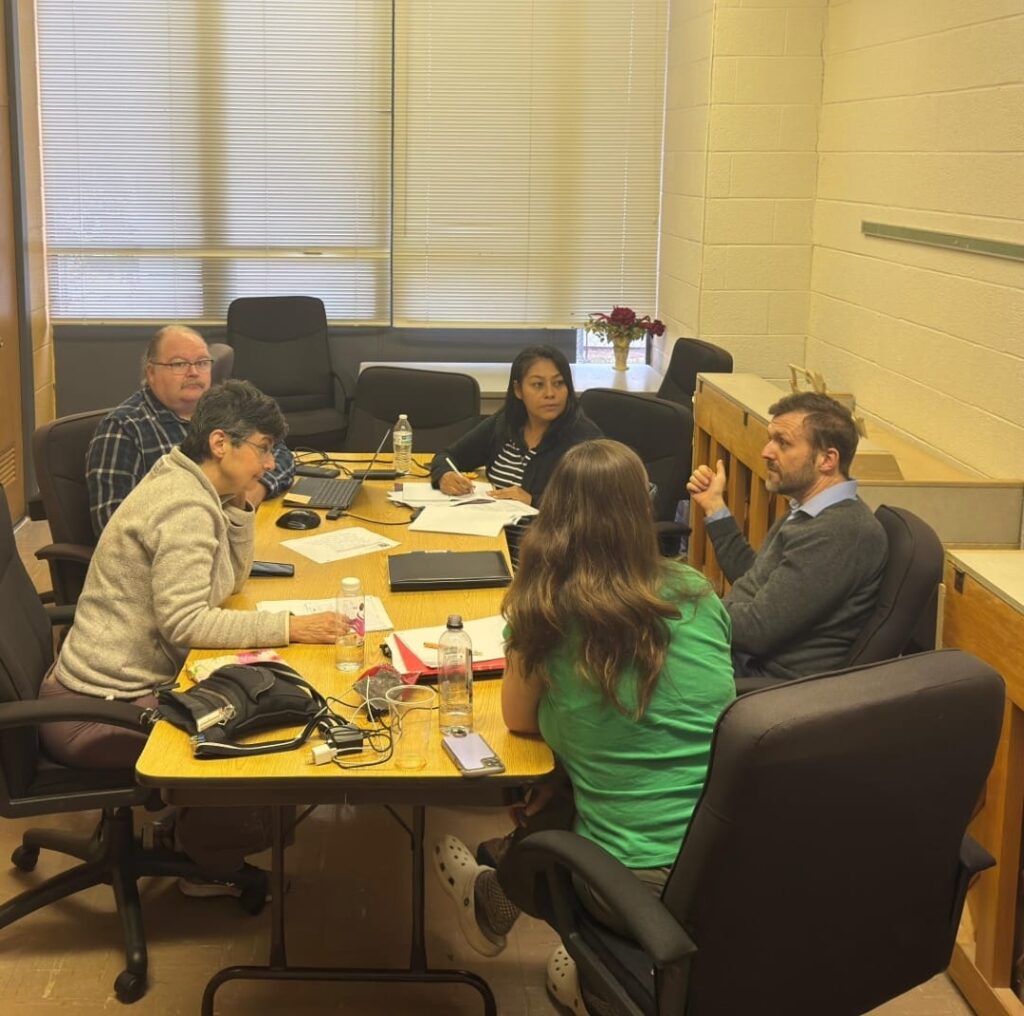
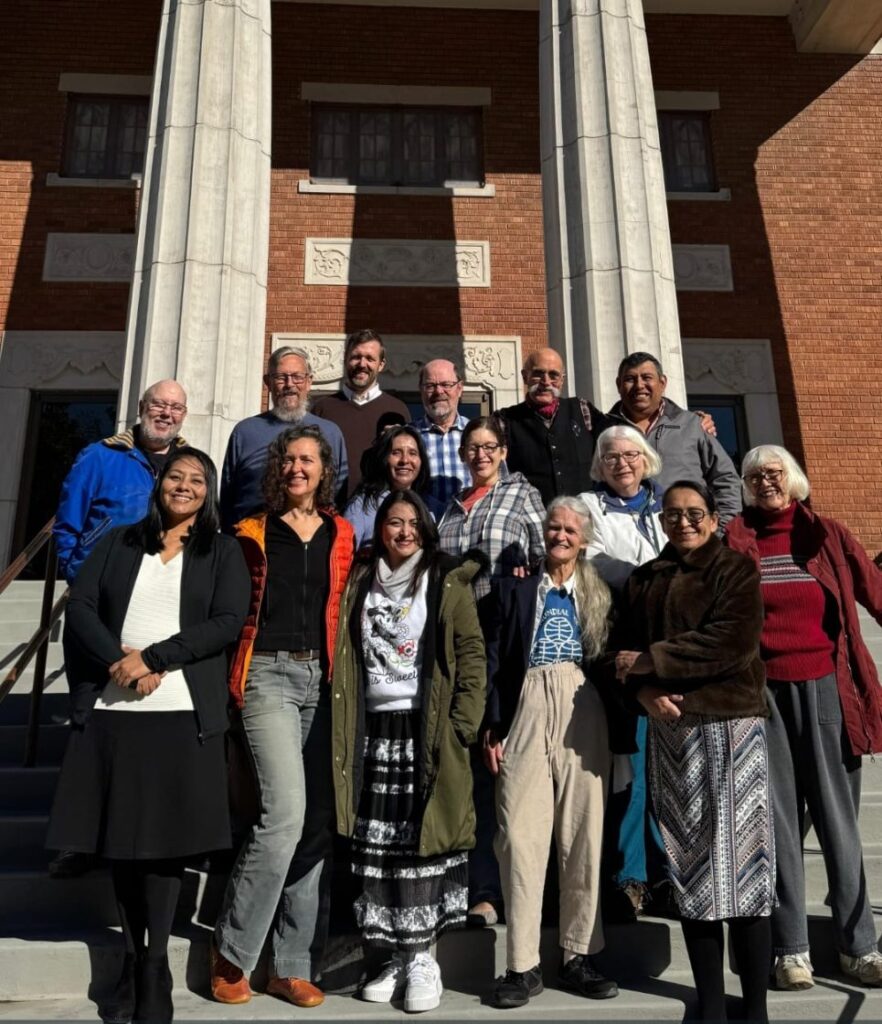
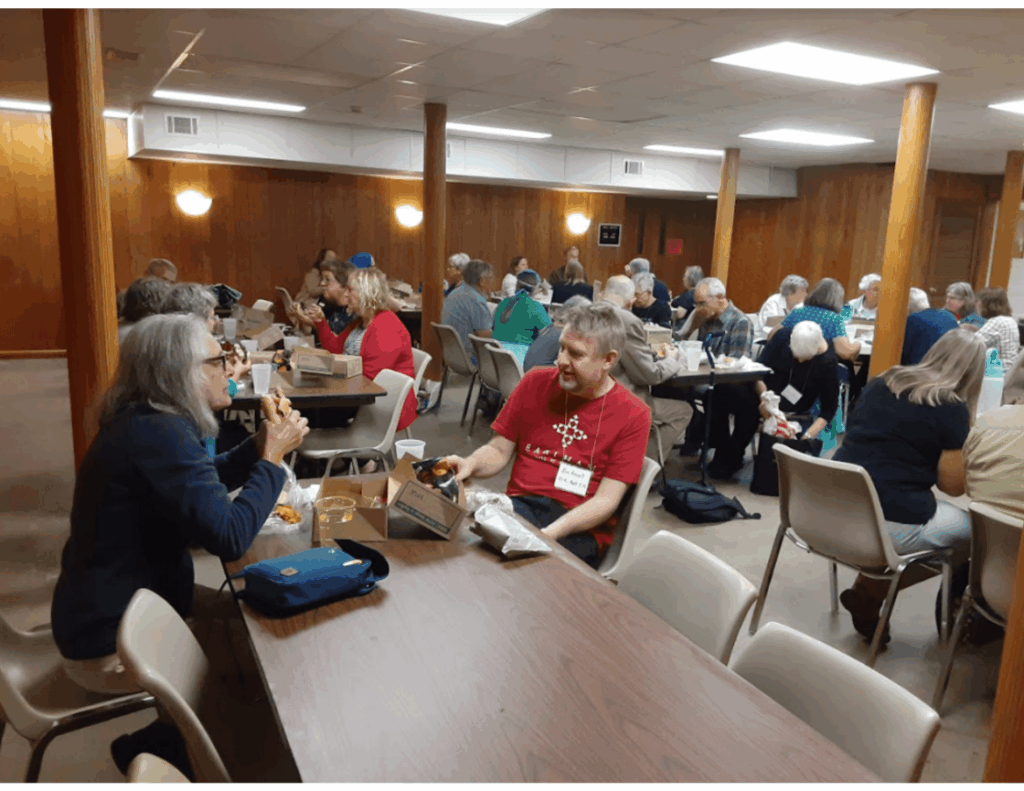
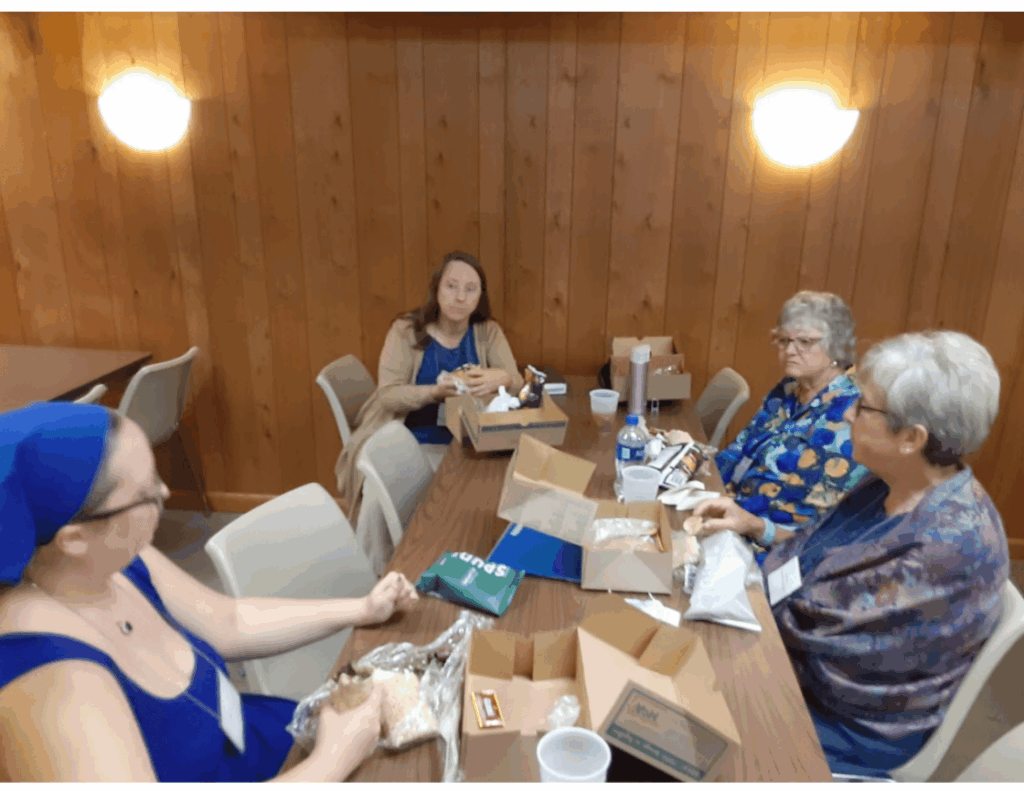
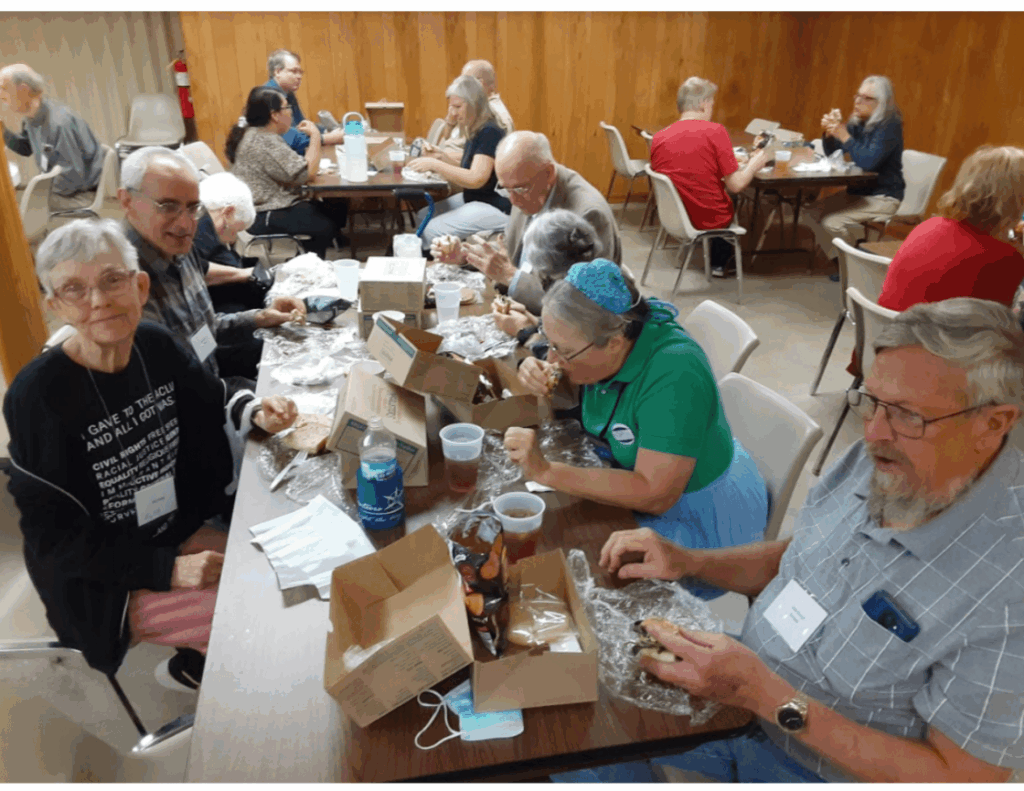
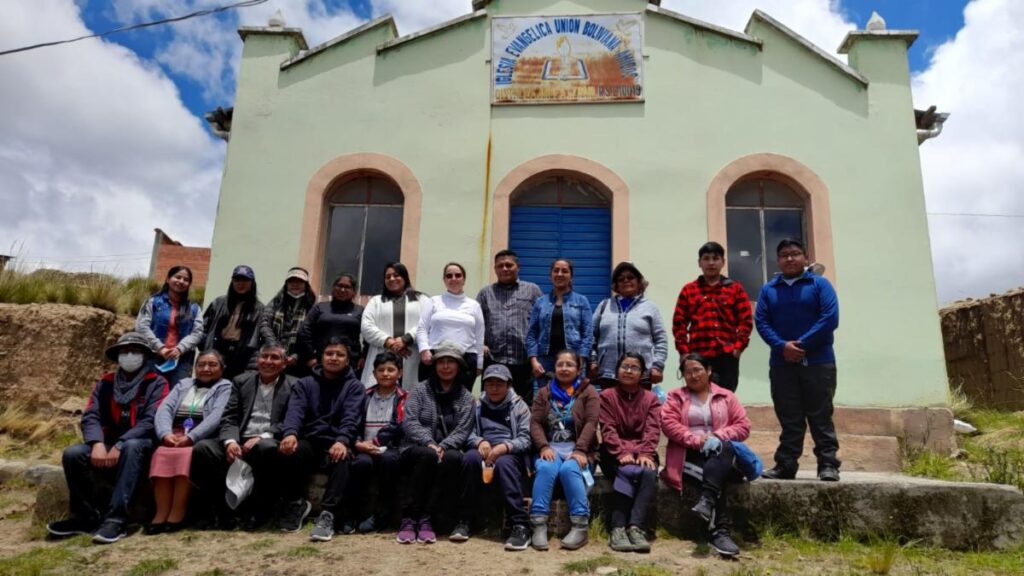
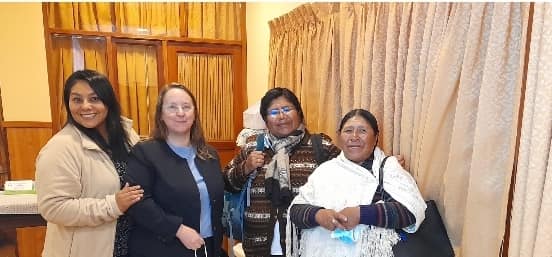
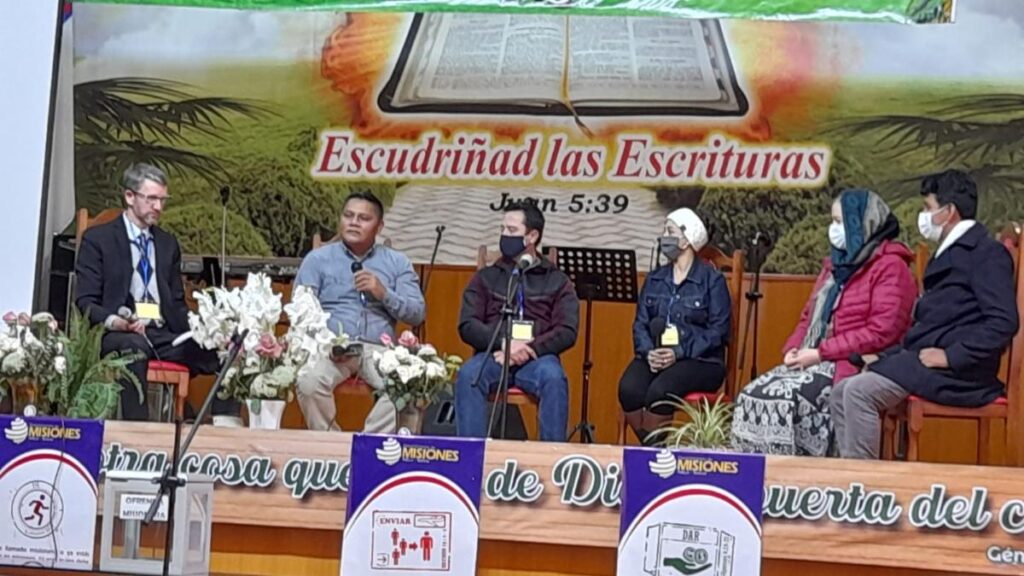
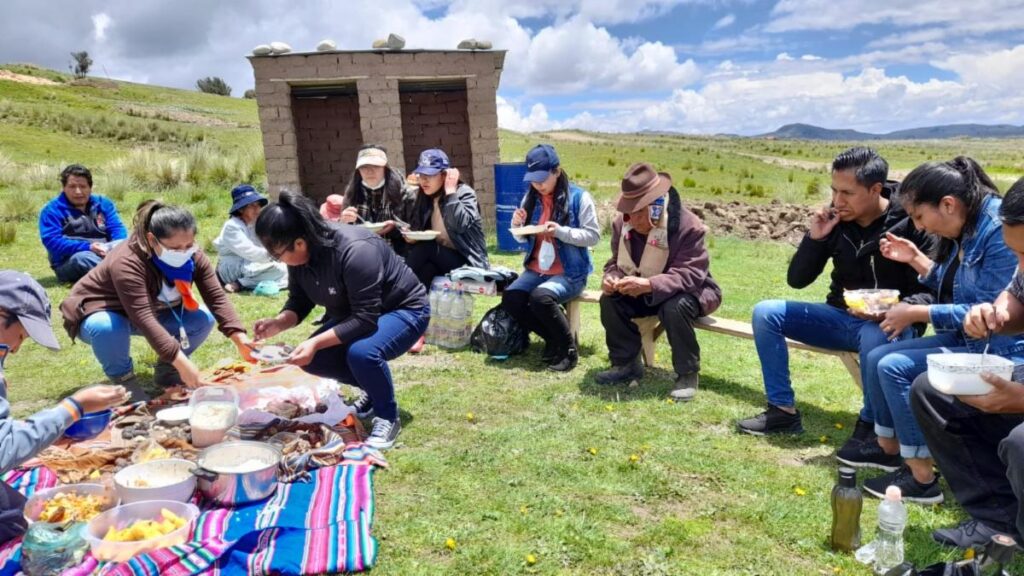
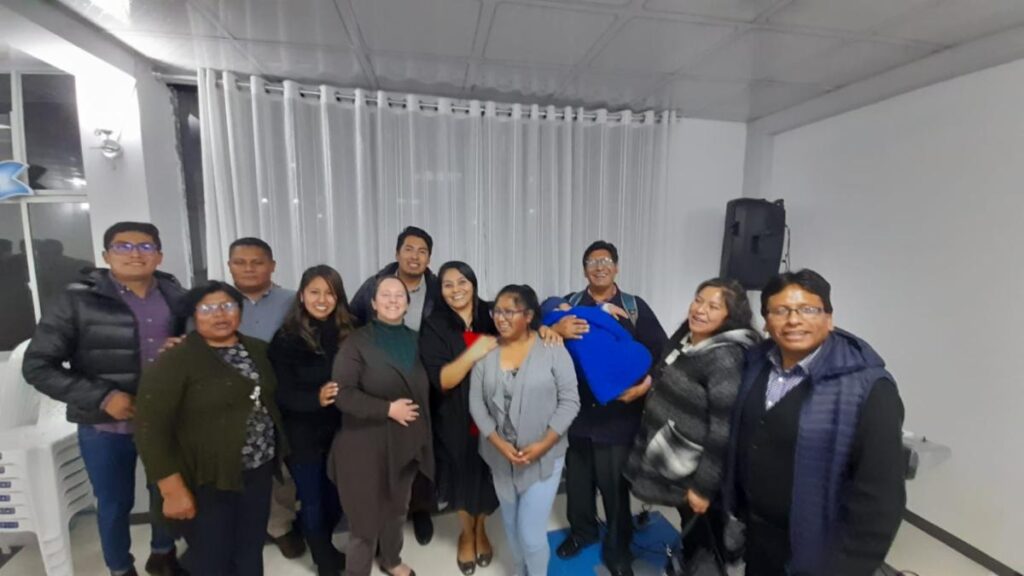
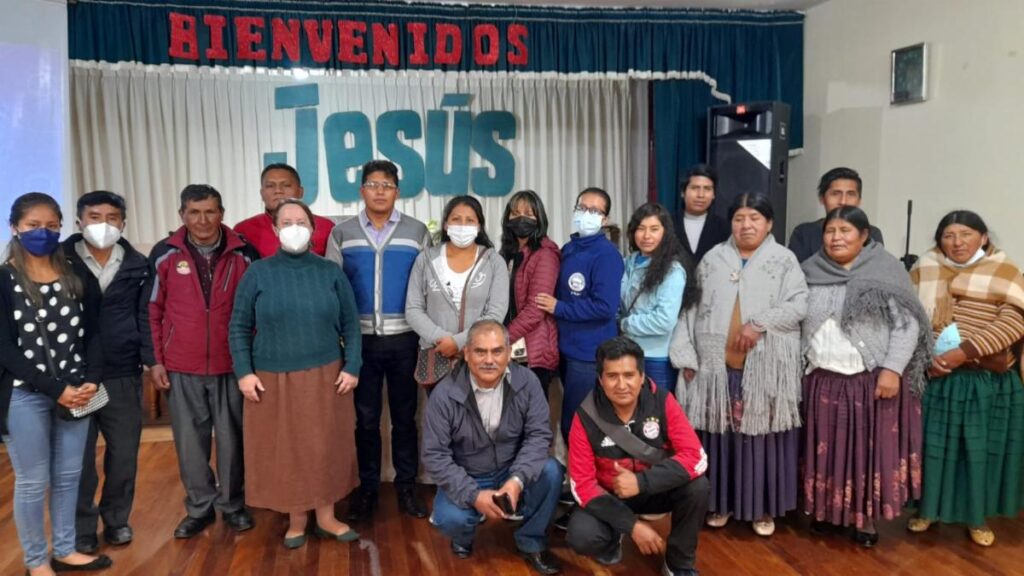
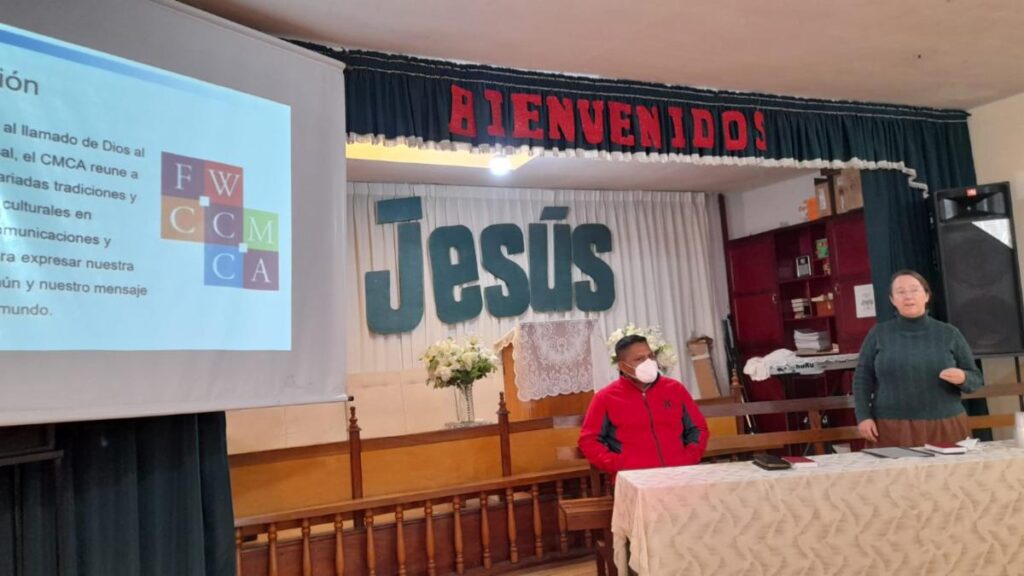
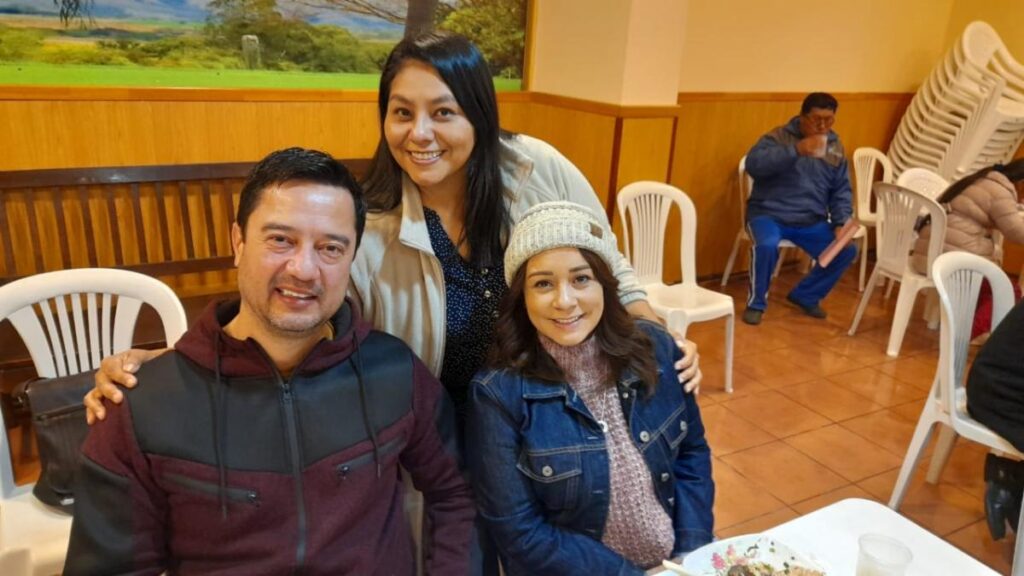
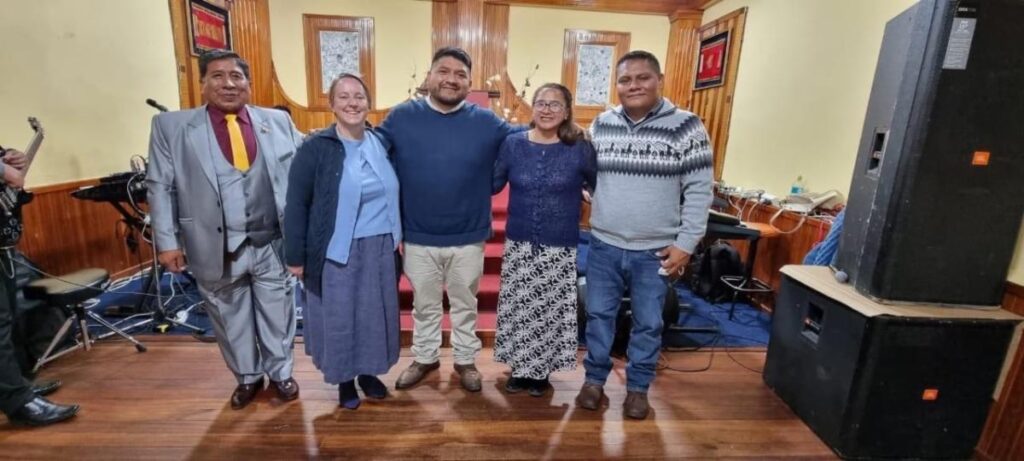
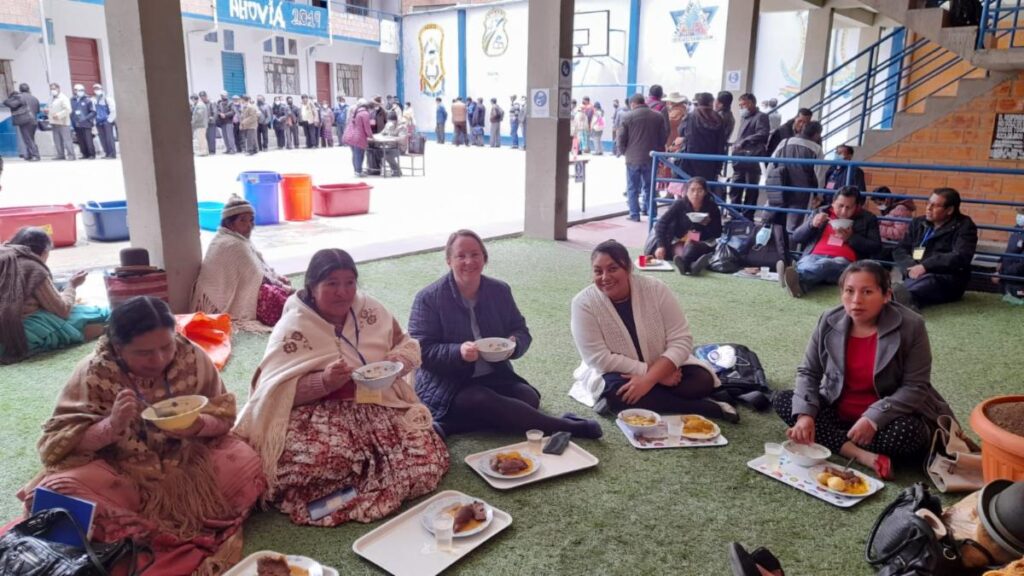
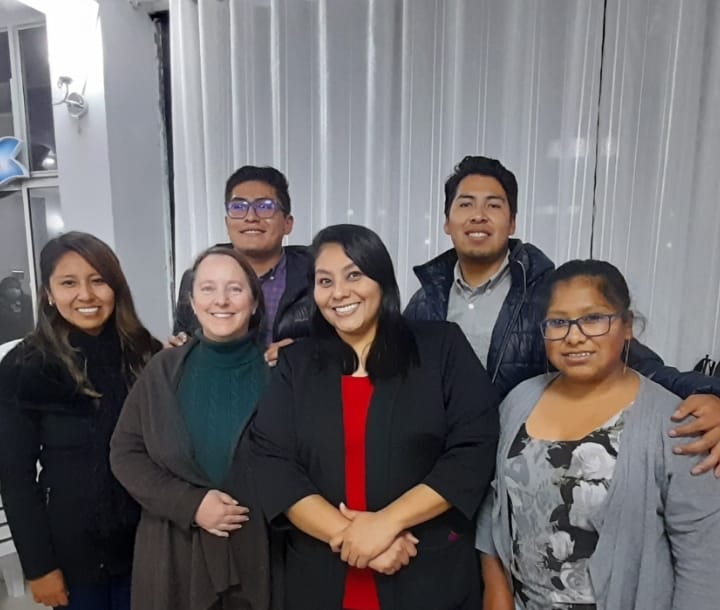
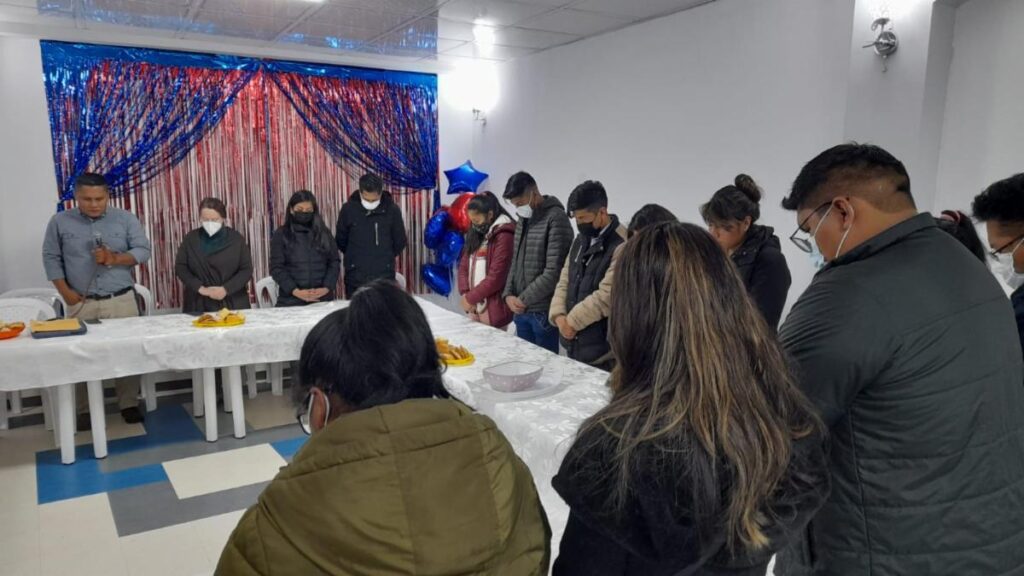
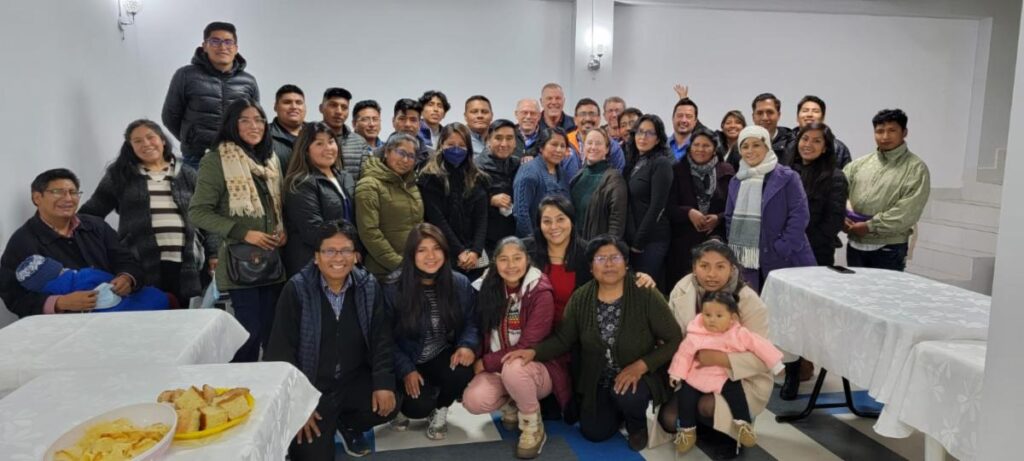
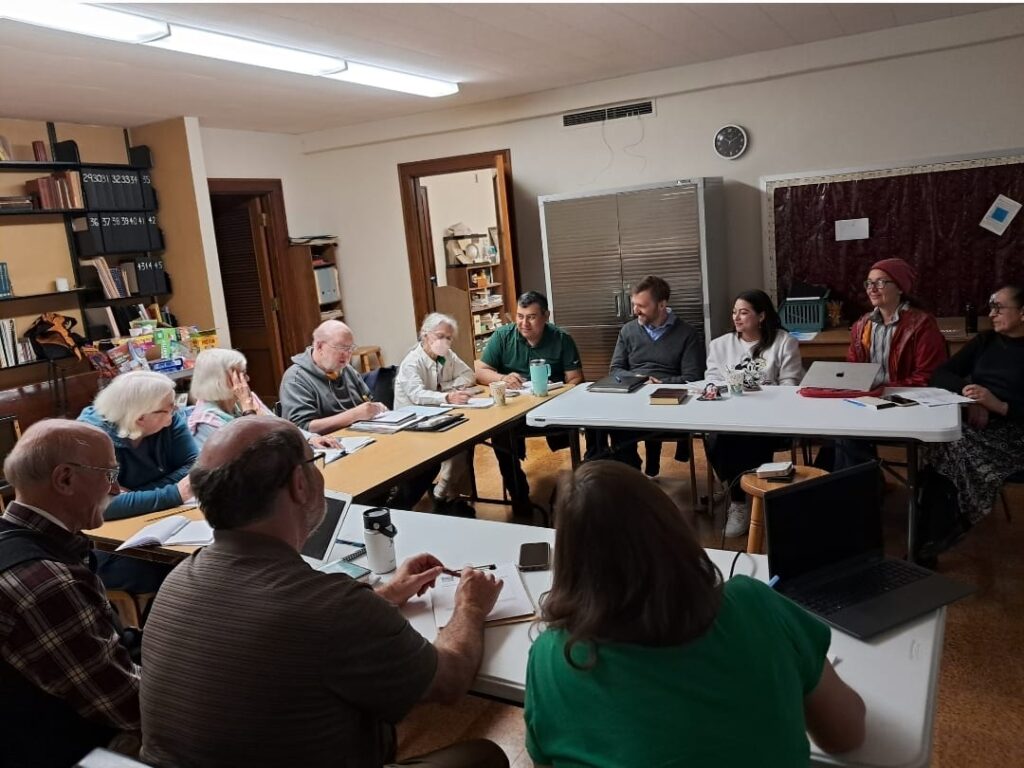
FWCC participated in a consultation between organizations interested in Bolivia, convened by the Bolivian Quaker Education Fund (BQEF). Goals of this consultation were to 1) Gain a more thorough understanding of the work of Quaker or Quaker-affiliated organizations located in the Global North working in solidarity with Bolivian partners 2) Explore our responses to the evolving landscapes of solidarity work in Bolivia and reflect on deepening our faithful accompaniment with Bolivian Communities and Friends 3) Discover possibilities for further support and collaborations. We are very thankful to Rebecca Day Cutter of BQEF and Consultation and Intervisitation Program Group Clerk Milena Villca for their leadership in this initiative

Representatives from BQEF, United 4 Change (which has taken on the work of Quaker Bolivia Link), Waljok, Quaker Earthcare Witness, the American Friends Service Committee, Thee Quaker Podcast (through a videomaking project in partnership with Waljok), Friends Journal shared about their work and FWCC shared about our relationships with Friends and Yearly Meetings in Bolivia.

Outcomes of this meeting include multiple opportunities to engage and learn more about Bolivia, including an in person study tour lead by BQEF to Bolivia in January and a virtual tour organized by Waljok.

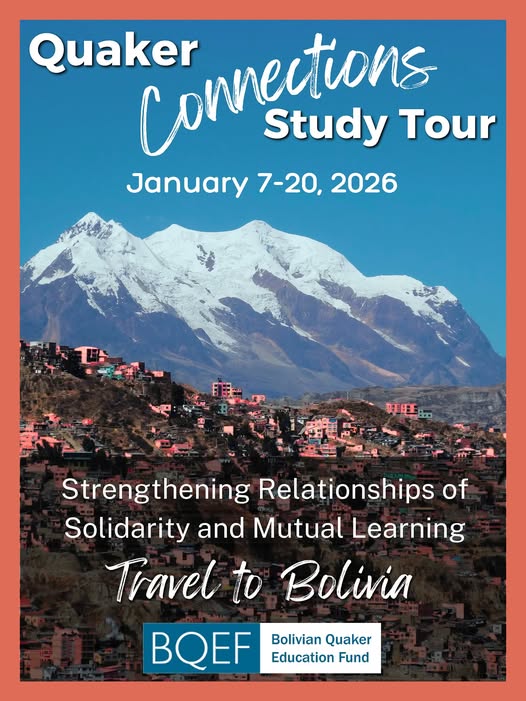
BQEF has just a few spots left for its Quaker Study Tour, January 7-20 2025, which will visit several of the projects described in the consultation. BQEF staff say that despite the fact that deadlines and information sessions listed on the tour page have past, you are still welcome to express interest.

Waljok is organizing a virtual study tour and released a preview of that opportunity, produced by Thee Quaker filmmaker Michael Candelori (who has also produced media for FWCC). Learn more about that tour at this link, and enjoy the preview below:

Voices of Young Adult Friends

image9-2-e1761592508307

Hazel Guindon (Monteverde Friends Meeting) – Monteverde, Costa Rica

As we continue learning how to expand as a faith community while including all voices, I want to express my deep appreciation for all the work being done—both locally and globally—to keep our diverse Quaker community alive.

Currently, I am on Vancouver Island, worshiping with friends near Duncan, where acknowledgment of the broader Quaker practice and FWCC was mentioned on World Quaker Day. That same weekend, I had a video call with Neyda from Bolivia and Fernanda from México, which inspired me to write a short article. I hope it encourages them to write about their own experiences, and I would be very curious to learn more about their perspectives on Quaker life. I ended up submitting a publication to Friends Journal, as Renzo has been motivating us to share our work in the journal’s Latin American part. 

I also want to express my heartfelt gratitude for FWCC, especially the gathering in Arizona. I learned so much from that experience, and it has shaped the way I hope to approach future Quaker experiences. I feel deeply honored to be part of a non-programmed Quaker practice within the Latin American section. I admire how our meeting is growing, and I’m profoundly grateful we are part of a global network.

Thank you, truly, for all that you do!

With love and peace,

Hazel

Meg Cody (North Pacific Yearly Meeting) – Portland, Oregon

I wonder how the trials of young adulthood have changed over the decades. I find it hard to believe the current state of society is all that novel—there have been countless economic crises, wars, and billows of hatred rising up throughout the centuries. Have things really changed all that much? Is this really the “most difficult” time for young adults?

While these questions frenzy my mind over whether the world has always been on fire, it doesn’t negate the urgency I feel at present to find a way to make the world a better place.

I was spread so thin over the past year with responsibilities that moving with a quickness drowned out the small, still voice of Spirit. It was so easy to get caught up in the whirlwind of opportunity, something which I find so challenging to navigate at this point in my life. I feel the surmounting pressure to balance my faith, career, and personal life—a ceaseless discernment of how to experience a connection with Spirit as I consider what it means to live a holy life.

It’s not Spirit that asks me to make money and pay my bills—that urging stems from my choosing to live in a capitalist society. But how I meet that end can be filled with Spirit.

I’m grateful to know I’m not alone in my struggle to navigate life’s many crossroads as I commiserate with other Quakers my age. Uplifting this community offers me comfort as I navigate endemic polarization between what I believe to be right and wrong, just and unjust. I’ve turned my efforts towards encouraging and empowering young adult friends in my monthly and yearly meetings, and am now led to forge a path for North and Latin American young adults to connect. And while I’ve encountered little resistance from the community in all of these endeavors, I find the challenge lies within myself.

It was an honor to be a part of planning opportunities for North and Latin American Friends to connect with one another. In this great, big, overwhelming world, it’s comforting to know there are Quakers everywhere showing up for that of God in everything. I feel my worries ease as more and more spaces for young adults to connect open across our section.

I’m stumbling along as I learn more about the cultural differences I have with Latin American friends. I’m embarrassed with every faux pas I make and grow frustrated with myself for not being more considerate. How dare I not know what I don’t know?

I turn these frustrations towards Spirit and recognize how I’m being led. I might walk along the path clumsily, but I continue to move towards Spirit’s light.

Spirit’s light is shining on a small and mighty group of young adults who are determined to build the future for young adult Friends as way opens. The first of four virtual gatherings was held on September 6th to facilitate introductions between young adults in the Section of the Americas. While it wasn’t a smooth planning process or program, it was filled with Spirit and opportunity. I’m excited to see how each event grows and changes from previous ones, and even more enthused about what might come of these connections.

The next events will occur on the first Saturdays of December, March, and June. Please share this opportunity widely! A registration form for December will be shared in the coming months.

Meg

Young Adult Friends Section Meeting Retreat Report

Young Adult Friends (YAFs, ages 18-35) serve a vital role in the health of the Quaker community. They carry the weighty responsibility of the future of Quakerism. They provide a bridge for Junior Friends to step into the larger Meeting. They bring energy and vibrance to gatherings. They steward what it means to be a Quaker.

Hosting opportunities for YAFs to be with one another builds a collective identity of Quakerism for this generation and becomes a foundation for what Quakerism will become. It also offers YAFs opportunities to engage with people going through similar experiences and learn to navigate those challenges from a place of inner light.

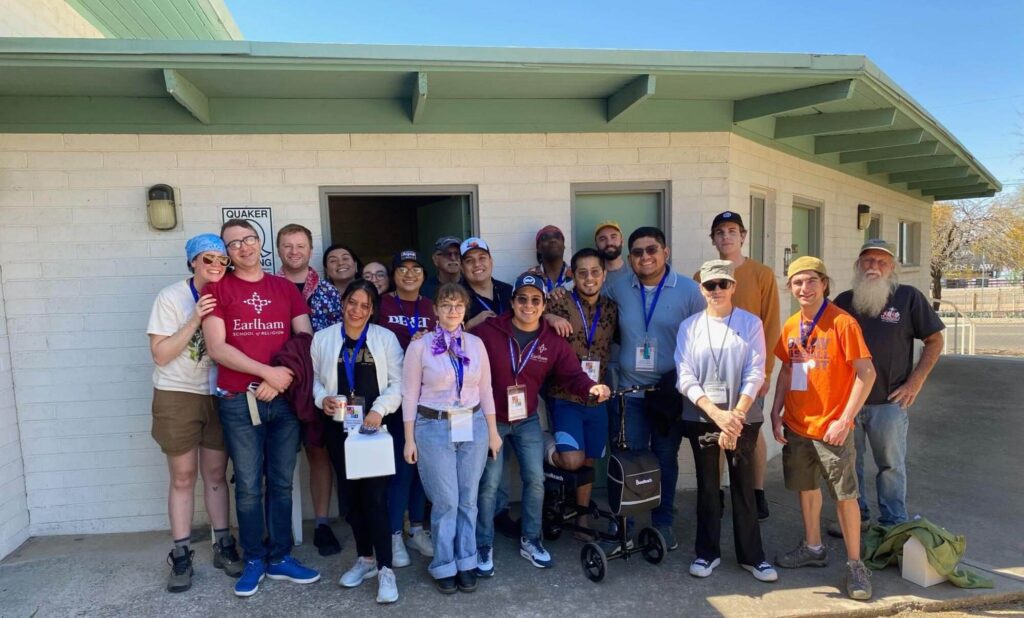
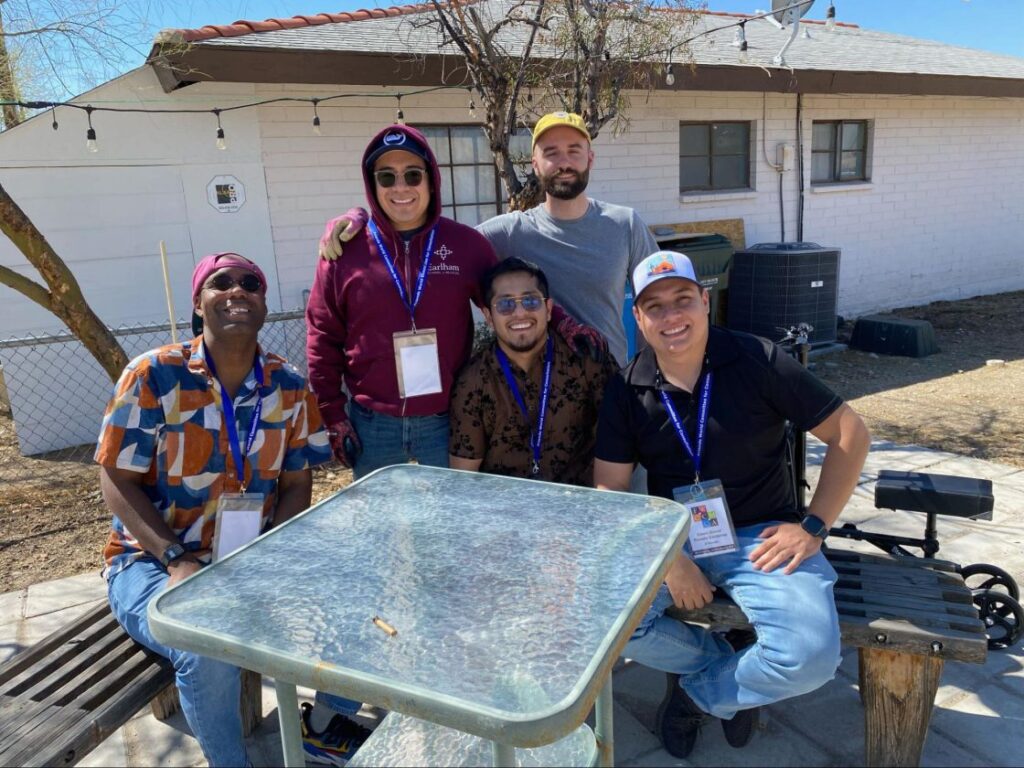
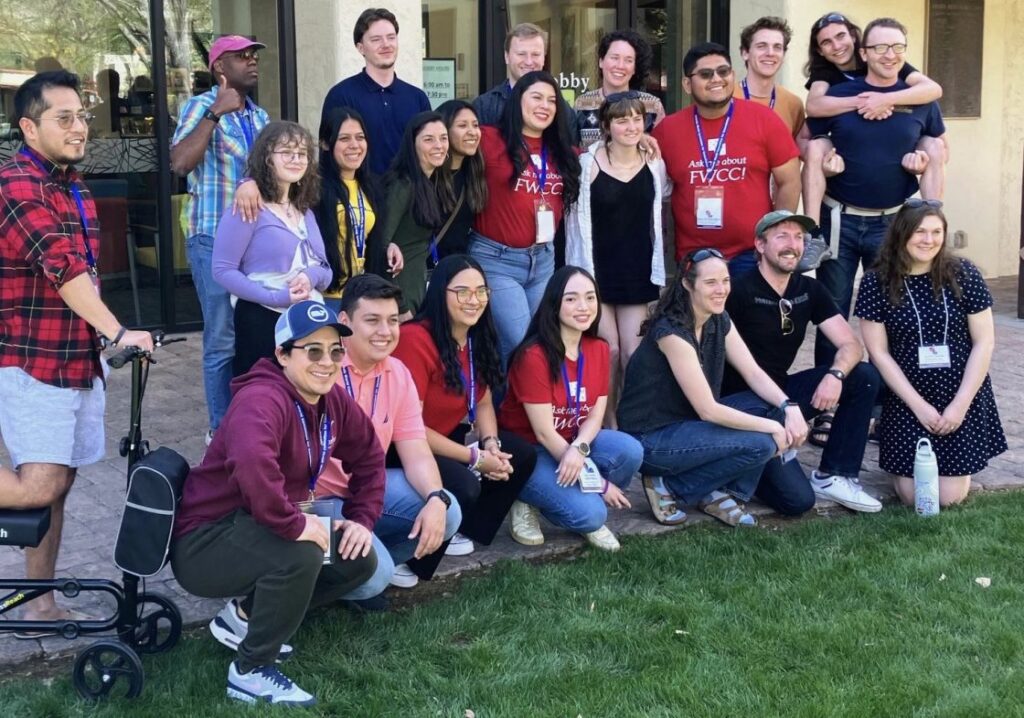
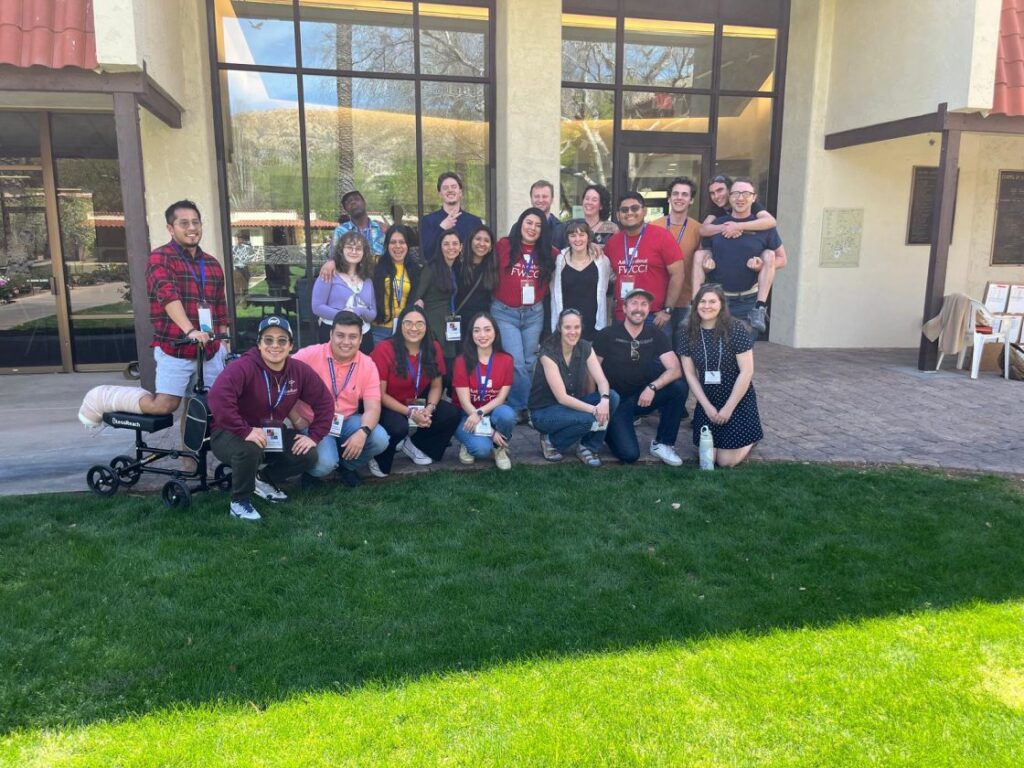
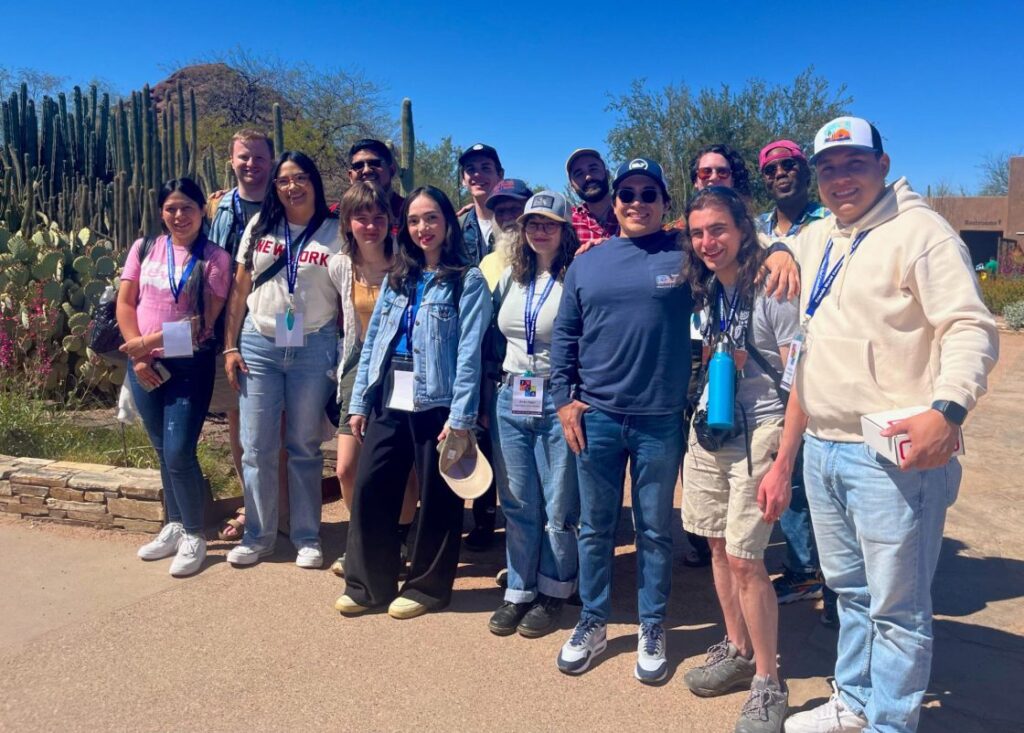
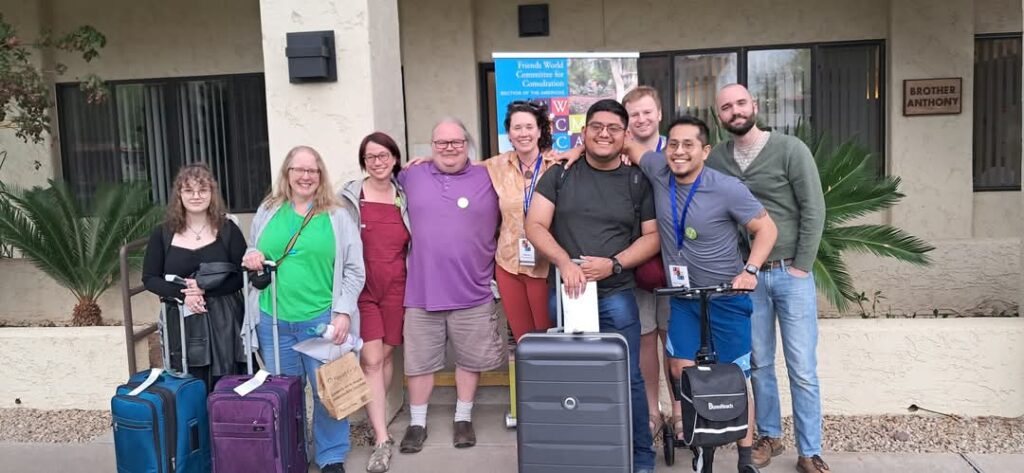
YAFs from across the Section of the Americas (SOA) were blessed with a unique and historic opportunity which was made possible by the Friends World Committee for Consultation (FWCC). In March, 18 YAFs from Canada, the United States, Mexico, Guatemala, El Salvador, Costa Rica, Peru, and Bolivia gathered in Scottsdale, Arizona for three days leading up to the SOA Annual Section Meeting. This gathering was the first of its kind, and was inspired by the spirit of connection sparked at the YAF Gathering prior to the World Plenary last August. It marked a powerful moment of cross-cultural fellowship and spiritual deepening among young Friends.

YAFs were grounded in their shared belief of honoring the light within each of us while celebrating the unique facets of our local, regional, and national expressions of our faith. The first activity together was to establish the following intentions to aid the navigation of this diversity.

  • To learn and respect the differences between our cultures and worship / Para aprender y respetar las diferencias entre nuestras culturas y adoración
  • Speak on behalf of yourself – use ‘I’ statements / Habla en nombre de ti mismo – usa declaraciones ‘Yo’
  • Seek unity in our diversity / Buscar unidad en nuestra diversidad
  • We’re learning from God through each other / Estamos aprendiendo de Dios el uno a través del otro
  • Every experience is unique and valued / Cada experiencia es única y valorada
  • Enjoy being in each other’s presence / Disfruta de estar en presencia del otro
  • In building trust with one another, we learn how to share our light / Al construir confianza entre nosotros, aprendemos a compartir nuestra luz

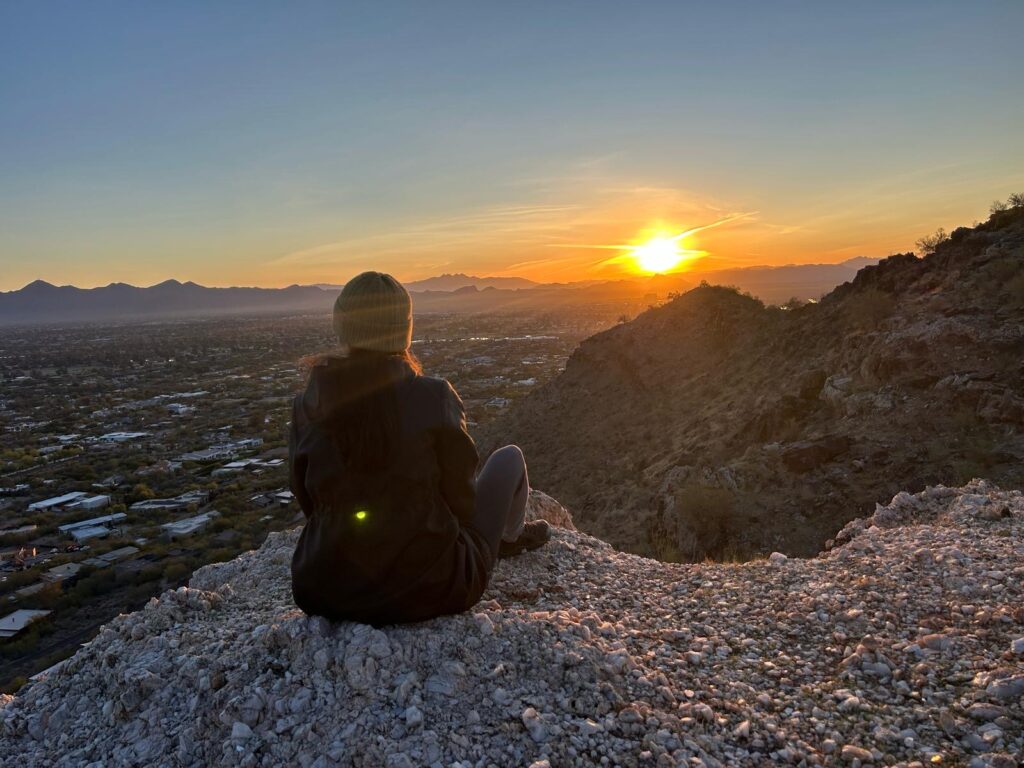
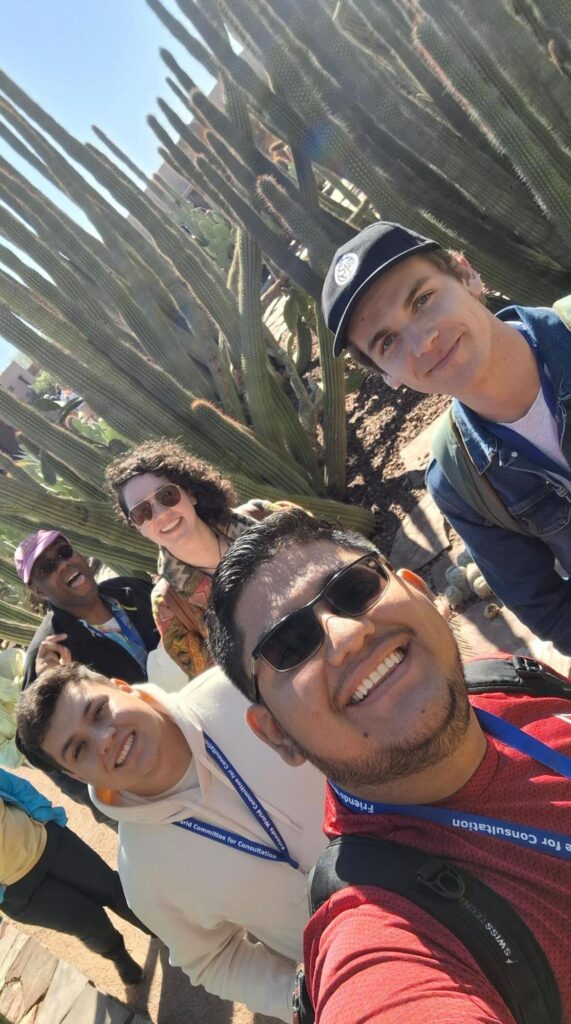
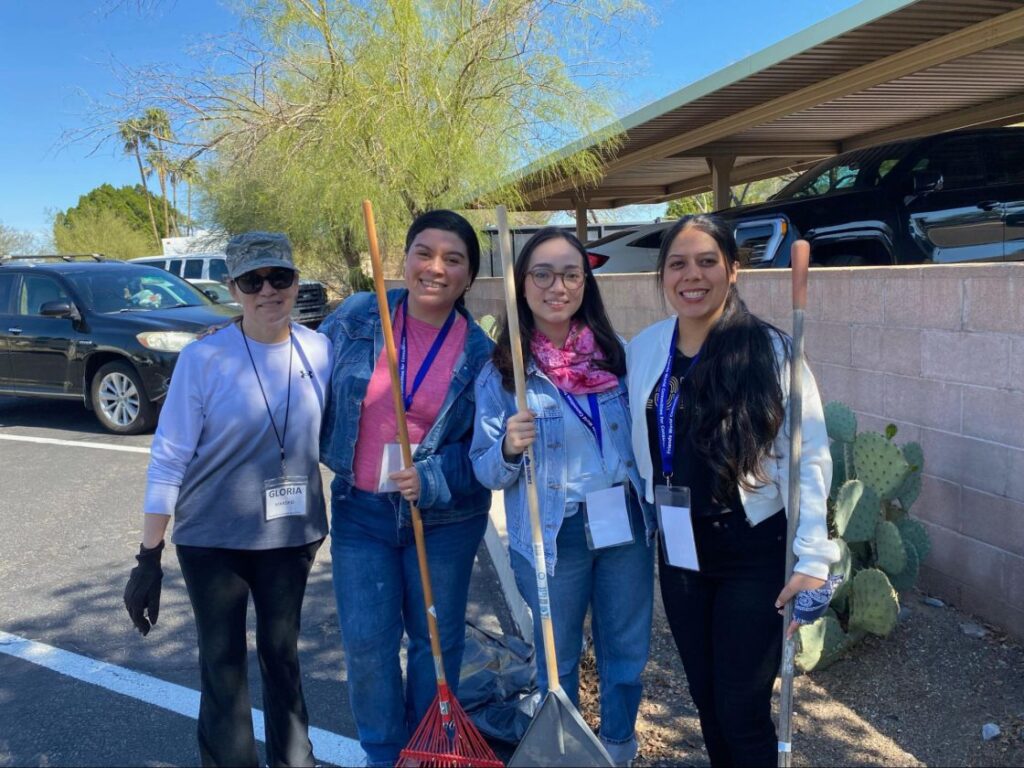
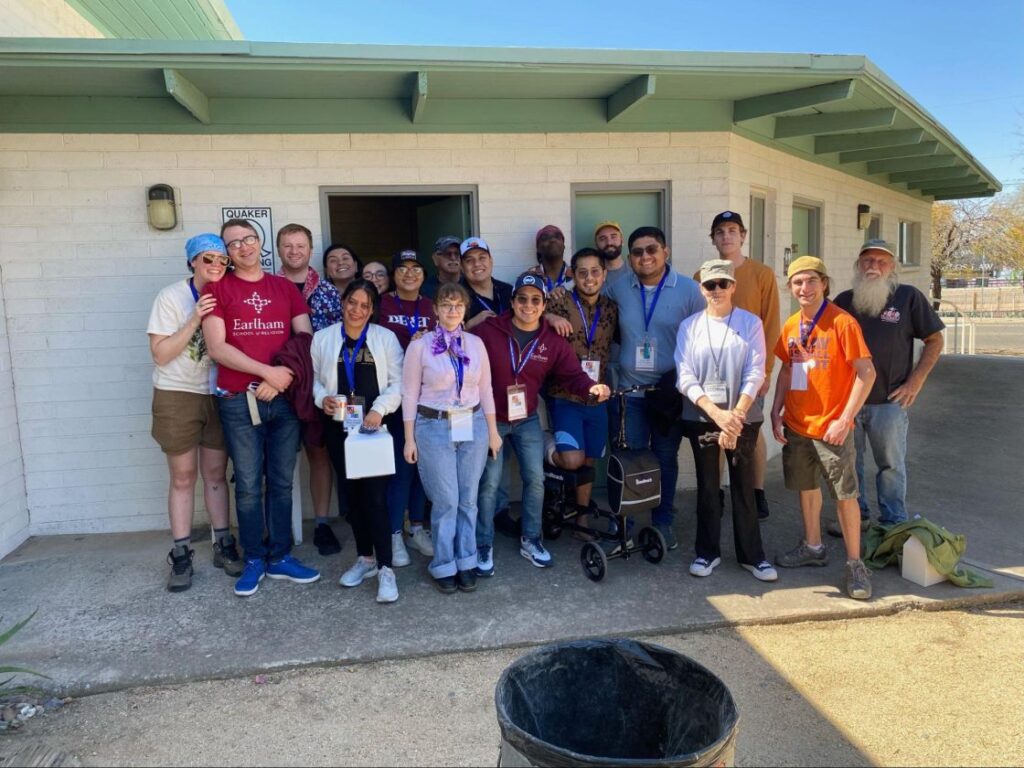
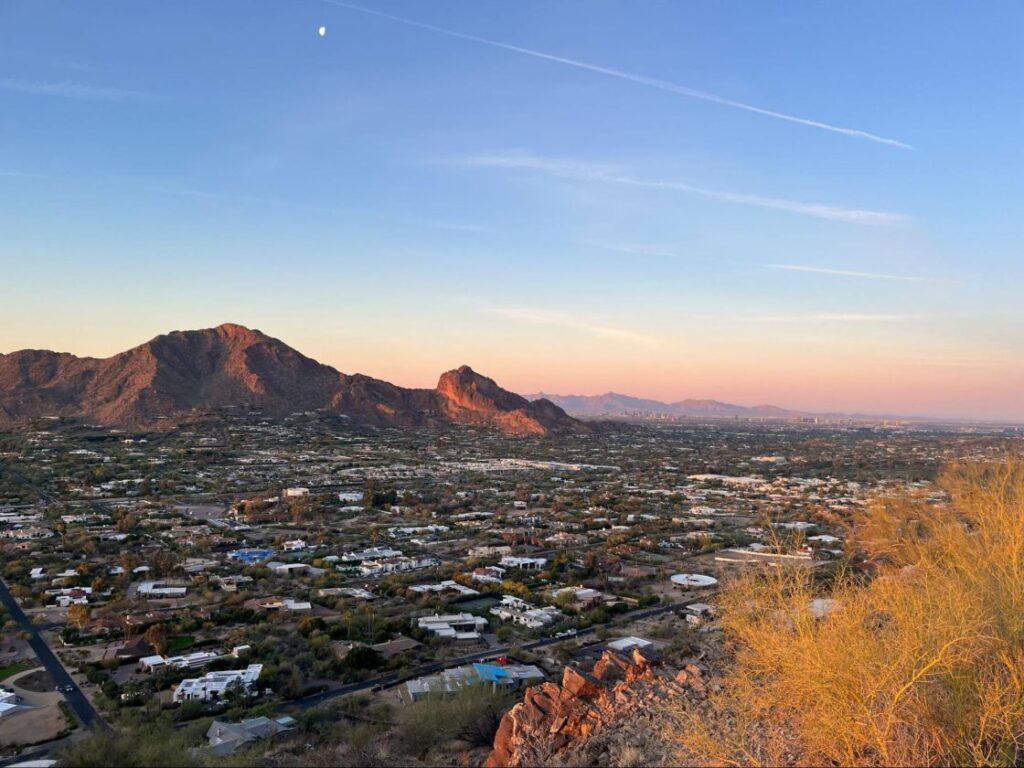
YAFs deepened their spiritual bonds through a rich tapestry of shared experiences. Throughout the gathering, YAFs stepped into roles of leadership by guiding workshops, facilitating worship, and greeting the day together on peaceful sunrise hikes. A memorable excursion to the Desert Botanical Garden, led by two gracious friends from Phoenix Monthly Meeting, offered a space for reflection and connection with the natural world. With open hearts and willing hands, YAFs also gave back to the Phoenix Meeting community, providing much-needed yard care for its smaller, aging congregation. YAFs led the entire community in worship on the final day of the Section Meeting—an experience many described as spiritually moving and left a lasting impression on all who were present.

What young Friends do now shapes the future of Quakerism. Opportunities for YAFs to connect amongst themselves are crucial for the discernment of their identity and emboldens the brilliance of Quakerism for generations to come. This event is just one instance of the commitment that FWCC has in supporting YAFs around the world to honor their presence, engagement, and visibility.

Inspired by the depth of connection and shared spirit they experienced, YAFs left the gathering with a renewed commitment to strengthening their bonds and expanding their presence within the wider Quaker community across the Section of the Americas. While this may have been the first event of its kind, it is clear it will not be the last. The seeds planted in Scottsdale are already taking root, and are nurturing a growing movement of young Friends ready to walk together in faith, friendship, and service.

Meg Cody

Loving our Neighbours across the 49th Parallel: Conversation with Friends across our Common Border

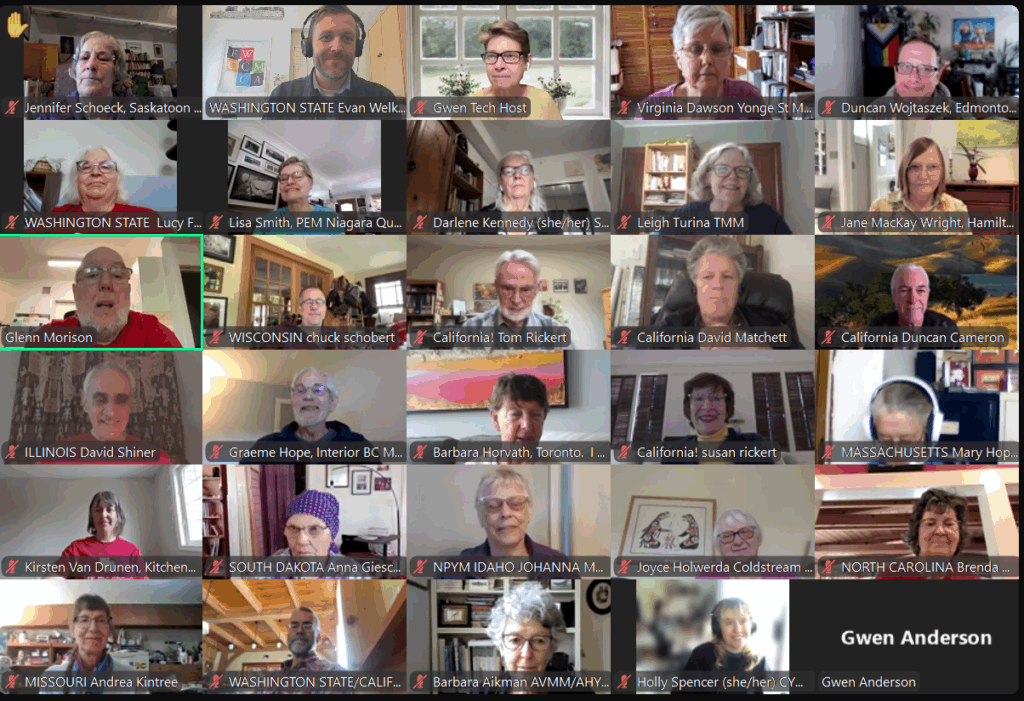
As a part of Canadian Yearly Meeting sessions, Glenn Morison of Winnipeg Monthly Meeting and Co-Clerk of the Representative Engagement Program Group of the Friends World Committee for Consultation, Section of the Americas, organized an online Special Interest Group on June 13, 2025 called:

Loving our Neighbours across the 49th Parallel: Conversation with Friends across our Common Border

After a Welcome from Glenn and an explanation of the gathering by Glenn, Evan Welkin, FWCC Americas Executive Secretary (North Pacific Yearly Meeting), offered a reflection on the work of FWCC to build bridges and cross cultures among Friends, including through the initiative of World Quaker Day which takes place the 1st Sunday of October every year. This year, October 5, 2025, World Quaker Day’s theme is on Galatians 5:14: “Love your neighbour as yourself” There are resources to host WQD events in your meeting here and a further reflection from FWCC General Secretary Tim Gee on the theme here in this month’s issue of Friends Journal.

Glenn Morison then shared a bit more about his motivation for hosting this event as a frequent traveler to and from the United States from Canada, and how the current political situation has deeply affected him. He referenced an experience at the recent FWCC Section of the Americas meeting in which he felt called to minister about the relationship between the US and Canada and an Executive Committee member from FWCC said a delegation might come to Canadian Yearly Meeting to speak to this concern. 

Chuck Schobert, a Friend from Madison, Wisconsin and member of the FWCC Americas Executive Committee, spoke about his experience of making apologies as a US citizen travelling abroad, and offered his apologies to those gathered during the gathering. He spoke of the need to resist unjust policies and also of reaching out directly to offer a different message.

After some Introduction of queries for consideration in our breakout rooms, Friends divided into mixed groups with US and Canadians to consider: 

  • What is your name, where do you live and what is your special interest in being here?
  • Given the reality that Canada – USA relations are the worst they have been since the Pig War of 1859, what is on your heart? What are your fears and hopes? How does this impact you at your deepest levels? 
  • On both sides of the border there have been people who have reported that the current climate has impacted the usual relations between Friends who tend towards a quietest approach and those who lean towards a more activist expression in their life and meeting. Is your meeting impacted by the current political climate? If so, in which ways? And how can we uphold one another in such a situation?  
  • Considering the strained relations between Canada and the USA, what are your thoughts, fears, and hopes? Kazu Haga, a practitioner of Kingian Nonviolence and restorative justice, reminds us that “human beings are not the problem. It is the actions we take, shaped by our life experiences, which are influenced by our culture and larger systems beyond our control. We need to fight the structures and mechanisms that perpetuate harm. To change them, we must understand individual stories and the systems influencing them.” How can we listen to our neighbours’ stories and understand the systems that affect them? 
  • bell hooks, a feminist teacher and theorist, states, “beloved community is formed not by eradicating differences, but by affirming them, by each of us claiming the identities and cultural legacies that shape who we are and how we live in the world.” How can we work towards creating a beloved community in our daily lives? 

We closed the gathering with some brief reflections on the experience and an overall sense of thanks for the opportunity to have the conversation. 

Building the Future as Way Opens: Reflecting on our 2025 Section Meeting

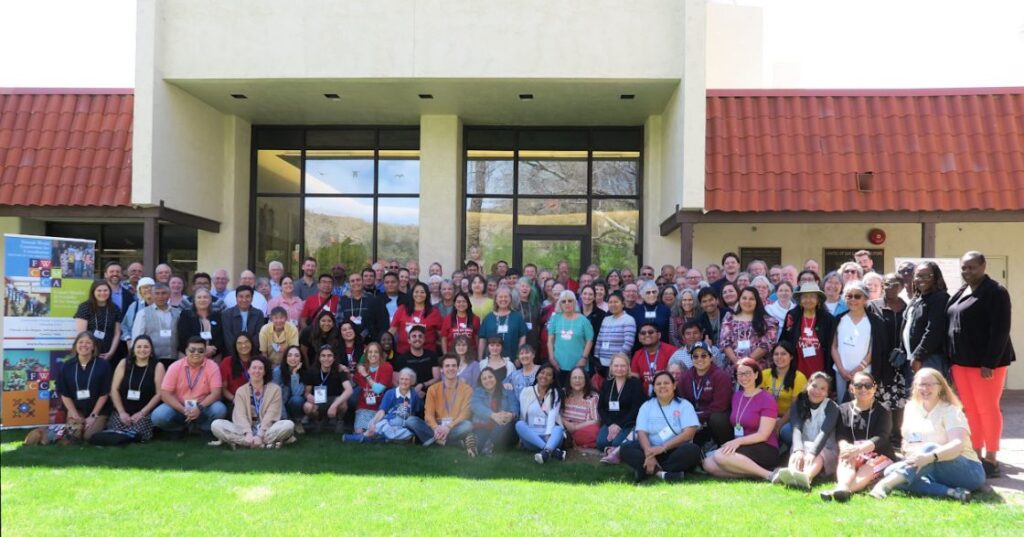
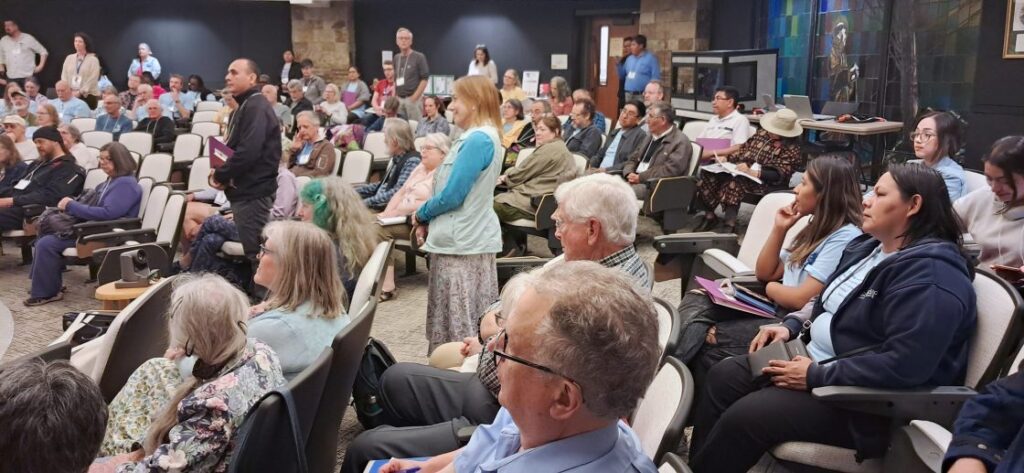
Gathering of Friends from the 2025 Section Meeting

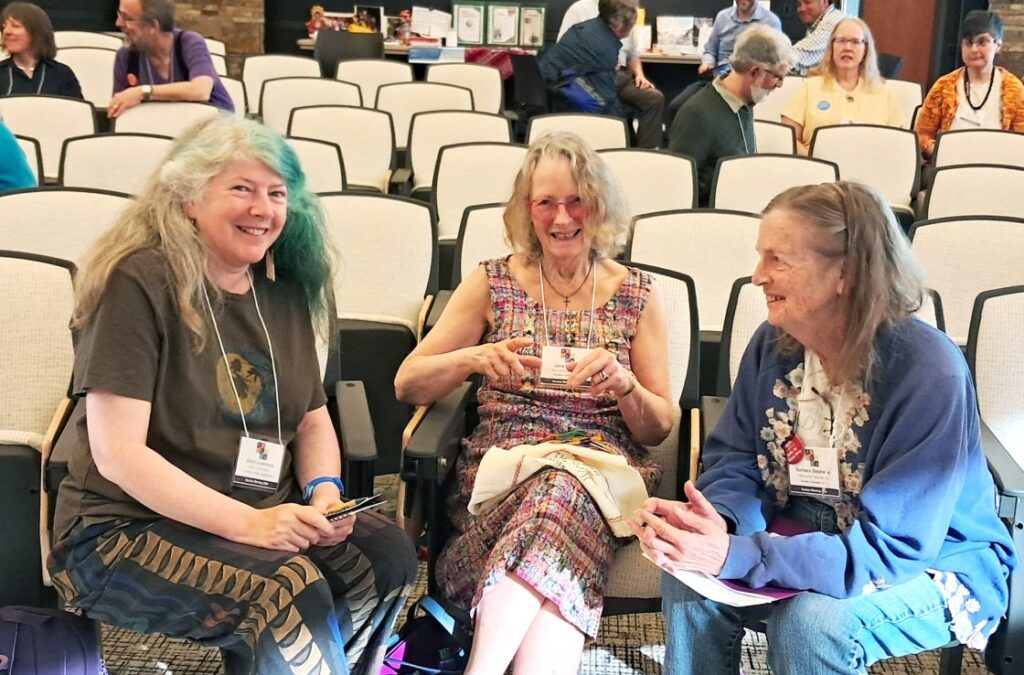
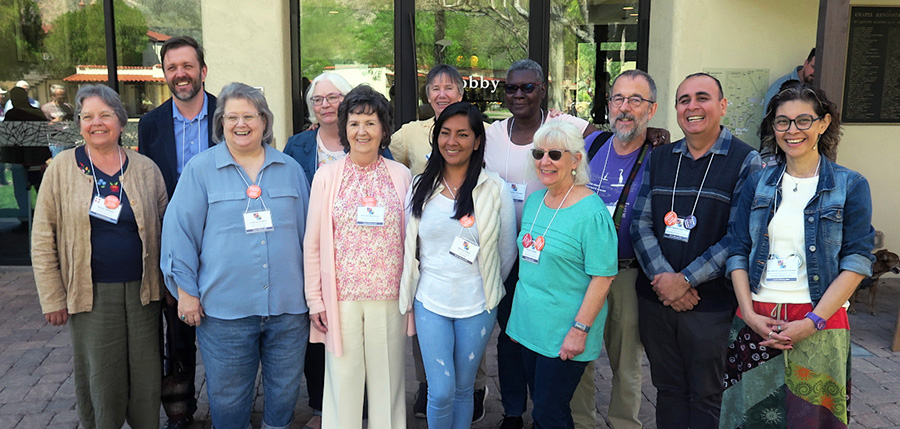
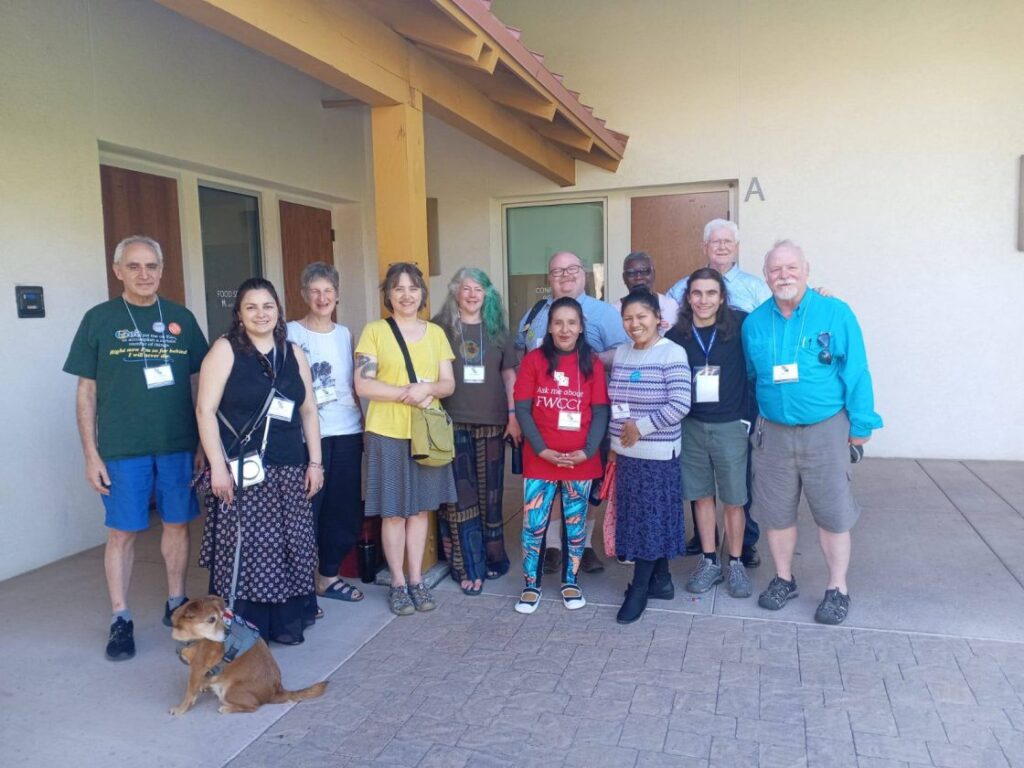
From March 20–23, 2025, 145 Friends gathered in Scottsdale, Arizona and 30 more connected  online for the FWCC Section of the Americas Meeting. We came from all across the Americas and beyond, including the largest Latin America delegation in recent memory. Friends traveled from their homes in Bolivia, Canada, Jamaica, Mexico, Guatemala, El Salvador, Costa Rica, Peru, the United Kingdom, and the United States—to be together in the Spirit and celebrate our diversity in fellowship. The theme of our gathering, “Building the Future as Way Opens,” was drawn from Isaiah 43:19: “Look, I am doing something new! Now it emerges; can you not see it? Yes, I am making a road in the desert and rivers in the wasteland.”

And we truly saw something new emerge among us.

Throughout our time together, worship set the heartbeat of our days. Each morning began with early worship—quiet, grounded, Spirit-led. We experienced rich and diverse forms of worship led by Latin American Friends, Conservative Friends, and Young Adult Friends. Each voice, each style, was a reminder of how our varied spiritual practices all seek and serve the same Divine source.

Gathering of Friends from the 2025 Section Meeting

Bible study sessions opened the scriptures in new ways, inviting us to listen with fresh ears and softened hearts. Home groups offered a space to reflect, laugh, and share stories across languages and backgrounds. In these small circles, we grew in our understanding of one another—not just intellectually, but spiritually and as members of a greater community.

In addition to worship and fellowship, we came together in workshops and business sessions, exploring how FWCC can live more deeply into its calling. After a successful campaign “Becoming the Quakers the World Needs”, we feel some fatigue on committees and in our fundraising efforts as transition, new programs and reorganization require more new energy.

We saw progress on new programming made possible by the campaign.  We shared a beta version of our Digital Quaker Glossary, an evolution of a collaborative tool for making Quaker terms and vocabulary accessible to all in English and Spanish. We look forward to the next phase of this project, supporting our active Bilingual Services team to develop a certified interpretation and translation program. We also announced new partnerships on our digital map, offering a single source to find Friends’ projects as well as meetings, churches and worship groups around the world. Our Quaker Connect program launched in the days leading up to the Section Meeting and apprentices from meetings across the Section joined our gathering for the first time with new perspective and enthusiasm for what is possible in the Society of Friends. To witness their excitement and growing connection was to witness the future unfolding before our eyes.

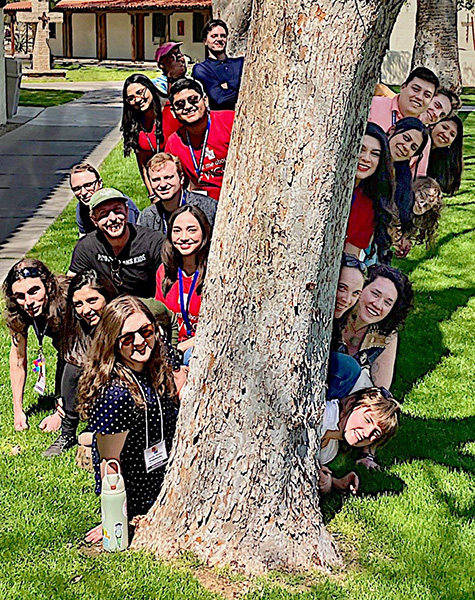
Young Adult Friends brought great energy to the gathering, not only in their worship leadership but also in their fellowship.  They explored the desert gardens together, shared meals and laughter, and took part in a service project for a local Friends meeting—offering their hands and hearts in service as part of a first-of-its-kind pre-conference gathering for young people across the Section.

Evan Welkin, our new Executive Secretary, introduced himself and set his personal experience within our gathering theme and what is unfolding in the Section. Joined by FWCC General Secretary Tim Gee, they both invited us to trust God and in each other as an unknown path unfolds before us in a time of uncertainty and great possibility. Our plenary speakers, Ana Gabriela Castañeda Aguilera and Debbie Humphries, built on this theme and reminded us of examples from scripture and our own lives when we are invited to do new things: how do we respond? We are excited that Ana and Debbie’s remarks will be printed for distribution soon. 

Gathering of Friends from the 2025 Section Meeting

We are, as ever, a community of Friends seeking unity across languages, cultures, and traditions. This gathering gave us the opportunity to treasure our diversity and to celebrate our shared commitment to God’s leading among us. There were long conversations over meals, joyful singing in multiple languages, and celebration over the work we are doing throughout the Section. Embracing Friends from across the globe, not just physically but spiritually, helped us find new ways to speak, to listen, to walk forward together.

The Spirit is doing something new among us. We came away from this gathering excited about projects that inspire and unite us, energized by the possibilities that lie ahead. We are also clear-eyed about the clear and present challenges in the world around us today.  As we return to our home countries and meetings, may we continue to walk forward in faith, trusting that the road will open, and rivers will flow, even in the wasteland.

As Ana Gabriela shared powerfully with us during her evening plenaries: “Sometimes, it’s the very act of stepping into the unknown that prepares us in ways we never imagined.” Like the road in the desert or the river in the wasteland, this gathering reminded us that new paths are revealed when we walk forward in faith, trusting the unknown. We are all grateful for every person who made this gathering possible and for each Friend who took that leap. Together, we are building the future—as way opens.

Gathering of Friends from the 2025 Section Meeting
Evan Welkin speaking at the 2025 Section Meeting
Friends playing a game at the 2025 Section Meeting

A Sermon in Wichita

FWCC representatives from across the Americas– from diverse contexts, perspectives, and languages– met for worship in Wichita Kansas, and listened to a message on Amos 5:18-24 offered by University Friends pastor Charity Sandstrom about the daily work of our faith, which does not change, even as the political circumstances that we find ourselves in in each of our countries do.

Volunteers, Representatives and staff for FWCC Americas attended University Friends Meeting last Sunday in Wichita, KS.

Amos 5:18-24 NRSVUE
The Day of the Lord a Dark Day
18 Woe to you who desire the day of the Lord!
Why do you want the day of the Lord?
It is darkness, not light,
19 as if someone fled from a lion
and was met by a bear
or went into the house and rested a hand against the wall
and was bitten by a snake.
20 Is not the day of the Lord darkness, not light,
and gloom with no brightness in it?
21 I hate, I despise your festivals,
and I take no delight in your solemn assemblies.
22 Even though you offer me your burnt offerings and grain offerings,
I will not accept them,
and the offerings of well-being of your fatted animals
I will not look upon.
23 Take away from me the noise of your songs;
I will not listen to the melody of your harps.
24 But let justice roll down like water
and righteousness like an ever-flowing stream.

James 1:19-27 NRSVUE
Hearing and Doing the Word

19 You must understand this, my beloved brothers and sisters: let everyone be quick to listen, slow to speak, slow to anger, 20 for human anger does not produce God’s righteousness.[ justice] 21 Therefore rid yourselves of all sordidness and rank growth of wickedness, and welcome with meekness the implanted word that has the power to save your souls.
22 But be doers of the word and not merely hearers who deceive themselves. 23 For if any are hearers of the word and not doers, they are like those who look at themselves[d] in a mirror; 24 for they look at themselves and, on going away, immediately forget what they were like. 25 But those who look into the perfect law, the law of liberty, and persevere, being not hearers who forget but doers who act—they will be blessed in their doing.
26 If any think they are religious and do not bridle their tongues but deceive their hearts, their religion is worthless. 27 Religion that is pure and undefiled before God the Father is this: to care for orphans and widows in their distress and to keep oneself unstained by the world

Charity Kemper Sandstrom is an author and Quaker pastor, currently serving University Friends Church in Wichita, KS. She has three great kids, a love for Jesus, and possibly a mild caffeine dependency. Charity considers herself an ecumenical and occasionally liturgical Friend, with a passion for sharing the love of God. 

In November we are looking at four difficult themes: Grief & Remembrance, Injustice & Action, Disillusionment & Hope, Change & Growth. All of these hard things are common human experiences, and as the darkness sets in for the winter, we are holding these experiences in our hands and asking “What do we do with this hard thing?” This morning we are holding the difficult experience of injustice.
The text from Amos that was just read sets us up nicely to talk about how we usually respond to difficulty. Like children who say, “My dad can beat up your dad” in response to a perceived slight, the Children of Israel saw themselves as victims of injustice. They wanted the day of the Lord to come, so that everything could be set right. They wanted their enemies to suffer. They wanted God to sweep away evil. They were calling for it, expecting it with eager anticipation, and the prophet interrupts to say, “What in the world are you thinking? Do you really think evil is only located in your enemies?”

Why do you want the day of the Lord to come? It is darkness and not light. You hate your enemies, but do you not see the injustice that comes from your own hands? God is not interested in your festivals, rituals, and rites. Away with the noise of your worship. Instead let justice roll down like mighty waters.
It’s a good thing that was just a “them problem,” right? We certainly don’t respond the same way today, right? Oh, no, wait. I guess we are all suffering from a human problem. It is so very human to locate the source of the problem out there somewhere. We don’t want to look at ourselves, our actions. We want God to be on our side, we need it to be true. We need the certainty that I am on the right team, they are on the wrong team, and we are going to win. We will go to many lengths to convince ourselves it is true.

In this year of political strife, and we are not likely finished with the fallout of the election season, the rhetoric of “us versus them” has been intense. And the arguments presented did not serve to change anyone’s mind, rather to intensify the hate and fear of one side toward the other. In a University of London study, researchers wanted to know whether people responded primarily to factual evidence or their preexisting desire for their cause or candidate to win. What they found was that when people were presented with evidence that supported their point of view, they added that information to their sense of confidence that they would see their desired outcome. When presented with evidence that countered their point of view, they held firm to their opinion and dismissed the information. When we are engaging in “us versus them” rhetoric, it is easy to invest ourselves more heavily in being loyal to our cause than to the truth we hold dear. We set aside the values and principles God calls us to demonstrate in our lives.
The prophet Amos tells the people that their religious practices will not convince God to be on their side, only participating in creating a more just society will please God. Calling for God to bring vengeance for those who are participating in injustice will only call down judgment on their own heads if they are not careful. Not just here, but many times in the prophets, we hear that God is more interested in justice than sacrifice, more interested in a society and culture in which the poor are cared for, where the marginalized are brought to the center than one where all the rules for religious festivals are followed. Jesus picks this up in the Gospels as he told religious leaders they were more concerned with tithing their garden herbs than practicing justice and mercy. Paul tells everyone in Romans 2 that when we judge others we heap condemnation on our own heads because we do the same things.

James picks up this theme in our New Testament scripture this morning. Set aside anger. Listen instead. Human anger cannot bring about God’s justice. Remember the word in the Greek for righteousness is the same as justice. And what does James instruct us to do? He tells us to take action. Stop talking about it, and act. Stop reading about it, and act. Stop complaining about it, and act. Care for the widows, the orphans, and step away from the ways of the world.
Too often in our modern era of internet advocacy on social media, we think we have done our part if we like, share, and post the causes we care about. We think we have done our part if we go to vote once every four years. We put the responsibility of bringing about a just society on the shoulders of political and government leaders. We stop paying attention to the policies and laws that are being passed because the person we voted for won. We trust them and we don’t actually want to know if they will follow through. Or the person we voted for lost, and we give up. We decide nothing we do will matter anyway.

The reality is that justice is not lived out on the grand scale of national politics. Can we legislate changes? Yes, but unless there is agreement among everyday citizens all we do is drive injustice underground. Think with me for a minute about race relations in this country. We outlawed slavery on the national level. I agree with that decision. But what followed were 100 years of oppression in smaller laws and regulations passed at the state and local levels that imprisoned and legally re-enslaved many people of color for simply not having a job. Laws that kept black men and women from voting, even after a constitutional amendment. Laws that kept citizens of color from equal access to education, and public accommodations.

We saw activism in the middle of last century that led to desegregation of schools and other public services, the voting rights act that enfranchised voters of color for the first time in a meaningful way. I agree with these changes. But they did not end racism. Racism became subdued, expressed behind closed doors or in euphemisms and dog-whistles. People stopped saying the quiet part out loud, but they kept their biases against black people. Institutions and policies continued to disproportionately affect the daily lives of people of color. And those not directly affected could pretend that everything was ok, and racism was a thing of the past.

Why am I critiquing the practice of legislating change on a national level? I support lobbying for change on any level and through any legitimate means of making a more just society. I want the government to make good laws that lead to good lives for every person in the country. I believe good policy matters. But I believe there is something that matters more—you and I choosing justice and mercy every day.
What do we remember about the days of slavery? Quakers on the underground railroad seeking the good of their neighbor, and slave patrols hunting those seeking freedom. What do we remember about the Civil Rights movement? People on the ground either marching for peace or protesting angrily at school integration. What do you think makes more of a real difference in a neighborhood—community members who connect and care for each other, or a law that says they have to be civil?

We don’t have to wait for government policy to treat our neighbor with kindness. We don’t have to wait for the supreme court to deem goodness constitutional. We can get busy feeding the hungry or clothing the naked or visiting those who are sick or imprisoned. We can practice religion that God our Creator accepts right now. We can care for the widow and the orphan. We can let justice roll down like mighty waters and righteousness flow like a never-ending stream. We can do that regardless of who won an election. We can do that whether the ballot measure we wanted passed or not. We can choose every day to walk in step with the Spirit, love our neighbor, and lift up those in need.

We can choose to love our enemies. It is what we are called to as followers of Jesus. Love for enemy does not mean agreeing with them. It does mean seeking their good, working to create a world where they can live with respect and dignity. If we are tearing down the other side, we have already lost. Human anger does not bring about the justice of God.
That doesn’t mean you can’t be angry about injustice. It doesn’t mean you can’t tell the truth about your experiences of being mistreated. It doesn’t mean you have to bypass the negative feelings that accompany the realization that something is wrong in government or society, or your family or your neighborhood. Be upset. But take a pause. Take a moment to remember the person in front of you—even the one working injustice—is a beloved child of God. Then you can work for wholeness, healing and peace, even as you tell the hard truth and seek for systemic change.

We are all responsible for creating a community and culture of justice. We are not off the hook because of election results. We are responsible to act. And when we act in alignment with our values, with the principles of Jesus, with the working of Spirit among us, we create change from the ground up.

As we tune our hearts to listen in a time of Quaker worship, can we ask Spirit to show us the truth of our own hearts? Can we trust Christ to teach us how to live day by day in ways that add to the justice and peace of our communities? Can we allow our Creator to remind us that we are beloved Image bearers, and in that reminder accept that of God in the person before us even those who would decide we are their enemy? Let us now try what love would do.
A Midwest Regional Gathering

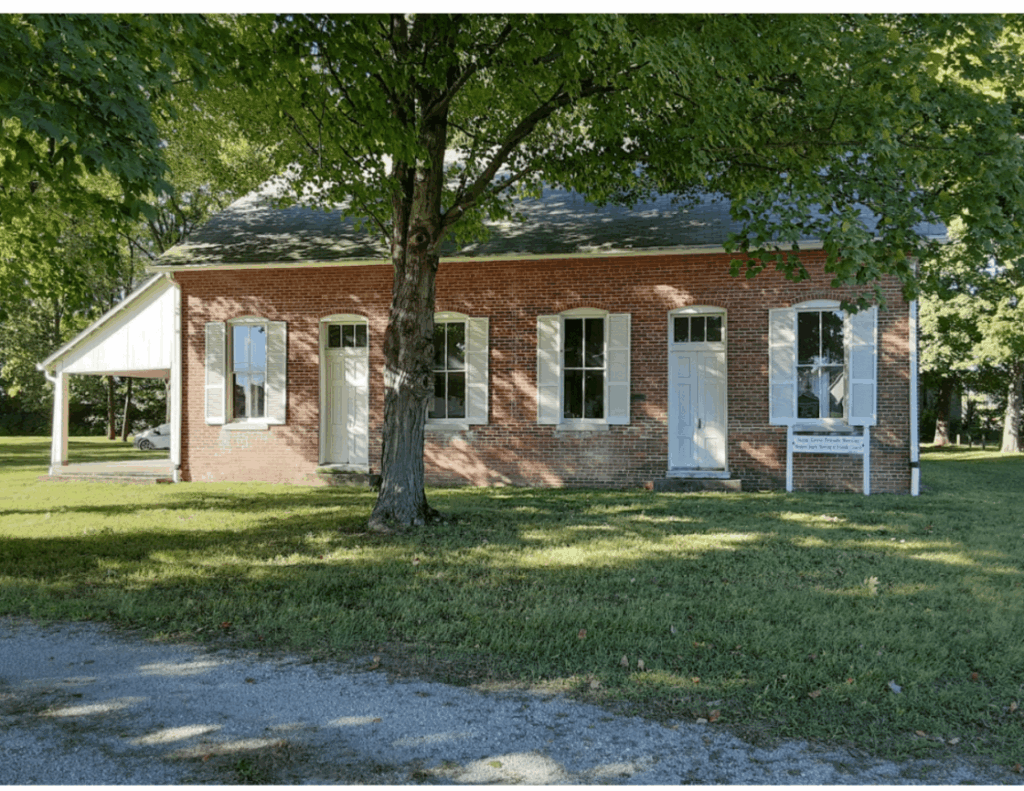
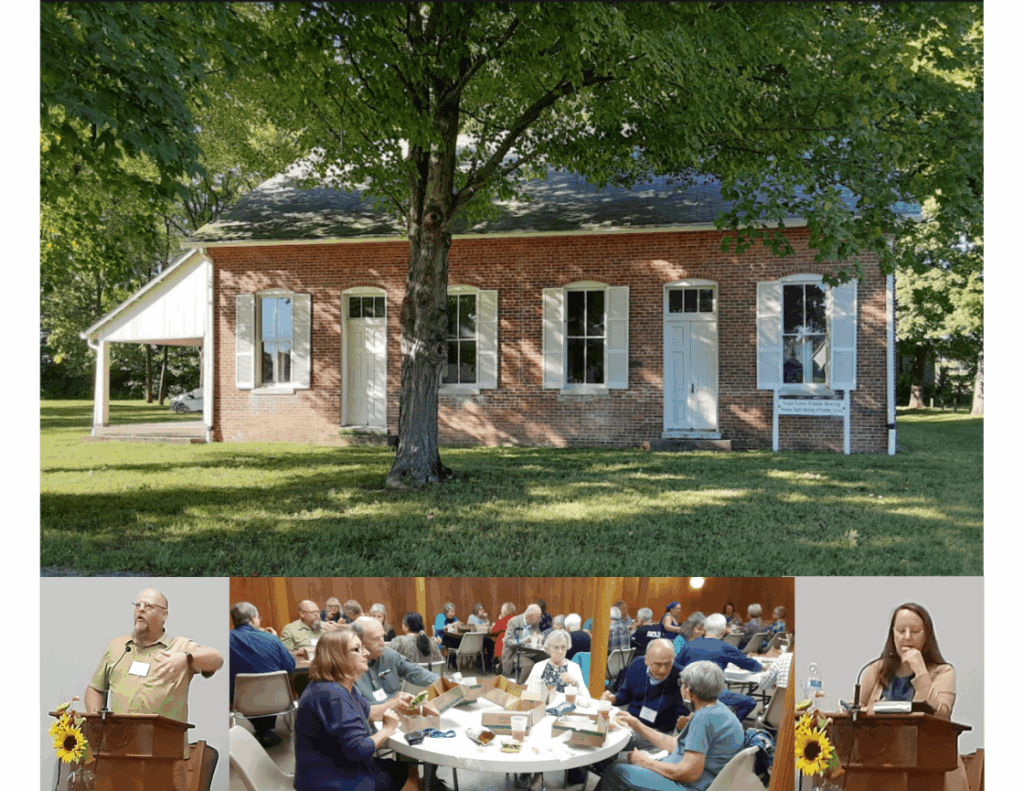
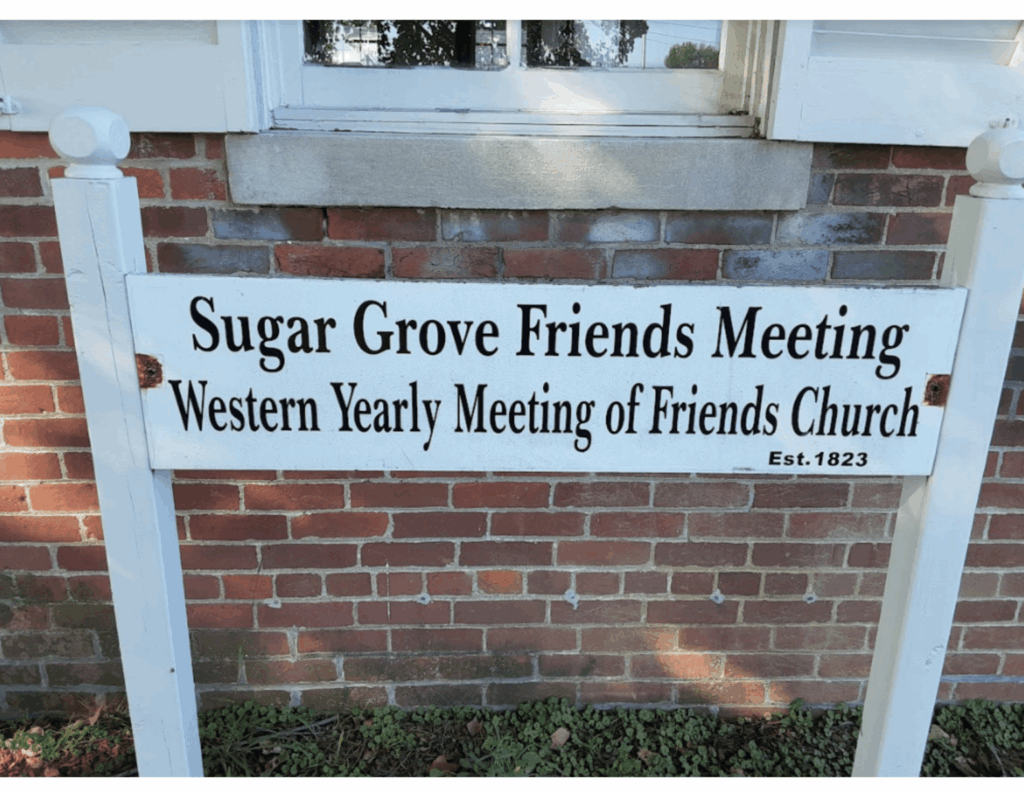
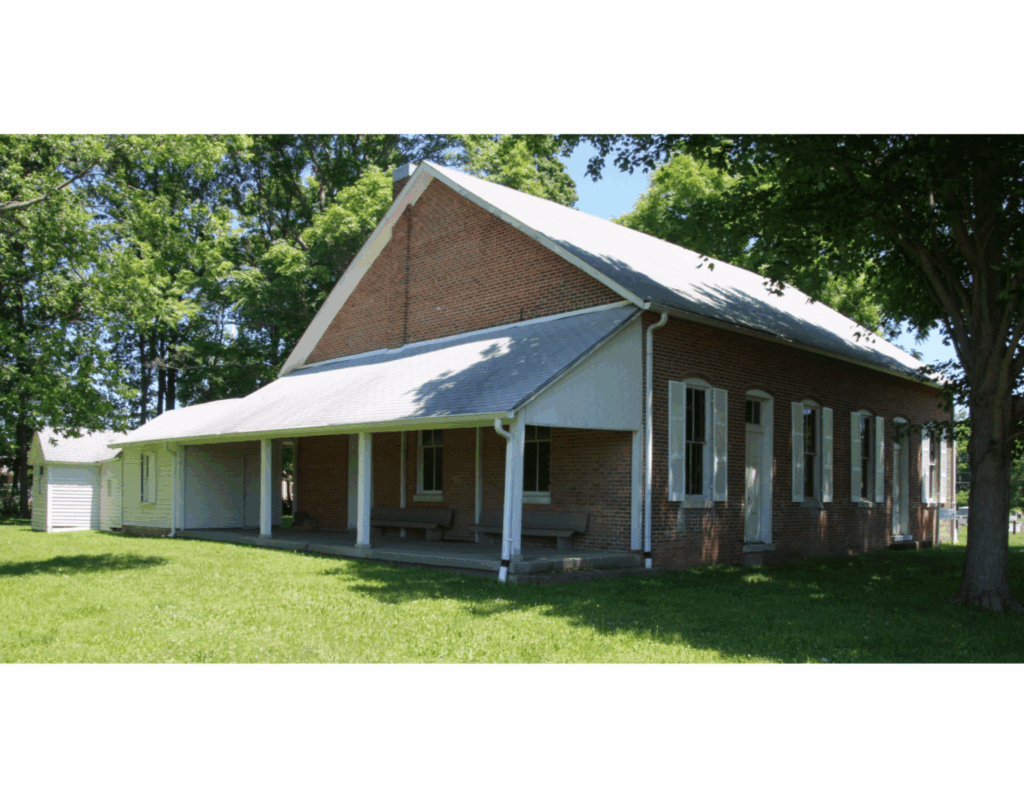
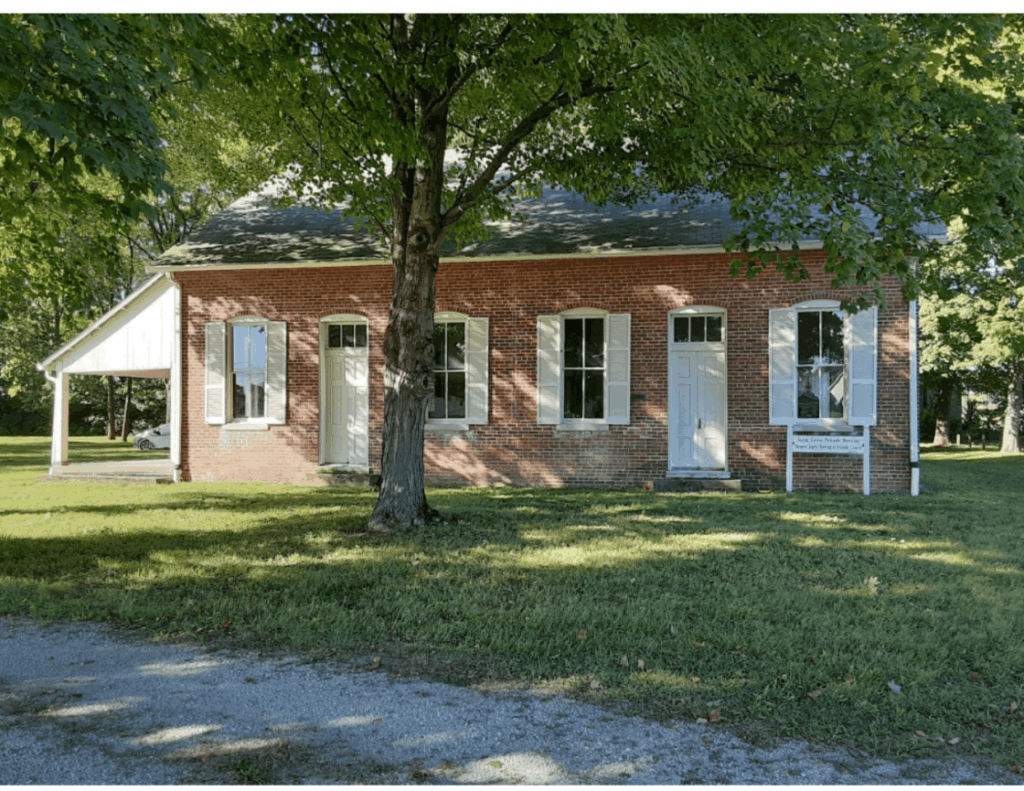
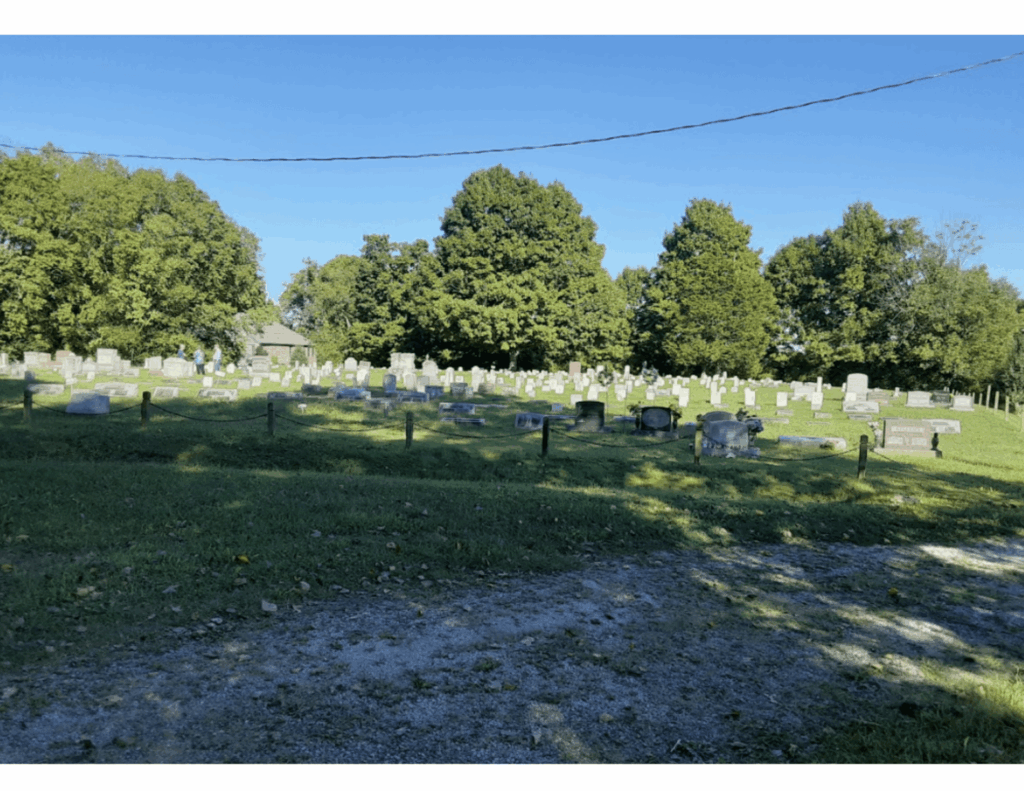
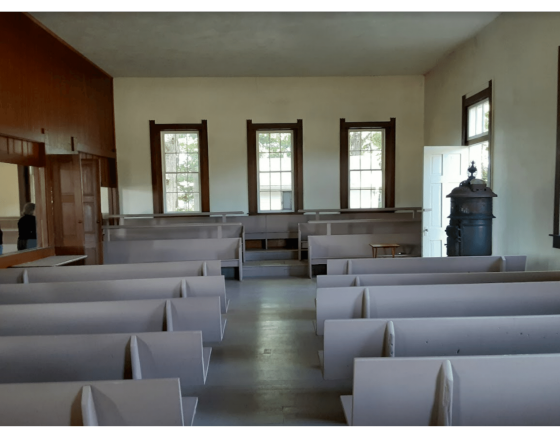
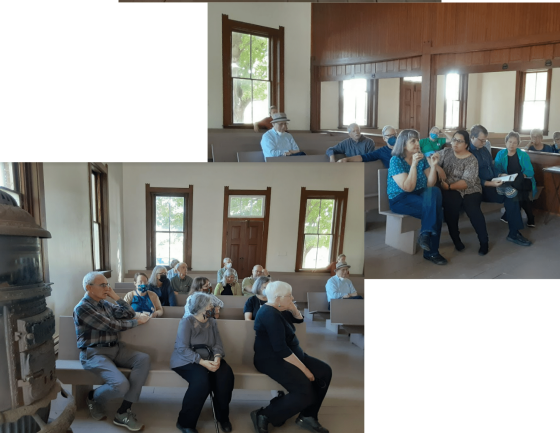
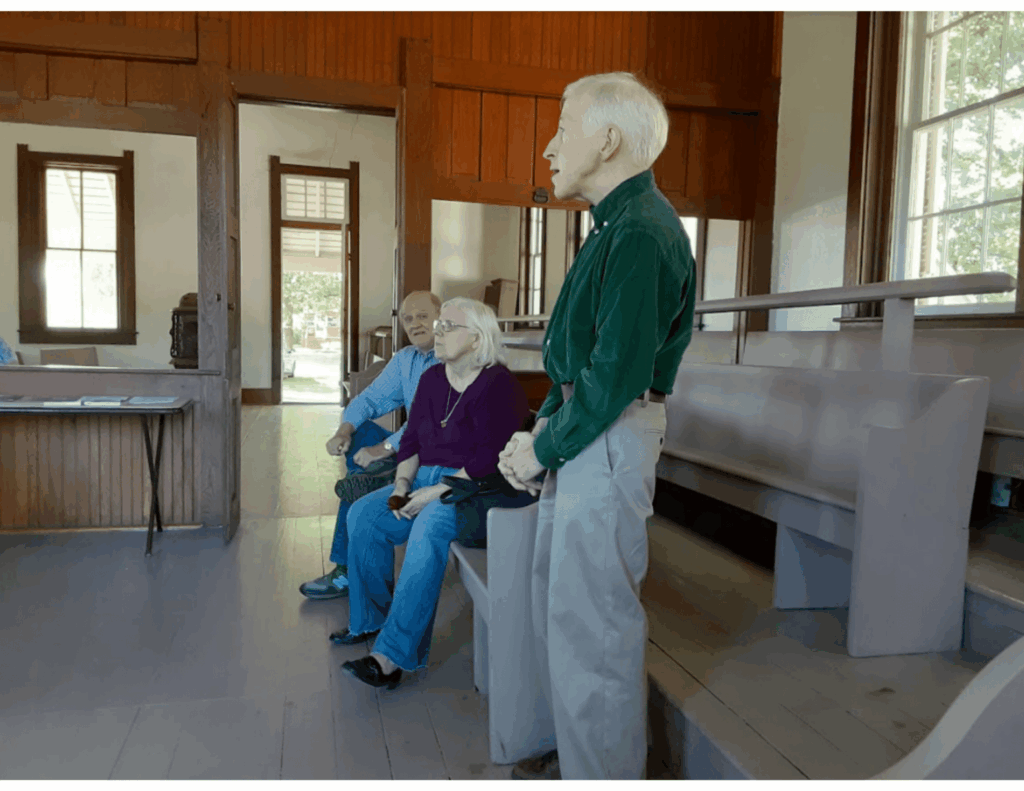
Friends visited Historic Sugar Grove Friends Meeting House in Guilford Township, Hendricks County, Indiana.

by Luanne Hagee

Friends, if there is one thing I have learned the last two and a half years is that I must be patient (near impossible for me) and that patience pays off.

It was way back in March of 2019 during the FWCC-SOA Section Meeting near Kansas City, Missouri members of the Midwest Region (Illinois YM, Indiana YM, Ohio Valley YM, Western YM, the New Association of Friends and Central YM) began a discussion of a possible event/gathering in our Region before the next Section Meeting in 2021. It was suggested that we might hold such a gathering in mid-2020 in conjunction with the annual sessions of one of our Yearly Meetings . . . and then COVID struck, but COVID could not and did not stop us from continuing conversations and planning for a Midwest Regional event/gathering. Lots of emails were sent/received and virtual gatherings were held within the Section.

In April we finally had a location and date secured along with a speaker and a field trip! David Edinger and I discussed options for lunch. In July registration opened and I saw that we had two speakers and a field trip! After I registered I began watching as Friends began to register – it was exciting to see which Friends were going to be attending and anticipating seeing them in person for the first time since the 2019 Section Meeting.

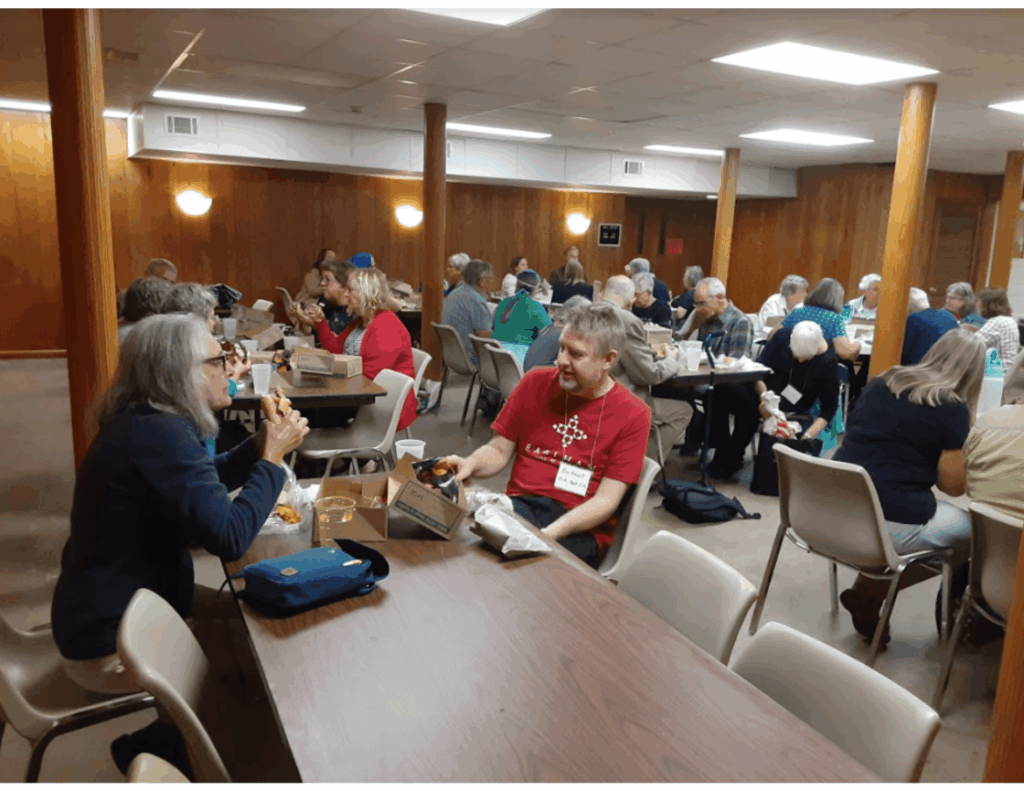
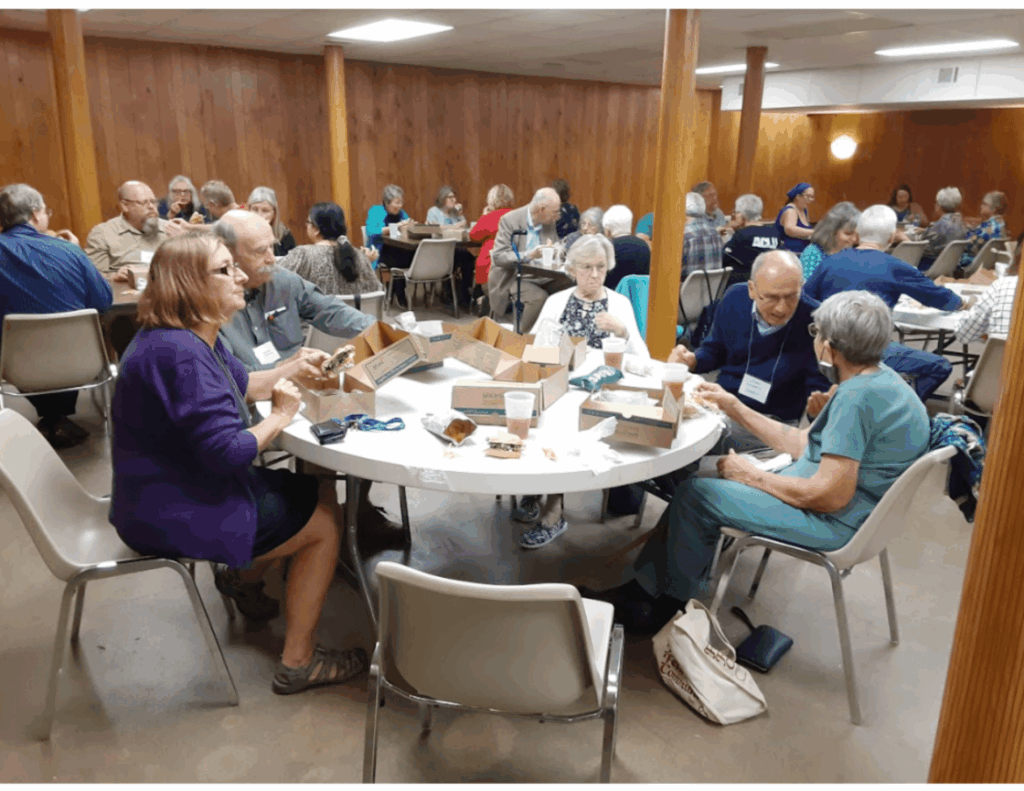
Patience finally paid off . . . and on Saturday, September 24th, 2022, in Plainfield, Indiana over 40 Friends gathered at the Plainfield Friends Meeting on U.S. 40 for the first “post COVID” hybrid FWCC-SOA gathering.

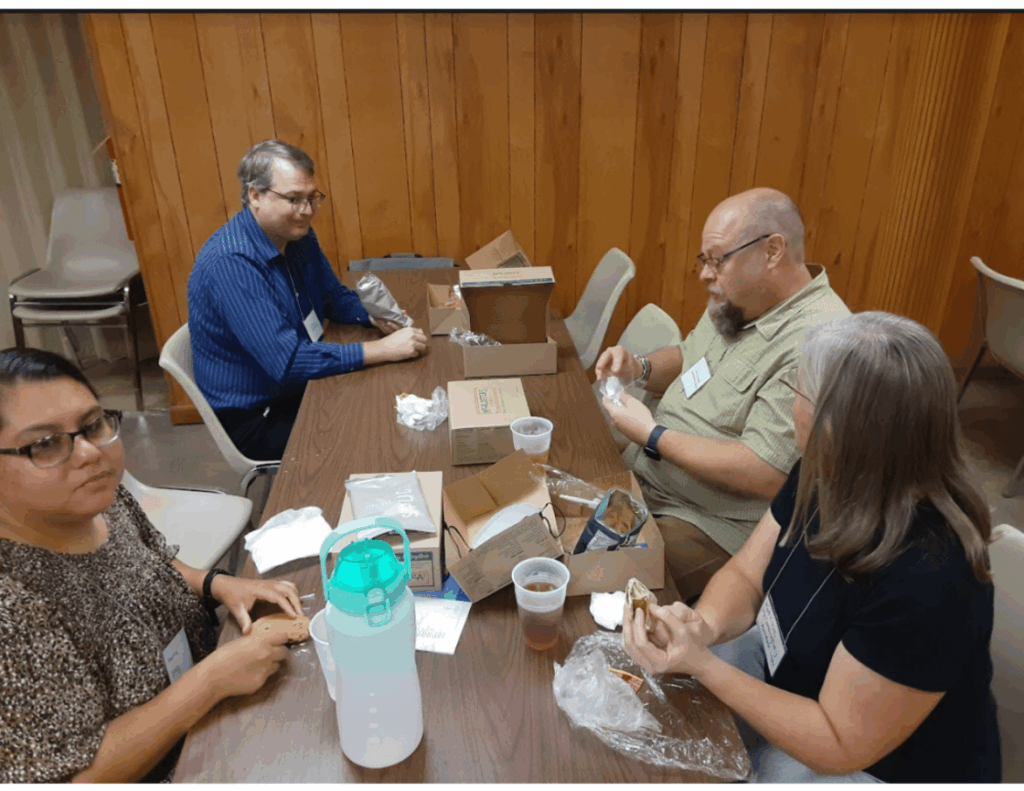
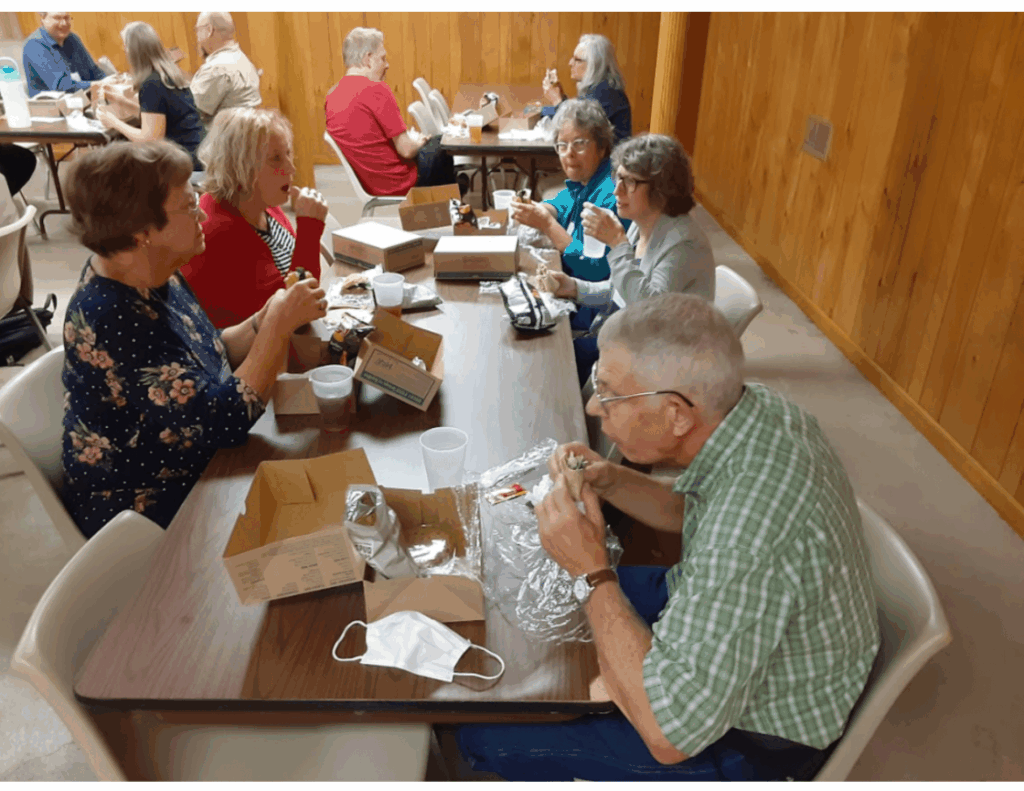
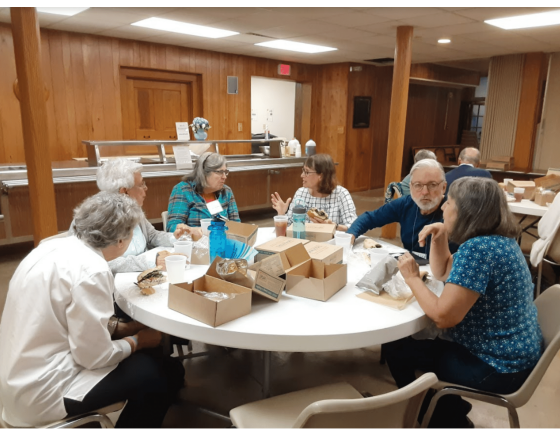
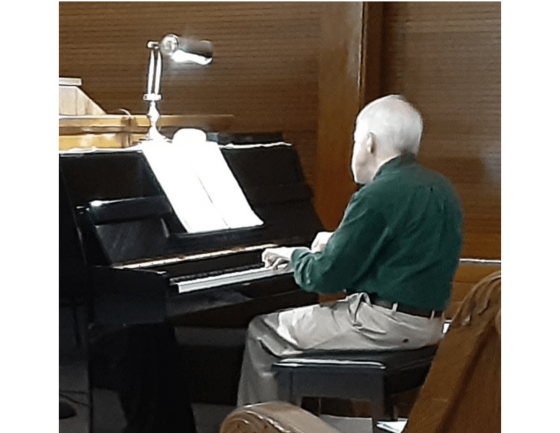
The afternoon began with a brief gathering in the Plainfield Friends Meeting Room then Friends were dismissed to the basement where a variety of box lunches from McAlister’s were available along with lemonade and ice tea. As Friends returned to the Meeting Room they were welcomed with Tom Roberts (Western YM) playing the piano. After a brief welcome to those in attendance both in the Meeting Room and virtually by our Midwest Regional Coordinator, David Edinger, Tom played a couple more tunes for us followed by a period of waiting worship.

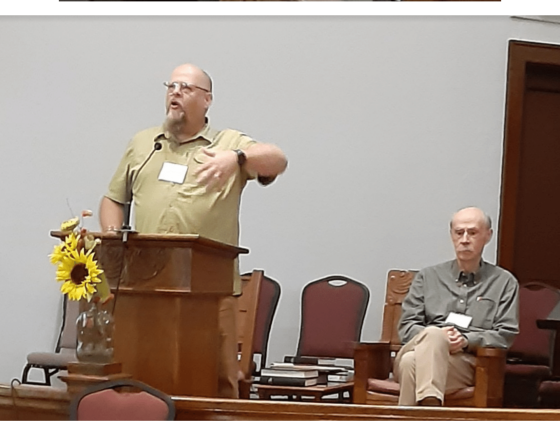
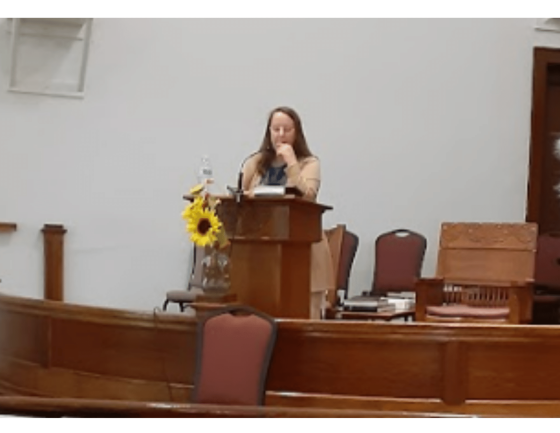
We then heard from two dynamic speakers – Shawn McConaughey, the new Western Yearly Meeting Superintendent, who had been serving on staff with Friends United Meeting in East Africa and Robin Mohr, Executive Secretary of FWCC-SOA. Shawn shared about the work he did while working on staff with Friends United Meeting serving in East Africa and Robin shared the ongoing work of FWCC around the world.

Tom Hamm, archivist at Earlham College, shared with Friends the history of the historic Sugar Grove Friends Meeting House. Sugar Grove Meeting House is currently used by local Friends for Easter Sunrise Service and a group currently meets there once a month on Sunday afternoon for worship in the manner of Friends – unprogrammed worship. The Meetinghouse still has the wooden panels that separated the men and women during Meeting for Worship. Twenty-nine Friends visited the Sugar Grove Meetinghouse where they heard a bit more about the history and how the Meetinghouse is being used today.

I enjoyed seeing so many of my FWCC Friends in person and having the opportunity to have conversations with them face-to-face and not virtually and getting a few hugs as well.

Thanks to Plainfield Friends for sharing their facilities with us, Pastor Cathy Harris, Bill Clendening and Tom Roberts for helping.

The afternoon program speakers and music were recorded and can be viewed at: FWCC Midwest Regional Gathering – 2022 – YouTube

Planning for this gathering began three and a half years ago and was over in the blink of an eye . . . but it was so worth the wait! 

A Midwest Regional Gathering
We started with lunch and fellowship
As we entered the room for presentations, Tom Roberts (Western YM) played piano
Shawn McConaughey, the new Western Yearly Meeting Superintendent, who had been serving on staff with Friends United Meeting in East Africa. Shawn shared about the work he did while working on staff with Friends United Meeting serving in East Africa.
Robin Mohr, Executive Secretary of FWCC-Americas shared the ongoing work of FWCC around the world.
Sugar Grove Meeting House is currently used by local Friends for Easter Sunrise Service and a group currently meets there once a month on Sunday afternoon for worship in the manner of Friends – unprogrammed worship.
Tom Roberts shared with Friends the history of the Sugar Grove Friends Meeting House.

FWCC-COAL Report on Working with Right Sharing of World Resources

by Karen Gregorio de Calderon, Coordinator for COAL-FWCC

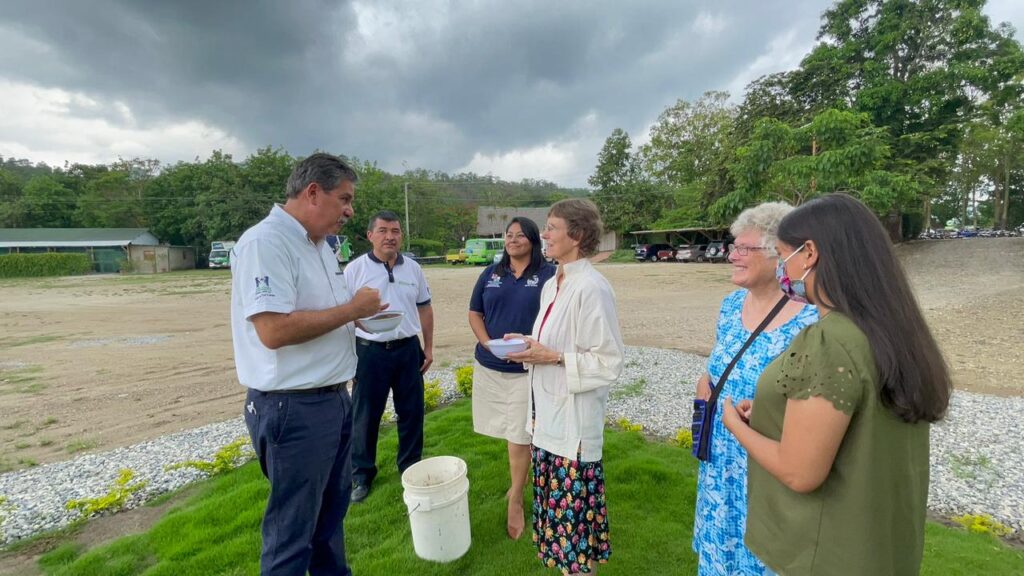
Right Sharing of World Resources (RSWR), a Quaker nonprofit, came to Guatemala from May 23-29, 2022 to investigate the potential for doing projects in Latin America and using Guatemala as a pilot project. For FWCC-COAL, it was beneficial for us to be a part of the working process for this visit because one of our objectives is to work on joint projects with a community improvement focus with Quaker organizations that wish to do this work in Latin American countries.

RSWR was for many years a program of the Friends World Committee for Consultation, but has now been an independent organization for over 20 years. RSWR works with marginalized women, offering them seed capital so that they can start their own businesses and become productive women, thus changing the lives of themselves and their families. This project would bring great benefits to the people of Guatemala. 

How would work be done in Guatemala?

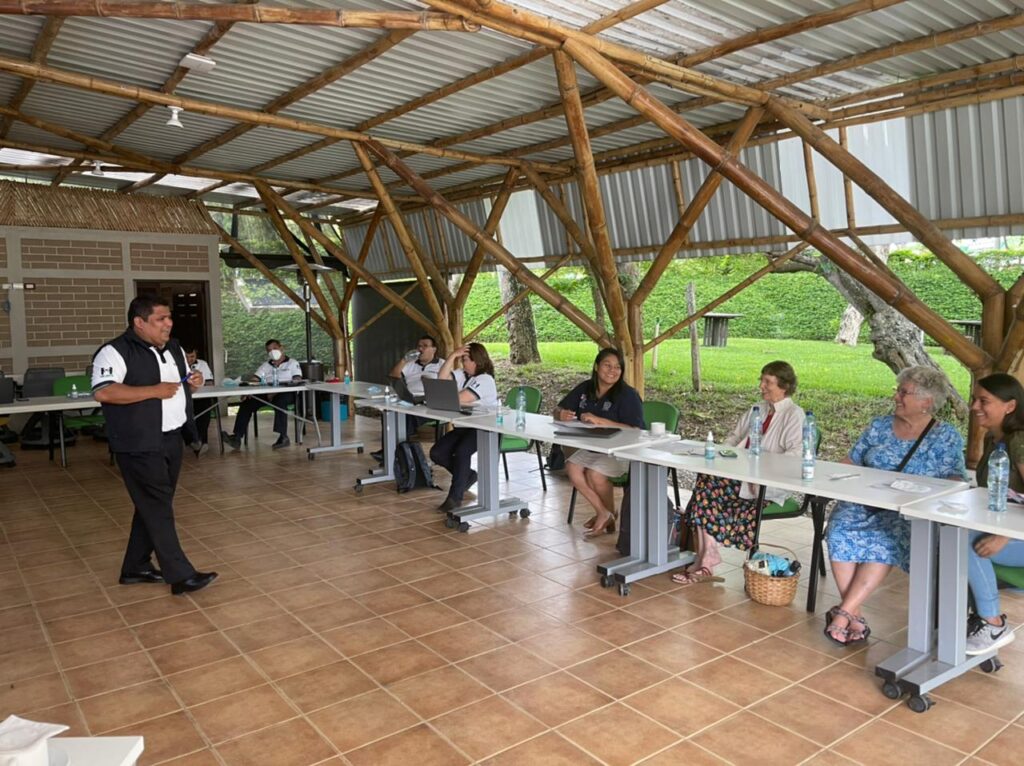
RSWR would work in conjunction with the COOSAJO Savings and Credit Cooperative located in Esquipulas, Chiquimula in eastern Guatemala. With this institution, the pilot project could be executed in the eastern region of the country. The staff of the Cooperative had the opportunity to learn who Quakers are worldwide and the work that Quakers do.
It is important to emphasize that the cooperative already carries out community work in the region with women, the pilot project would be a further development of their work. Two field technicians would be hired, who would form and train the women’s groups and accompany them in their training process, which is similar to RSWR’s work in Sierra Leone and India.

What activities were carried out during the visit?

  • Meetings with the management of the Guatemalan institution COOSAJO, to learn more about its work, its achievements and its values.
  • Meeting with the middle managers of the institution to share information about the projects and both organizations.
  • Meeting with the COOSAJO Board of Directors. We introduced FWCC and RSWR.
  • Meetings with leading employees of the institution: To learn about their testimony, their achievements and how the institution has been part of the change in their lives with the value of inclusion of women.
  • Field visits to the villages, where we were able to share with women who need to be taken into account and be benefited.
  • Meeting with young women leaders: to learn about the work COOSAJO has done with them, providing study scholarships, scholarships to study English, etc.

What did COAL-FWCC contribute during the RSWR visit to Guatemala?

  • Lodging
  • Food for two people.
  • General orientation on the region to be worked in (Statistical data and cultural information)
  • General information on Quakers in Guatemala, how they are organized and where they are most concentrated in the country and how Quakers work in this area.
  • Review of the information in PowerPoint and translation of the same, to present it in Spanish to the organization. Focus on the objectives with correct Spanish vocabulary.
  • Intervention in meetings, when it was necessary to make the idea of ​​RSWR clear.
  • Support in decision-making processes when help was required.
  • Clarification of ideas
  • Accompany RSWR in each planned meeting, to support them in these processes (with the language, with small translations, synthesize the information, etc.)
  • Lead and facilitate scheduled meetings, to obtain the necessary information from each group.
  • Work meetings (RSWR-FWCC-COAL) at the end of the day to draw conclusions and learn from each scheduled activity.
  • Coordinate and manage meetings with Quakers in the region
  • Coordinate visits to the churches in the region
  • Coordinate a visit to the largest Friends campus in the Region. National Friends Church.
  • And the most important thing is that due to the support that can be provided by COAL and the Quakers in the region, Guatemala is a potential country for RSWR to start a pilot project in Latin America and that could later be extended to other countries.

What benefit do local Quakers have with this project?

  • Job opportunity: One of the benefits is that they will be considered in the process of hiring field facilitators. In other words, when the call to hire people is launched, it will also be sent to the Quakers in the region so that they can apply.
  • Opportunity for the women of our churches: The women of our Friends Churches will also have the opportunity to be taken into account, to provide them with seed capital, according to the RSWR processes.

What did COAL achieve during the RSWR visit?

  • First, connecting the affiliated and non-affiliated yearly meetings.

During RSWR’s visit, representatives and leaders from our affiliated and unaffiliated Yearly Meetings were invited to a meeting. At the meeting, the work of FWCC, the work of COAL, the future plans and an invitation to work together were announced. In addition, the RSWR project was presented to them, as a fulfillment of the mission and objectives of FWCC, making our slogan a reality: Connecting friends, crossing cultures and changing lives. This meeting was fruitful; we were together in harmony sharing the love of God that unites us.

 Among attendees were:

  • Ambassadors Friends Monthly Meeting, represented by Susy Ramirez
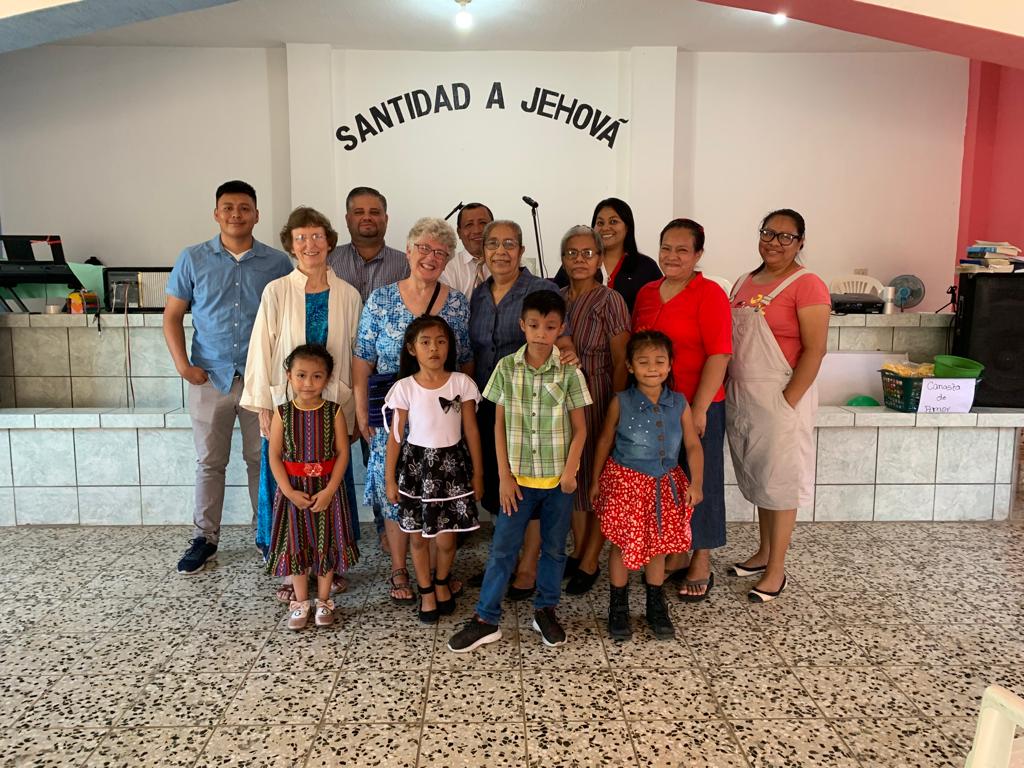
  • Holiness Friends Yearly Meeting: With the participation of two representatives to FWCC, Teresa de Hernandez and Abner Garcia. In addition, 4 women leaders from the different churches of the yearly meeting participated.
  • National Friends Church: It was represented by its president Rigoberto Vargas and by 3 more members of one of the churches. That they are also part of the Shalom Jiréh Organization, who distributed the funds that FWCC collected, for the victims of Hurricanes Eta and Iota
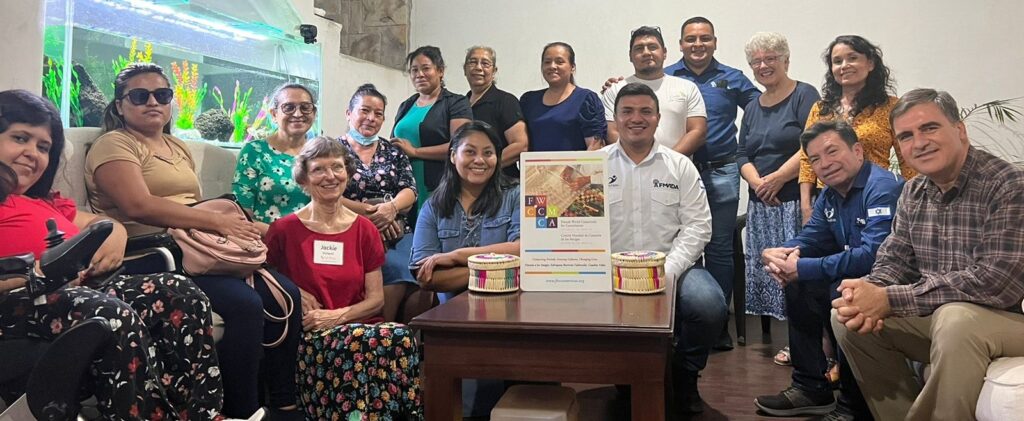
  • We also achieved the participation of two disabled women entrepreneurs, who have not been supported by other organizations.
  • Total, we achieved attendance of 16 people.

All attendees were pleased and grateful for having been invited to the meeting and expressed their desire to be taken into account in the process of this project or others that we can work together as a region and as a church through FWCC.

What potential do we have after the RSWR visit to develop other projects with the Guatemalan institution COOSAJO for the benefit of local Quakers and society in general?

  • The institution has community development programs, with established processes.
  • Provide entrepreneurship training
  • They carry out projects to take care of the environment
  • They design training processes according to the needs of the projects to be worked on.
  • Provide scholarships to people with limited resources.
  • They have an agreement with the US embassy for young people who want to study English in a free program. This with the purpose of curbing migration, since Chiquimula is a department bordering Honduras and El Salvador vulnerable to the formation of migrant caravans. There are many bilingual youth who benefited from these programs.
  • Recruit new interpreter volunteers who already have command of the English language and who serve as interpreters among the international cooperatives.

Conclusions:

  • FWCC has the opportunity to start a closer relationship with this institution and manage benefits that are possible for our Quaker community. In this way, achieve that the yearly meetings have something in common and gradually break down the communication barrier between them.
  • An important point to emphasize is that the yearly meetings are interested in working together on projects for the benefit of the community.

[Translation by Diane Zappas and Robin Mohr]

Strengthening our Community of Friends: Visit to the Yearly Meetings of Bolivia

Pastor Gualberto Torrez and his congregation in one of their churches in the Andes region.

By Karen Gregorio de Calderon, Coordinator of Latin American Programs


In the month of January, God allowed us the privilege of making a visit to the affiliated yearly meetings of Bolivia, with the objective of strengthening our community and sharing the love of God that unites us. It was a wonderful experience to be able to greet the brothers of the different congregations to share with them, in the worship services and multiple scheduled activities, in which we were able to live together in harmony, worship our Lord Jesus Christ, share our cultures and our common heritage. We thank God for this privilege and for what it will allow us to continue doing in the near future with each of the Meetings. We are sure that God will direct the plans for the growth and expansion of his work.


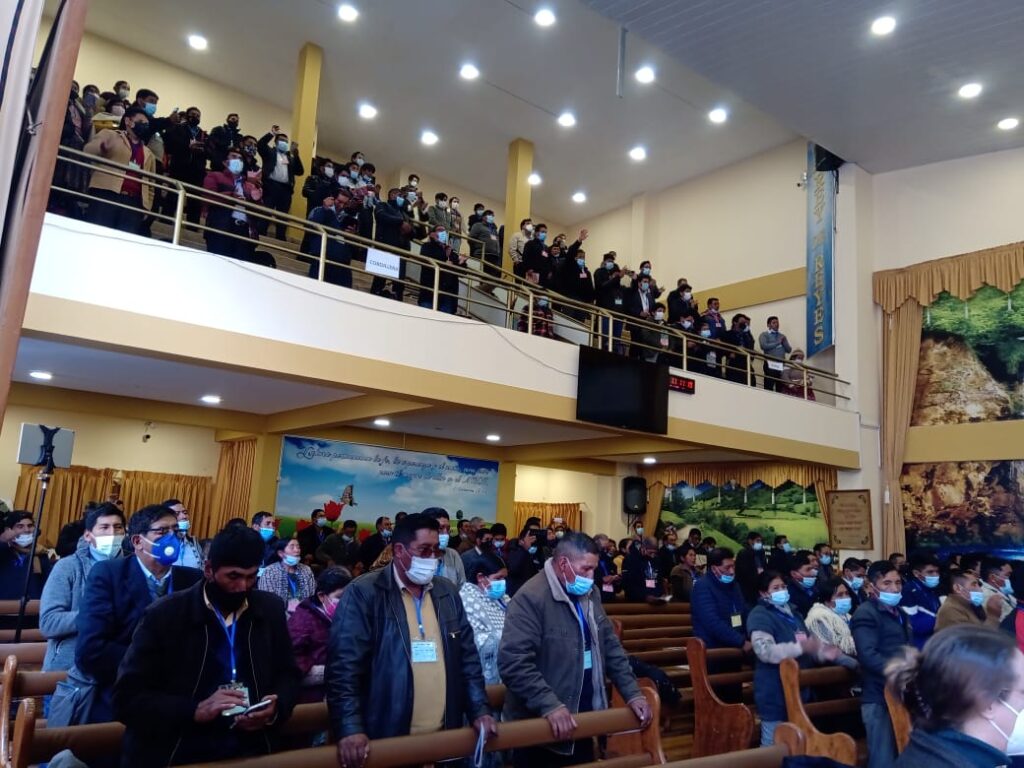
I traveled with Raúl Pérez, member of the Executive Committee of FWCC-Section of the Americas and member of El Salvador Yearly Meeting and Robin Mohr, Executive Secretary for the Section of the Americas. We had the opportunity to visit the yearly meeting annual sessions of INELA Bolivia, the Bolivian Union Friends and the Central Friends yearly meetings.


We particularly want to thank Pr. Gualberto Torrez, of the Iglesia Evangelica Union Boliviana Amigos for his support and taking us to visit some of the rural churches of their yearly meeting.
We also had the opportunity to visit with Friends of Central Yearly Meeting. It was a blessing to share the message of God’s word and participate in the worship services. We thank its president Armando Mamani and the Congregation for the organization of the activities and their development.

Raúl Pérez, member of El Salvador Yearly Meeting and member of the Executive Committee of FWCC Americas, shared the experience of Central American yearly meetings with missionary work in Nicaragua and Cambodia.
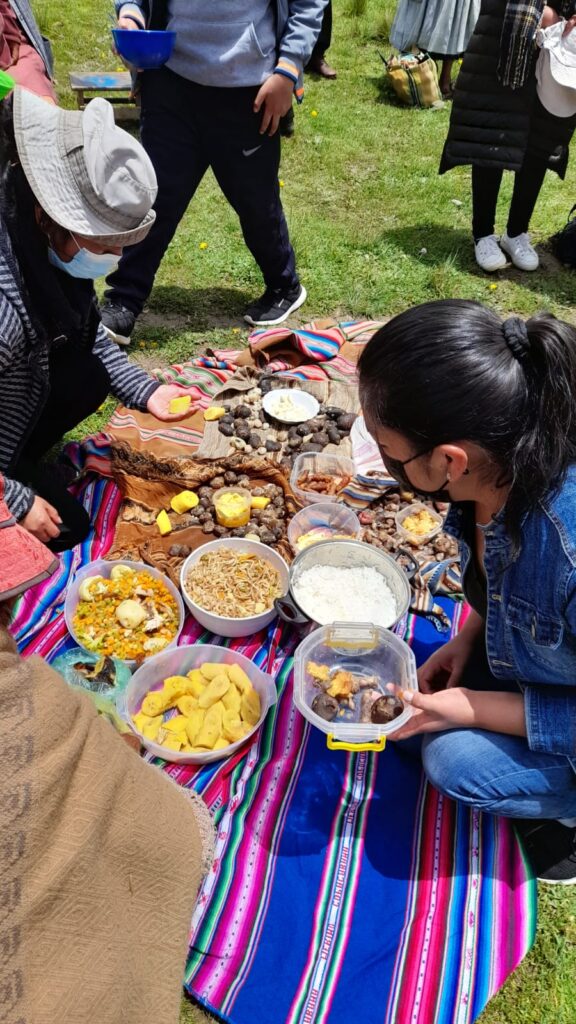
In the Aymara culture, “Apthapi” is the name of the Aymara celebration in which food and knowledge are shared. It is derived from the verb apthapiña, which means to bring. The celebration attendees bring food to share with the group. We thank the sisters of Unión Boliviana and their churches in the Andes region for this wonderful experience.
Attendees at the INELA Bolivia Yearly Meeting.
Sharing experiences with Northwest YM Friends: Daniel Cammack, David Thomas, Roy Lujan, Ken Comfort.
Sharing with the leaders of the Amigos Central Yearly Meeting, at the Villa Victoria church.
Sharing with: Edwin and María Girón. They were also part of a panel presentation about modern approaches to missionary work.
Visit to Escobar-Uria Friends Church
Pleasant moments with the sisters of UFINELA. (INELA Women’s Union) during lunch, during the activities of the yearly meeting.
With the South American members of the Traveling Ministry Corps In the first row: Jhoana Ramos (INELA Peru), Robin Mohr (Executive Secretary of CMCA) Karen Gregorio de Calderón (Coordinator for Latin America of CMCA-COAL) Carmen Rosa Paye (Bolivian Friends Union) In the back row: Jhimmy Roque (INELA Bolivia) and Juan Daniel Mamani (INELA Bolivia). Thank you for your service to our community of Friends!
Youth Leadership of Bolivian Friends: One of the main objectives of the visit to Bolivia was to share with the young leaders of the affiliated meetings. We were able to meet and share with around 25 young people from Amigos Central, Unión Boliviana Amigos and INELA Bolivia. We had the opportunity to share the vision and mission of FWCC, future plans and projects, and share ideas of plans that we can work on together.
The FWCC-COAL deeply thanks the local arrangements committee, who did an excellent job coordinating travel to the different Annual Meeting. They include: Jhoana Ramos, member of the Section’s Nominating Committee, (INELA Peru), Milena Villca, FWCC Executive Committee (Union Boliviana Amigos), Carmen Rosa Paye, (Bolivian Friends Union), Timoteo Choque and family (INELA-Bolivia), Agustina Callejas and family, (INELA Bolivia) Ruben Maydana (INELA Bolivia), and Florentino Ramos and family (INELA Peru). We appreciate and value their support.