Hymn Contest Entries

We are deeply grateful for the many heartfelt entries we received for our hymn contest. Each song reflected a deep faith and sincere devotion, reminding us of the light and love that inspire our Quaker community around the world.

This year’s winning hymn comes from Sandra Elizabeth Espinoza of El Salvador, whose words and music beautifully capture the heart of Quaker worship. In her reflection on the song, Sandra shared that Quakers “worship modestly in silence, believing that God is with us and listens to us. The truth is not in vain words but in what comes from our hearts sincerely.” She described her hymn as expressing “a life guided by God and accompanied by peace, love, and steadfastness, and by committed action without hatred.”

Sandra composed the music through prayer and inspiration, giving thanks to God for the privilege of participating. Her work reminds us that the Spirit continues to speak through song, calling us to peace, humility, and service.

Congratulations to Sandra and to all who shared their gifts in this joyful celebration of faith and creativity.

Enjoy the videos of each of our hymn entries below:

Voices of Young Adult Friends

image9-2-e1761592508307

Hazel Guindon (Monteverde Friends Meeting) – Monteverde, Costa Rica

As we continue learning how to expand as a faith community while including all voices, I want to express my deep appreciation for all the work being done—both locally and globally—to keep our diverse Quaker community alive.

Currently, I am on Vancouver Island, worshiping with friends near Duncan, where acknowledgment of the broader Quaker practice and FWCC was mentioned on World Quaker Day. That same weekend, I had a video call with Neyda from Bolivia and Fernanda from México, which inspired me to write a short article. I hope it encourages them to write about their own experiences, and I would be very curious to learn more about their perspectives on Quaker life. I ended up submitting a publication to Friends Journal, as Renzo has been motivating us to share our work in the journal’s Latin American part. 

I also want to express my heartfelt gratitude for FWCC, especially the gathering in Arizona. I learned so much from that experience, and it has shaped the way I hope to approach future Quaker experiences. I feel deeply honored to be part of a non-programmed Quaker practice within the Latin American section. I admire how our meeting is growing, and I’m profoundly grateful we are part of a global network.

Thank you, truly, for all that you do!

With love and peace,

Hazel

Meg Cody (North Pacific Yearly Meeting) – Portland, Oregon

I wonder how the trials of young adulthood have changed over the decades. I find it hard to believe the current state of society is all that novel—there have been countless economic crises, wars, and billows of hatred rising up throughout the centuries. Have things really changed all that much? Is this really the “most difficult” time for young adults?

While these questions frenzy my mind over whether the world has always been on fire, it doesn’t negate the urgency I feel at present to find a way to make the world a better place.

I was spread so thin over the past year with responsibilities that moving with a quickness drowned out the small, still voice of Spirit. It was so easy to get caught up in the whirlwind of opportunity, something which I find so challenging to navigate at this point in my life. I feel the surmounting pressure to balance my faith, career, and personal life—a ceaseless discernment of how to experience a connection with Spirit as I consider what it means to live a holy life.

It’s not Spirit that asks me to make money and pay my bills—that urging stems from my choosing to live in a capitalist society. But how I meet that end can be filled with Spirit.

I’m grateful to know I’m not alone in my struggle to navigate life’s many crossroads as I commiserate with other Quakers my age. Uplifting this community offers me comfort as I navigate endemic polarization between what I believe to be right and wrong, just and unjust. I’ve turned my efforts towards encouraging and empowering young adult friends in my monthly and yearly meetings, and am now led to forge a path for North and Latin American young adults to connect. And while I’ve encountered little resistance from the community in all of these endeavors, I find the challenge lies within myself.

It was an honor to be a part of planning opportunities for North and Latin American Friends to connect with one another. In this great, big, overwhelming world, it’s comforting to know there are Quakers everywhere showing up for that of God in everything. I feel my worries ease as more and more spaces for young adults to connect open across our section.

I’m stumbling along as I learn more about the cultural differences I have with Latin American friends. I’m embarrassed with every faux pas I make and grow frustrated with myself for not being more considerate. How dare I not know what I don’t know?

I turn these frustrations towards Spirit and recognize how I’m being led. I might walk along the path clumsily, but I continue to move towards Spirit’s light.

Spirit’s light is shining on a small and mighty group of young adults who are determined to build the future for young adult Friends as way opens. The first of four virtual gatherings was held on September 6th to facilitate introductions between young adults in the Section of the Americas. While it wasn’t a smooth planning process or program, it was filled with Spirit and opportunity. I’m excited to see how each event grows and changes from previous ones, and even more enthused about what might come of these connections.

The next events will occur on the first Saturdays of December, March, and June. Please share this opportunity widely! A registration form for December will be shared in the coming months.

Meg

“As Way Opens” Now Available!

“When the path ahead suddenly clears, will you be ready to step forward?”

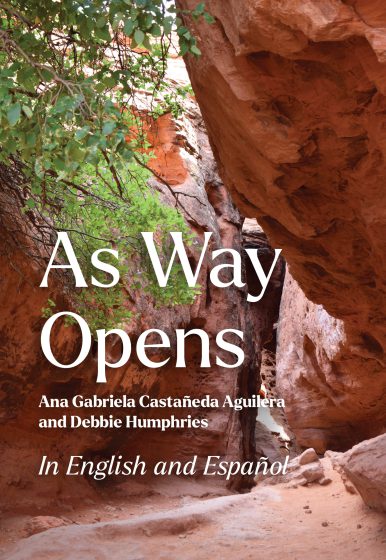
We are pleased to announce the publication of As Way Opens, a new collection of spiritual reflections born out of the FWCC Section of the Americas meeting in Scottsdale, Arizona, March 2025. This book is the first product of our newly formed partnership with Barclay Press, working together to bring Quaker voices into greater circulation.

What is "As Way Opens?"

In these talks — given by Ana Gabriela Castañeda Aguilera and Debbie Humphries — two Quaker-rooted voices invite us into deeper reflection on “way opening” moments. They share stories and insights about listening, discerning, and preparing for times when the Spirit invites us to act. Through their wisdom we are reminded that preparation is not passive waiting, but an ongoing cultivation of courage, clarity, and openness.

As the back cover describes:

We believe this work will speak to Friends and seekers alike — to those who reflect on times of transition, pivot, or call, and to those longing for guidance on how to walk faithfully when the path ahead is uncertain.

How donors can receive a copy

Because this is a special publication, we are making As Way Opens available as a thank-you gift to those who support FWCC with a donation of US $50 or more. Donors at or above that level will receive a mailed copy of the book, along with a note of thanks and our hopes that it will serve as spiritual support in their journey.

If you are interested in receiving a copy through your donation, please click the button below.

Young Adult Friends Section Meeting Retreat Report

Young Adult Friends (YAFs, ages 18-35) serve a vital role in the health of the Quaker community. They carry the weighty responsibility of the future of Quakerism. They provide a bridge for Junior Friends to step into the larger Meeting. They bring energy and vibrance to gatherings. They steward what it means to be a Quaker.

Hosting opportunities for YAFs to be with one another builds a collective identity of Quakerism for this generation and becomes a foundation for what Quakerism will become. It also offers YAFs opportunities to engage with people going through similar experiences and learn to navigate those challenges from a place of inner light.

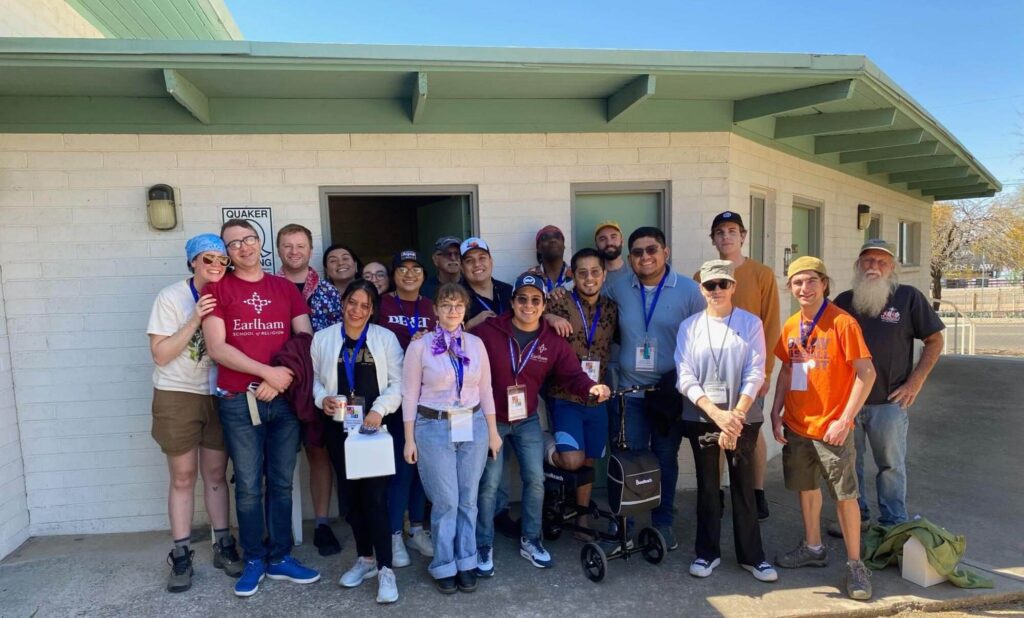
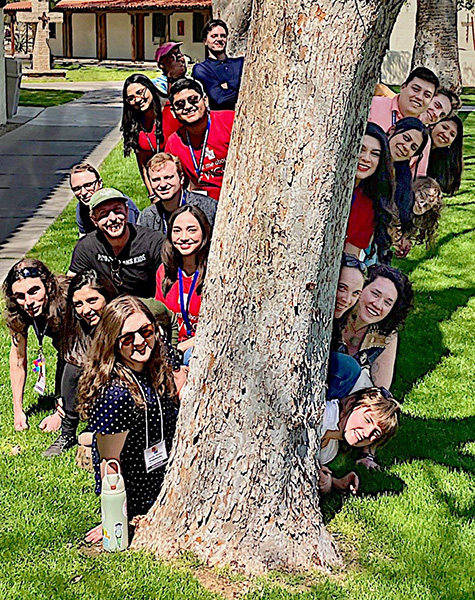
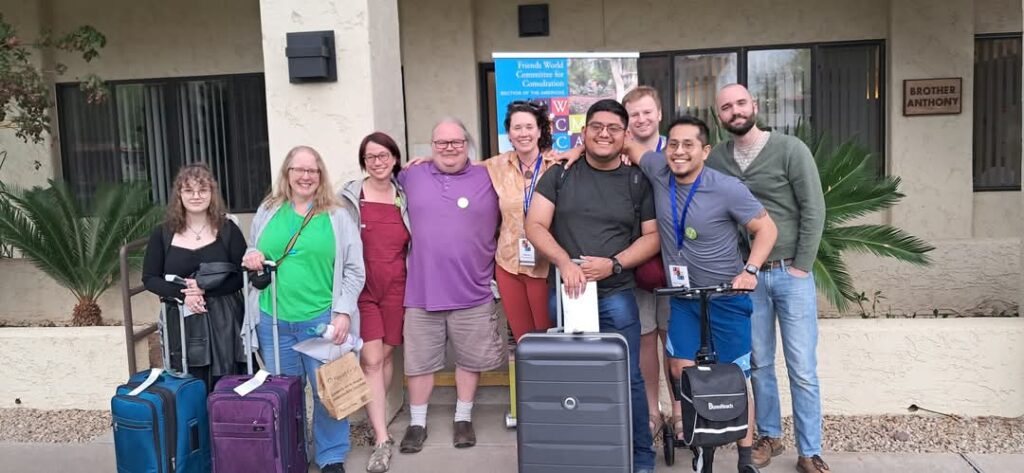
YAFs from across the Section of the Americas (SOA) were blessed with a unique and historic opportunity which was made possible by the Friends World Committee for Consultation (FWCC). In March, 18 YAFs from Canada, the United States, Mexico, Guatemala, El Salvador, Costa Rica, Peru, and Bolivia gathered in Scottsdale, Arizona for three days leading up to the SOA Annual Section Meeting. This gathering was the first of its kind, and was inspired by the spirit of connection sparked at the YAF Gathering prior to the World Plenary last August. It marked a powerful moment of cross-cultural fellowship and spiritual deepening among young Friends.

YAFs were grounded in their shared belief of honoring the light within each of us while celebrating the unique facets of our local, regional, and national expressions of our faith. The first activity together was to establish the following intentions to aid the navigation of this diversity.

  • To learn and respect the differences between our cultures and worship / Para aprender y respetar las diferencias entre nuestras culturas y adoración
  • Speak on behalf of yourself – use ‘I’ statements / Habla en nombre de ti mismo – usa declaraciones ‘Yo’
  • Seek unity in our diversity / Buscar unidad en nuestra diversidad
  • We’re learning from God through each other / Estamos aprendiendo de Dios el uno a través del otro
  • Every experience is unique and valued / Cada experiencia es única y valorada
  • Enjoy being in each other’s presence / Disfruta de estar en presencia del otro
  • In building trust with one another, we learn how to share our light / Al construir confianza entre nosotros, aprendemos a compartir nuestra luz

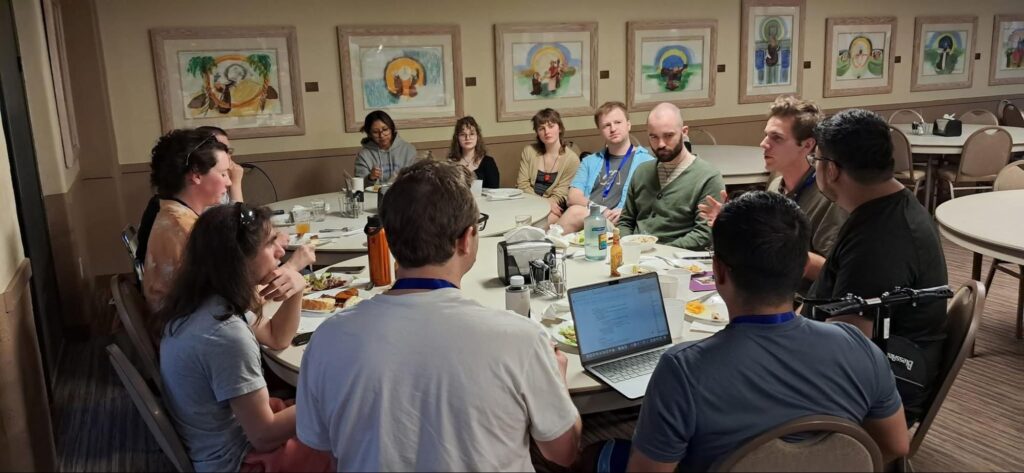
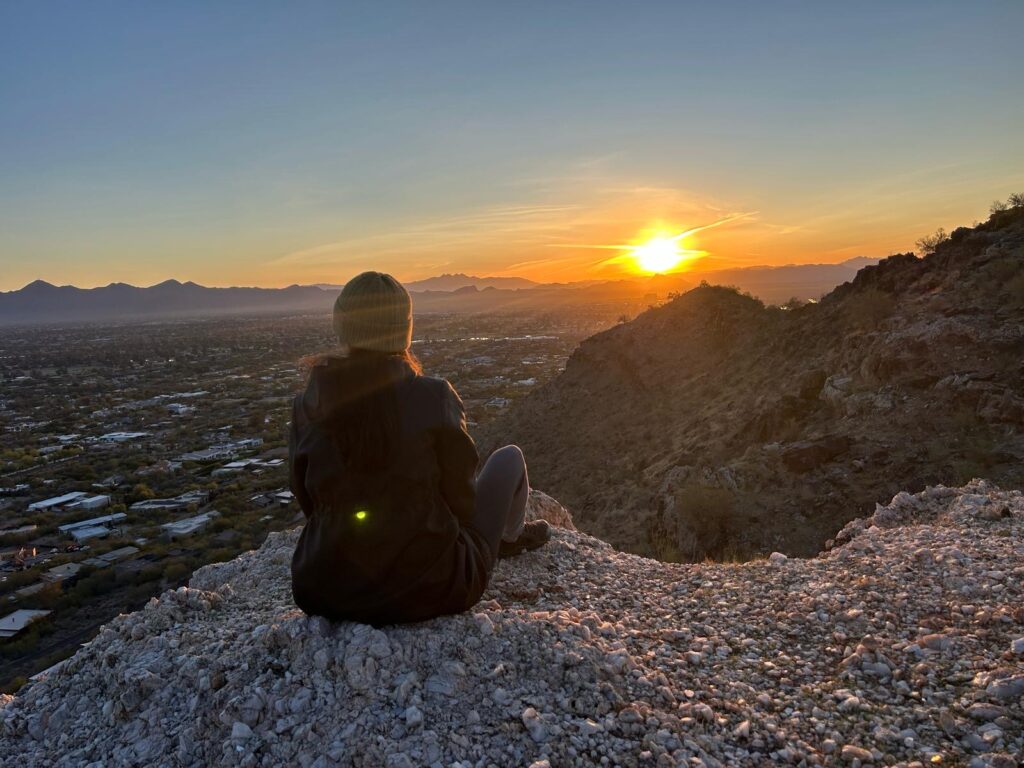
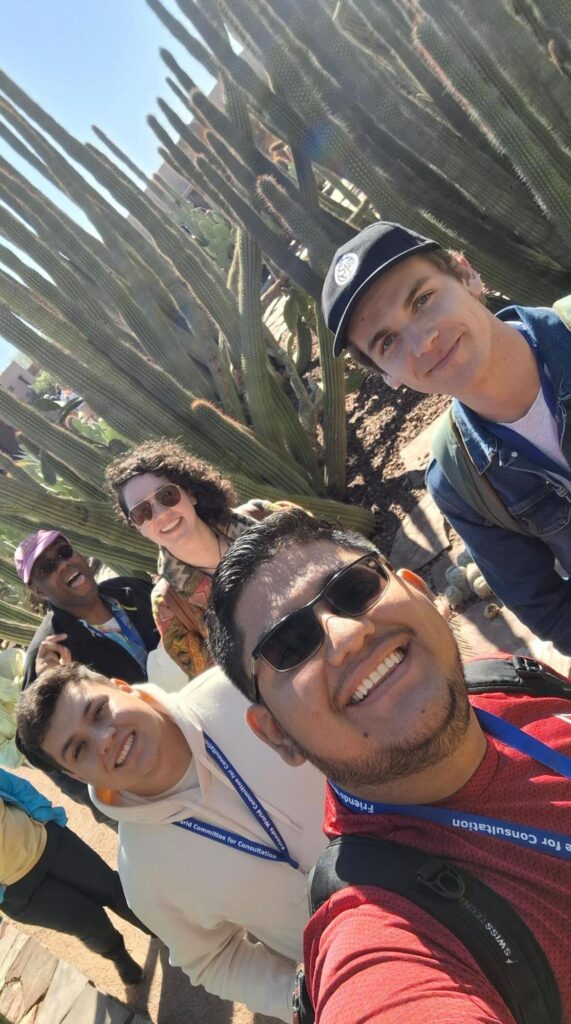
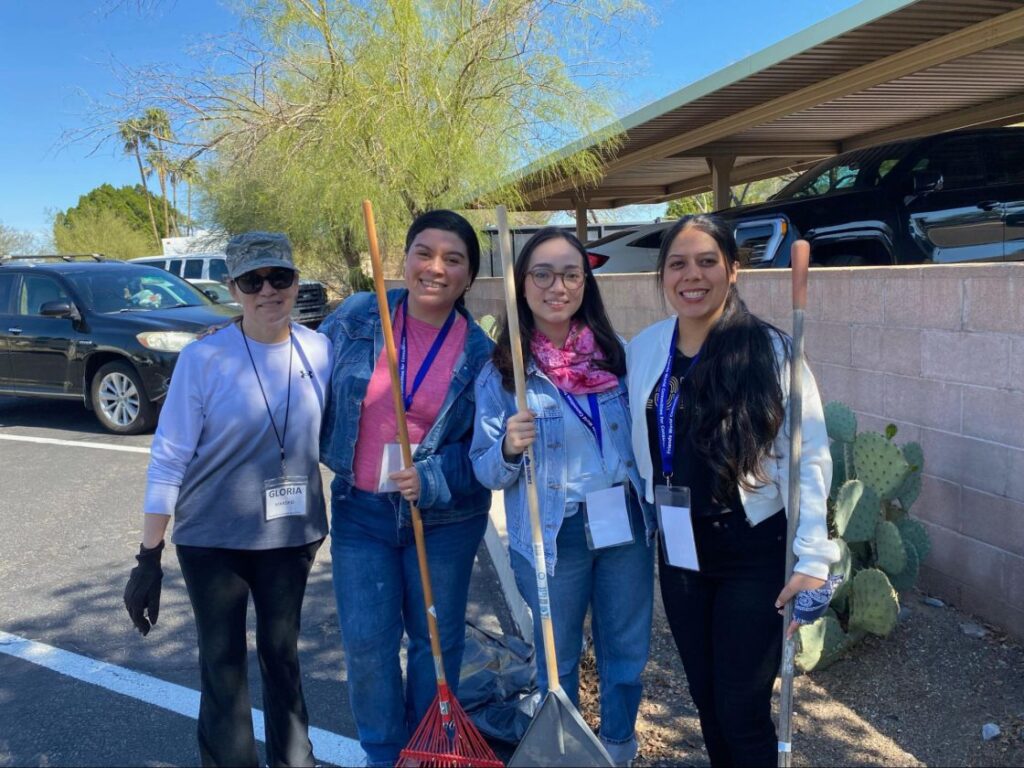
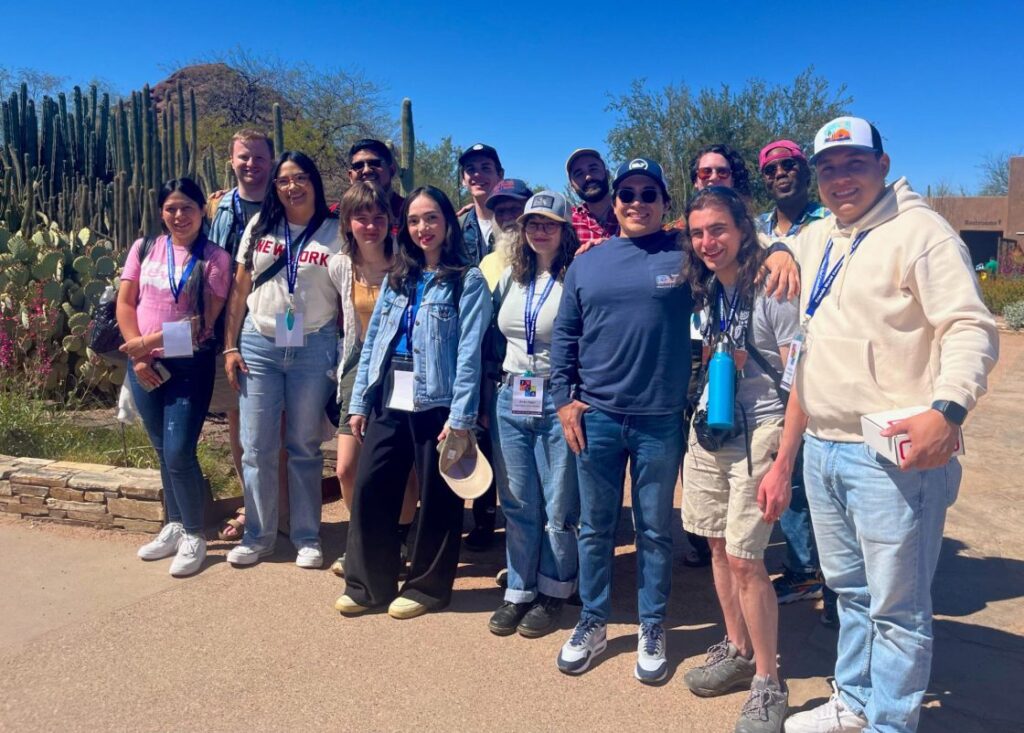
YAFs deepened their spiritual bonds through a rich tapestry of shared experiences. Throughout the gathering, YAFs stepped into roles of leadership by guiding workshops, facilitating worship, and greeting the day together on peaceful sunrise hikes. A memorable excursion to the Desert Botanical Garden, led by two gracious friends from Phoenix Monthly Meeting, offered a space for reflection and connection with the natural world. With open hearts and willing hands, YAFs also gave back to the Phoenix Meeting community, providing much-needed yard care for its smaller, aging congregation. YAFs led the entire community in worship on the final day of the Section Meeting—an experience many described as spiritually moving and left a lasting impression on all who were present.

What young Friends do now shapes the future of Quakerism. Opportunities for YAFs to connect amongst themselves are crucial for the discernment of their identity and emboldens the brilliance of Quakerism for generations to come. This event is just one instance of the commitment that FWCC has in supporting YAFs around the world to honor their presence, engagement, and visibility.

Inspired by the depth of connection and shared spirit they experienced, YAFs left the gathering with a renewed commitment to strengthening their bonds and expanding their presence within the wider Quaker community across the Section of the Americas. While this may have been the first event of its kind, it is clear it will not be the last. The seeds planted in Scottsdale are already taking root, and are nurturing a growing movement of young Friends ready to walk together in faith, friendship, and service.

Meg Cody

Loving our Neighbours across the 49th Parallel: Conversation with Friends across our Common Border

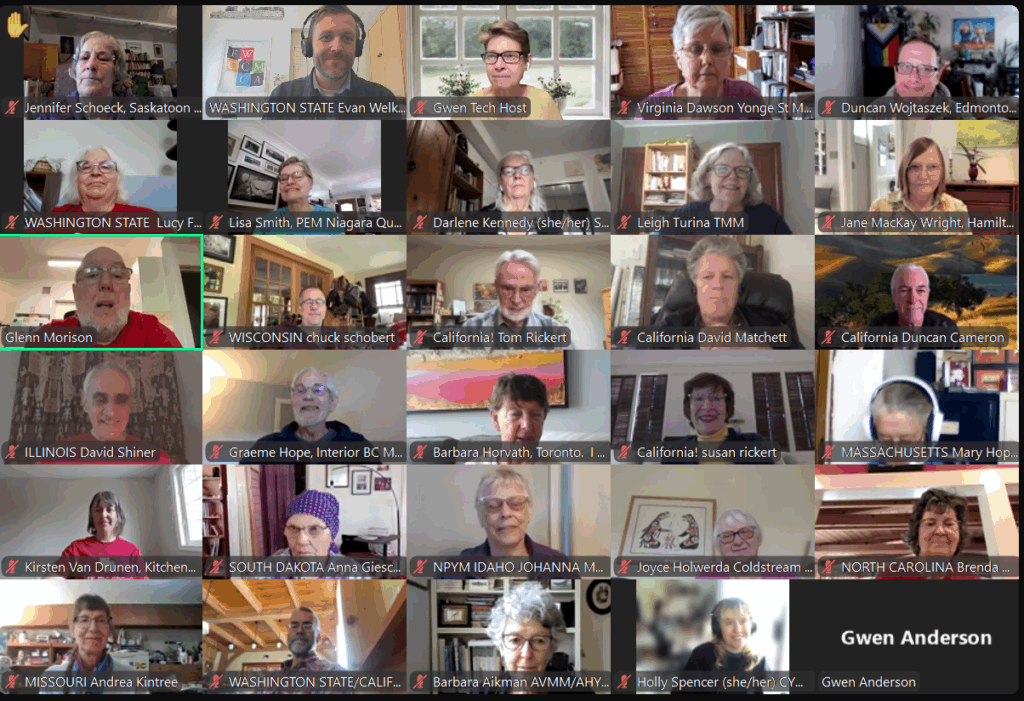
As a part of Canadian Yearly Meeting sessions, Glenn Morison of Winnipeg Monthly Meeting and Co-Clerk of the Representative Engagement Program Group of the Friends World Committee for Consultation, Section of the Americas, organized an online Special Interest Group on June 13, 2025 called:

Loving our Neighbours across the 49th Parallel: Conversation with Friends across our Common Border

After a Welcome from Glenn and an explanation of the gathering by Glenn, Evan Welkin, FWCC Americas Executive Secretary (North Pacific Yearly Meeting), offered a reflection on the work of FWCC to build bridges and cross cultures among Friends, including through the initiative of World Quaker Day which takes place the 1st Sunday of October every year. This year, October 5, 2025, World Quaker Day’s theme is on Galatians 5:14: “Love your neighbour as yourself” There are resources to host WQD events in your meeting here and a further reflection from FWCC General Secretary Tim Gee on the theme here in this month’s issue of Friends Journal.

Glenn Morison then shared a bit more about his motivation for hosting this event as a frequent traveler to and from the United States from Canada, and how the current political situation has deeply affected him. He referenced an experience at the recent FWCC Section of the Americas meeting in which he felt called to minister about the relationship between the US and Canada and an Executive Committee member from FWCC said a delegation might come to Canadian Yearly Meeting to speak to this concern. 

Chuck Schobert, a Friend from Madison, Wisconsin and member of the FWCC Americas Executive Committee, spoke about his experience of making apologies as a US citizen travelling abroad, and offered his apologies to those gathered during the gathering. He spoke of the need to resist unjust policies and also of reaching out directly to offer a different message.

After some Introduction of queries for consideration in our breakout rooms, Friends divided into mixed groups with US and Canadians to consider: 

  • What is your name, where do you live and what is your special interest in being here?
  • Given the reality that Canada – USA relations are the worst they have been since the Pig War of 1859, what is on your heart? What are your fears and hopes? How does this impact you at your deepest levels? 
  • On both sides of the border there have been people who have reported that the current climate has impacted the usual relations between Friends who tend towards a quietest approach and those who lean towards a more activist expression in their life and meeting. Is your meeting impacted by the current political climate? If so, in which ways? And how can we uphold one another in such a situation?  
  • Considering the strained relations between Canada and the USA, what are your thoughts, fears, and hopes? Kazu Haga, a practitioner of Kingian Nonviolence and restorative justice, reminds us that “human beings are not the problem. It is the actions we take, shaped by our life experiences, which are influenced by our culture and larger systems beyond our control. We need to fight the structures and mechanisms that perpetuate harm. To change them, we must understand individual stories and the systems influencing them.” How can we listen to our neighbours’ stories and understand the systems that affect them? 
  • bell hooks, a feminist teacher and theorist, states, “beloved community is formed not by eradicating differences, but by affirming them, by each of us claiming the identities and cultural legacies that shape who we are and how we live in the world.” How can we work towards creating a beloved community in our daily lives? 

We closed the gathering with some brief reflections on the experience and an overall sense of thanks for the opportunity to have the conversation. 

Building the Future as Way Opens: Reflecting on our 2025 Section Meeting

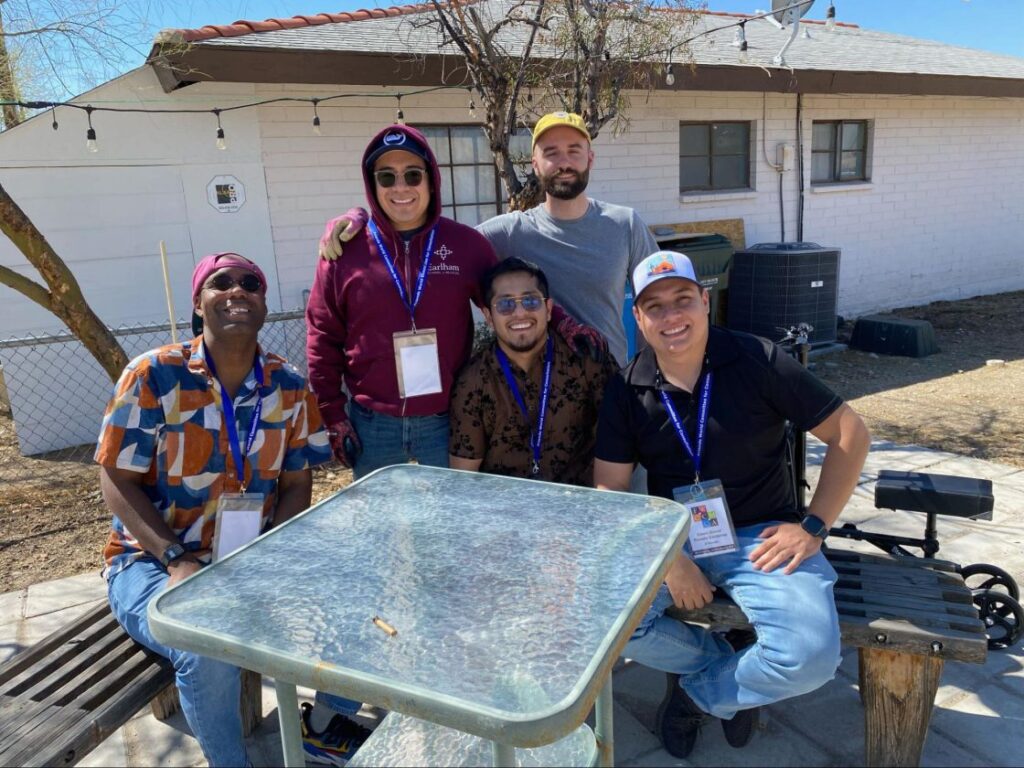
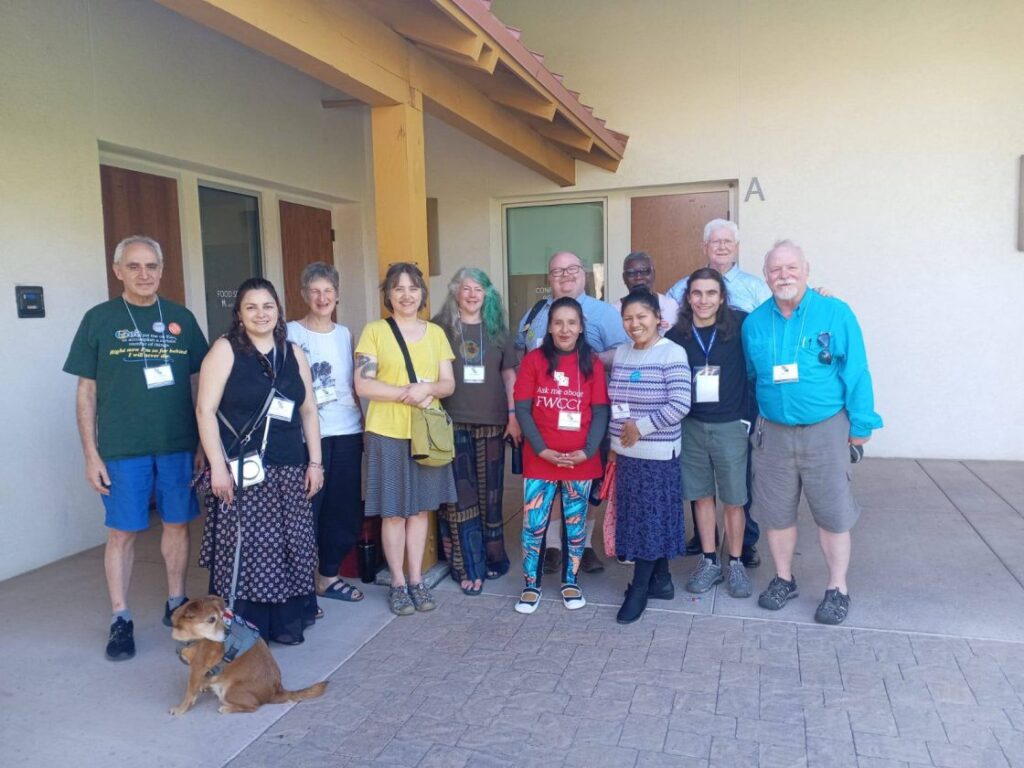
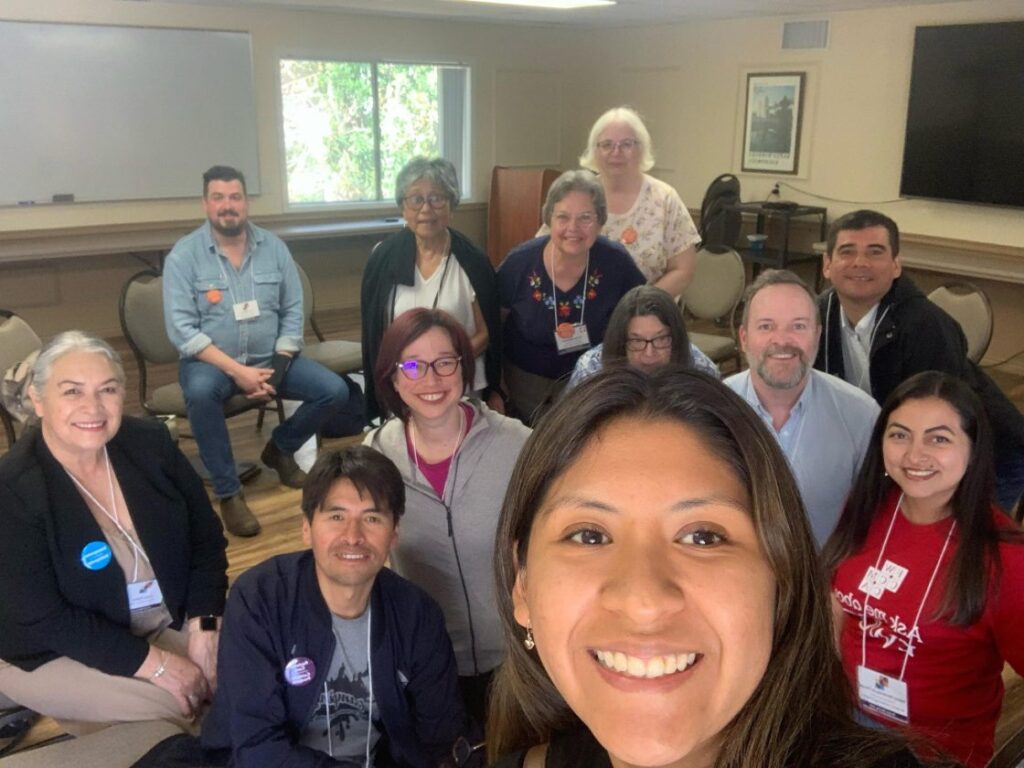
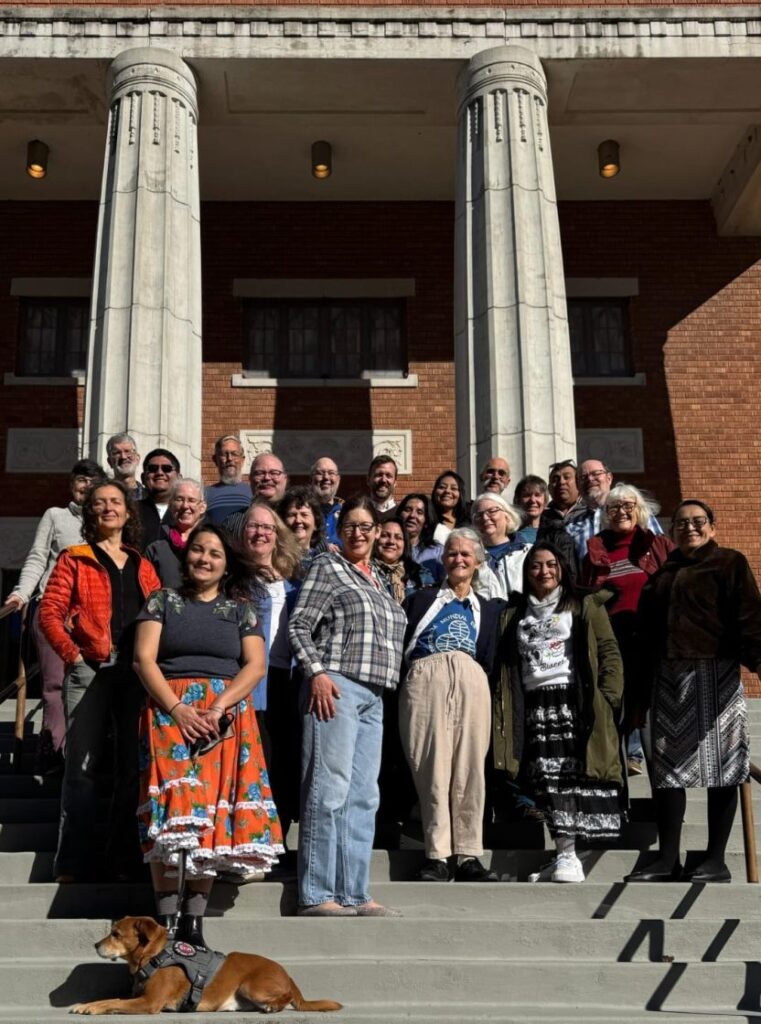
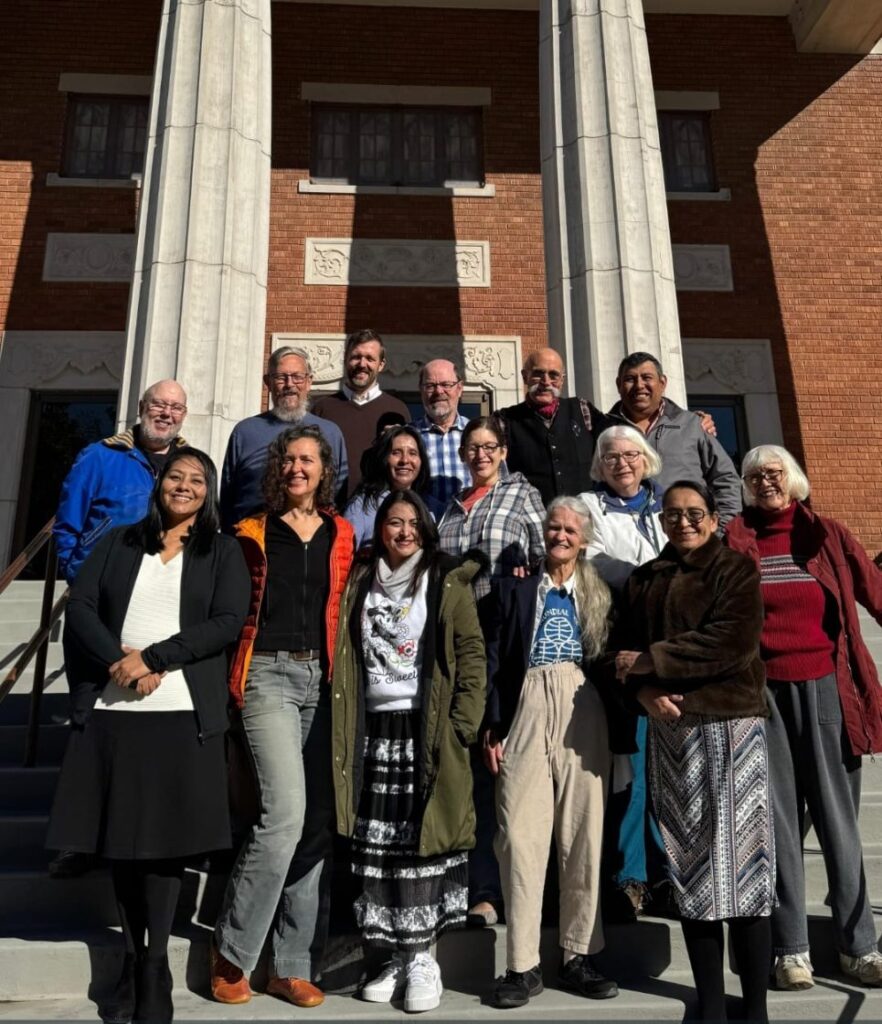
Gathering of Friends from the 2025 Section Meeting

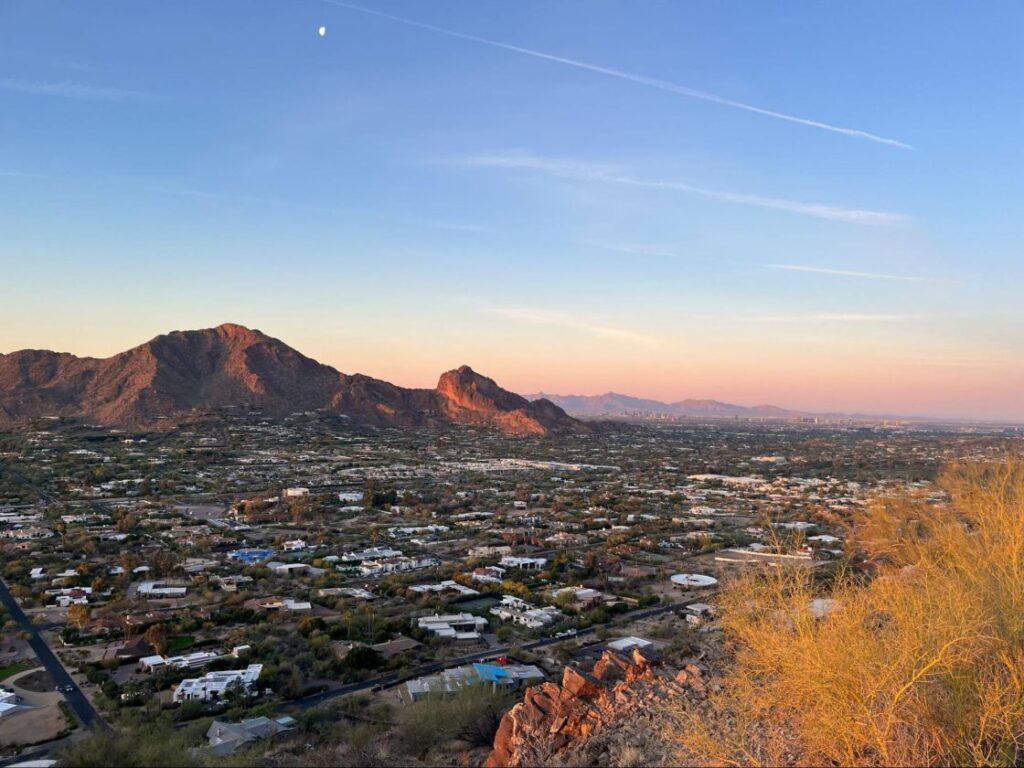
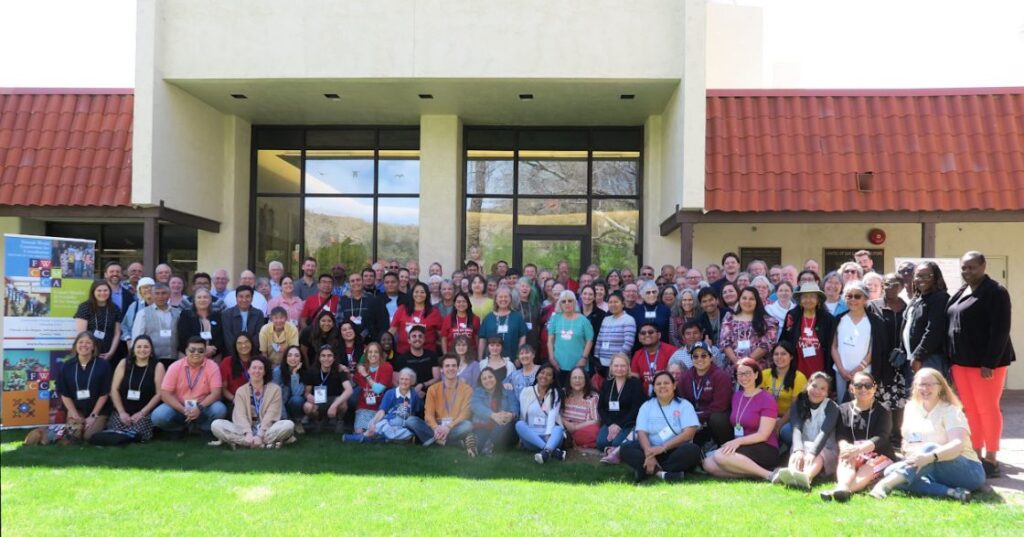
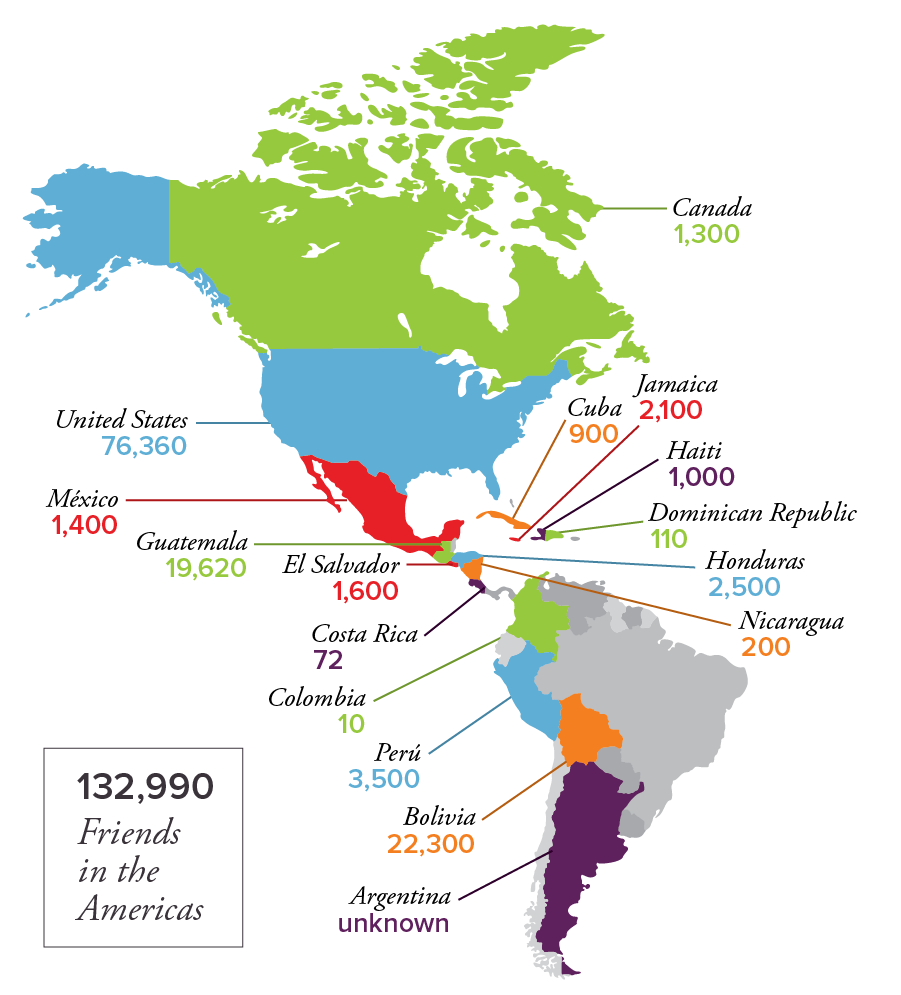
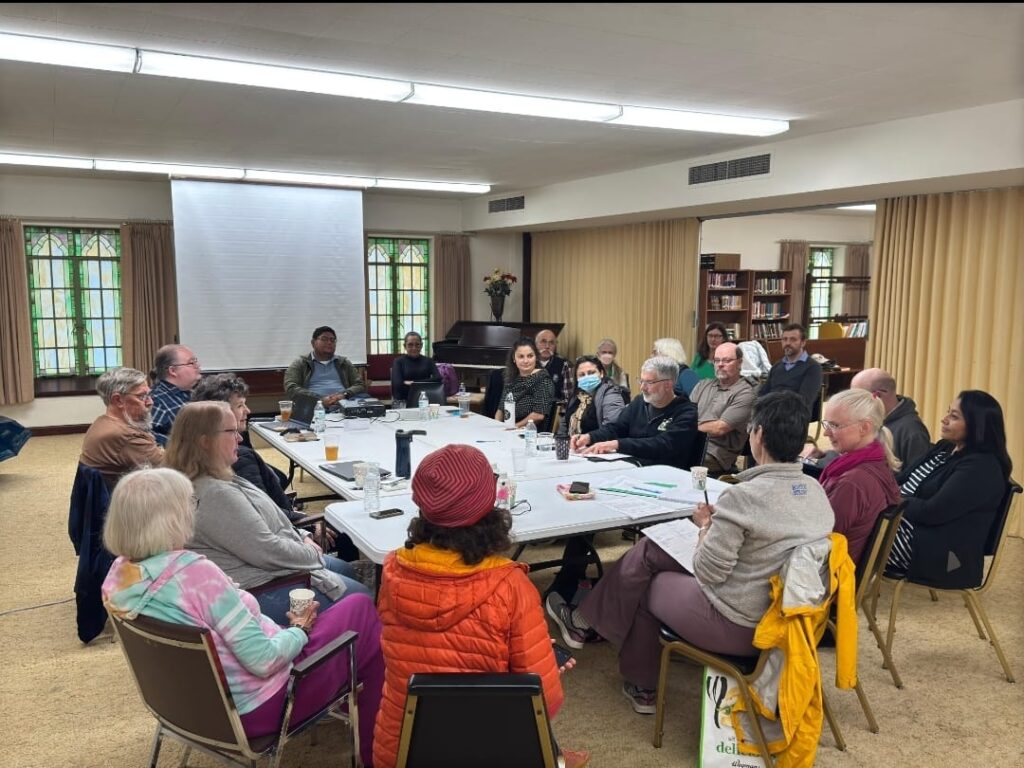
From March 20–23, 2025, 145 Friends gathered in Scottsdale, Arizona and 30 more connected  online for the FWCC Section of the Americas Meeting. We came from all across the Americas and beyond, including the largest Latin America delegation in recent memory. Friends traveled from their homes in Bolivia, Canada, Jamaica, Mexico, Guatemala, El Salvador, Costa Rica, Peru, the United Kingdom, and the United States—to be together in the Spirit and celebrate our diversity in fellowship. The theme of our gathering, “Building the Future as Way Opens,” was drawn from Isaiah 43:19: “Look, I am doing something new! Now it emerges; can you not see it? Yes, I am making a road in the desert and rivers in the wasteland.”

And we truly saw something new emerge among us.

Throughout our time together, worship set the heartbeat of our days. Each morning began with early worship—quiet, grounded, Spirit-led. We experienced rich and diverse forms of worship led by Latin American Friends, Conservative Friends, and Young Adult Friends. Each voice, each style, was a reminder of how our varied spiritual practices all seek and serve the same Divine source.

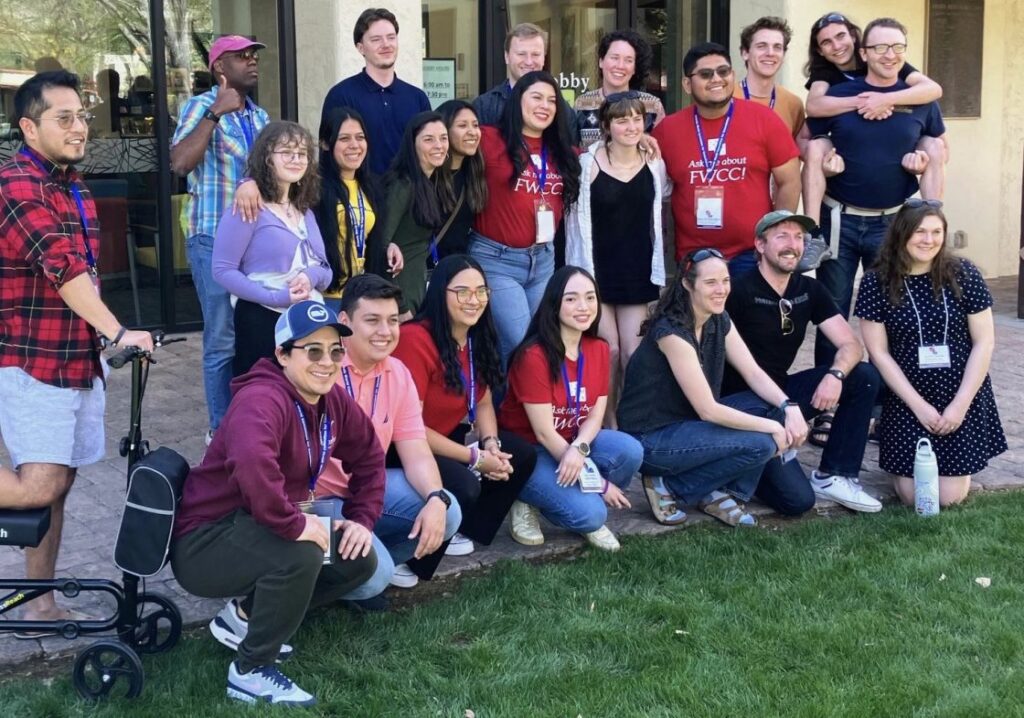
Gathering of Friends from the 2025 Section Meeting

Bible study sessions opened the scriptures in new ways, inviting us to listen with fresh ears and softened hearts. Home groups offered a space to reflect, laugh, and share stories across languages and backgrounds. In these small circles, we grew in our understanding of one another—not just intellectually, but spiritually and as members of a greater community.

In addition to worship and fellowship, we came together in workshops and business sessions, exploring how FWCC can live more deeply into its calling. After a successful campaign “Becoming the Quakers the World Needs”, we feel some fatigue on committees and in our fundraising efforts as transition, new programs and reorganization require more new energy.

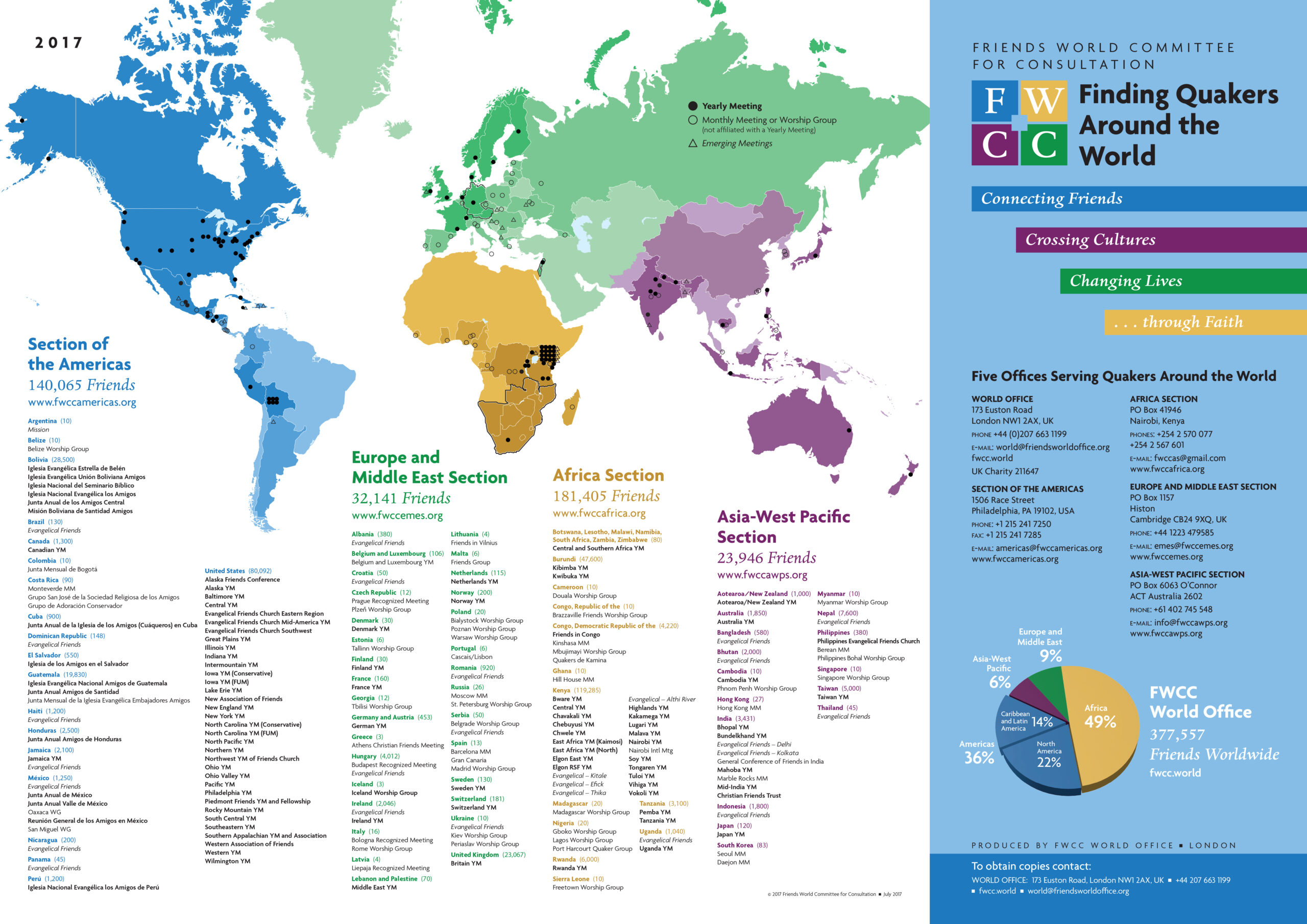
We saw progress on new programming made possible by the campaign.  We shared a beta version of our Digital Quaker Glossary, an evolution of a collaborative tool for making Quaker terms and vocabulary accessible to all in English and Spanish. We look forward to the next phase of this project, supporting our active Bilingual Services team to develop a certified interpretation and translation program. We also announced new partnerships on our digital map, offering a single source to find Friends’ projects as well as meetings, churches and worship groups around the world. Our Quaker Connect program launched in the days leading up to the Section Meeting and apprentices from meetings across the Section joined our gathering for the first time with new perspective and enthusiasm for what is possible in the Society of Friends. To witness their excitement and growing connection was to witness the future unfolding before our eyes.

Young Adult Friends brought great energy to the gathering, not only in their worship leadership but also in their fellowship.  They explored the desert gardens together, shared meals and laughter, and took part in a service project for a local Friends meeting—offering their hands and hearts in service as part of a first-of-its-kind pre-conference gathering for young people across the Section.

Evan Welkin, our new Executive Secretary, introduced himself and set his personal experience within our gathering theme and what is unfolding in the Section. Joined by FWCC General Secretary Tim Gee, they both invited us to trust God and in each other as an unknown path unfolds before us in a time of uncertainty and great possibility. Our plenary speakers, Ana Gabriela Castañeda Aguilera and Debbie Humphries, built on this theme and reminded us of examples from scripture and our own lives when we are invited to do new things: how do we respond? We are excited that Ana and Debbie’s remarks will be printed for distribution soon. 

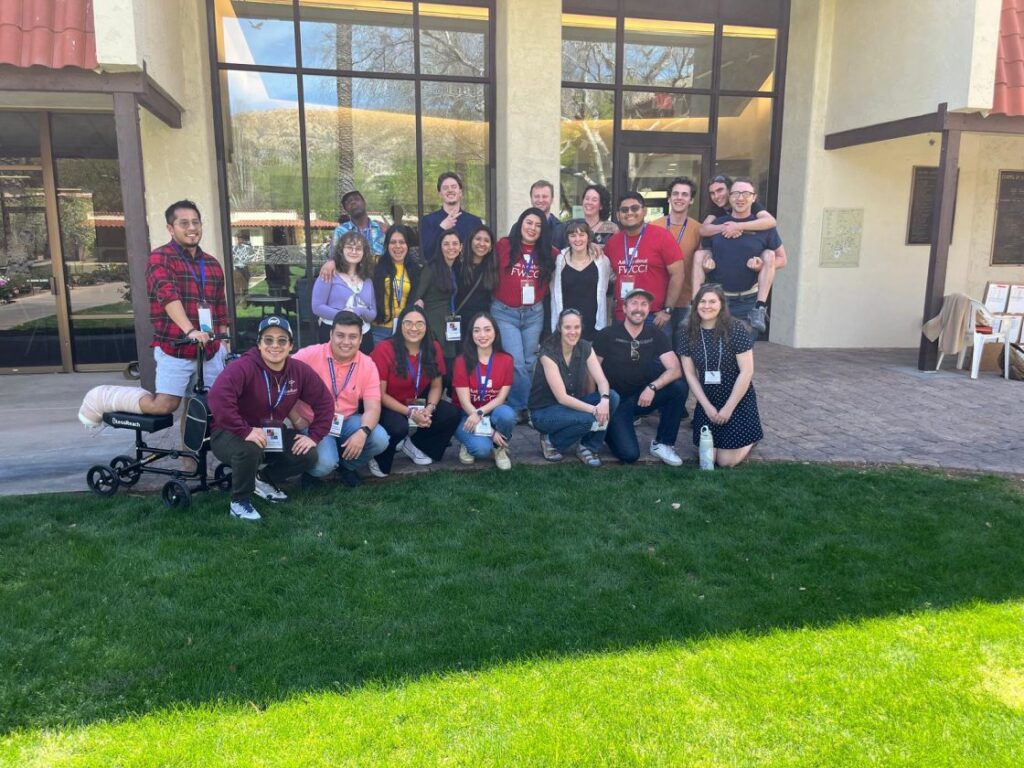
Gathering of Friends from the 2025 Section Meeting

We are, as ever, a community of Friends seeking unity across languages, cultures, and traditions. This gathering gave us the opportunity to treasure our diversity and to celebrate our shared commitment to God’s leading among us. There were long conversations over meals, joyful singing in multiple languages, and celebration over the work we are doing throughout the Section. Embracing Friends from across the globe, not just physically but spiritually, helped us find new ways to speak, to listen, to walk forward together.

The Spirit is doing something new among us. We came away from this gathering excited about projects that inspire and unite us, energized by the possibilities that lie ahead. We are also clear-eyed about the clear and present challenges in the world around us today.  As we return to our home countries and meetings, may we continue to walk forward in faith, trusting that the road will open, and rivers will flow, even in the wasteland.

As Ana Gabriela shared powerfully with us during her evening plenaries: “Sometimes, it’s the very act of stepping into the unknown that prepares us in ways we never imagined.” Like the road in the desert or the river in the wasteland, this gathering reminded us that new paths are revealed when we walk forward in faith, trusting the unknown. We are all grateful for every person who made this gathering possible and for each Friend who took that leap. Together, we are building the future—as way opens.

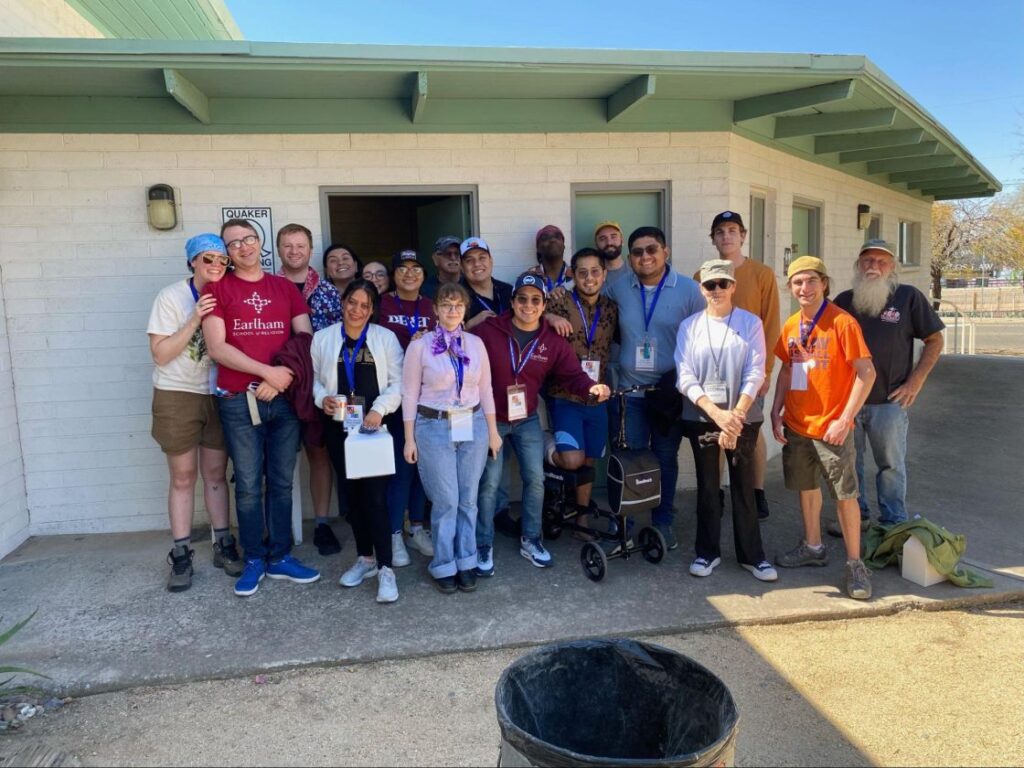
Gathering of Friends from the 2025 Section Meeting
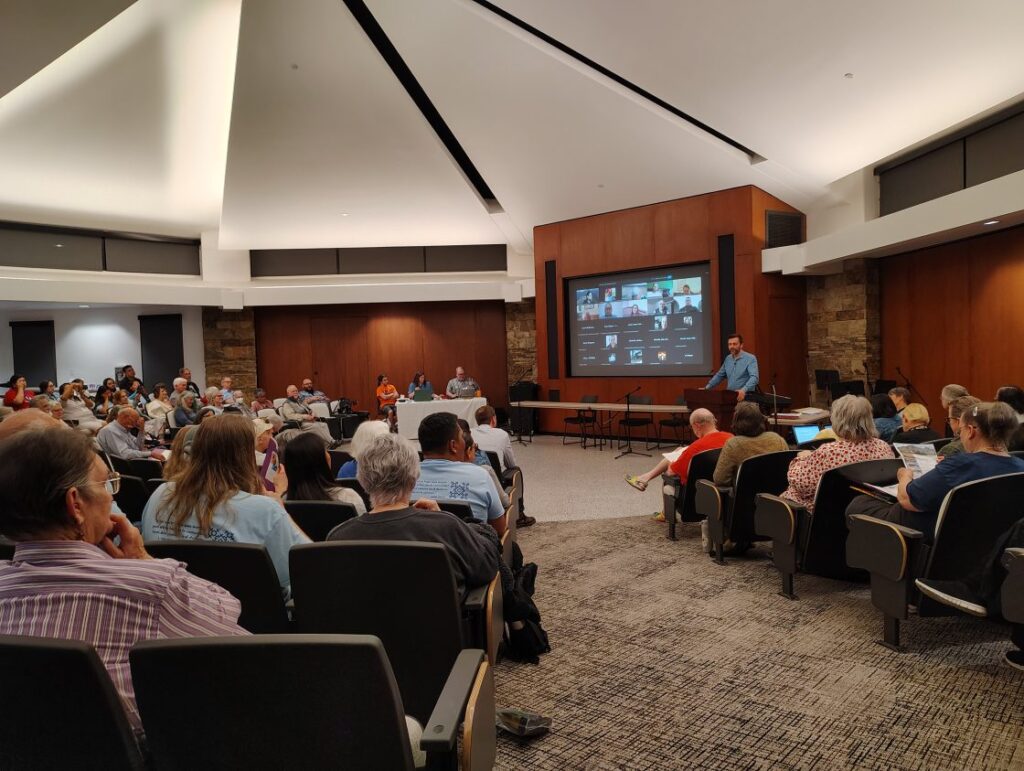
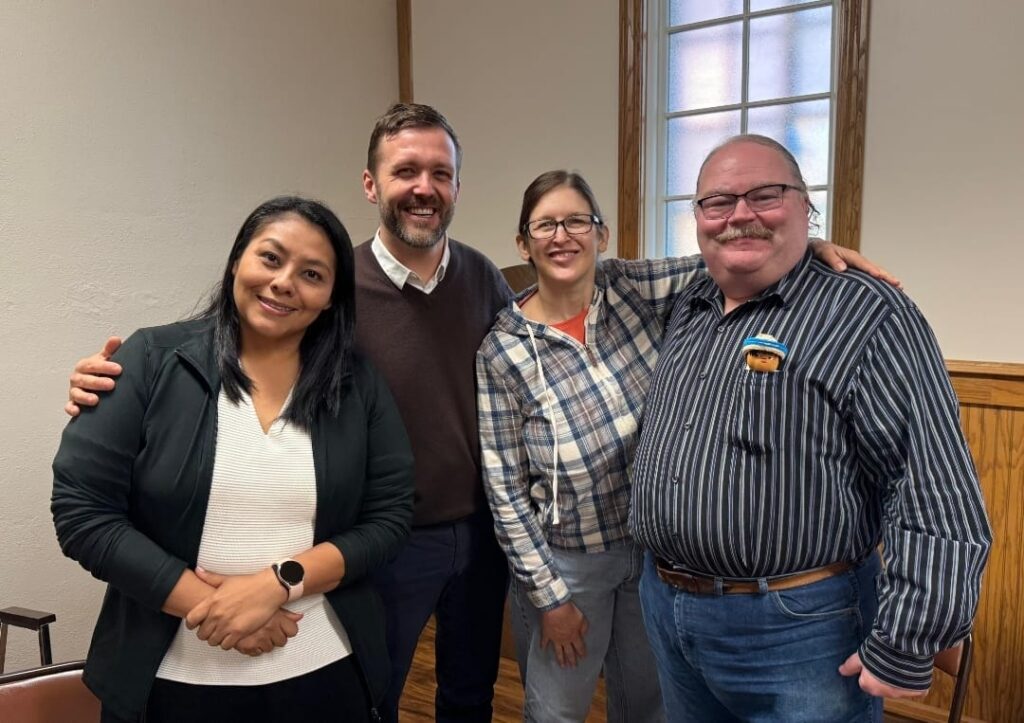
Evan Welkin speaking at the 2025 Section Meeting
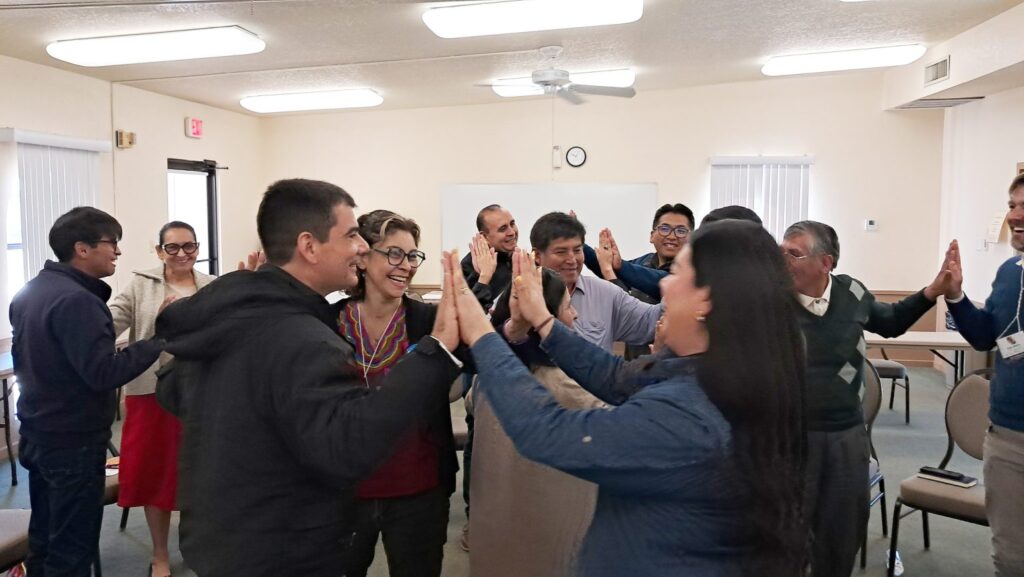
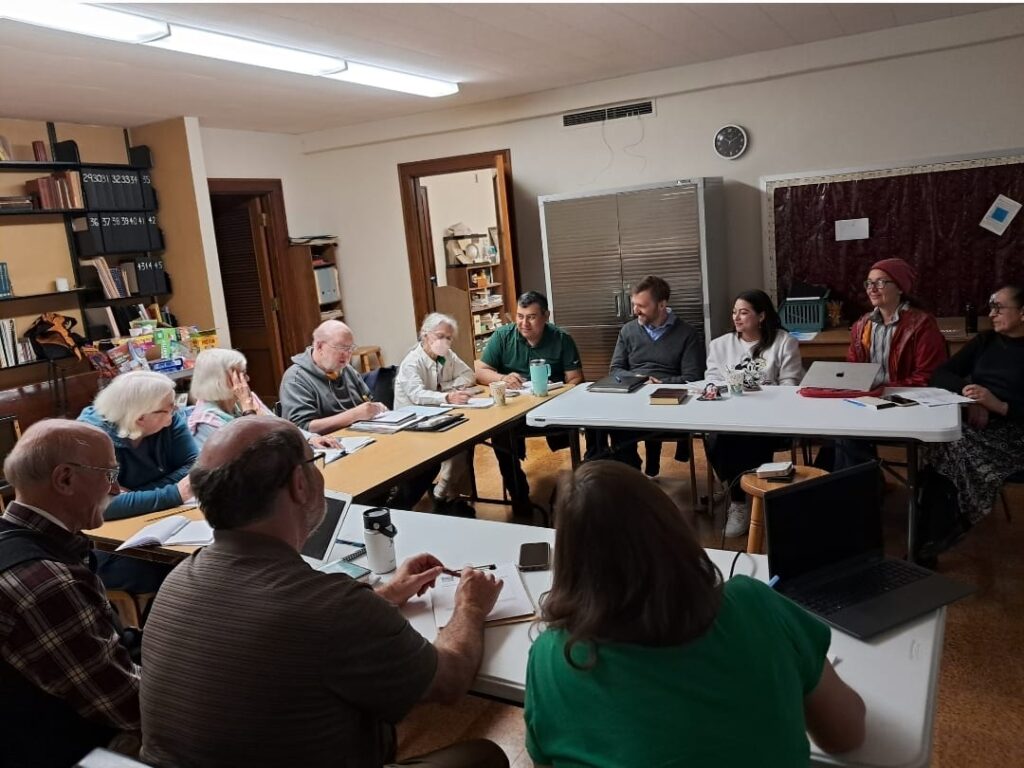
Friends playing a game at the 2025 Section Meeting

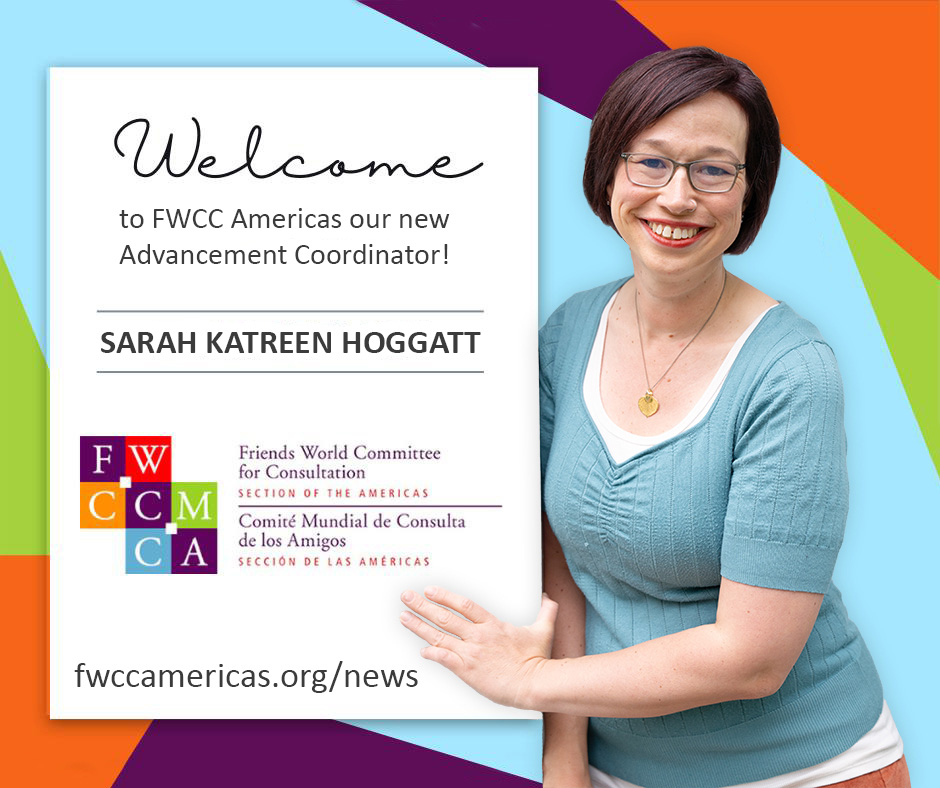
FWCC Welcomes Sarah Katreen Hoggatt as Advancement Coordinator

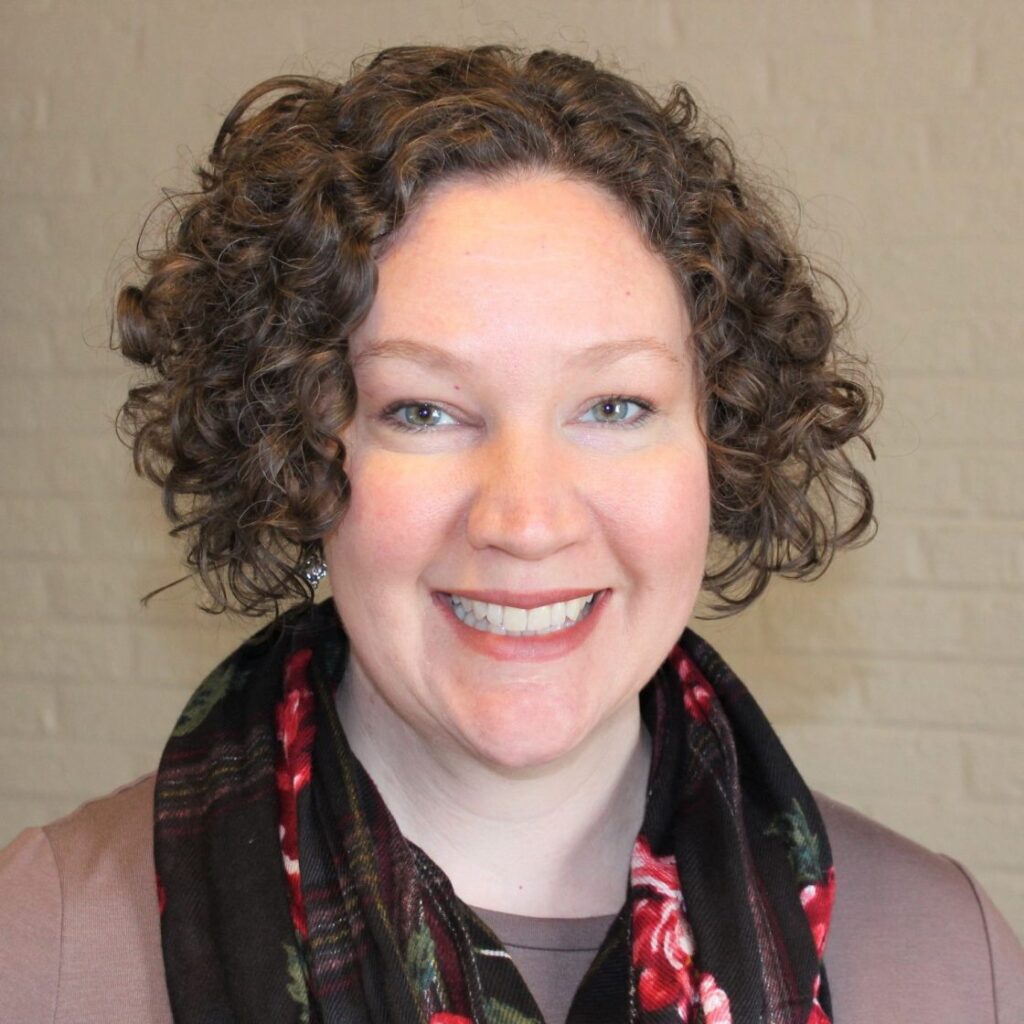
Sarah Katreen Hoggatt, Advancement Coordinator at FWCC

Friends World Committee for Consultation (FWCC) is pleased to announce that Sarah Katreen Hoggatt has joined our team as the Advancement Coordinator. In this role, Sarah will focus on fundraising, communications, and strengthening connections within the global Quaker community. With a deep commitment to Quaker values and extensive experience in communications and nonprofit leadership, Sarah brings a wealth of expertise to FWCC’s mission of fostering unity among Friends worldwide.

Quaker Experience

A direct member of Sierra Cascades Yearly Meeting of Friends, Sarah was born and raised in Salem, Oregon, of the US Pacific Northwest, on lands of the Kalapuya peoples.

Sarah earned her bachelor’s degree from Oregon State University and went on to complete a Master of Arts in Christian Ministry, a certificate in Spiritual Formation, and a certification as a spiritual director at George Fox Evangelical Seminary (now Portland Seminary).

In 2008, Sarah was selected for the editorial board of Spirit Rising: Young Quaker Voices (English and Español). Working with fellow editors and learning about their diverse Quaker experiences deepened her appreciation for the many ways Friends around the world live out the Light within them. To promote the book, Sarah traveled throughout the Pacific Northwest, across the United States, and internationally, speaking about it in Europe and Kenya. While in Europe, she first connected with FWCC at the Europe and Middle East Section conference in Switzerland—an experience she treasures. Around the same time, she also became involved with Quakers Uniting in Publications, a community she continues to value today.

Sarah has served in many leadership roles within Quaker communities. At Freedom Friends Church, she worked as recording clerk and helped write its Faith and Practice. She later joined Northwest Yearly Meeting (NWYM), serving on its Board of Christian Education. When NWYM decided to cut off LGBTQIA-inclusive meetings, Sarah helped found Sierra Cascades Yearly Meeting of Friends (SCYMF). She initially served on the Faith and Practice Committee before being named co-presiding clerk from 2018 to 2022. One of her greatest joys in this role was looking out at all the faces during business meetings—”the best view in the house.”

During her time as co-presiding clerk, SCYMF recorded Sarah in ministry for writing, speaking, and spiritual direction. Since then, she has continued serving Quaker communities, including working on the planning committee for the 2023 FGC Gathering. She also enjoys organizing conferences and participating in clearness committees when called.

A Writer and Graphic Designer

At her core, Sarah is a writer. Since childhood, she has used writing—especially poetry—to express herself and share her perspective. Last summer, she published her sixth and seventh books: When the Ink Runs Dry and When the Questions Come, with an eighth book currently in progress. Her work (both articles and poems) has also appeared in Friends Journal and Western Friend.

Beyond writing, Sarah is a professional book designer and publisher, as well as an experienced editor. She is eager to bring her skills in publishing, design, and communications to FWCC’s work.

Welcome Sarah to FWCC!

Sarah will be working remotely from her hometown of Salem, Oregon. In her spare time, she enjoys drawing in pen and ink, hiking with her dog, learning classical guitar, reading, and Irish dancing.

We invite you to greet Sarah and welcome her at our Section of the Americas meeting in March. She is looking forward to spending time with our community and working alongside Friends worldwide.

A Sermon in Wichita

FWCC representatives from across the Americas– from diverse contexts, perspectives, and languages– met for worship in Wichita Kansas, and listened to a message on Amos 5:18-24 offered by University Friends pastor Charity Sandstrom about the daily work of our faith, which does not change, even as the political circumstances that we find ourselves in in each of our countries do.

Volunteers, Representatives and staff for FWCC Americas attended University Friends Meeting last Sunday in Wichita, KS.

Amos 5:18-24 NRSVUE
The Day of the Lord a Dark Day
18 Woe to you who desire the day of the Lord!
Why do you want the day of the Lord?
It is darkness, not light,
19 as if someone fled from a lion
and was met by a bear
or went into the house and rested a hand against the wall
and was bitten by a snake.
20 Is not the day of the Lord darkness, not light,
and gloom with no brightness in it?
21 I hate, I despise your festivals,
and I take no delight in your solemn assemblies.
22 Even though you offer me your burnt offerings and grain offerings,
I will not accept them,
and the offerings of well-being of your fatted animals
I will not look upon.
23 Take away from me the noise of your songs;
I will not listen to the melody of your harps.
24 But let justice roll down like water
and righteousness like an ever-flowing stream.

James 1:19-27 NRSVUE
Hearing and Doing the Word

19 You must understand this, my beloved brothers and sisters: let everyone be quick to listen, slow to speak, slow to anger, 20 for human anger does not produce God’s righteousness.[ justice] 21 Therefore rid yourselves of all sordidness and rank growth of wickedness, and welcome with meekness the implanted word that has the power to save your souls.
22 But be doers of the word and not merely hearers who deceive themselves. 23 For if any are hearers of the word and not doers, they are like those who look at themselves[d] in a mirror; 24 for they look at themselves and, on going away, immediately forget what they were like. 25 But those who look into the perfect law, the law of liberty, and persevere, being not hearers who forget but doers who act—they will be blessed in their doing.
26 If any think they are religious and do not bridle their tongues but deceive their hearts, their religion is worthless. 27 Religion that is pure and undefiled before God the Father is this: to care for orphans and widows in their distress and to keep oneself unstained by the world

Charity Kemper Sandstrom is an author and Quaker pastor, currently serving University Friends Church in Wichita, KS. She has three great kids, a love for Jesus, and possibly a mild caffeine dependency. Charity considers herself an ecumenical and occasionally liturgical Friend, with a passion for sharing the love of God. 

In November we are looking at four difficult themes: Grief & Remembrance, Injustice & Action, Disillusionment & Hope, Change & Growth. All of these hard things are common human experiences, and as the darkness sets in for the winter, we are holding these experiences in our hands and asking “What do we do with this hard thing?” This morning we are holding the difficult experience of injustice.
The text from Amos that was just read sets us up nicely to talk about how we usually respond to difficulty. Like children who say, “My dad can beat up your dad” in response to a perceived slight, the Children of Israel saw themselves as victims of injustice. They wanted the day of the Lord to come, so that everything could be set right. They wanted their enemies to suffer. They wanted God to sweep away evil. They were calling for it, expecting it with eager anticipation, and the prophet interrupts to say, “What in the world are you thinking? Do you really think evil is only located in your enemies?”

Why do you want the day of the Lord to come? It is darkness and not light. You hate your enemies, but do you not see the injustice that comes from your own hands? God is not interested in your festivals, rituals, and rites. Away with the noise of your worship. Instead let justice roll down like mighty waters.
It’s a good thing that was just a “them problem,” right? We certainly don’t respond the same way today, right? Oh, no, wait. I guess we are all suffering from a human problem. It is so very human to locate the source of the problem out there somewhere. We don’t want to look at ourselves, our actions. We want God to be on our side, we need it to be true. We need the certainty that I am on the right team, they are on the wrong team, and we are going to win. We will go to many lengths to convince ourselves it is true.

In this year of political strife, and we are not likely finished with the fallout of the election season, the rhetoric of “us versus them” has been intense. And the arguments presented did not serve to change anyone’s mind, rather to intensify the hate and fear of one side toward the other. In a University of London study, researchers wanted to know whether people responded primarily to factual evidence or their preexisting desire for their cause or candidate to win. What they found was that when people were presented with evidence that supported their point of view, they added that information to their sense of confidence that they would see their desired outcome. When presented with evidence that countered their point of view, they held firm to their opinion and dismissed the information. When we are engaging in “us versus them” rhetoric, it is easy to invest ourselves more heavily in being loyal to our cause than to the truth we hold dear. We set aside the values and principles God calls us to demonstrate in our lives.
The prophet Amos tells the people that their religious practices will not convince God to be on their side, only participating in creating a more just society will please God. Calling for God to bring vengeance for those who are participating in injustice will only call down judgment on their own heads if they are not careful. Not just here, but many times in the prophets, we hear that God is more interested in justice than sacrifice, more interested in a society and culture in which the poor are cared for, where the marginalized are brought to the center than one where all the rules for religious festivals are followed. Jesus picks this up in the Gospels as he told religious leaders they were more concerned with tithing their garden herbs than practicing justice and mercy. Paul tells everyone in Romans 2 that when we judge others we heap condemnation on our own heads because we do the same things.

James picks up this theme in our New Testament scripture this morning. Set aside anger. Listen instead. Human anger cannot bring about God’s justice. Remember the word in the Greek for righteousness is the same as justice. And what does James instruct us to do? He tells us to take action. Stop talking about it, and act. Stop reading about it, and act. Stop complaining about it, and act. Care for the widows, the orphans, and step away from the ways of the world.
Too often in our modern era of internet advocacy on social media, we think we have done our part if we like, share, and post the causes we care about. We think we have done our part if we go to vote once every four years. We put the responsibility of bringing about a just society on the shoulders of political and government leaders. We stop paying attention to the policies and laws that are being passed because the person we voted for won. We trust them and we don’t actually want to know if they will follow through. Or the person we voted for lost, and we give up. We decide nothing we do will matter anyway.

The reality is that justice is not lived out on the grand scale of national politics. Can we legislate changes? Yes, but unless there is agreement among everyday citizens all we do is drive injustice underground. Think with me for a minute about race relations in this country. We outlawed slavery on the national level. I agree with that decision. But what followed were 100 years of oppression in smaller laws and regulations passed at the state and local levels that imprisoned and legally re-enslaved many people of color for simply not having a job. Laws that kept black men and women from voting, even after a constitutional amendment. Laws that kept citizens of color from equal access to education, and public accommodations.

We saw activism in the middle of last century that led to desegregation of schools and other public services, the voting rights act that enfranchised voters of color for the first time in a meaningful way. I agree with these changes. But they did not end racism. Racism became subdued, expressed behind closed doors or in euphemisms and dog-whistles. People stopped saying the quiet part out loud, but they kept their biases against black people. Institutions and policies continued to disproportionately affect the daily lives of people of color. And those not directly affected could pretend that everything was ok, and racism was a thing of the past.

Why am I critiquing the practice of legislating change on a national level? I support lobbying for change on any level and through any legitimate means of making a more just society. I want the government to make good laws that lead to good lives for every person in the country. I believe good policy matters. But I believe there is something that matters more—you and I choosing justice and mercy every day.
What do we remember about the days of slavery? Quakers on the underground railroad seeking the good of their neighbor, and slave patrols hunting those seeking freedom. What do we remember about the Civil Rights movement? People on the ground either marching for peace or protesting angrily at school integration. What do you think makes more of a real difference in a neighborhood—community members who connect and care for each other, or a law that says they have to be civil?

We don’t have to wait for government policy to treat our neighbor with kindness. We don’t have to wait for the supreme court to deem goodness constitutional. We can get busy feeding the hungry or clothing the naked or visiting those who are sick or imprisoned. We can practice religion that God our Creator accepts right now. We can care for the widow and the orphan. We can let justice roll down like mighty waters and righteousness flow like a never-ending stream. We can do that regardless of who won an election. We can do that whether the ballot measure we wanted passed or not. We can choose every day to walk in step with the Spirit, love our neighbor, and lift up those in need.

We can choose to love our enemies. It is what we are called to as followers of Jesus. Love for enemy does not mean agreeing with them. It does mean seeking their good, working to create a world where they can live with respect and dignity. If we are tearing down the other side, we have already lost. Human anger does not bring about the justice of God.
That doesn’t mean you can’t be angry about injustice. It doesn’t mean you can’t tell the truth about your experiences of being mistreated. It doesn’t mean you have to bypass the negative feelings that accompany the realization that something is wrong in government or society, or your family or your neighborhood. Be upset. But take a pause. Take a moment to remember the person in front of you—even the one working injustice—is a beloved child of God. Then you can work for wholeness, healing and peace, even as you tell the hard truth and seek for systemic change.

We are all responsible for creating a community and culture of justice. We are not off the hook because of election results. We are responsible to act. And when we act in alignment with our values, with the principles of Jesus, with the working of Spirit among us, we create change from the ground up.

As we tune our hearts to listen in a time of Quaker worship, can we ask Spirit to show us the truth of our own hearts? Can we trust Christ to teach us how to live day by day in ways that add to the justice and peace of our communities? Can we allow our Creator to remind us that we are beloved Image bearers, and in that reminder accept that of God in the person before us even those who would decide we are their enemy? Let us now try what love would do.

FWCC Americas announces new Executive Secretary!

The Friends World Committee for Consultation, Section of the Americas—the global fellowship association for the Religious Society of Friends—is pleased to announce that Evan Welkin, from North Pacific Yearly Meeting, has been appointed as the next Executive Secretary, starting July 15, 2024.

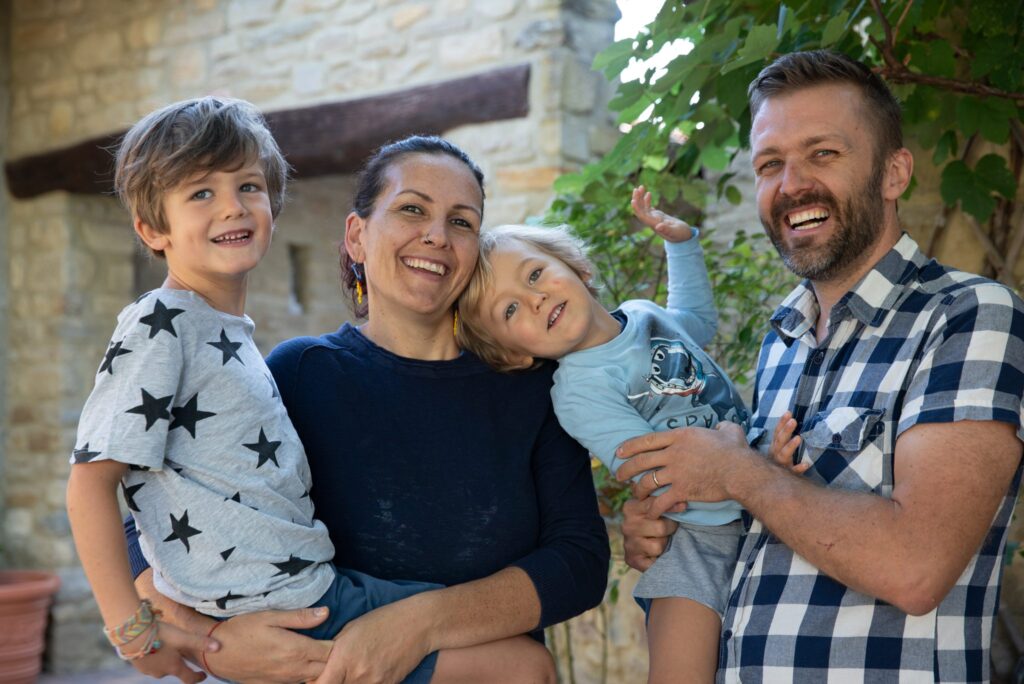
Evan Welkin is a member of Olympia Monthly Meeting (North Pacific Yearly Meeting), born and raised in the Cascadia region of the US Pacific Northwest on lands of the Siuslaw, Squaxin Island and Nisqually peoples. His grandparents Jack and Judy Brown (University Friends Meeting) became convinced Friends through their work with AFSC camps after the end of WWII. 

He holds a BA from Guilford College in Greensboro, North Carolina, USA and Masters from Schumacher College in Totnes, Devon, UK. He is a graduate of the Guilford Quaker Leadership Scholars Program (QLSP) where he served as a Sojourning member released from Olympia MM to study theological diversity among evangelical, conservative, programmed and unprogrammed Friends in Guilford County. While in QLSP, he offered ministry at local meetings and churches, supported development of the QLSP Service Committee and received a Clarence and Lilly Pickett Fund for Quaker Leadership grant to survey meetings along the Eastern Seaboard. He participated in several service learning projects with the North Carolina Friends Disaster Service, advocated for graduates of the Ramallah Friends School targeted by campus violence at Guilford and received a Lyman Fund grant to join a Christian Peacemaker Teams (CPT) delegation to Israel and Palestine in 2008. While on the CPT delegation, he met his Italian future wife, Federica Faggioli, as she served as project coordinator on a EU-funded human rights monitoring project in the South Hebron Hills of the West Bank. Returning to the Pacific Northwest, Evan served as Clerk of Olympia Monthly Meeting’s Finance and Worship & Ministry Committees while beginning a career in management and community organizing with the Rachel Corrie Foundation for Peace and Justice, TOGETHER! of Thurston County and the Squaxin Island Tribe.  

He married Federica in 2012 under the care of Olympia Monthly Meeting and her Catholic community, the Pope John XXIII Association. From 2012 to 2015, Evan and Federica tested a leading to move to Italy while connecting with the FWCC Europe and Middle East Section and supporting Quakers in Italy to host an annual gathering of Italian Friends, held each year on the Faggioli family farm from 2016-2023. Their first son, Oliver, was born in 2014 as Evan founded a private consulting practice focusing on support for nonprofit development and network facilitation for clients including the Global Ecovillage Network, Climate Action Network-International, PEN America, the European Network of Community-Lead Climate Initiatives, the Global Fund for Children, and Permaculture for Refugees.

From 2016-2017, Evan completed the Young Adult Leadership Programme at Woodbrooke Learning and Quaker Study Centre in Birmingham, UK and served as Elder and Trustee of Europe and Middle East Young Friends.  In 2018 after the birth of their second son, Gabriel, the family found way open to move definitively to the farm and found an ecovillage, learning center and permaculture project called “Borgo Basino.” From 2020 to 2024 Borgo Basino served as a living, learning community connecting education, networking and wellness on a small multifunctional farm. Nestled in the hills outside of Bologna, Borgo Basino offered a hub for agricultural innovation, community wellness, and sustainable hospitality. Despite facing significant challenges caused by the COVID pandemic, Evan continued his work as a lecturer and administrator at the Spring Hill College Italy Center while leading activities with groups, interns and community members on the farm. In 2022, he began work for the FWCC in the Europe and Middle East Section (EMES), supporting communications and development of the EMES Peace and Service Network. He also served the FWCC World Office facilitating the Global Quaker Sustainability Network. In Spring 2023, massive landslides caused extensive damage to the farm and its only access road, provoking difficult discernment about the sustainability of the farm after many setbacks. In early 2024, Evan and his family made the difficult decision to leave the farm and return to the United States, trusting again that way would open to new possibilities. The opportunity to continue his vocation and career with the FWCC Americas Section is truly the continued realization of a personal dream, connecting Friends around the world in faith, spiritual formation and a deeper connection with all life on earth.  

In his spare time, Evan keeps bees, makes artwork and sails (and repairs!) wooden boats.

Evan's favorite verses

For the Spirit God gave us does not make us timid, but gives us power, love and self-discipline.
- 2 Timothy 1:7 (NIV)

He has shown you, O mortal, what is good. And what does the Lord require of you? To act justly and to love mercy and to walk humbly with your God.
- Micah 6:8 (NIV)

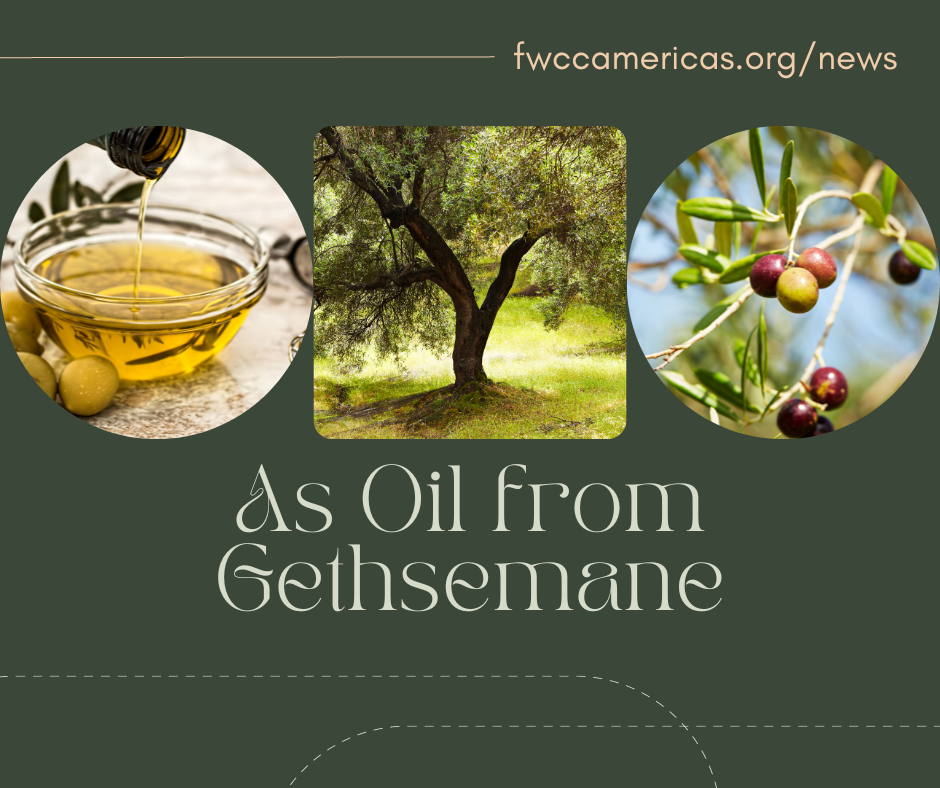
As Oil from Gethsemane

On Friendship, and “Becoming the Quakers the World Needs”

A message given by Noah Merrill at the FWCC Americas 2023 Section Meeting

Download printable pdf in English or Spanish

Good evening, Friends.

Just after I was born, I am told, my mother brought me to my first meeting for worship. She used to say that I had attended many before that, while she was carrying me in her womb, before I was born. I remember glimpses of those early years—mostly in images and sensations. But most of all, I remember the sense of coming home that met me in that worship, one that has continued to meet me throughout my life, a sense of spiritual intimacy, belonging, and relationship that has never left me, no matter the storms and struggles that might come. Thank you, Mom, for so many gifts. Thank you for the gift of bringing me home to Friends.

Many of you may know that my mother passed away suddenly and unexpectedly on Thursday, just after I had arrived to join those gathered in North Carolina. I am deeply sorry not to be able to be with all of you who are gathered there this week, but I am grateful to be with my family in this time of grief, and for this opportunity to be together with you and our wider community of Friends around the world tonight. And
I am deeply thankful for the many expressions of care, support, condolence, and prayer shared by so many of you in the hours since then. On behalf of our family, thank you.

The connections so many of us are experiencing as part of this Section Meeting are difficult or impossible to make in any other ways, anywhere else in the world. And in these times of division, distrust, and grief, tending to and strengthening loving relationships among us as the People of God called Friends has never been more important.

Across the Americas, we who are gathering have lost neighbors, loved ones, dear Friends. Many Friends faith communities—and the wider communities in which we live, work, and serve—have been devastated, whether by the immediate loss of health and life from illness, or by related losses: economic instability, deprivation, and collapse, restrictions on travel, disruptions of access to basic needs, or the social atrophy that has left many of us lonely, fragmented, unsure of what the future holds. Some of us find ourselves restless and unsatisfied, even in relative comfort.

From the Arctic to the Andes, recent years have brought political polarization, instability, and strife. There is growing suffering and insecurity, worsened by climate chaos. In many of our societies, bonds of civil discourse and relationship, already tenuous, have eroded further— sometimes seeming to unravel entirely. In many places, there is ebbing faith in institutions to save us. Ideologies—no matter how loudly or passionately proclaimed—no longer hold the reassuring or motivating power they once did for many. In the cultures around us, there is increased loneliness and fear.

Truly, this is an in-between time; a threshold between worlds. The signs are all around us. Things will not return to the way they were. The rhythms of communal life, the stable approaches of our Friends institutions—our local meetings and yearly meetings and wider fellowships like the Friends World Committee—don’t seem to be working in the ways we’ve come to trust. And yet, amidst all that is changing, it is difficult to imagine the future yet to come.

Our theme for this gathering is, “Becoming the Quakers the World Needs.” When I was invited to share with you tonight with this focus, I wrestled in prayer with the invitation. The theme seemed to suggest some significant things about which I was not sure I had much to offer. Trusting the discernment of the organizers, I knew there was something more to be discovered here. So I listened, in patience, and in prayer for what I might be given.

The first thing that the theme seems to suggest is that the world needs something, and that we—here, together—might be able to discover what that something is. It also seems to imply that this something might have to do with us—as people living our faith in these times rooted in the tradition and testimony of the Religious Society of Friends.

The second suggestion is that we are not now—perhaps we aren’t anymore, if we ever were, or perhaps we are not yet—who we need to be in some sense, in order to help the world receive this something.

And the third—perhaps most significant of all—is that there might be some way that we —us here together, gathered in person and across the miles—might participate in a process of becoming that will allow us to respond in a meaningful sense to the needs of the world, in these times we have been given.

So tonight I want to invite you to come with me in an exploration of our theme. I want to share some stories from our living tradition. And I hope, in this brief time, that we will find a fresh reminder of the invitation to a shared journey together as a People being gathered into covenant with God and one another.

The first story I’d like to share is about that something that the world needs. It begins, as so many things in my experience of the work of the Section of the Americas, with an unexpected text message.

My dear Friend Myron Guachalla and I have known each other for several years through the work of the Friends World Committee. Last year, unexpectedly, Myron sent me a message. As part of his service helping prepare for the World Plenary next year and his service on the Central Executive Committee, he was flying back from Nairobi to Bolivia, and had been able to arrange a stopover in Boston. Given how close he would be to my home a few hours away in Vermont, he asked, could we meet?
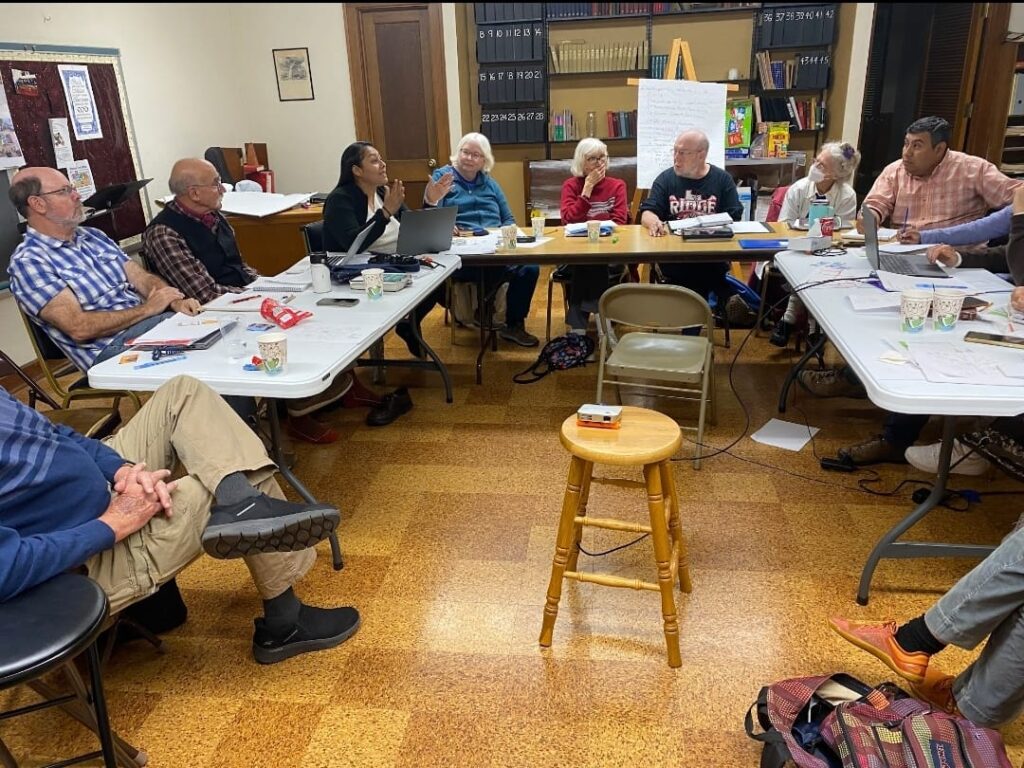
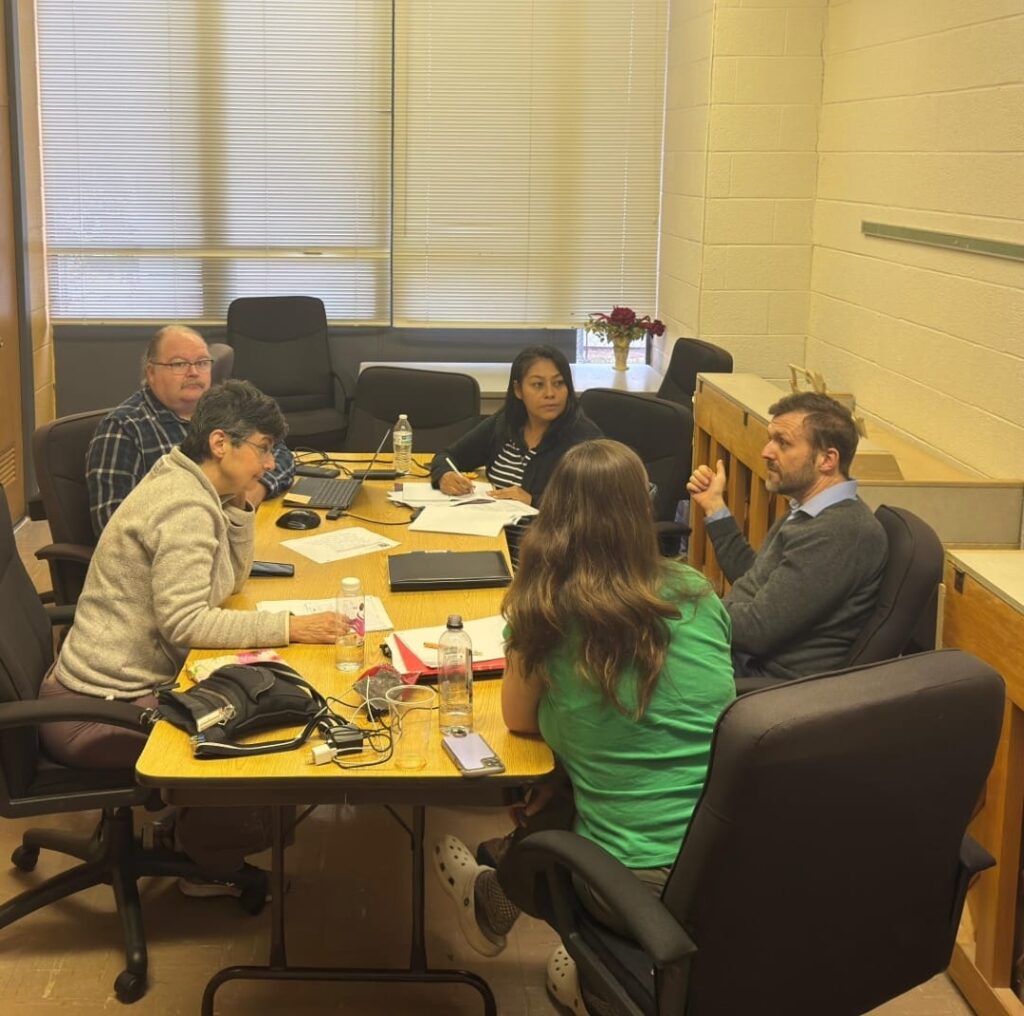
On the day he was scheduled to fly home, Myron and I met in Boston. We found a park near the harbor, the site of an old maritime fortress that has been destroyed and rebuilt many times over. The place had been used, in the earliest days of European colonization in the region I call home, to house Indigenous prisoners of war before they were sold into slavery. From the fortress island, a bridge led to a long breakwater arcing out into the water, toward the harbor islands, and beyond that, to the endless ocean. Afterwards, we agreed, I would drive him to the airport for his journey home.

We walked together along that breakwater, surrounded by wind and water, in a place between sea and land and sky, in a place in time between arrival and departure, between the tragedies and diversity of our shared history in this hemisphere on one side, and a future beyond knowing on the other. In the midst of our journeys, we walked together in a time set apart.

And as we walked, we reflected on these years since we’d last been together in person. We shared our stories. We spoke about our illnesses with COVID, about the struggles, griefs, and joys of Friends in our local contexts. How our walk with God had unfolded, our learning to pray and listen for God’s guidance. And we spoke about our sense of the condition of the body of Friends, and the condition of our world. We asked each other, as our theme seems to be asking, “What does the world need now?” and
“What are we able to offer, as Friends?”

I remember Myron’s clarity reflecting on a conversation he’d had the evening before with some people he’d met in the city, who had been inspired by their own encounters with the Quaker movement, and the many good works in which Friends locally were engaged, past and present.

There is so much work that needs to be done, he said, important work in which Friends may be led to be involved, so much that Quaker individuals and organizations are already doing—social action, service and presence and witness, living with integrity in our lives and livelihoods, reaching for a more just and inclusive world.

And yet maybe, he said, what is needed now isn’t just urgent action, more advocacy and lobbying and training and demonstrating, more proposals, petitions, and programs. Maybe what the world needs is not just our actions. Maybe it’s not our works, however fruitful and significant or strategic they may be. Maybe what the world needs, he said, is what inspires these things. Myron’s words resonated deeply in me, and have ever since. Maybe the World needs not the fruits of our faith, but the Root of it. What the world needs is the Source of our Hope.

Maybe you’re like me. At times in these years, that Hope has felt far off. I’ve wrestled with disillusionment. In service in institutional leadership on behalf of Friends communities in the northeastern United States, in gospel ministry, and in my relationships with Friends and neighbors in the places in which I live and work and serve, the separation and relentless strain of these years have worn me down. I’ve grown numb. I’ve struggled to pray, and God’s voice, so full of assurance at times, has grown quiet. In seeking to accompany Friends as we’ve navigated the storms of these years, I’ve been brought to a reckoning with a difficult truth. For many Friends communities, particularly in my experience in parts of the United States, the spiritual grounding that has knit our faith communities together has been revealed as fragile and brittle. In many places, our shared understanding of the guidance of what our tradition has to offer—has not been resilient enough to encompass the suffering, anxiety, disconnection, and disillusionment of these times. I confess that the roots of my faith have not been deep enough. I share in the broken-heartedness for where the roots of our faith have not been deep enough. And I know I’m not the only one who has come to this painful realization. Many of us, and many of our meeting communities, have lost something.


And yet, I know from experience that it is in the driest of times that our roots learn to reach more deeply to seek the Living Water, more deeply than they ever have before.

And so preparing for this time together, I’ve been praying, and listening for guidance for how I—and we—might rediscover that Hope.

Often, when I don’t know where to turn, I go back to the beginning.

I believe in beginnings. There is a power, I have found, in returning to how things got started, and in seeking to understand what lessons those beginnings might still have to teach us.

However painful or mysterious, we need to try to understand our beginnings. There is an Arabic proverb: When we have no past, we have no future. Rufus Jones, the 20th century North American Quaker who did so much to establish what would become the Friends World Committee, warned that absent a living relationship with the Spirit that animated our beginnings, we would soon become like cut flowers—beautiful now for a moment, but in some sense already dead.

I believe that the path to rediscovering and reclaiming our Hope runs back to our beginnings as a church, as a Religious Society.

So: what might our beginnings have to teach us about what the world needs, and about a process of becoming that helps this something to come more fully into the world today?

Most of us have heard the words George Fox used to describe his convincement, from his Journal. Words which have, for generations, formed our understanding of the discovery that birthed the Quaker movement. He wrote,

For these first Quakers, the life-giving joy of discovering that human beings could directly experience the inward voice of this Living Christ reoriented their lives, and kindled a movement. And alongside this, the promise that, not only could we hear this guiding voice and experience this liberating power individually, but that, as each of us yielded to it in our own hearts, we would experience it together. Francis Howgill writes of one of these early experiences of being drawn in to covenant community:

But here’s the part we quote less often, which follows immediately:

Here’s what I hope we might hear in this: The discovery of early Friends was a discovery of communion with a personal Presence. Coming to know and welcome this Presence, and allowing it to find a home in us, gives birth to a relationship—this is not something that is built, it is something that is given. A covenantal relationship which we must always choose, but for which we are chosen first.

This is founded on vulnerability, born of despair of the world and its power. As George Fox recounts his life-changing insight, the world doesn’t need us to save it. The world needs a living testimony to the Love that alone can save us from ourselves.

In these times, in the society in which I live, this is an unpopular message. In some circles, it’s even taken as theological malpractice, because of the ways this teaching has been used, especially for many of us who know the wounds of exclusion and marginalization, as justification to diminish our God-given capacities, to tear us down or beat us up. And yet, there is no avoiding it, if we take the testimony of our spiritual ancestors and the elders amongst us seriously. Quakerism is a path of descent, and not of personal triumph. We are invited to yield, to surrender all that we are, trusting that we will find on the other side the journey home, a fullness of life beyond what we could have demanded or created or
imagined.

This discovery was an essential part of our beginning. And yet, times as dry as these draw our roots deeper. Because of course, our journey as Friends didn’t begin in the 1650s. Our name came from somewhere. There’s a reason we call ourselves Friends. And this “Friendship”, I believe, has everything to do with the source of our Hope, and how it might be shared. It has everything to do with this becoming.

Given its essential significance in our own tradition, the name we use to greet one another and to describe our movement across the Americas and globally, it seems important to pay attention to the context of how Jesus came to call us “Friends.” It began over dinner one night, in an upper room in Jerusalem, two thousand years ago.

The Gospel of John relates that after they had shared the evening meal, Jesus offered what would be his final message to the disciples before his crucifixion. It was in this last teaching, when he knew that the hour was drawing near when he would be betrayed, arrested, tortured, and executed, that he said these words:

So: Jesus has told them “everything”. And yet, the gospel narratives don’t seem to have understood this.

The next acts taken by the disciples described in the biblical narrative are 1) to fall asleep, 2) to betray Jesus to his persecutors, 3) to attempt murder to prevent Jesus from being arrested, in disobedience of Jesus’ instructions, and 4) to abandon Jesus, which all of them did, except some few faithful women. None of the men. Through all of this, they protested that they would never do these things, even as they did them. And they demonstrated, again and again, that they did not know everything, that they did not understand.

So I want to address the elephant in the room, the obvious issue here. According to our understanding of it now, of course, what Jesus says is not true. The disciples did not fully know, they did not understand the fullness of what was to come.

This is obvious from the narrative. It was only later, looking back through the profound reorientation of their hearts—and of Creation—begun in the Resurrection. And this understanding in light of the Resurrection is the voice that narrates the Gospels. When they were first called Friends, they did not understand what was to come.

And yet, the writers of the Gospels chose to explicitly include the disciples’ lack of understanding of “what the master was doing” when they wrote the story later—so the fact that they did not yet understand, when Jesus called them Friends, must have been important to the writers of the Gospel narrative. Here, in the beginning, is a message that could also be important for us.

Rather than giving the disciples a guidebook, a project plan, a set of principles or a set of goals to be achieved through their own strength and striving, Jesus called them into a Friendship.

We do not walk alone. We are given to one another, gathered into fellowships journeying together as a People born, nourished, and sustained by communion with this Presence, this Friend. And this One is waiting to speak—if we are willing—into our condition now, just as this same Friend reached George Fox in his desperation, yearning, and despair—and just as this same Spirit reached Myron and me that day on the pier.

So: Becoming the Quakers the world needs.

A great blessing of my life has been to be taught and inspired by the faith and witness of Cuban Friends, relationships that have been kindled through the Bridge of Love between Friends in our yearly meetings in Cuba and New England. While I mourn the continuing political callousness, inertia, and fear that prevents our being together in person, I am grateful to understand that some Friends from Cuba have been able to join us remotely during the activities of this week, and to know that some are with us online tonight. One of the people who has been an encouragement and an anchor for me in times of struggle and doubt is my Friend William.

William and I are close to the same age, and in our opportunities together over the years we have recognized in each other kindred spirits, resonant calls from the Lord to encourage and build up our covenant people in each of our contexts, as part of the wider body of Friends in the times we have been given.

Years ago, Robin Mohr and I traveled in the ministry to La Paz to participate in the training for Latin American Friends serving as part of the Traveling Ministry Corps. We were joined by Friends from Central and South America and the Caribbean, including William, who traveled from Cuba to participate.

Late one night while we were there, William and I were walking in the streets of the city. Out of the stillness, William shared that he was carrying a message from the Lord that he knew I also needed to hear. This was the message: “It’s time to gather those who are willing to go with the Lord to Gethsemane”.

A few words now about Gethsemane, so we’re all on the same page. Gethsemane is the name of a place just outside the city of Jerusalem in the New Testament. On what is called the Mount of Olives. It’s described as a garden of olive trees. The place appears in some form in each of the four gospels as the place Jesus goes with the disciples just before his arrest.

Taken together, these accounts make clear that the location of Gethsemane, and what happens there, play a pivotal role in the gospel narrative as a whole. So: what happens in Gethsemane?

I’d like to pause here for a moment to talk about olive trees and the fruits they bear.

Olive trees grow and thrive in dry places, under conditions of hardship in which other trees would wither. Their trunks are thick and twisted. Olive trees grow through endurance and steadfastness, in the exhausting heat, through the winds and storms of winter. Even when their trunks are cut to the ground, they can grow back. They can live for a really long time. Olive trees can seem to take forever to bear fruit—but the fruit will come. They are a symbol of steadfastness and resilience, even in these terrible times in the lands where Jesus was born.

The fruits of the olive tree- Olives- only grow on new growth, so pruning is necessary after each harvest. It’s only after loss and hardship that the new life comes. They must remain on the tree to ripen before being picked; separated from the body from which they have grown, they will not mature.

Great quantities of olives are pressed together under enormous weight to yield their oil, with countless uses: to heal and sustain life, to bring light, to preserve beauty, to nourish bodies, to cleanse and anoint and baptize the living and the dead.

In households around the world, olive oil is common, ever present at our table—the place of hospitality where we are welcomed, nourished in relationships, and fed.

In the language Jesus spoke, the place where olives are pressed has a name. You may remember it from before: That name is Gethsemane.

So back to the story:
Immediately after the last supper—right after he first calls the disciples “Friends”—Jesus walks out the door, into the night, to Gethsemane. And the disciples follow him.

In the garden, Jesus asks a few of them to pray—that they might sustain their attention on God, and not fall into temptation. Moving a short distance further off, but still where they can keep him in their sight, he begins to pray. The prayers Jesus prays, here in Gethsemane, bring us to the heart of the spiritual journey, to the depths of suffering and the human condition, and to the Way into which God invites us.

Knowing all that was to come, Jesus bared his heart in vulnerability. Pouring out his spirit to the Lord in prayer in the bitter watches of the night, tears falling like drops of blood on the broken ground, Jesus offered a living example of the ultimate surrender to love, of surrender for love, even and especially when that surrender, that willingness rose from the abyss of despair, disillusionment, violence, and death. As he prepared to lay down his life to reveal the world’s captivity to violence, and to offer the world an invitation to liberation and joy beyond imagination, he set an example of willingness for the disciples to follow. “If it is possible—Abba, Father—let this cup pass from me. And yet, not my will, but thy will be done.”

And in response, the ones he had just called to be his Friends fell asleep. In the hours and days to come, they disobeyed him, betrayed him, and abandoned him. To make this clear: they did not just happen to be distracted. They were not just insufficiently devoted to their spiritual exercises. The first Friends in the garden of Gethsemane were traitors.

When the soldiers came to arrest Jesus, the disciples fled. They abandoned him, denied him and disobeyed his instructions. And Jesus knew it would happen, told them it would happen, and loved and forgave them anyway. Through the wrenching violence of his arrest, torture, and crucifixion. Through the lonely desperation of absence, terror, and death. And through the amazement and joy of his return to them, bearing in himself the forgiveness and unshakeable love they had been offered all along.

For generations, Friends have read the Scriptures with an understanding that the events described do not only speak to historical events, they also give language for our present experience in our journey with God. And so for us tonight Gethsemane is a real place, a place in this story from our past, and—if we allow it—it is also a spiritual place, a condition of the heart.

Gethsemane is a place in-between—between the tragedies and failings of our past and the mystery of our future made possible by joy. Being willing to go to Gethsemane is welcoming vulnerability and brokenheartedness, and finding within it that we are standing on unshakeable ground, not because there will not be death, disillusionment and grief—there will be! And yet, we may abandon, but we will never be abandoned.

This place is always available to us in worship, where we can wait and watch with our eyes on the Teacher. There, we can be certain that as those first Friends did in the garden, we will fall asleep, that we will get distracted, that we will find ourselves having abandoned, in our fear and striving and confusion, even our most heartfelt aspirations and commitments to a life in faith.

And, in every moment, the garden of Gethsemane waits for us again, a memory that we are called to be Friends by the One who loved us first. We are invited on this journey by the One who knew that we could not understand fully yet, and who invites us for who we are now, and for who, in this shared fellowship, we might discover ourselves as becoming.

Beyond Gethsemane, as the sun puts the shadows to flight, there is the world. And it is for the world—which always includes us, but is not limited to us—that we are called, gathered, and sent. Ultimately, Gethsemane is a birthplace, a womb from which God is giving birth to a New Creation.

We live in a Gethsemane time. So much of the striving of the 20th and the first years of the 21st century, the hubris of ideology and pride and selfishness, is giving way to exhaustion and hopelessness and distraction. We and so many of the people around us are tired, burdened, borne down by the weight of suffering, the exhaustion of our human failings and dreams unfulfilled. In so many ways, we’re returning to the same realization as those early Friends. We are recognizing that we cannot save ourselves.

Rufus Jones knew about this essential experience of disillusionment and unknowing as a foundation of spiritual resilience. He wrote, “If you have not clung to a broken piece of your old ship in the dark night of the soul, your faith may not have the sustaining power to carry you through to the end of the journey.” And this condition of the heart is what we discover in Gethsemane.

We are like olives. The Religious Society of Friends is like an olive tree, and the fruits of the Spirit born from lives lived in this Friendship, are like the olive oil pressed from our willing hearts. And so, let us go to Gethsemane, the place where the olives are pressed.

To go with the Lord to Gethsemane is to stand at the threshold, though our bodies may quake, with eyes and ears and hands and hearts wide open to the stirrings, the springtime of this new world. This Hope reaches out, not just to move through policies and programs, through social movements and economic choices, through social services and schools and feeding programs, but to reach and forgive and free even the secret desires of the heart. “For the Creation waits with eager longing for the revealing of the children of God.”

We cannot yet know what is within us—as the disciples did not know, when they went to the garden with their Friend, what oil of love and forgiveness their lives would bear.

But there is one thing needful: the willingness to go together to the oil press. No one ever pressed a solitary olive. This is not about being saved as separate, about our own individual spiritual journeys and fulfillment. It’s about being part of the Friendship through which God’s anointing continues to come into the world. The Good News is not that we are great or special or holy. It’s that we are a fellowship of forgiven traitors, a society becoming Friends.

So, who are the Quakers the world needs?

The Quakers the world needs are those who are willing to go with the Lord to Gethsemane. Vulnerability. Tenderness. Resilience. Humility. Abiding. Patience. Mystery. Presence.

The Quakers the world needs are human beings alive in Friendship, bearers in our living of a Hope that comes to us from the shores beyond the ocean of despair.

And once again, we are being invited to rediscover this Friendship that embraces the whole of our lives, as relevant in the pasture as in the protest line; on the factory floor and in the hospital, in the art studio and the marketplace, on the streets and in the wilderness, at the border and in the heartland, at the bedside of a dying loved one or a newborn stranger, in the halls of government as much as in the hearth and home.

There is no playbook, there is no recipe, no rigid doctrine or program for transformation; there are are no “ten easy steps”. We don’t know the specifics of what the end will look like, or the details of the plan. We aren’t given a “where”, a “what”, or a “when”. But there is a Who: There is a Presence, a Friend who can meet, shape, and guide us. And there is a How: There is a Way.

The Friendship that begins at the threshold of Gethsemane ends in amazement and joy. May we be given the courage to follow—that in each new and continuing birth of this humble power, the world might be cleansed, healed, anointed, through the oil of this Grace pressed from wounded and wandering hearts.

Very soon now, we will return in body, and in our minds and hearts, to our own homes and neighborhoods, to our own responsibilities. And what will be different? Where will we invest our attention, in the time we have been given?

As we turn again to each daily act of faithfulness, as we go together into the world anew, how will our lives make visible the Hope that inspires us? What fruits will be borne from this journey?

Where does this Friendship lead?

Friends: Come and see.