FWCC joins consultation with organizations focused on Bolivia

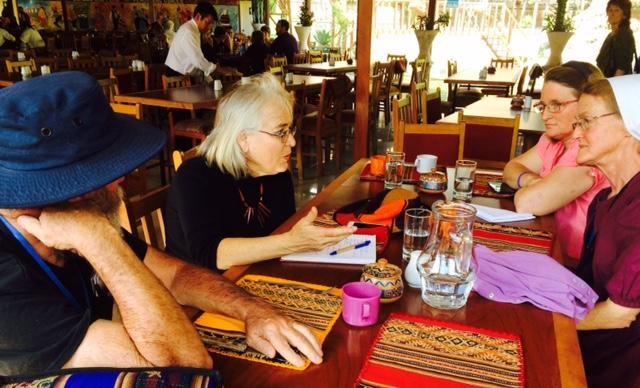
FWCC participated in a consultation between organizations interested in Bolivia, convened by the Bolivian Quaker Education Fund (BQEF). Goals of this consultation were to 1) Gain a more thorough understanding of the work of Quaker or Quaker-affiliated organizations located in the Global North working in solidarity with Bolivian partners 2) Explore our responses to the evolving landscapes of solidarity work in Bolivia and reflect on deepening our faithful accompaniment with Bolivian Communities and Friends 3) Discover possibilities for further support and collaborations. We are very thankful to Rebecca Day Cutter of BQEF and Consultation and Intervisitation Program Group Clerk Milena Villca for their leadership in this initiative

Representatives from BQEF, United 4 Change (which has taken on the work of Quaker Bolivia Link), Waljok, Quaker Earthcare Witness, the American Friends Service Committee, Thee Quaker Podcast (through a videomaking project in partnership with Waljok), Friends Journal shared about their work and FWCC shared about our relationships with Friends and Yearly Meetings in Bolivia.

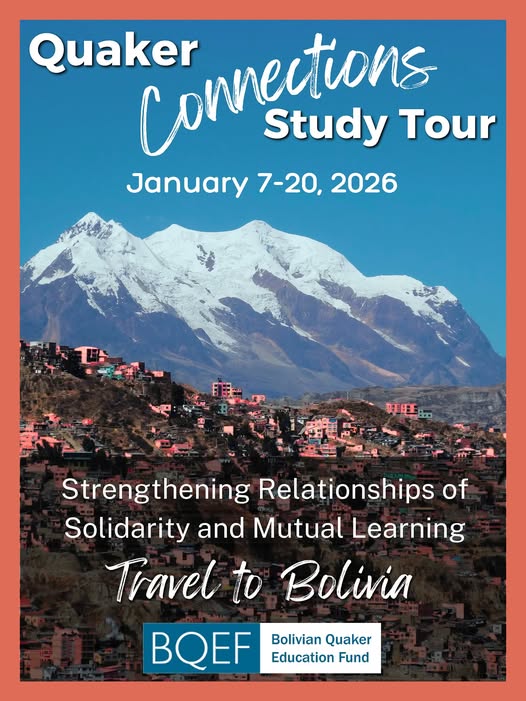
Outcomes of this meeting include multiple opportunities to engage and learn more about Bolivia, including an in person study tour lead by BQEF to Bolivia in January and a virtual tour organized by Waljok.

BQEF has just a few spots left for its Quaker Study Tour, January 7-20 2025, which will visit several of the projects described in the consultation. BQEF staff say that despite the fact that deadlines and information sessions listed on the tour page have past, you are still welcome to express interest.

Waljok is organizing a virtual study tour and released a preview of that opportunity, produced by Thee Quaker filmmaker Michael Candelori (who has also produced media for FWCC). Learn more about that tour at this link, and enjoy the preview below:

FWCC Americas announces new Executive Secretary!

The Friends World Committee for Consultation, Section of the Americas—the global fellowship association for the Religious Society of Friends—is pleased to announce that Evan Welkin, from North Pacific Yearly Meeting, has been appointed as the next Executive Secretary, starting July 15, 2024.

Evan Welkin is a member of Olympia Monthly Meeting (North Pacific Yearly Meeting), born and raised in the Cascadia region of the US Pacific Northwest on lands of the Siuslaw, Squaxin Island and Nisqually peoples. His grandparents Jack and Judy Brown (University Friends Meeting) became convinced Friends through their work with AFSC camps after the end of WWII. 

He holds a BA from Guilford College in Greensboro, North Carolina, USA and Masters from Schumacher College in Totnes, Devon, UK. He is a graduate of the Guilford Quaker Leadership Scholars Program (QLSP) where he served as a Sojourning member released from Olympia MM to study theological diversity among evangelical, conservative, programmed and unprogrammed Friends in Guilford County. While in QLSP, he offered ministry at local meetings and churches, supported development of the QLSP Service Committee and received a Clarence and Lilly Pickett Fund for Quaker Leadership grant to survey meetings along the Eastern Seaboard. He participated in several service learning projects with the North Carolina Friends Disaster Service, advocated for graduates of the Ramallah Friends School targeted by campus violence at Guilford and received a Lyman Fund grant to join a Christian Peacemaker Teams (CPT) delegation to Israel and Palestine in 2008. While on the CPT delegation, he met his Italian future wife, Federica Faggioli, as she served as project coordinator on a EU-funded human rights monitoring project in the South Hebron Hills of the West Bank. Returning to the Pacific Northwest, Evan served as Clerk of Olympia Monthly Meeting’s Finance and Worship & Ministry Committees while beginning a career in management and community organizing with the Rachel Corrie Foundation for Peace and Justice, TOGETHER! of Thurston County and the Squaxin Island Tribe.  

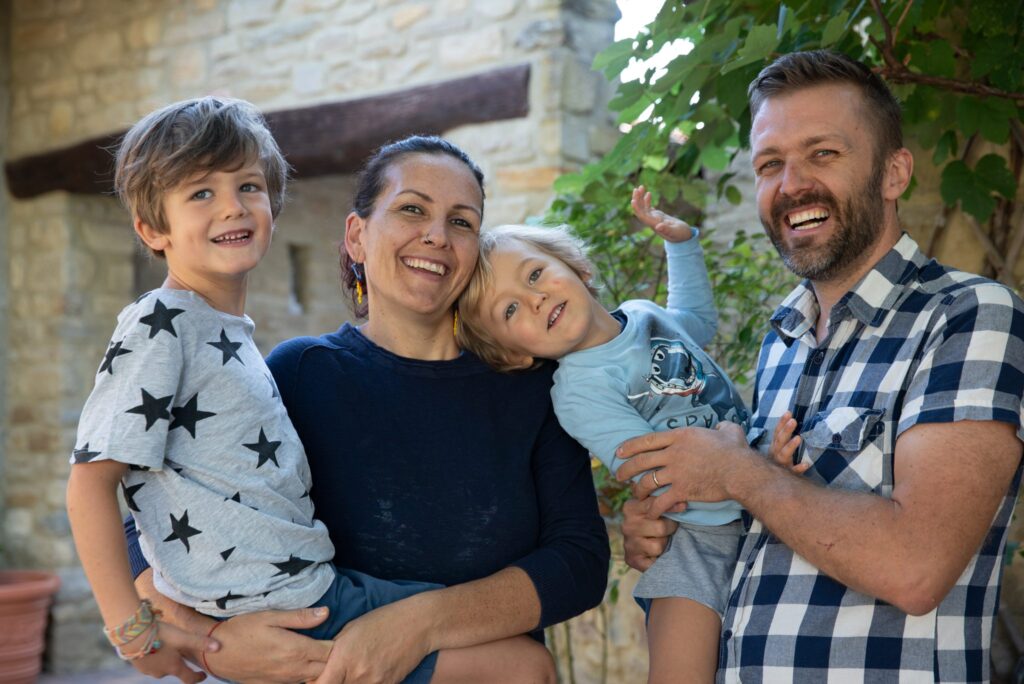
He married Federica in 2012 under the care of Olympia Monthly Meeting and her Catholic community, the Pope John XXIII Association. From 2012 to 2015, Evan and Federica tested a leading to move to Italy while connecting with the FWCC Europe and Middle East Section and supporting Quakers in Italy to host an annual gathering of Italian Friends, held each year on the Faggioli family farm from 2016-2023. Their first son, Oliver, was born in 2014 as Evan founded a private consulting practice focusing on support for nonprofit development and network facilitation for clients including the Global Ecovillage Network, Climate Action Network-International, PEN America, the European Network of Community-Lead Climate Initiatives, the Global Fund for Children, and Permaculture for Refugees.

From 2016-2017, Evan completed the Young Adult Leadership Programme at Woodbrooke Learning and Quaker Study Centre in Birmingham, UK and served as Elder and Trustee of Europe and Middle East Young Friends.  In 2018 after the birth of their second son, Gabriel, the family found way open to move definitively to the farm and found an ecovillage, learning center and permaculture project called “Borgo Basino.” From 2020 to 2024 Borgo Basino served as a living, learning community connecting education, networking and wellness on a small multifunctional farm. Nestled in the hills outside of Bologna, Borgo Basino offered a hub for agricultural innovation, community wellness, and sustainable hospitality. Despite facing significant challenges caused by the COVID pandemic, Evan continued his work as a lecturer and administrator at the Spring Hill College Italy Center while leading activities with groups, interns and community members on the farm. In 2022, he began work for the FWCC in the Europe and Middle East Section (EMES), supporting communications and development of the EMES Peace and Service Network. He also served the FWCC World Office facilitating the Global Quaker Sustainability Network. In Spring 2023, massive landslides caused extensive damage to the farm and its only access road, provoking difficult discernment about the sustainability of the farm after many setbacks. In early 2024, Evan and his family made the difficult decision to leave the farm and return to the United States, trusting again that way would open to new possibilities. The opportunity to continue his vocation and career with the FWCC Americas Section is truly the continued realization of a personal dream, connecting Friends around the world in faith, spiritual formation and a deeper connection with all life on earth.  

In his spare time, Evan keeps bees, makes artwork and sails (and repairs!) wooden boats.
Evan's favorite verses

For the Spirit God gave us does not make us timid, but gives us power, love and self-discipline.
- 2 Timothy 1:7 (NIV)

He has shown you, O mortal, what is good. And what does the Lord require of you? To act justly and to love mercy and to walk humbly with your God.
- Micah 6:8 (NIV)

Seeing the Tapestry – QuakerSpeak videos and curricula

Listening in Tongues Being Bilingual as a Quaker Practice img

Seeing the Tapestry – QuakerSpeak videos and curricula

We are pleased to present all five of the QuakerSpeak – FWCC videos collected in one place, along with the Religious Education curricula that go along with each.

We are so happy with how these videos turned out, and the success with which they have been greeted, garnering many “views” and positive feedback from those who have watched and used the videos. “Are You A Quaker” is on track to be one of the most-watched QuakerSpeak videos yet!

If you do use one of these videos as part of your religious education classes at your church or meeting, please take a moment to complete our brief survey. This will help us plan for any future videos!

Video #1 – Listening in Tongues – Being Bilingual as a Quaker Value
Video #2 – How Many Quakers are there in the World? And Where are They?
Video #3 – Top Ten Reasons I am a Quaker
Video #4 – How Do Quakers Approach Sustainability Work?

Curriculum – Quakers and Sustainability

Has your monthly meeting or annual meeting responded to the sustainability meeting? Let us know how!

Video #5 – Are You A Quaker?

Curriculum – Are You a Quaker?

Many thanks to our partners: Friends Publishing Corporation, Quaker Religious Education Collaborative, Friends International Bilingual Center, New England Yearly Meeting, and the Thomas H. and Mary Williams Shoemaker Fund.

Additional Viewing

Why I Worship With Other Kinds of Quakers
Why Traveling Ministry Is Vital for Quakers in the 21st Century
What’s the Difference Between “Programmed” and “Unprogrammed” Quaker Worship?

Conservative Quakers Raise Cattle Sustainably in Bolivia

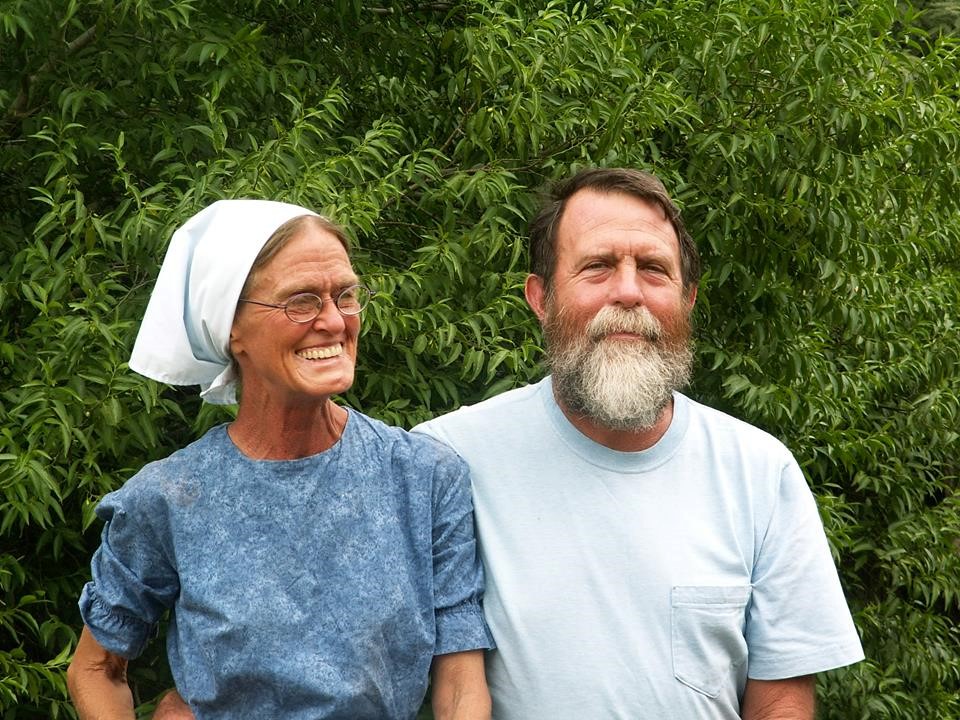
We met Neva and Grant Kaufmann at World Plenary of Friends in Peru and were fascinated by their story. The Kaufmans have lived in Bolivia for several decades but they are not typical Bolivian Friends. They are Conservative Friends who moved to Bolivia from Iowa twenty years ago and became cattle ranchers. They live as simply and as sustainably as possible. Neva is a birthright Friend and Grant was born into a secular Jewish family. With their mostly homemade plain dress, they look like Friends who’ve stepped out of the 19th century.

Grant and Neva moved to an area in the southeast part of Bolivia called the Chaco, where the climate is extremely hot and arid. When they arrived, the pond on their property looked like pea soup.  To make the water drinkable, they had to boil it over a wood fire. The cistern held rainwater, but it rains so rarely the water was insufficient. They couldn’t grow corn because it is too dry. The ground was unproductive.  They lost cattle because there was not enough grass to feed them.

Through the Mennonites they learned about panicum  gatton, a species of grass that grows in shade. They also learned about a system of ranching called sylvopastoralism, which is “the practice of combining forestry and grazing of domesticated animals in a mutually beneficial way.” Instead of cutting down trees to create a monoculture, the Kaufmanns planted panicum grass, which grows under trees and feeds their cattle. As a result of thispractice, the Kaufmanns began to see deer, wild pigs and new species of birds.  As their ranch prospered, neighboring ranchers also began to follow their example.

They learned that certain trees called choroquete thrive in this dry climate. Their leaves taste like salad. In June through October they drop their leaves and help create a cushion, which the cattle like to lick up.

“It’s a beautiful symbiotic system,” explained Grant.

Their life hasn’t been easy. In the first year they killed over 300 poisonous snakes.  They had to work hard to live sustainably but they have a happy family and a deep gratitude to God. Neva explained, “Our family loves to work and loves to have fun. They love to milk cows. One son wanted a cow since he was four years old. Nathan likes ranching, and Rachel trains horses. She loves animals and is very gentle and kind.”

Grant told us, “The biblical counsel ‘whatsoever thy hand findeth to do, do it with thy might’ has encouraged us to press ahead with the ranch at a time when Bolivia’s chronic political and legal instability, combined with threats of climate change, have discouraged many others.” He is thankful for all that he has been able to accomplish in South America.

We enjoyed many meals with Grant and Neva in Pisac, and we have kept in touch in the year that has passed. For us, the encounter with these Friends, living a particular but sustainable life, displays the essence of FWCC’s mission to bring Friends of varying traditions and cultural experiences together.

When we asked the Kauffmans what was most memorable about the FWCC Plenary, they responded:  “Knowing again that we are not alone….The essence of our Friends community seems to be sharing the love of God, whether we call it that or something else.  This was the Pisaq experience for us.”

To learn more about the Kaufmanns, including their spiritual journey, go to http://laquaker.blogspot.com/2016/10/conservative-quakers-raise-cattle.html.

FWCC and Sustainability (Video)

how-quakers-approach-sustainability-work-600PX

The December QuakerSpeak – FWCC partnership video focuses on the work that started with the Kabarak Call and led to our sustainability minute from the 2016 World Plenary in Pisac, Peru.

The Kabarak Call for Peace and Ecojustice was approved on April 24, 2012 at the Sixth World Conference Friends, held at Kabarak University near Nakuru, Kenya. It was the culmination of the FWCC World Consultation on Global Change which was held in 2010 and 2011.

In January 2016, the FWCC World Plenary Meeting approved the Pisac Sustainability Minute proposed by the Consultation on Sustaining Life on Earth. “This FWCC Plenary Meeting also asks all Yearly Meetings to initiate at least two concrete actions on sustainability within the next 12 months. These may build on existing projects of individuals or monthly meetings or they may be new initiatives. We ask that they encourage Young Friends to play key roles. We ask that meetings minute the progress and results, so as to share them with FWCC and Quaker meetings.”


If your meeting, church, or group is responding to the 2016 Sustainability Minute, please let us know how by filling out this brief form.

One way FWCC Section of the Americas has responded to this minute is by creating a Green Endowment Fund, which will invest in companies that are working responsibly towards peace and ecojustice. This new fund seeks contributions from Friends who wish to help ensure the ongoing support of the Section’s work, with assurance that their gift will be invested in a fund that is screened for Quaker values and is fossil fuel free, with a portion of the portfolio specifically invested in alternative energy and green technology. Click here to make a contribution to this new fund – select Other and specify the Green Endowment Fund under Purpose.

The Quaker Religious Education Collaborative has produced materials for those interested in using the video as part of religious ed or first day classes – or other presentations!

Additional links and resources: