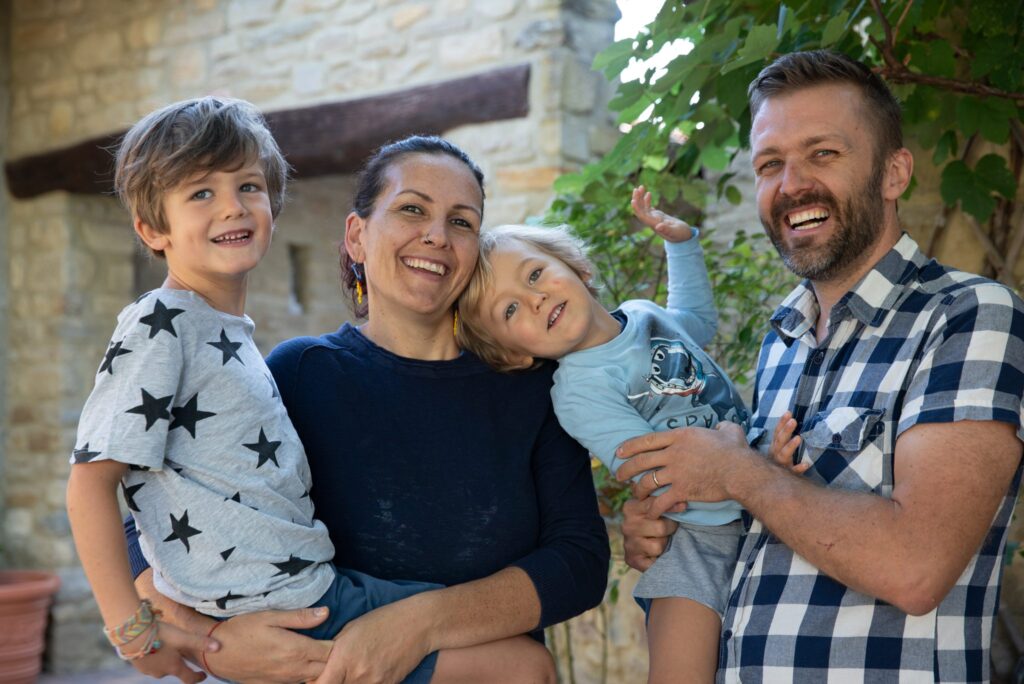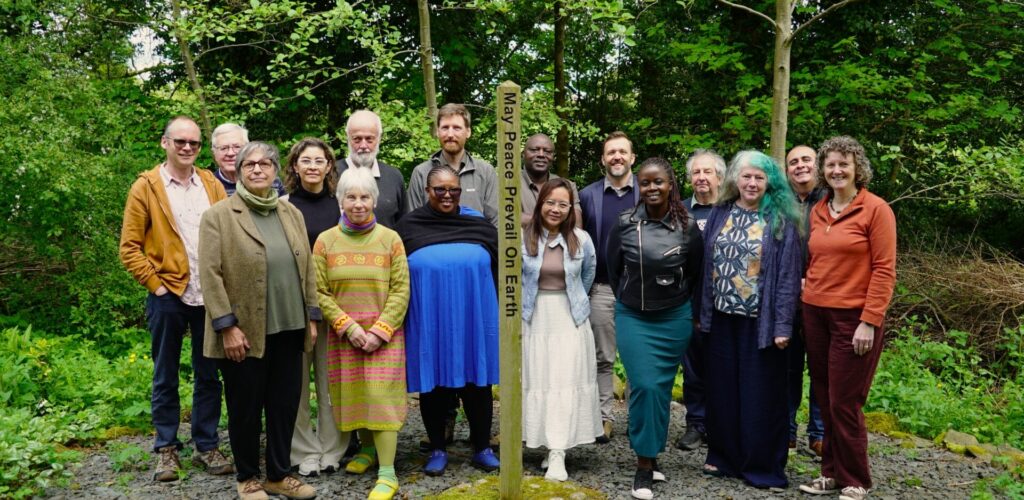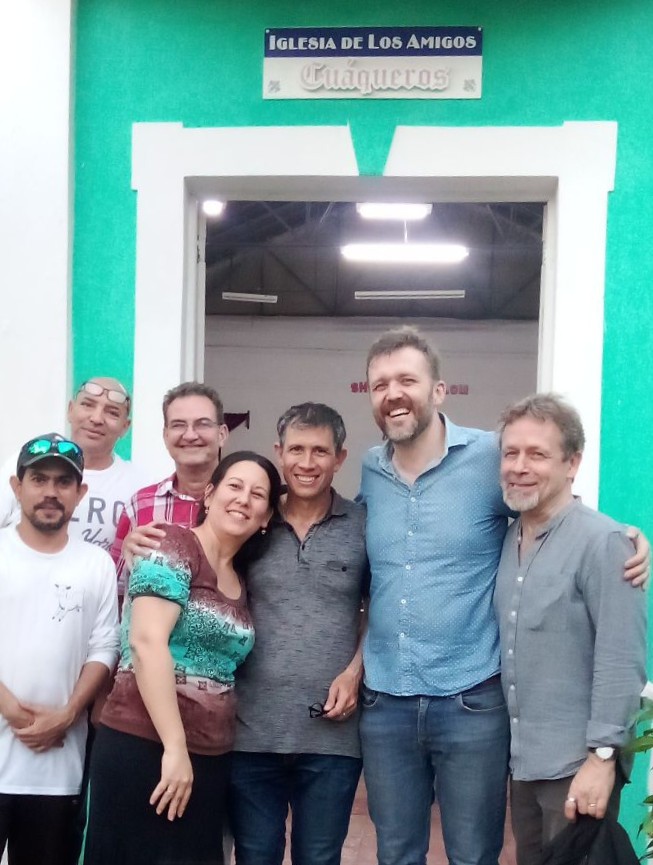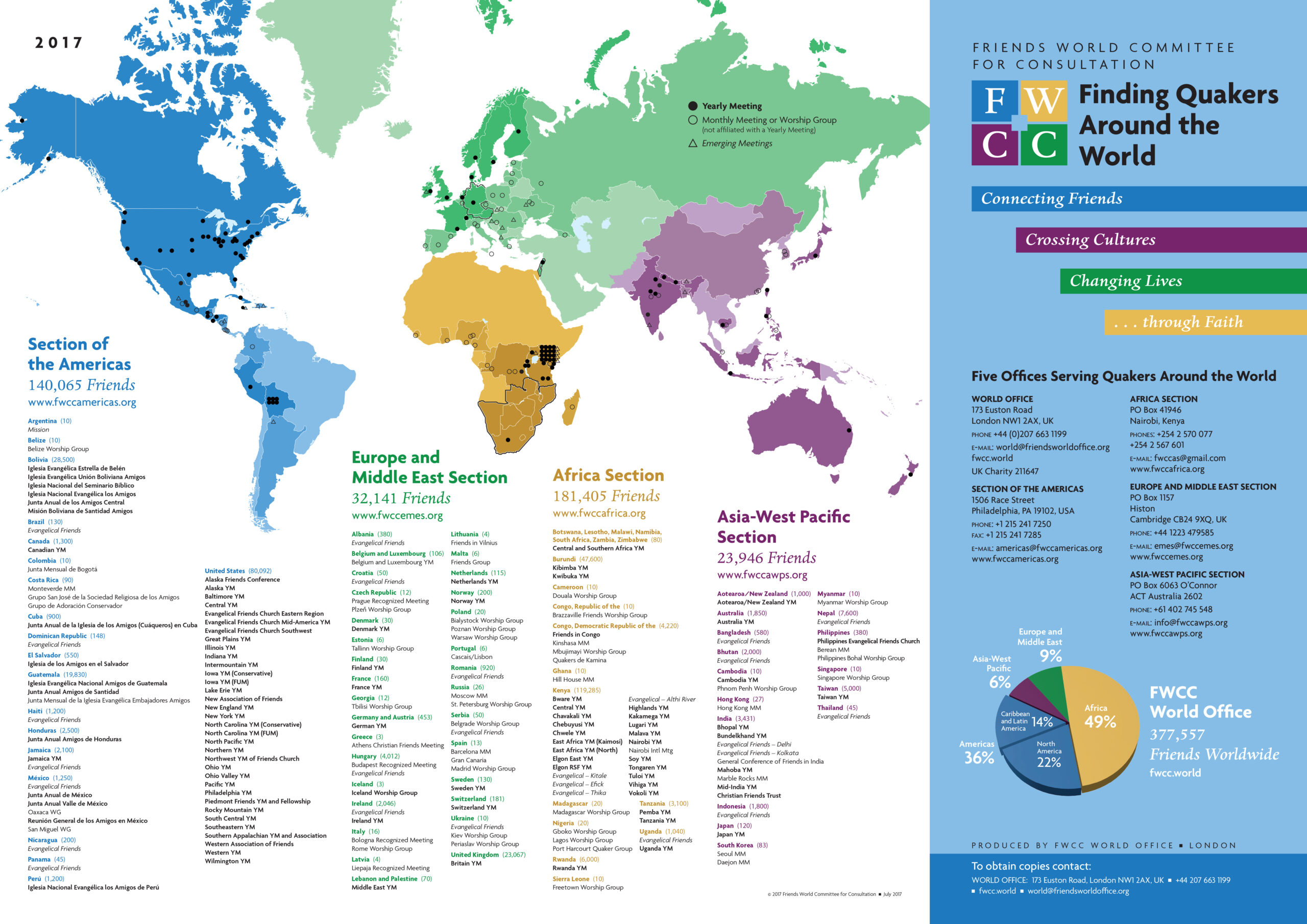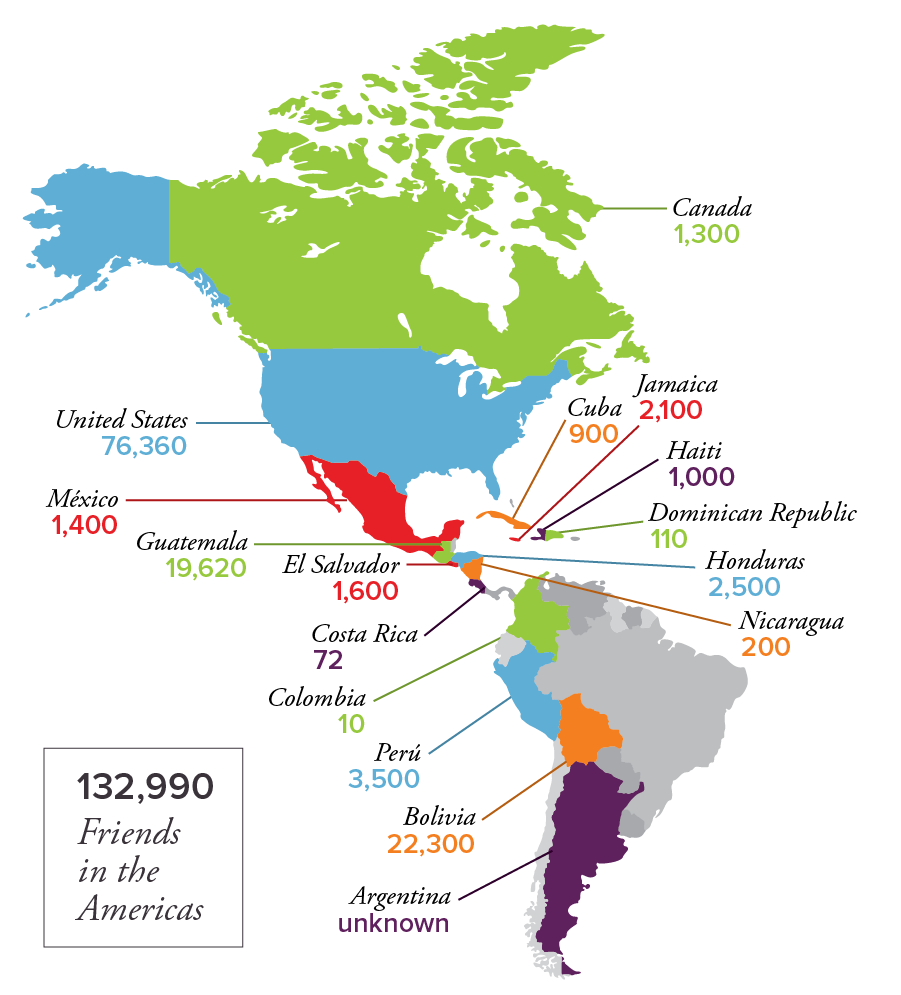
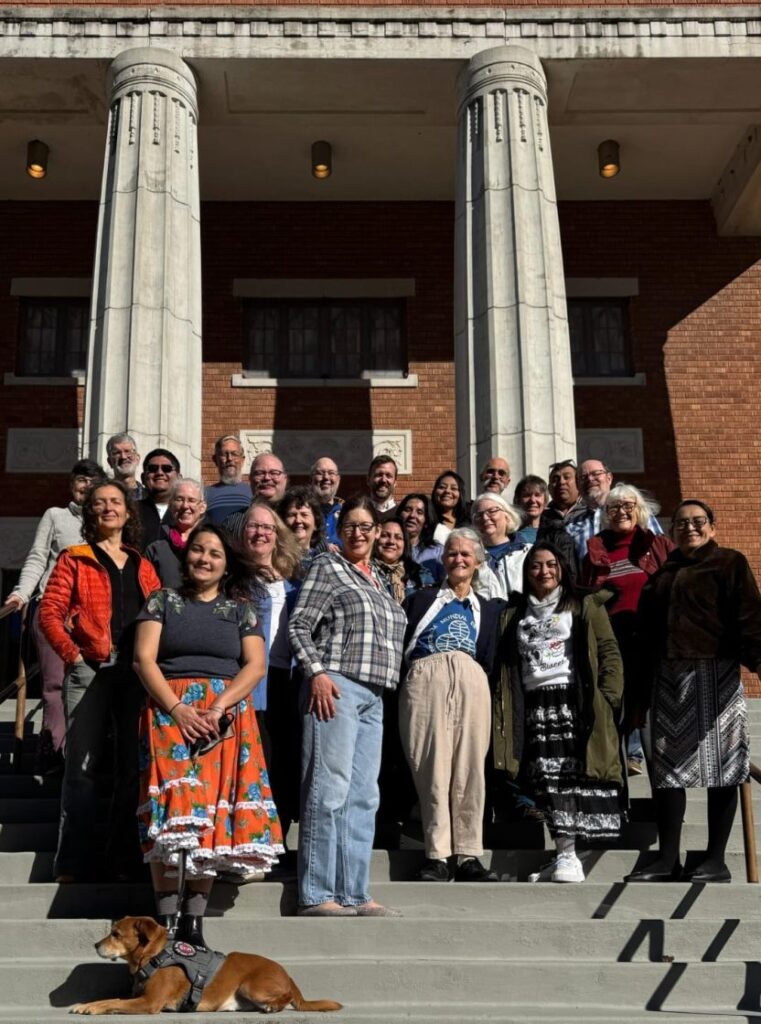
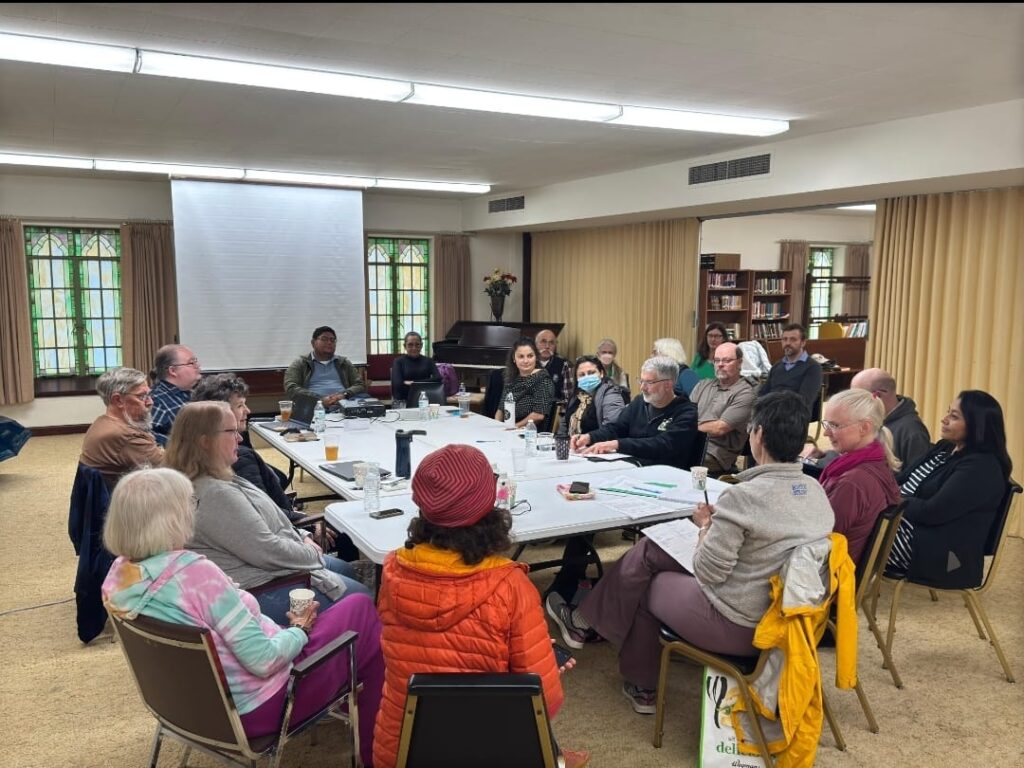
FWCC representatives from across the Americas– from diverse contexts, perspectives, and languages– met for worship in Wichita Kansas, and listened to a message on Amos 5:18-24 offered by University Friends pastor Charity Sandstrom about the daily work of our faith, which does not change, even as the political circumstances that we find ourselves in in each of our countries do.
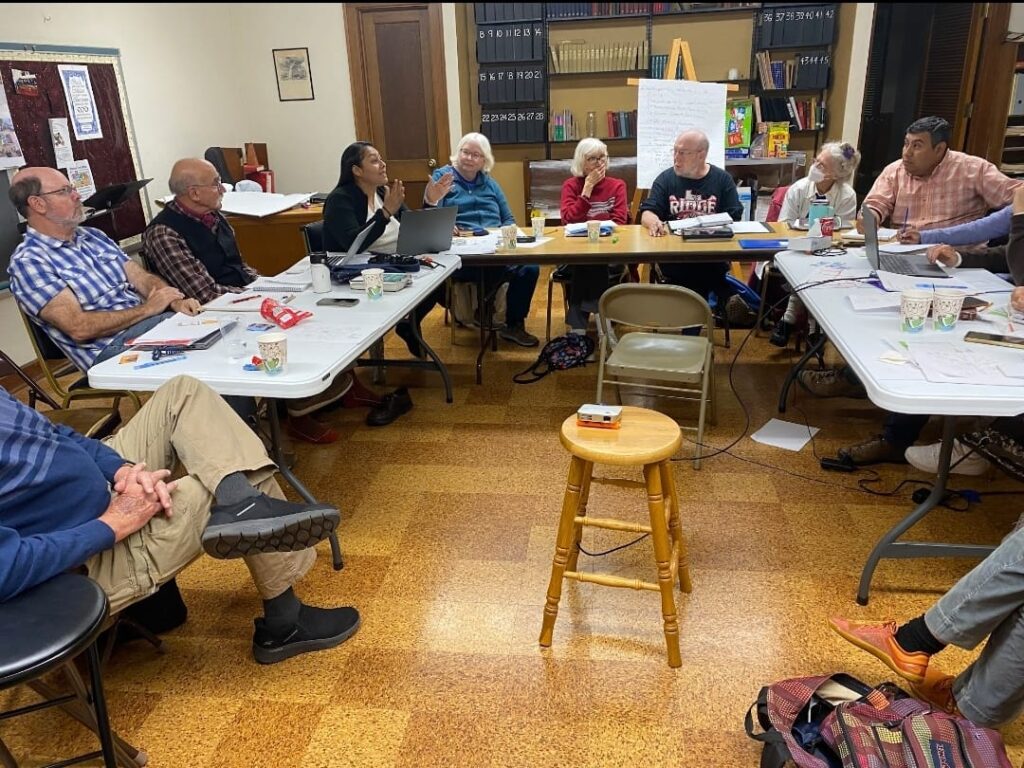
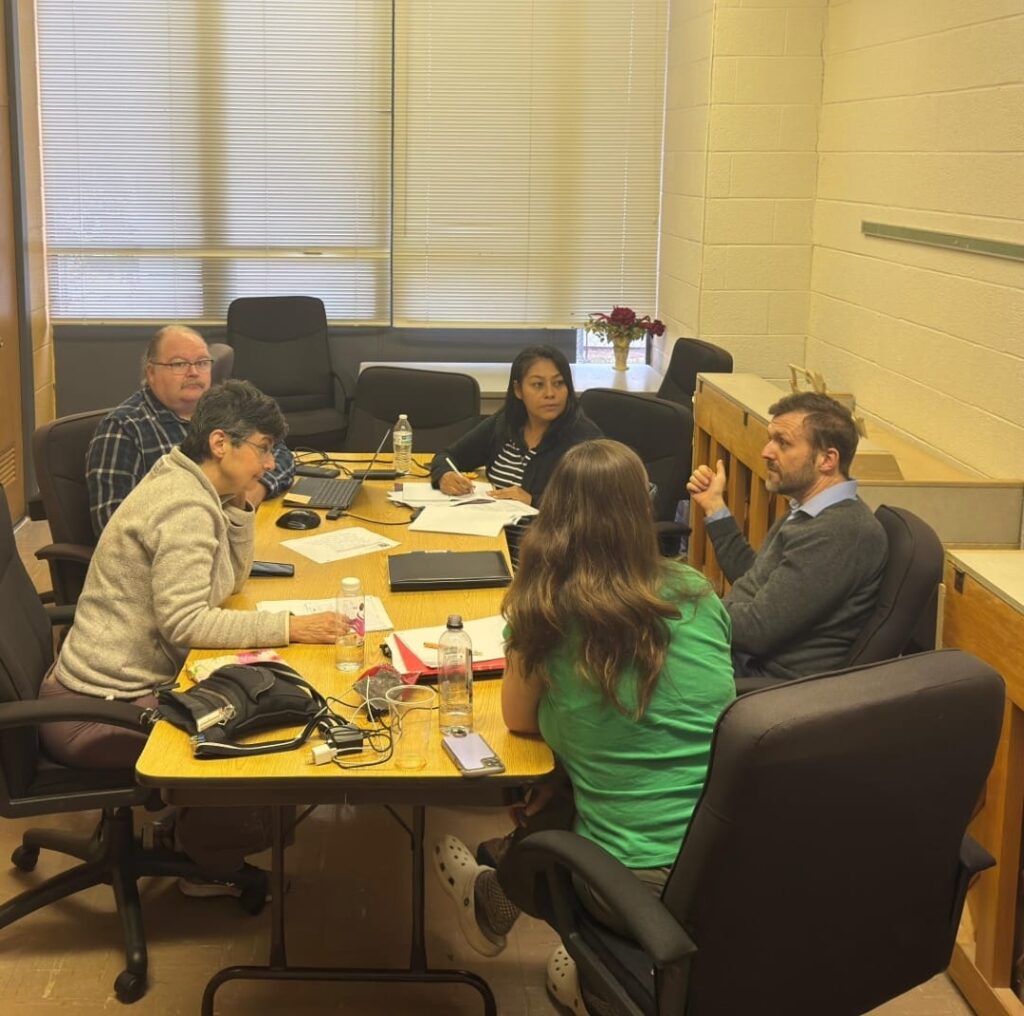
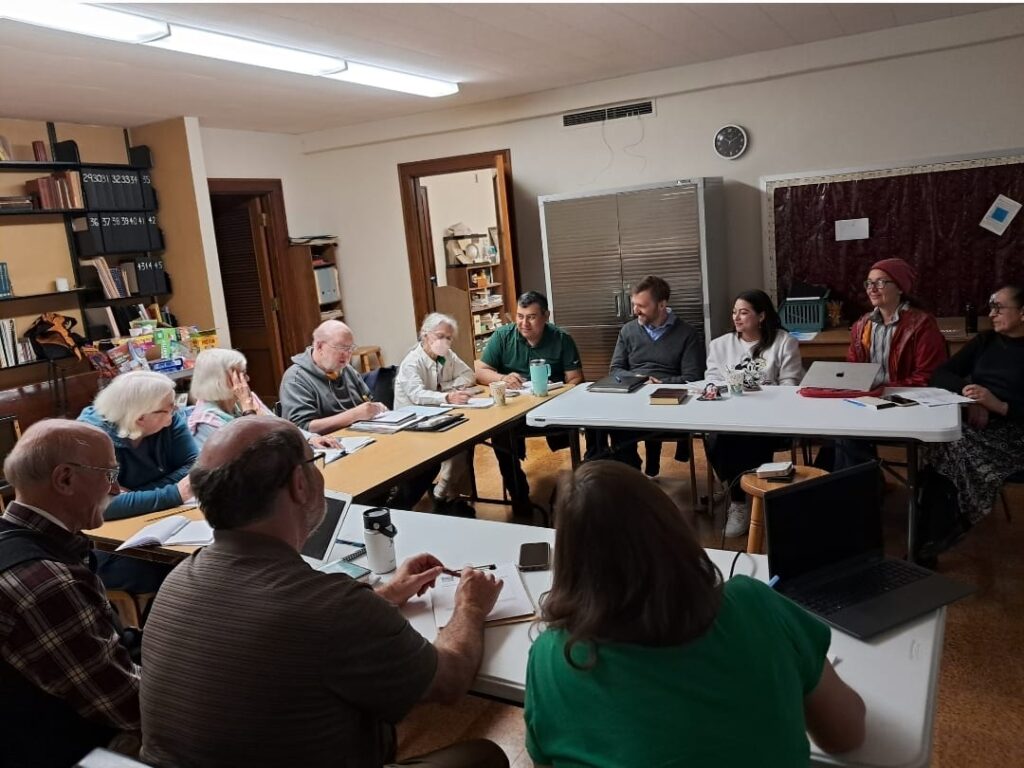
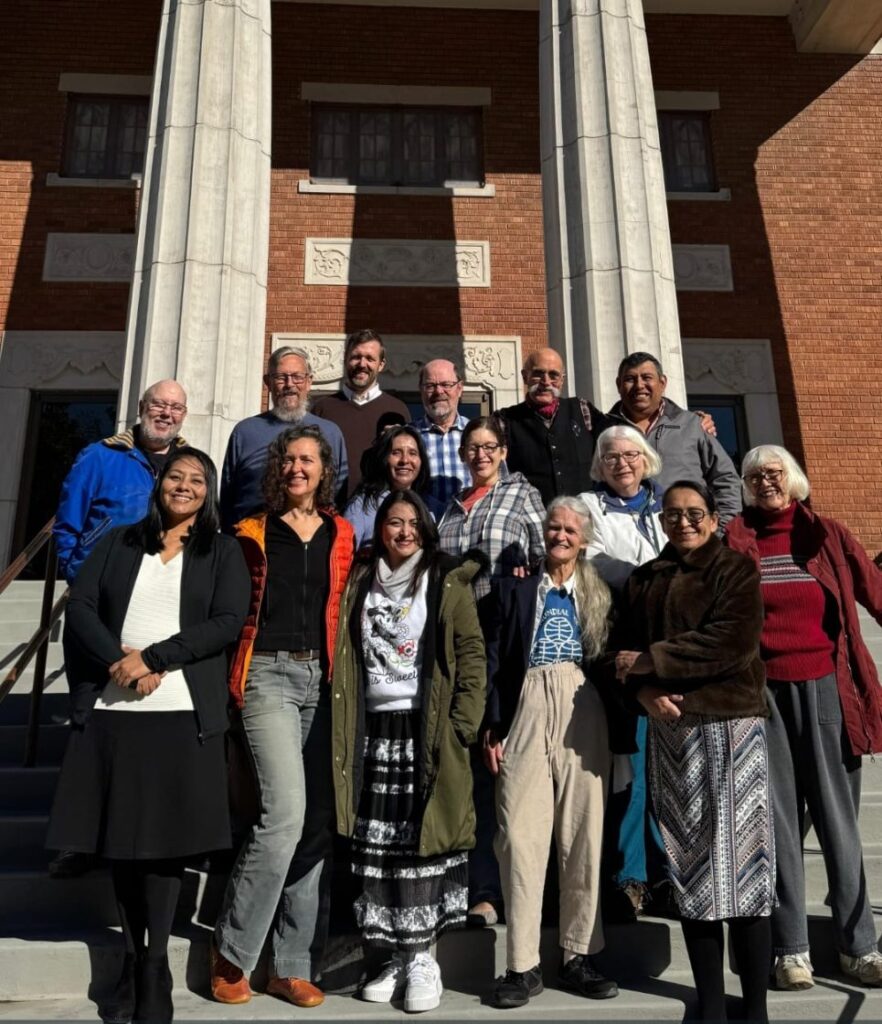
Volunteers, Representatives and staff for FWCC Americas attended University Friends Meeting last Sunday in Wichita, KS.
Amos 5:18-24 NRSVUE
The Day of the Lord a Dark Day
18 Woe to you who desire the day of the Lord!
Why do you want the day of the Lord?
It is darkness, not light,
19 as if someone fled from a lion
and was met by a bear
or went into the house and rested a hand against the wall
and was bitten by a snake.
20 Is not the day of the Lord darkness, not light,
and gloom with no brightness in it?
21 I hate, I despise your festivals,
and I take no delight in your solemn assemblies.
22 Even though you offer me your burnt offerings and grain offerings,
I will not accept them,
and the offerings of well-being of your fatted animals
I will not look upon.
23 Take away from me the noise of your songs;
I will not listen to the melody of your harps.
24 But let justice roll down like water
and righteousness like an ever-flowing stream.
James 1:19-27 NRSVUE
Hearing and Doing the Word
19 You must understand this, my beloved brothers and sisters: let everyone be quick to listen, slow to speak, slow to anger, 20 for human anger does not produce God’s righteousness.[ justice] 21 Therefore rid yourselves of all sordidness and rank growth of wickedness, and welcome with meekness the implanted word that has the power to save your souls.
22 But be doers of the word and not merely hearers who deceive themselves. 23 For if any are hearers of the word and not doers, they are like those who look at themselves[d] in a mirror; 24 for they look at themselves and, on going away, immediately forget what they were like. 25 But those who look into the perfect law, the law of liberty, and persevere, being not hearers who forget but doers who act—they will be blessed in their doing.
26 If any think they are religious and do not bridle their tongues but deceive their hearts, their religion is worthless. 27 Religion that is pure and undefiled before God the Father is this: to care for orphans and widows in their distress and to keep oneself unstained by the world

Charity Kemper Sandstrom is an author and Quaker pastor, currently serving University Friends Church in Wichita, KS. She has three great kids, a love for Jesus, and possibly a mild caffeine dependency. Charity considers herself an ecumenical and occasionally liturgical Friend, with a passion for sharing the love of God.
In November we are looking at four difficult themes: Grief & Remembrance, Injustice & Action, Disillusionment & Hope, Change & Growth. All of these hard things are common human experiences, and as the darkness sets in for the winter, we are holding these experiences in our hands and asking “What do we do with this hard thing?” This morning we are holding the difficult experience of injustice.
The text from Amos that was just read sets us up nicely to talk about how we usually respond to difficulty. Like children who say, “My dad can beat up your dad” in response to a perceived slight, the Children of Israel saw themselves as victims of injustice. They wanted the day of the Lord to come, so that everything could be set right. They wanted their enemies to suffer. They wanted God to sweep away evil. They were calling for it, expecting it with eager anticipation, and the prophet interrupts to say, “What in the world are you thinking? Do you really think evil is only located in your enemies?”
Why do you want the day of the Lord to come? It is darkness and not light. You hate your enemies, but do you not see the injustice that comes from your own hands? God is not interested in your festivals, rituals, and rites. Away with the noise of your worship. Instead let justice roll down like mighty waters.
It’s a good thing that was just a “them problem,” right? We certainly don’t respond the same way today, right? Oh, no, wait. I guess we are all suffering from a human problem. It is so very human to locate the source of the problem out there somewhere. We don’t want to look at ourselves, our actions. We want God to be on our side, we need it to be true. We need the certainty that I am on the right team, they are on the wrong team, and we are going to win. We will go to many lengths to convince ourselves it is true.
In this year of political strife, and we are not likely finished with the fallout of the election season, the rhetoric of “us versus them” has been intense. And the arguments presented did not serve to change anyone’s mind, rather to intensify the hate and fear of one side toward the other. In a University of London study, researchers wanted to know whether people responded primarily to factual evidence or their preexisting desire for their cause or candidate to win. What they found was that when people were presented with evidence that supported their point of view, they added that information to their sense of confidence that they would see their desired outcome. When presented with evidence that countered their point of view, they held firm to their opinion and dismissed the information. When we are engaging in “us versus them” rhetoric, it is easy to invest ourselves more heavily in being loyal to our cause than to the truth we hold dear. We set aside the values and principles God calls us to demonstrate in our lives.
The prophet Amos tells the people that their religious practices will not convince God to be on their side, only participating in creating a more just society will please God. Calling for God to bring vengeance for those who are participating in injustice will only call down judgment on their own heads if they are not careful. Not just here, but many times in the prophets, we hear that God is more interested in justice than sacrifice, more interested in a society and culture in which the poor are cared for, where the marginalized are brought to the center than one where all the rules for religious festivals are followed. Jesus picks this up in the Gospels as he told religious leaders they were more concerned with tithing their garden herbs than practicing justice and mercy. Paul tells everyone in Romans 2 that when we judge others we heap condemnation on our own heads because we do the same things.
James picks up this theme in our New Testament scripture this morning. Set aside anger. Listen instead. Human anger cannot bring about God’s justice. Remember the word in the Greek for righteousness is the same as justice. And what does James instruct us to do? He tells us to take action. Stop talking about it, and act. Stop reading about it, and act. Stop complaining about it, and act. Care for the widows, the orphans, and step away from the ways of the world.
Too often in our modern era of internet advocacy on social media, we think we have done our part if we like, share, and post the causes we care about. We think we have done our part if we go to vote once every four years. We put the responsibility of bringing about a just society on the shoulders of political and government leaders. We stop paying attention to the policies and laws that are being passed because the person we voted for won. We trust them and we don’t actually want to know if they will follow through. Or the person we voted for lost, and we give up. We decide nothing we do will matter anyway.
The reality is that justice is not lived out on the grand scale of national politics. Can we legislate changes? Yes, but unless there is agreement among everyday citizens all we do is drive injustice underground. Think with me for a minute about race relations in this country. We outlawed slavery on the national level. I agree with that decision. But what followed were 100 years of oppression in smaller laws and regulations passed at the state and local levels that imprisoned and legally re-enslaved many people of color for simply not having a job. Laws that kept black men and women from voting, even after a constitutional amendment. Laws that kept citizens of color from equal access to education, and public accommodations.
We saw activism in the middle of last century that led to desegregation of schools and other public services, the voting rights act that enfranchised voters of color for the first time in a meaningful way. I agree with these changes. But they did not end racism. Racism became subdued, expressed behind closed doors or in euphemisms and dog-whistles. People stopped saying the quiet part out loud, but they kept their biases against black people. Institutions and policies continued to disproportionately affect the daily lives of people of color. And those not directly affected could pretend that everything was ok, and racism was a thing of the past.
Why am I critiquing the practice of legislating change on a national level? I support lobbying for change on any level and through any legitimate means of making a more just society. I want the government to make good laws that lead to good lives for every person in the country. I believe good policy matters. But I believe there is something that matters more—you and I choosing justice and mercy every day.
What do we remember about the days of slavery? Quakers on the underground railroad seeking the good of their neighbor, and slave patrols hunting those seeking freedom. What do we remember about the Civil Rights movement? People on the ground either marching for peace or protesting angrily at school integration. What do you think makes more of a real difference in a neighborhood—community members who connect and care for each other, or a law that says they have to be civil?
We don’t have to wait for government policy to treat our neighbor with kindness. We don’t have to wait for the supreme court to deem goodness constitutional. We can get busy feeding the hungry or clothing the naked or visiting those who are sick or imprisoned. We can practice religion that God our Creator accepts right now. We can care for the widow and the orphan. We can let justice roll down like mighty waters and righteousness flow like a never-ending stream. We can do that regardless of who won an election. We can do that whether the ballot measure we wanted passed or not. We can choose every day to walk in step with the Spirit, love our neighbor, and lift up those in need.
We can choose to love our enemies. It is what we are called to as followers of Jesus. Love for enemy does not mean agreeing with them. It does mean seeking their good, working to create a world where they can live with respect and dignity. If we are tearing down the other side, we have already lost. Human anger does not bring about the justice of God.
That doesn’t mean you can’t be angry about injustice. It doesn’t mean you can’t tell the truth about your experiences of being mistreated. It doesn’t mean you have to bypass the negative feelings that accompany the realization that something is wrong in government or society, or your family or your neighborhood. Be upset. But take a pause. Take a moment to remember the person in front of you—even the one working injustice—is a beloved child of God. Then you can work for wholeness, healing and peace, even as you tell the hard truth and seek for systemic change.
We are all responsible for creating a community and culture of justice. We are not off the hook because of election results. We are responsible to act. And when we act in alignment with our values, with the principles of Jesus, with the working of Spirit among us, we create change from the ground up.
As we tune our hearts to listen in a time of Quaker worship, can we ask Spirit to show us the truth of our own hearts? Can we trust Christ to teach us how to live day by day in ways that add to the justice and peace of our communities? Can we allow our Creator to remind us that we are beloved Image bearers, and in that reminder accept that of God in the person before us even those who would decide we are their enemy? Let us now try what love would do.