A Midwest Regional Gathering

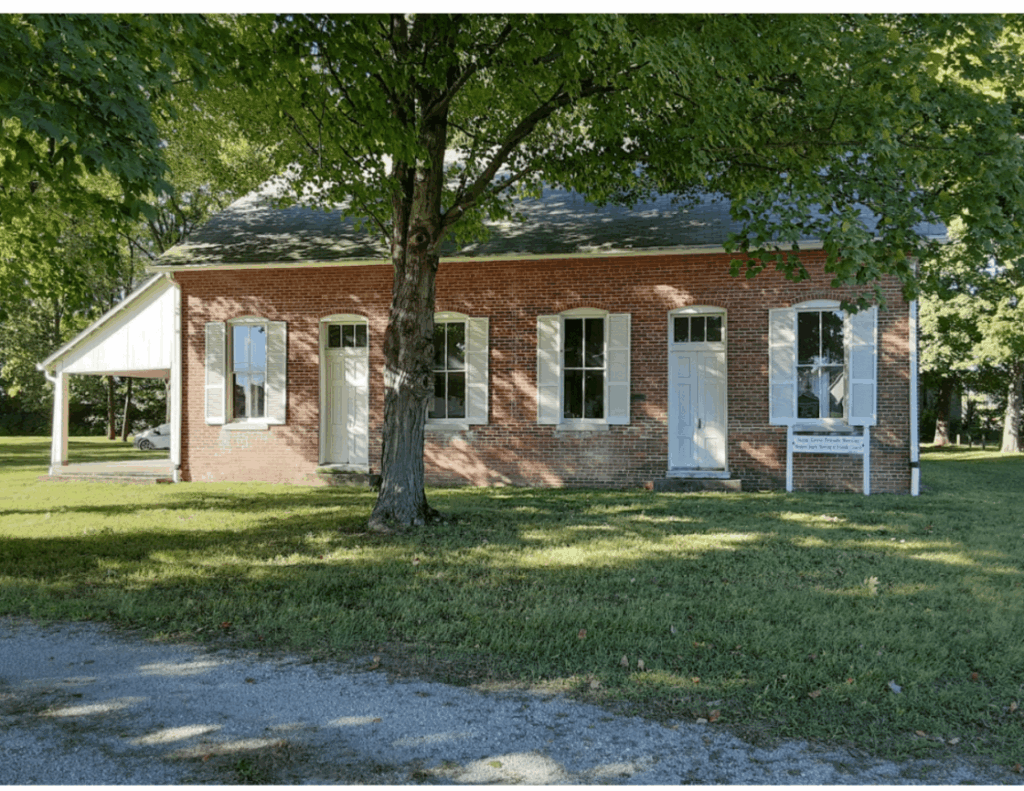
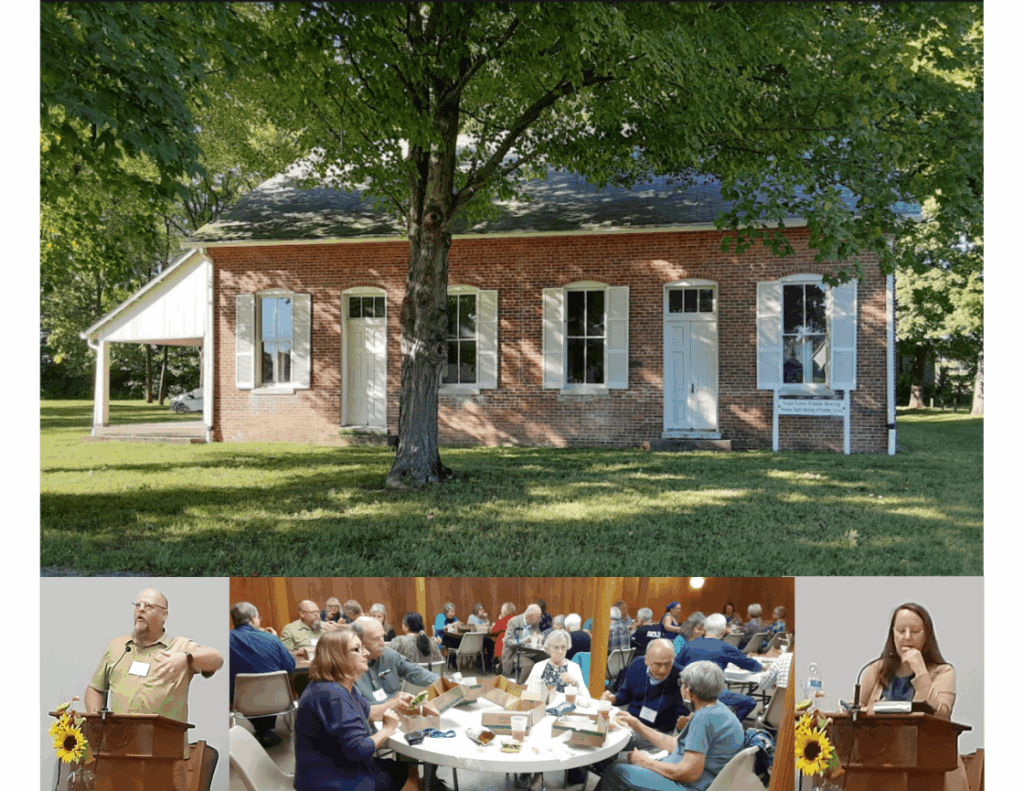
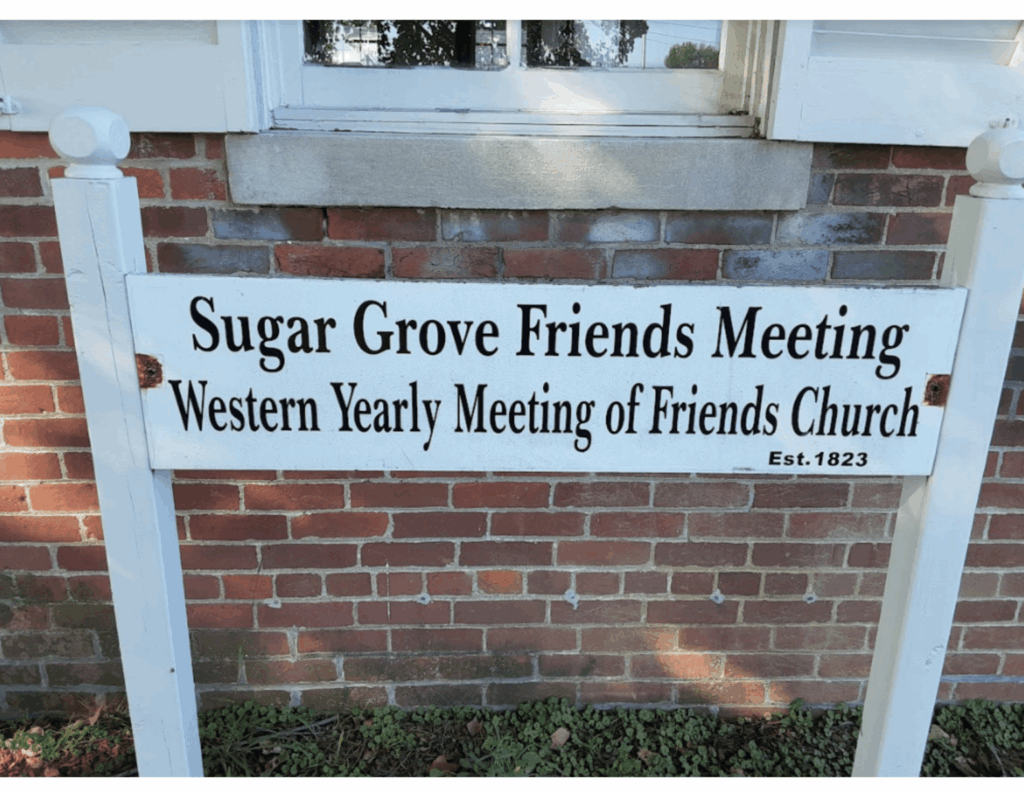
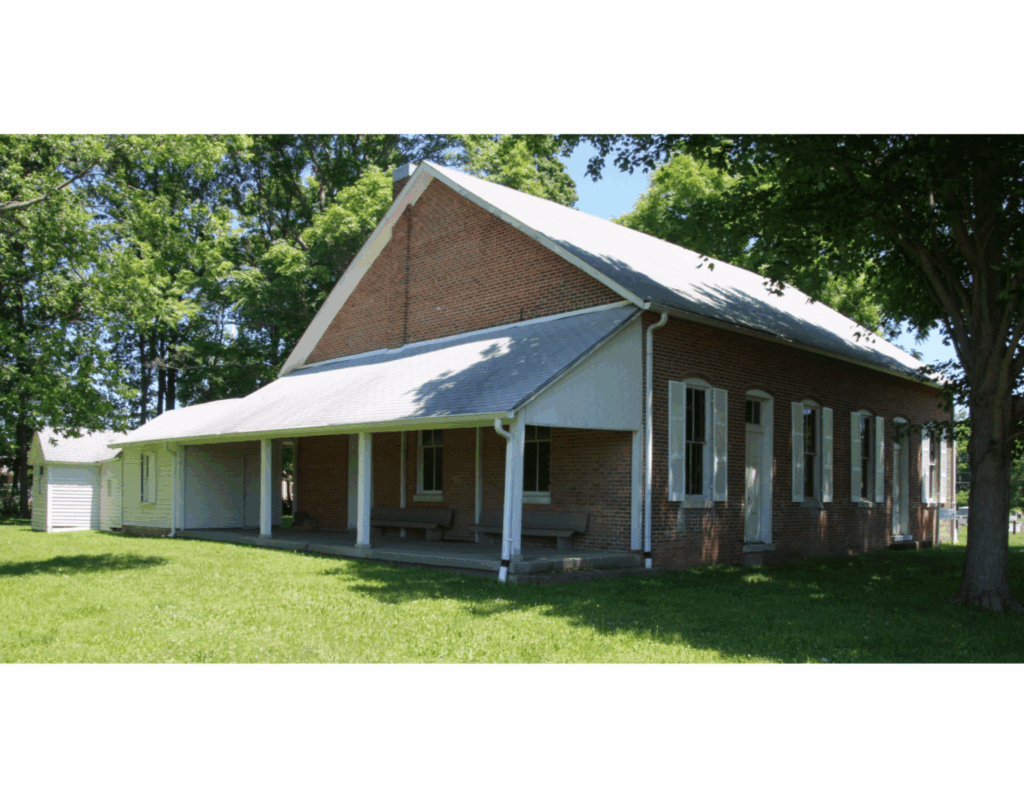
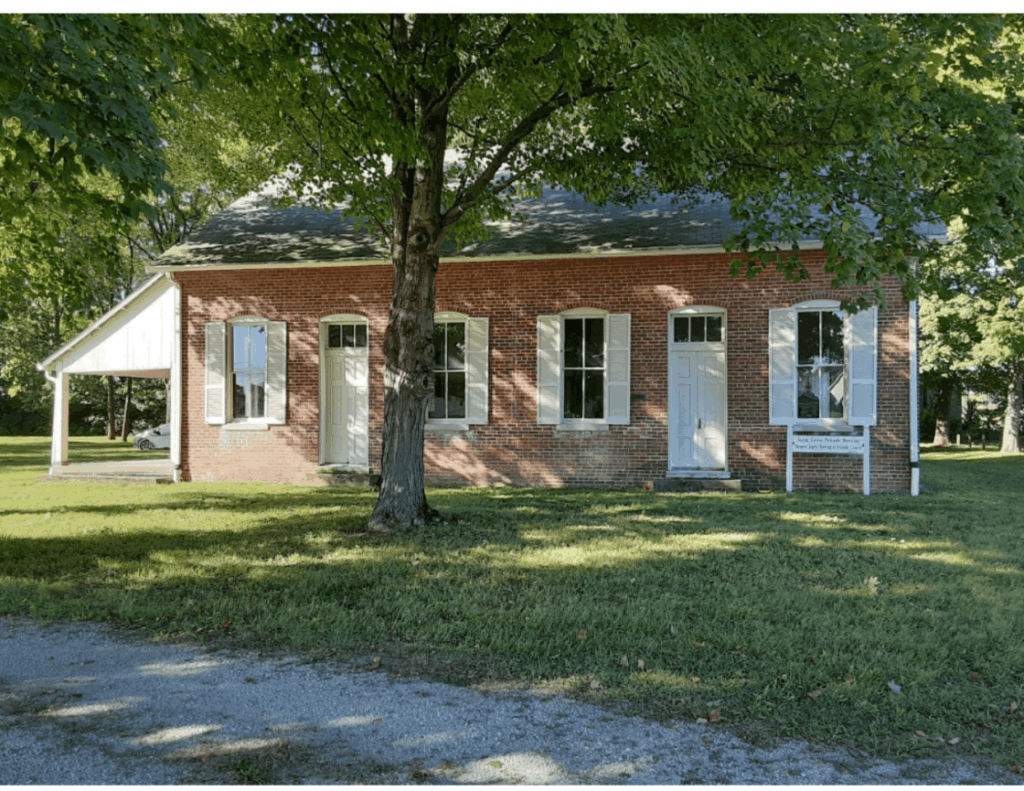
Friends visited Historic Sugar Grove Friends Meeting House in Guilford Township, Hendricks County, Indiana.

by Luanne Hagee

Friends, if there is one thing I have learned the last two and a half years is that I must be patient (near impossible for me) and that patience pays off.

It was way back in March of 2019 during the FWCC-SOA Section Meeting near Kansas City, Missouri members of the Midwest Region (Illinois YM, Indiana YM, Ohio Valley YM, Western YM, the New Association of Friends and Central YM) began a discussion of a possible event/gathering in our Region before the next Section Meeting in 2021. It was suggested that we might hold such a gathering in mid-2020 in conjunction with the annual sessions of one of our Yearly Meetings . . . and then COVID struck, but COVID could not and did not stop us from continuing conversations and planning for a Midwest Regional event/gathering. Lots of emails were sent/received and virtual gatherings were held within the Section.

In April we finally had a location and date secured along with a speaker and a field trip! David Edinger and I discussed options for lunch. In July registration opened and I saw that we had two speakers and a field trip! After I registered I began watching as Friends began to register – it was exciting to see which Friends were going to be attending and anticipating seeing them in person for the first time since the 2019 Section Meeting.

Patience finally paid off . . . and on Saturday, September 24th, 2022, in Plainfield, Indiana over 40 Friends gathered at the Plainfield Friends Meeting on U.S. 40 for the first “post COVID” hybrid FWCC-SOA gathering.

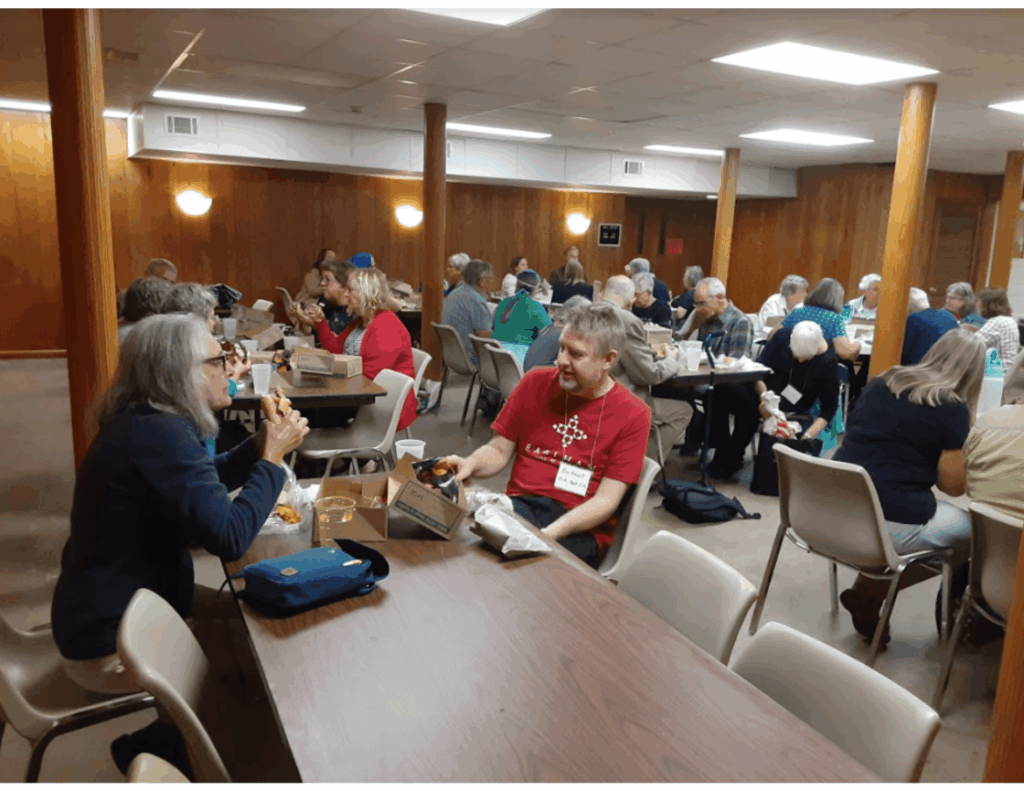
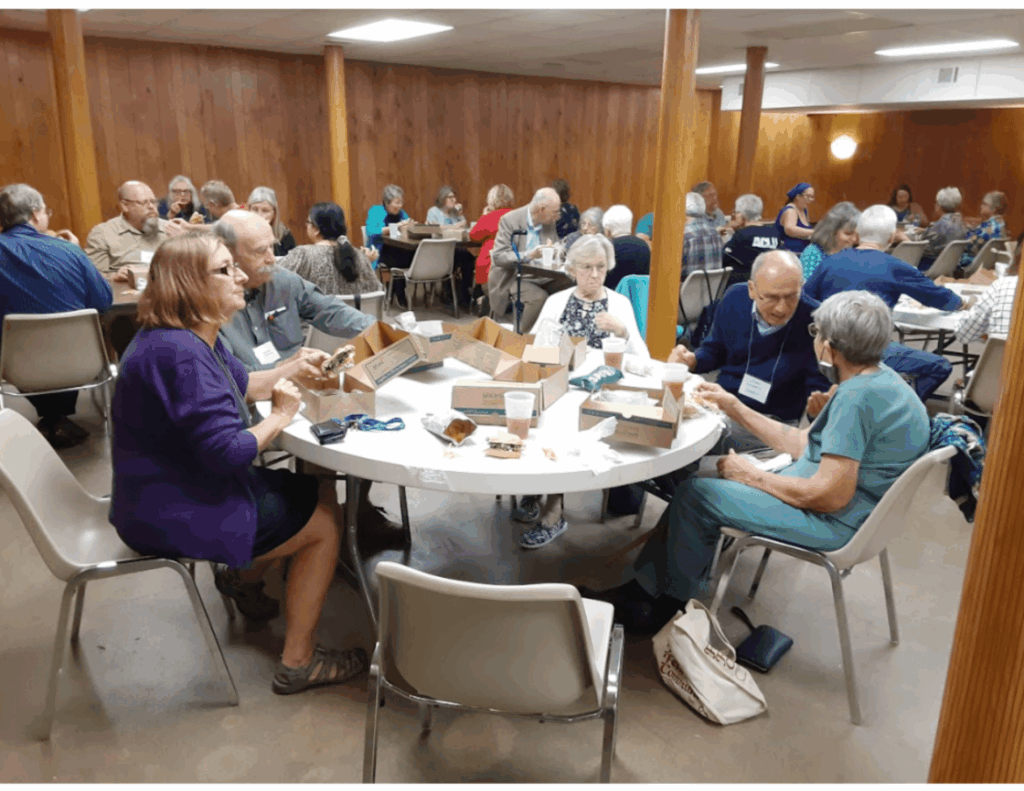
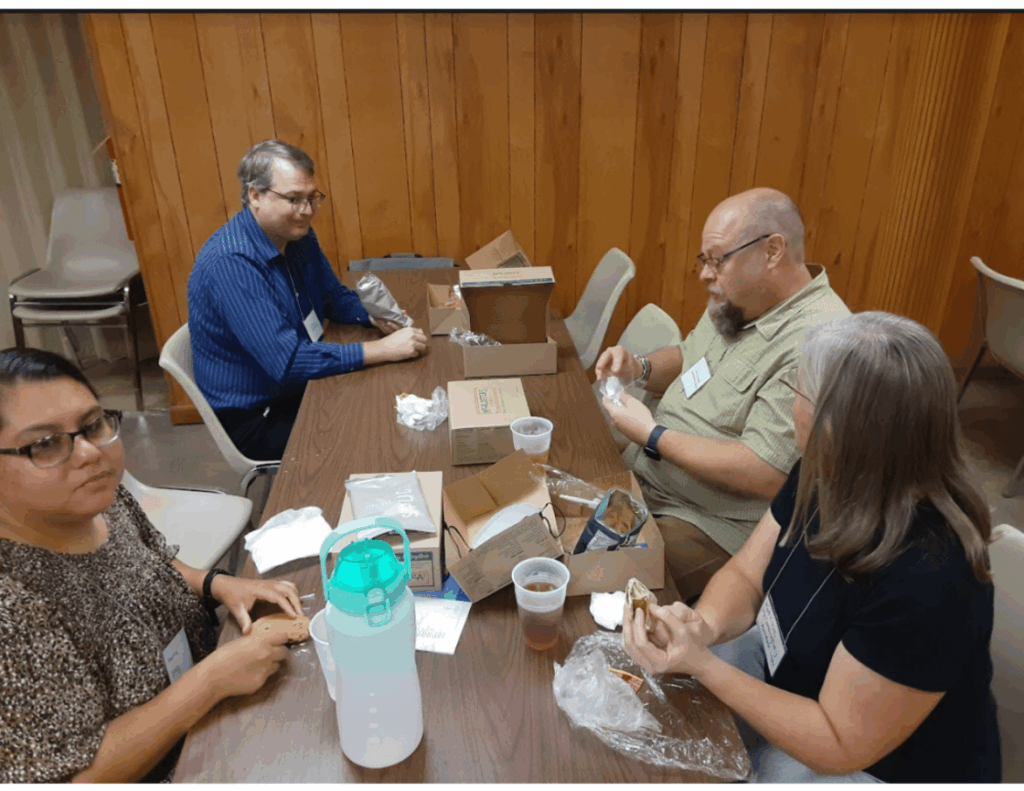
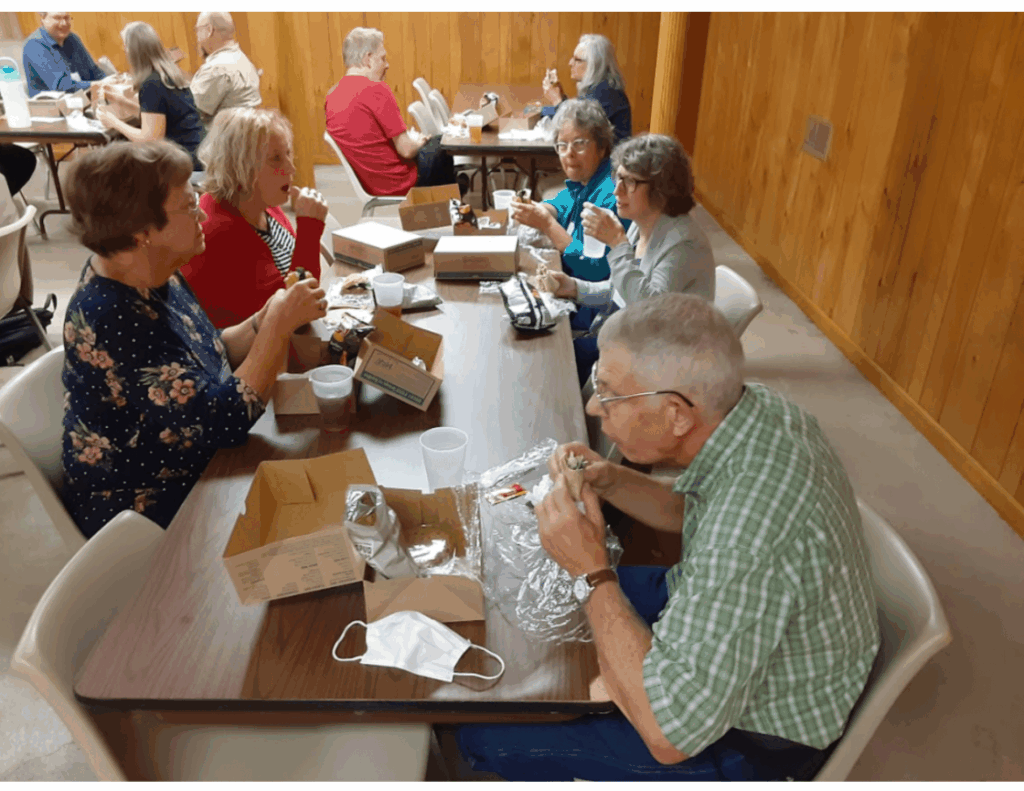
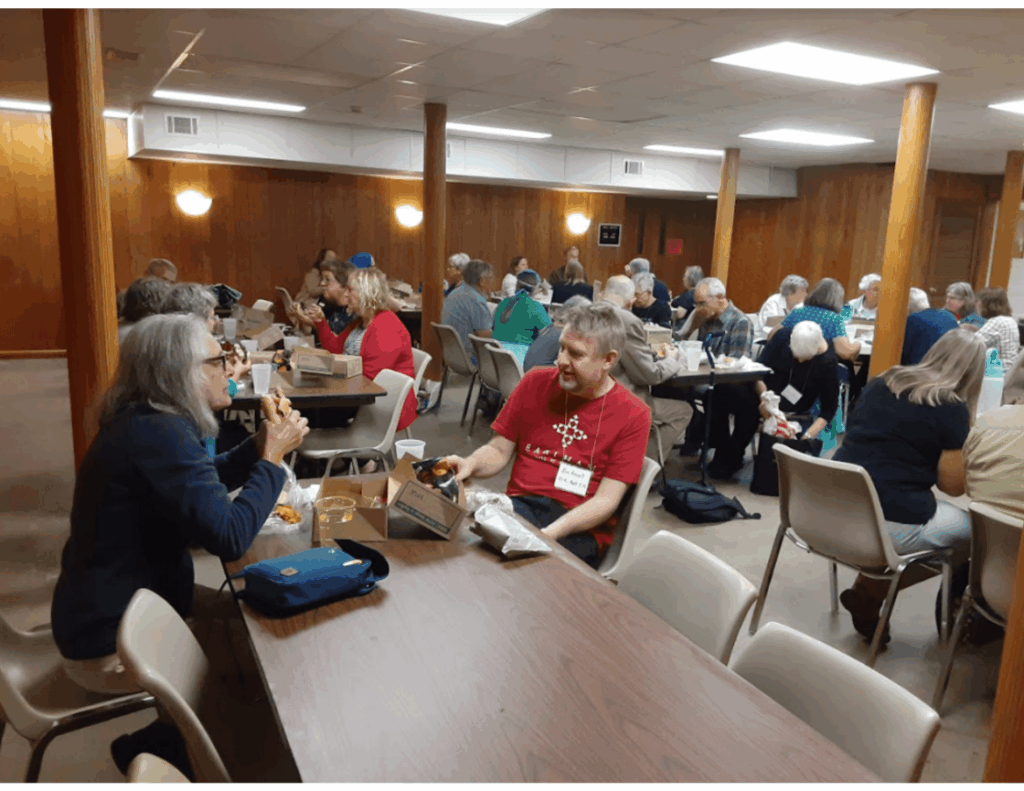
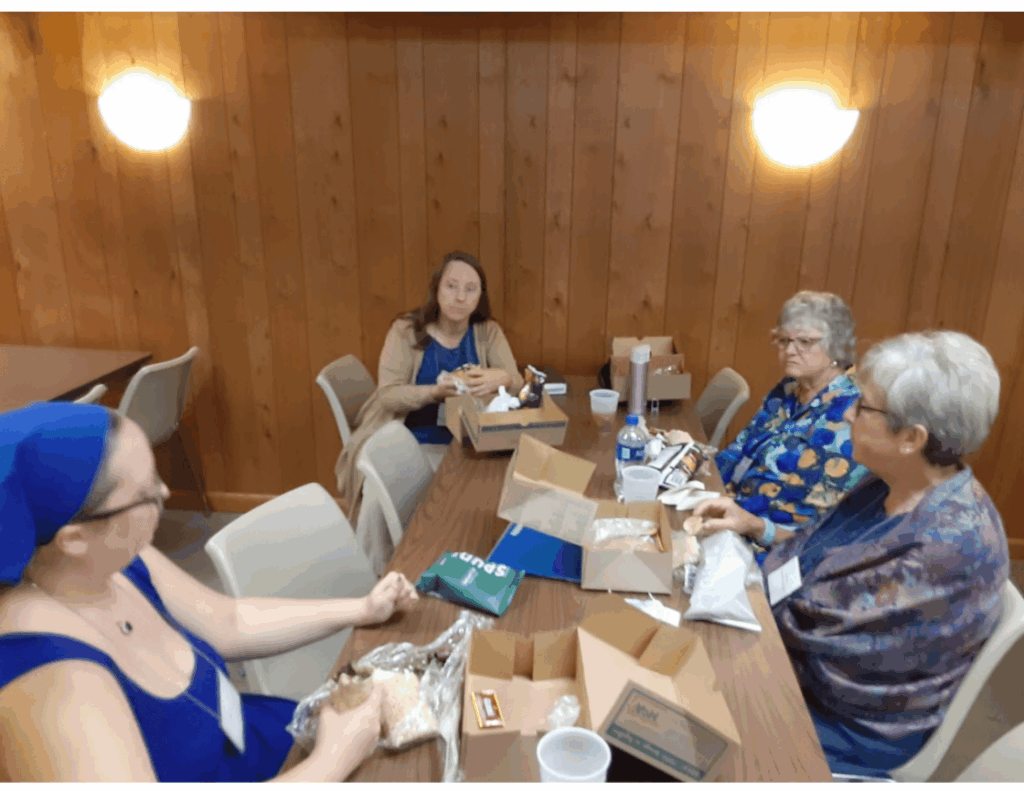
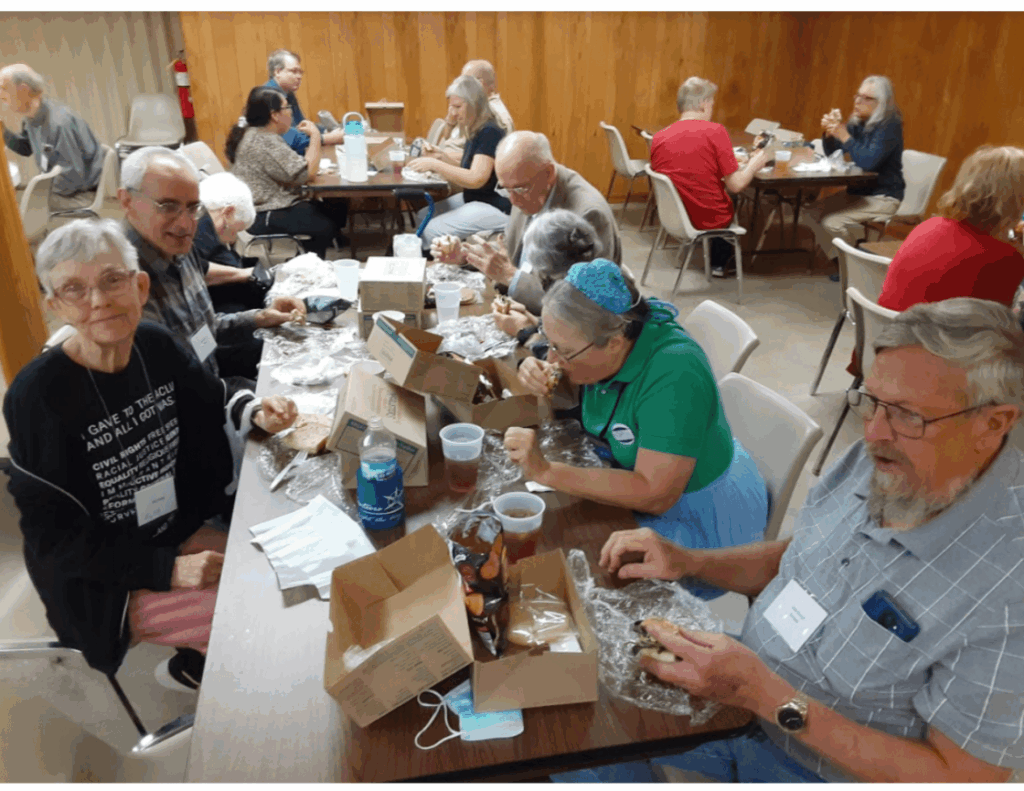
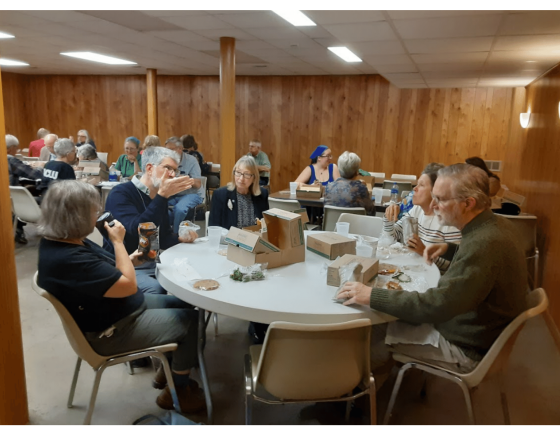
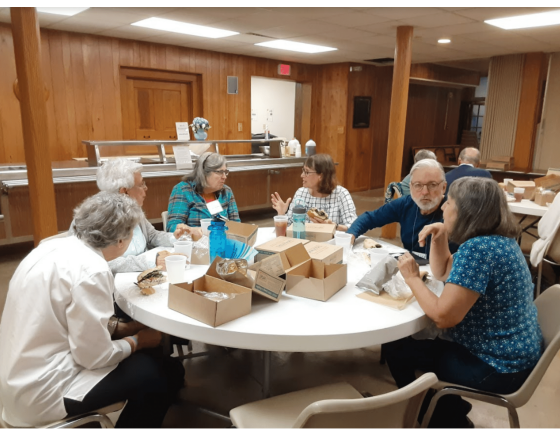
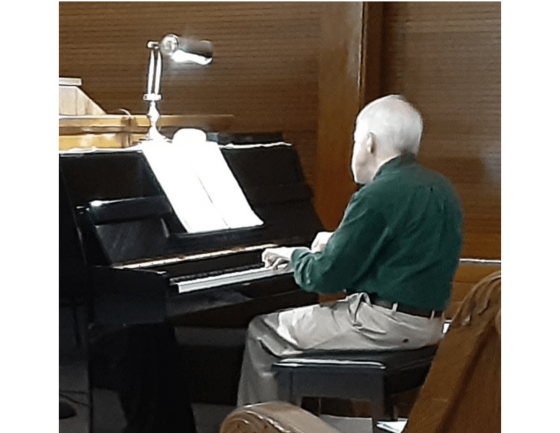
The afternoon began with a brief gathering in the Plainfield Friends Meeting Room then Friends were dismissed to the basement where a variety of box lunches from McAlister’s were available along with lemonade and ice tea. As Friends returned to the Meeting Room they were welcomed with Tom Roberts (Western YM) playing the piano. After a brief welcome to those in attendance both in the Meeting Room and virtually by our Midwest Regional Coordinator, David Edinger, Tom played a couple more tunes for us followed by a period of waiting worship.

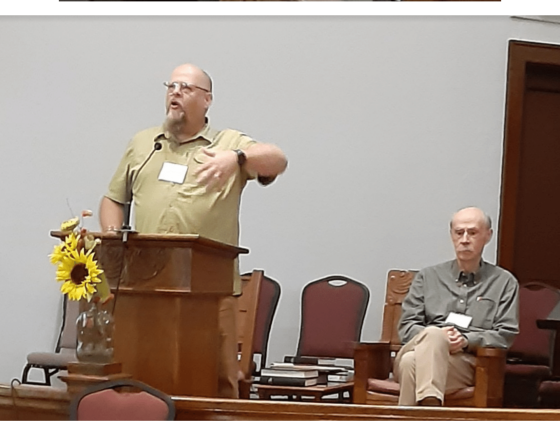
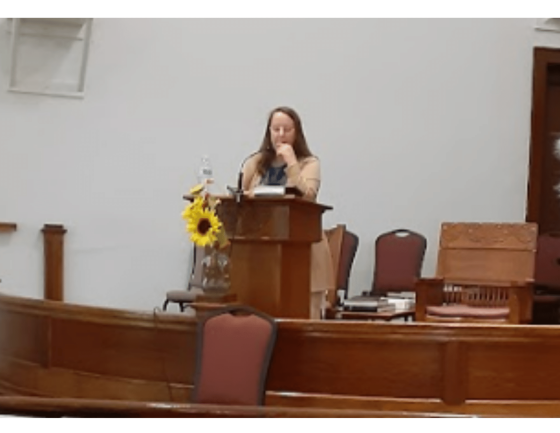
We then heard from two dynamic speakers – Shawn McConaughey, the new Western Yearly Meeting Superintendent, who had been serving on staff with Friends United Meeting in East Africa and Robin Mohr, Executive Secretary of FWCC-SOA. Shawn shared about the work he did while working on staff with Friends United Meeting serving in East Africa and Robin shared the ongoing work of FWCC around the world.

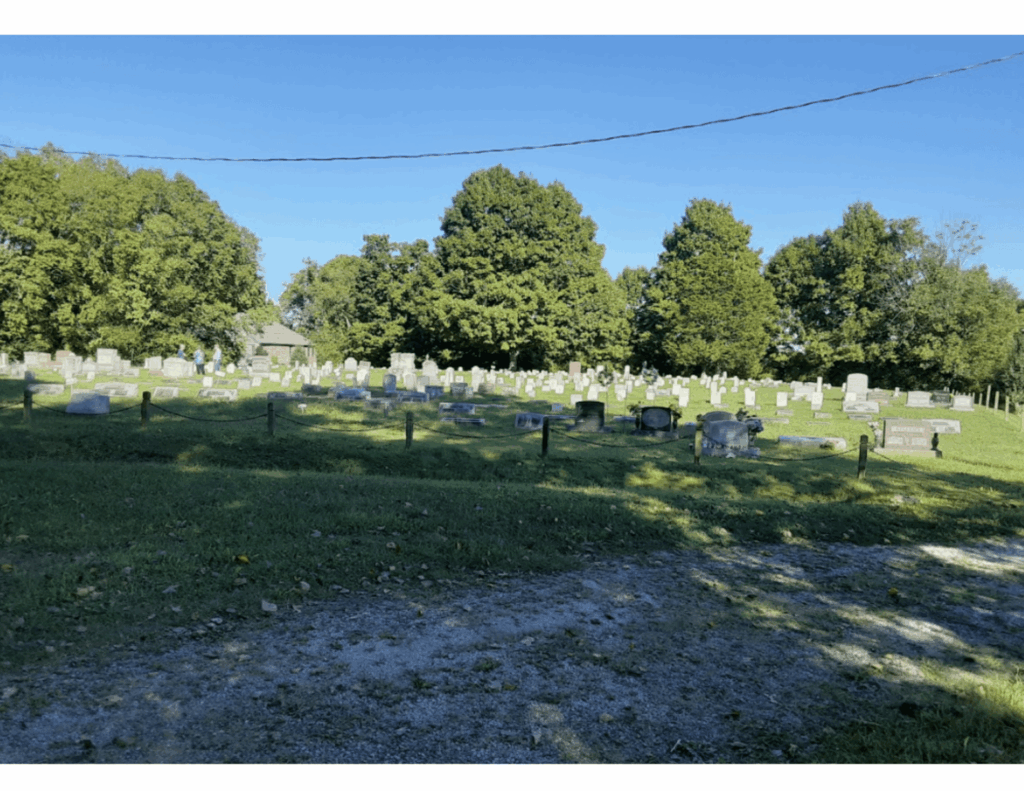
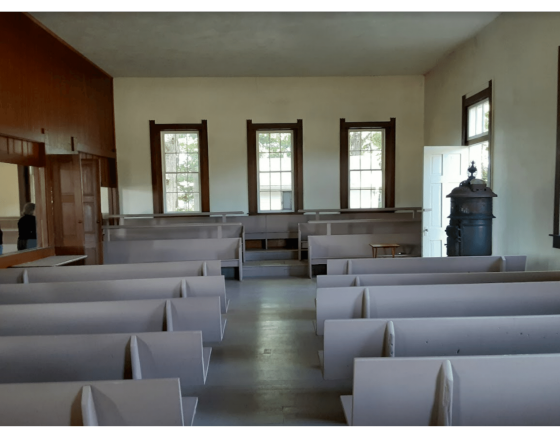
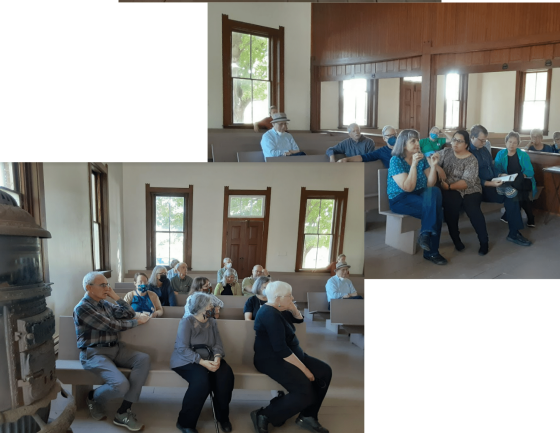
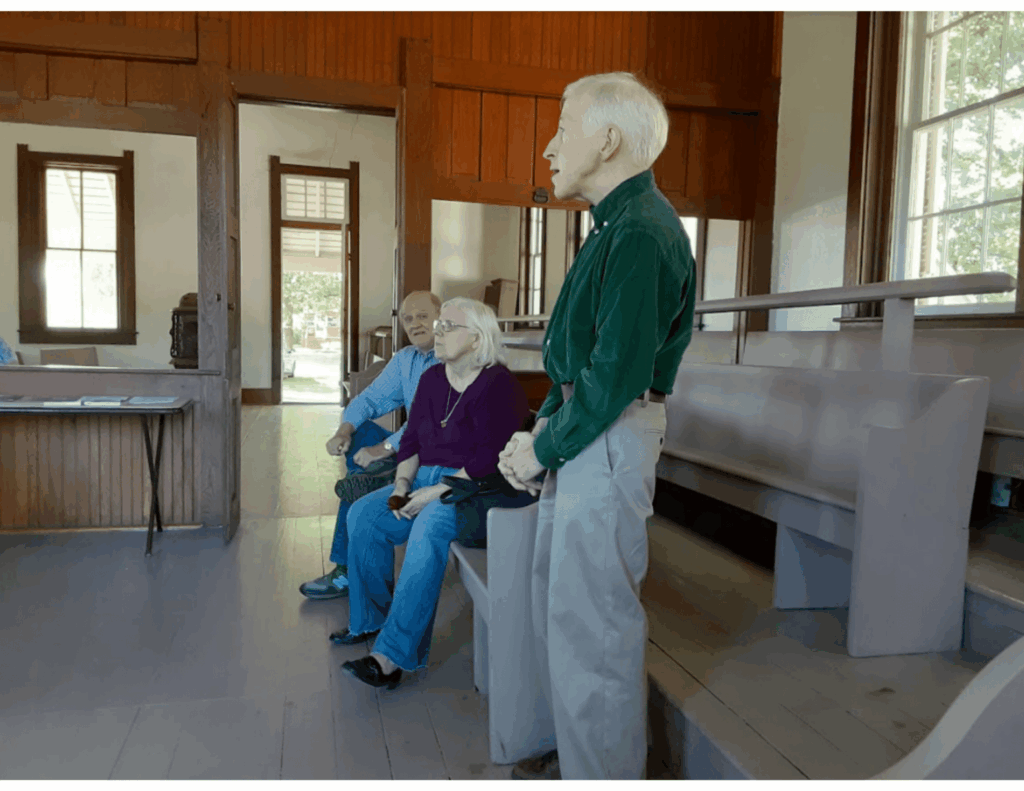
Tom Hamm, archivist at Earlham College, shared with Friends the history of the historic Sugar Grove Friends Meeting House. Sugar Grove Meeting House is currently used by local Friends for Easter Sunrise Service and a group currently meets there once a month on Sunday afternoon for worship in the manner of Friends – unprogrammed worship. The Meetinghouse still has the wooden panels that separated the men and women during Meeting for Worship. Twenty-nine Friends visited the Sugar Grove Meetinghouse where they heard a bit more about the history and how the Meetinghouse is being used today.

I enjoyed seeing so many of my FWCC Friends in person and having the opportunity to have conversations with them face-to-face and not virtually and getting a few hugs as well.

Thanks to Plainfield Friends for sharing their facilities with us, Pastor Cathy Harris, Bill Clendening and Tom Roberts for helping.

The afternoon program speakers and music were recorded and can be viewed at: FWCC Midwest Regional Gathering – 2022 – YouTube

Planning for this gathering began three and a half years ago and was over in the blink of an eye . . . but it was so worth the wait! 

A Midwest Regional Gathering
We started with lunch and fellowship
As we entered the room for presentations, Tom Roberts (Western YM) played piano
Shawn McConaughey, the new Western Yearly Meeting Superintendent, who had been serving on staff with Friends United Meeting in East Africa. Shawn shared about the work he did while working on staff with Friends United Meeting serving in East Africa.
Robin Mohr, Executive Secretary of FWCC-Americas shared the ongoing work of FWCC around the world.
Sugar Grove Meeting House is currently used by local Friends for Easter Sunrise Service and a group currently meets there once a month on Sunday afternoon for worship in the manner of Friends – unprogrammed worship.
Tom Roberts shared with Friends the history of the Sugar Grove Friends Meeting House.

Declaration of the Yearly Meeting of the Friends Church (Quakers) in Cuba

Peace is a desire and a necessity for all human beings. It is an essential condition for our personal and communal well-being. For the current moment in Cuba, marked by a crisis situation that affects the most sensitive areas of citizens’ lives, it is becoming something urgent.

Quakers, inspired by the teachings of Jesus, also seek to live and promote peace, through alternative ways, based on the principle of non-violence, to carry out civil justice and work within society to repair wrongs or errors.
Quakers believe in the Peace of Jesus. This Peace is not like what the world gives (John 14:27), from positions of power that exclude the voice of the least in the Kingdom. From this perspective, we Quakers know a Virtue that takes away the occasion of all war, and consequently, we do not support any way to solve conflicts that involves the use of force.

We therefore advocate for dialogue and for our authorities to recognize the tension and overwhelm of a people that feel vulnerable due to the precariousness of their economy, their health and their public services.
Likewise, we consider that the government must promote alternatives to violence in the face of other sectors of the people that, for various reasons, are fueled by positions of hatred that are encouraged from abroad and that in the current context of the crisis that we are experiencing, become breeding grounds for the emergence of violent demonstrations with unpredictable consequences.

We strongly encourage all the implicated parties to seek paths of dialogue that lead to peace and understanding in the future and the future and well-being of our country.

We desire and we work for peace and solidarity. We pray that all people may enjoy this blessing.

This is the time to open spaces for dialogue in the search for an answer to dissatisfaction and a solution to our problems. Let us all seek a common path that leads us to well-being and peaceful coexistence. Conflicts, if we address them with non-violent alternatives, are opportunities to find a peace that shelters all Cubans.

Shared by the Yearly Meeting of the Friends Church in Cuba, July 2021

Conservative Quakers Raise Cattle Sustainably in Bolivia

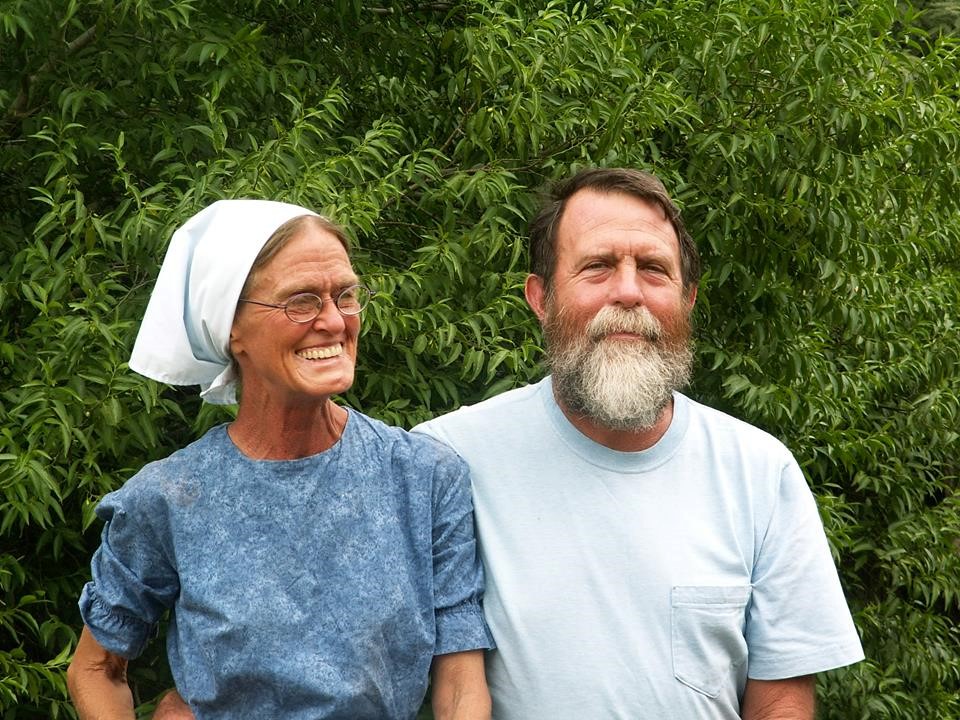
We met Neva and Grant Kaufmann at World Plenary of Friends in Peru and were fascinated by their story. The Kaufmans have lived in Bolivia for several decades but they are not typical Bolivian Friends. They are Conservative Friends who moved to Bolivia from Iowa twenty years ago and became cattle ranchers. They live as simply and as sustainably as possible. Neva is a birthright Friend and Grant was born into a secular Jewish family. With their mostly homemade plain dress, they look like Friends who’ve stepped out of the 19th century.

Grant and Neva moved to an area in the southeast part of Bolivia called the Chaco, where the climate is extremely hot and arid. When they arrived, the pond on their property looked like pea soup.  To make the water drinkable, they had to boil it over a wood fire. The cistern held rainwater, but it rains so rarely the water was insufficient. They couldn’t grow corn because it is too dry. The ground was unproductive.  They lost cattle because there was not enough grass to feed them.

Through the Mennonites they learned about panicum  gatton, a species of grass that grows in shade. They also learned about a system of ranching called sylvopastoralism, which is “the practice of combining forestry and grazing of domesticated animals in a mutually beneficial way.” Instead of cutting down trees to create a monoculture, the Kaufmanns planted panicum grass, which grows under trees and feeds their cattle. As a result of thispractice, the Kaufmanns began to see deer, wild pigs and new species of birds.  As their ranch prospered, neighboring ranchers also began to follow their example.

They learned that certain trees called choroquete thrive in this dry climate. Their leaves taste like salad. In June through October they drop their leaves and help create a cushion, which the cattle like to lick up.

“It’s a beautiful symbiotic system,” explained Grant.

Their life hasn’t been easy. In the first year they killed over 300 poisonous snakes.  They had to work hard to live sustainably but they have a happy family and a deep gratitude to God. Neva explained, “Our family loves to work and loves to have fun. They love to milk cows. One son wanted a cow since he was four years old. Nathan likes ranching, and Rachel trains horses. She loves animals and is very gentle and kind.”

Grant told us, “The biblical counsel ‘whatsoever thy hand findeth to do, do it with thy might’ has encouraged us to press ahead with the ranch at a time when Bolivia’s chronic political and legal instability, combined with threats of climate change, have discouraged many others.” He is thankful for all that he has been able to accomplish in South America.

We enjoyed many meals with Grant and Neva in Pisac, and we have kept in touch in the year that has passed. For us, the encounter with these Friends, living a particular but sustainable life, displays the essence of FWCC’s mission to bring Friends of varying traditions and cultural experiences together.

When we asked the Kauffmans what was most memorable about the FWCC Plenary, they responded:  “Knowing again that we are not alone….The essence of our Friends community seems to be sharing the love of God, whether we call it that or something else.  This was the Pisaq experience for us.”

To learn more about the Kaufmanns, including their spiritual journey, go to http://laquaker.blogspot.com/2016/10/conservative-quakers-raise-cattle.html.

Living Peace at Home and in the World

In the last month, I have had multiple opportunities to examine my privilege, my perspective and how I am working to promote inclusion in the work of the Friends World Committee.

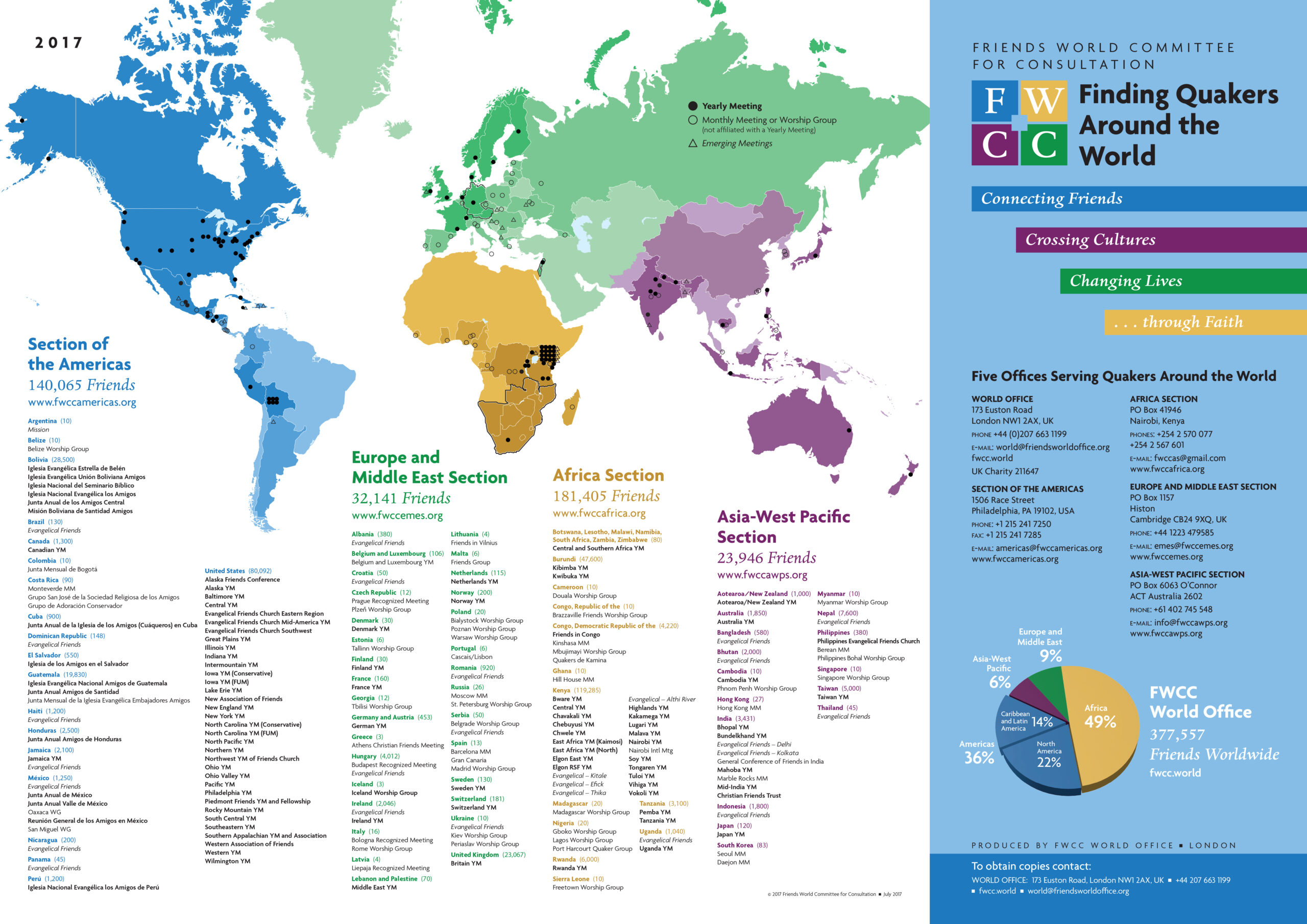
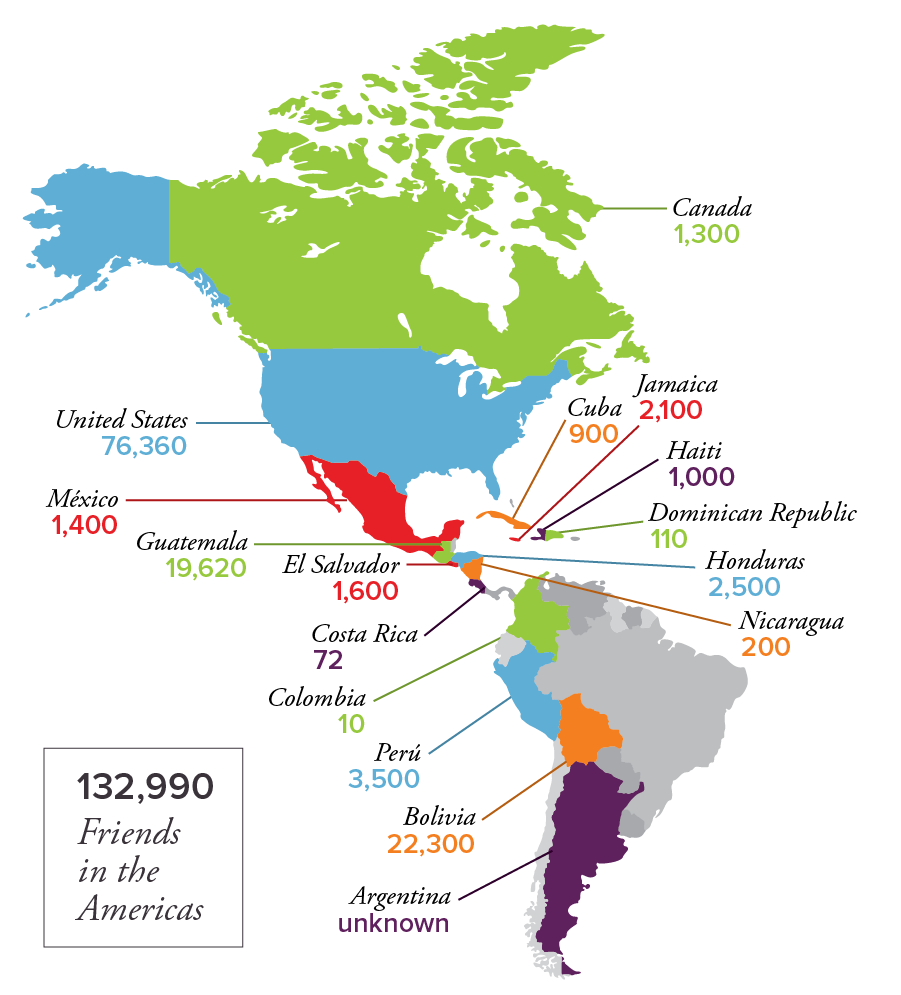
The Section of the Americas is vibrant and growing, and covers a broad swath of geography with many different versions of Quakerism. In the course of choosing a theme for the next Section Meeting, the Executive Committee had a deep and honest discussion of these differences. We recognized the danger right in our own committee of seeing only one side and denigrating the other, intentionally or not. E.C. members found the love in the room gave them the capacity to offer and receive forgiveness. A Friend noted that the depth, care and openness of this discussion is rare. How can we best foster this kind of discussion? How can we infuse the larger gatherings of the Section with the depth and tenderness we experienced in our honest conversation?

We will be exploring how to prepare ourselves to go deeper while we are together next March. To be honest and brave, vulnerable and tender, and forgiving – these are Quaker values I hope we can share in our local communities and the worldwide.

In friendship,
Robin Mohr
Executive Secretary

Theme of the 2017 Section Meeting: Vivir La Paz – Living Peace

At their April meeting, the Executive Committee approved the theme for the next Section Meeting: Vivir La Paz – Living Peace (John 16:33).

The concept of Peace, capitalized, is deep and comes from God. How can we live that Peace in the face of the tribulations of the world, such as terrorism and fear, yearly meeting schisms, the current tensions of elections throughout the Americas? Peace may also include peace with the earth, as reflected in the covenant in Genesis. Peace with justice. Peace with disparity. All of these are aspects that we might consider through this theme.

In addition, the peace testimony is seen differently by different strands of our tradition. Some see it as primarily an internal peace, while others hear a call to work to end war. Have we lost the faith base on the one hand, or activism and outreach on the other?

At the Section Meeting in March 2017, we will be searching for ways to bridge the divergences in the Quaker spectrum. We are seeking pathways to an attitude of both/and rather than either/or. Stay tuned for more ways to prepare for this journey of exploration.

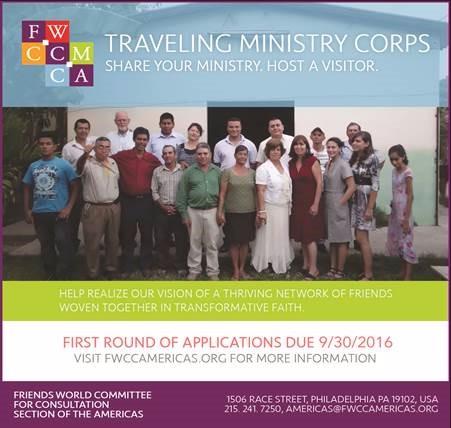
Traveling Ministry Corps – Deadline Extended! Applications due September 30, 2016

After the WPM: Traveling in the Ministry in South America

Suzanne Bennett, a British Friend with a traveling minute from her monthly meeting
in Dover, England, has been traveling in South America and reports back on her experiences so far. After attending the WPM in Pisac, Suzanne traveled to Arequipa, Peru and then on to Ecuador. She will continue traveling through Peru, Bolivia, Chile and Argentina until March 2017.

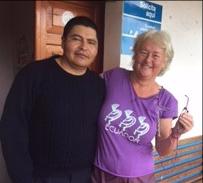
Suzanne and Clinic Doctor Patrizio

What has been a particular blessing in your travels?
A key time has been the last 4 weeks in Otovalo, Ecuador. I have been working as a volunteer nurse in a local health clinic, which features a mix of Western and Indigenous medicine. I am impressed by the holistic and fluid way the doctor I work with offers up a range of healing methods from blood tests and referrals for investigations, to acupressure, massage, Moxa heat therapy, advice on herbs, and plant medicine.

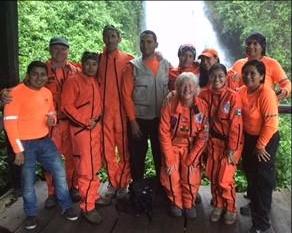
Then, on the 16th of April, the earthquake happened. I volunteered to be a part of a search and rescue team going to that area. The team I worked with are part of an international, entirely voluntary organization called Topos, which serves to offer help in times of disaster. It was very challenging and powerful, and I loved having the chance to work within this fantastic team, an honor and a delight. It has deepened my understanding of this lovely country. Ecuador and its people have touched my heart, as I have touched the hearts of many Ecuadorians, simply by being present to offer help.

Suzanne and her Topos team

Conditions in Pedernarles, and Portoviejo were terrible, the scale of devastation immense, tough going for all of us, but the team spirit and camaraderie were a constant source of uplift. I am now proud to say I am a member of the Topos organisation. I feel I have been called to this work, and strongly drawn to Otovalo, and the community I have got to know here. I plan to return here later in year to continue

What has been a challenge?
I’m aware of ways I may be “different;” I had a long term same-sex partner, I don’t consider myself Christian or know the Bible well, and yet I am a Quaker of the Unprogrammed tradition…I confess I ask the question, “will this be acceptable?”

What is next for you in traveling in the ministry?
I have plans in place to return to Peru, to walk the Inca trail and go to the Cusco Inca Inti Raymi ceremony and then to travel to Puno and meet again with some of the Peruvian Quakers I met in Pisaq. I have then arranged to go to La Paz , and stay in the Quaker house there and help out, particularly with teaching English with some of the Bolivian Friends I met in Pisaq. It will be hard to leave here, but I sense this is the right way forward.

I’m aware already of my understanding of Quakerism deepening and becoming broader also. So I will travel on, and my prayer is to remain ever open to the ways we connect, and inspire each other through the strength of our shared experience of how God works in our lives.