
by Luanne Hagee
Friends, if there is one thing I have learned the last two and a half years is that I must be patient (near impossible for me) and that patience pays off.
It was way back in March of 2019 during the FWCC-SOA Section Meeting near Kansas City, Missouri members of the Midwest Region (Illinois YM, Indiana YM, Ohio Valley YM, Western YM, the New Association of Friends and Central YM) began a discussion of a possible event/gathering in our Region before the next Section Meeting in 2021. It was suggested that we might hold such a gathering in mid-2020 in conjunction with the annual sessions of one of our Yearly Meetings . . . and then COVID struck, but COVID could not and did not stop us from continuing conversations and planning for a Midwest Regional event/gathering. Lots of emails were sent/received and virtual gatherings were held within the Section.
In April we finally had a location and date secured along with a speaker and a field trip! David Edinger and I discussed options for lunch. In July registration opened and I saw that we had two speakers and a field trip! After I registered I began watching as Friends began to register – it was exciting to see which Friends were going to be attending and anticipating seeing them in person for the first time since the 2019 Section Meeting.
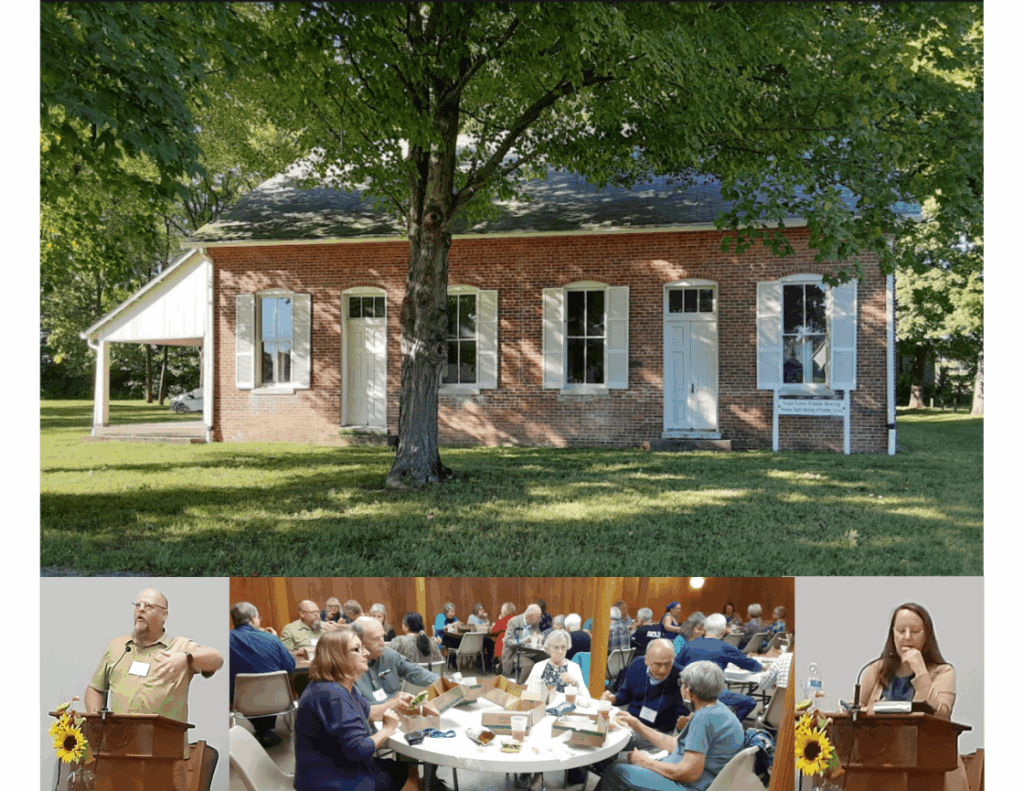
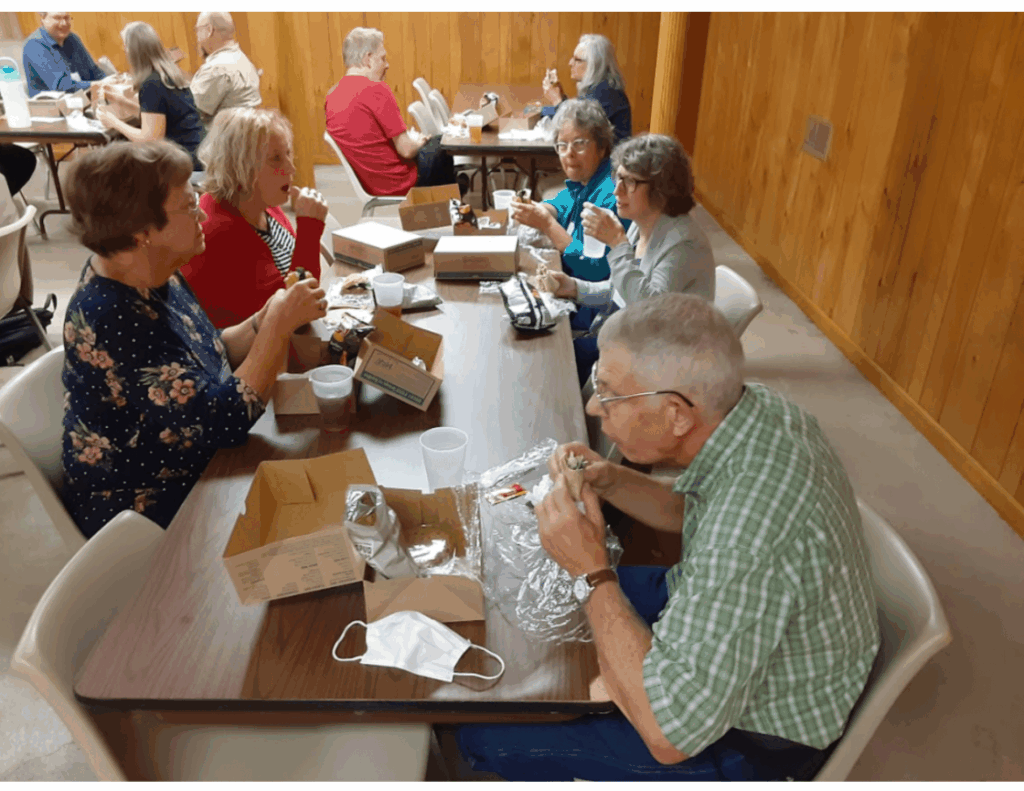
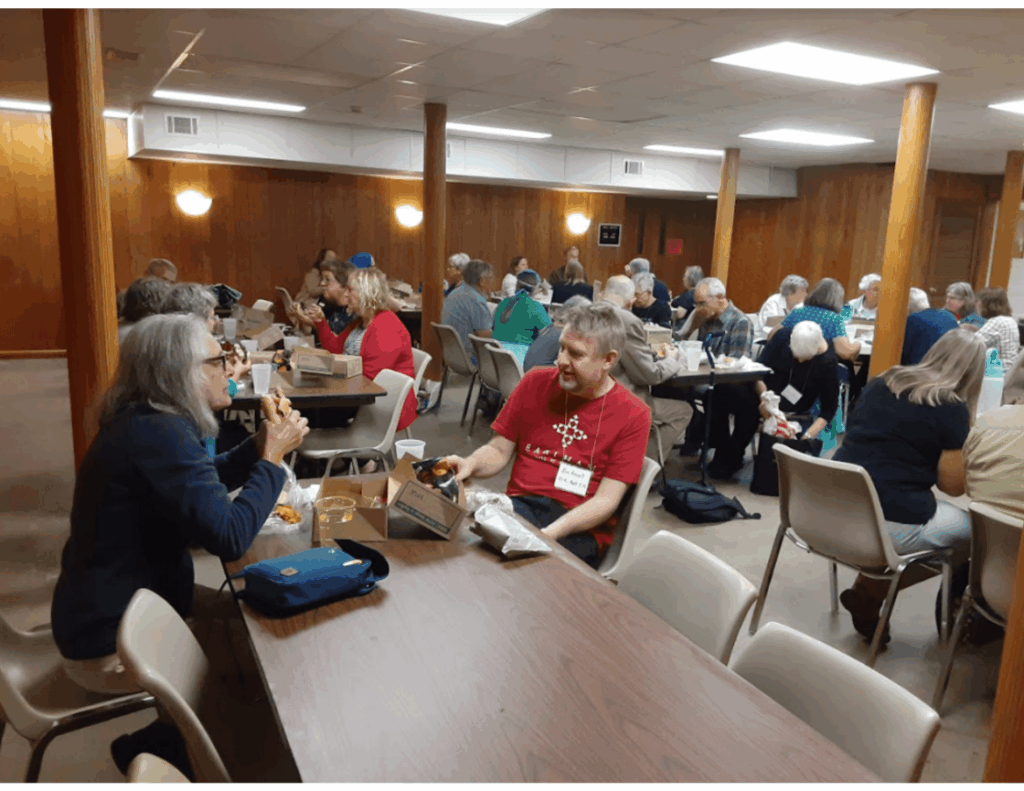
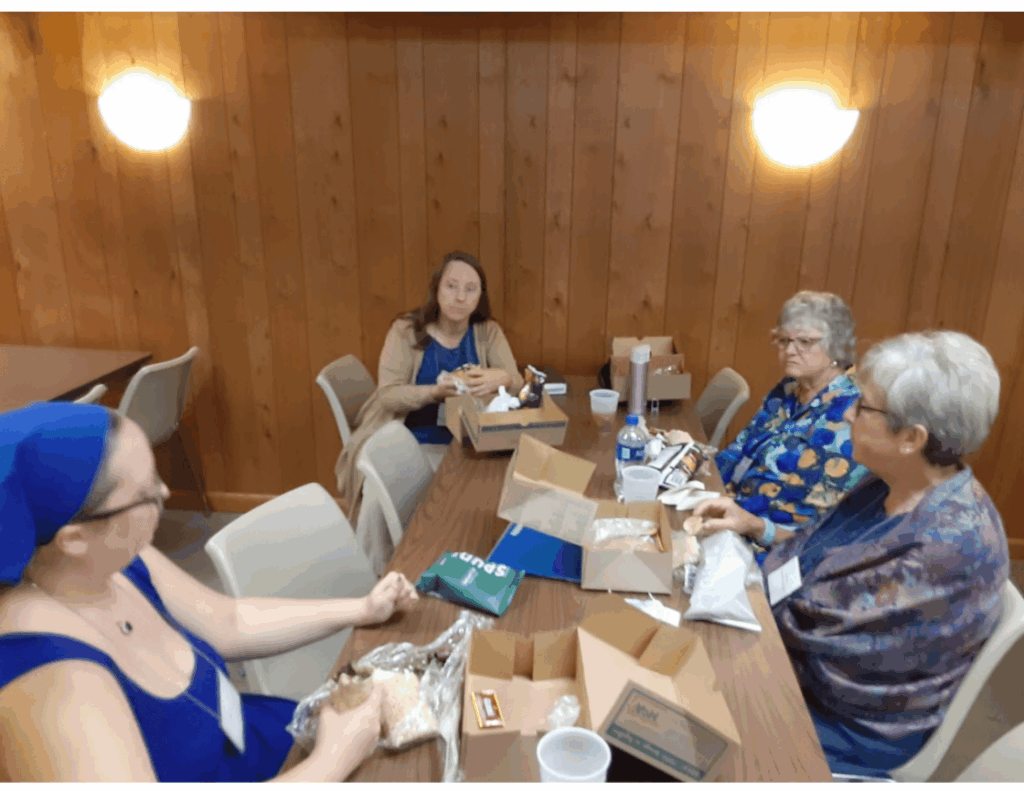
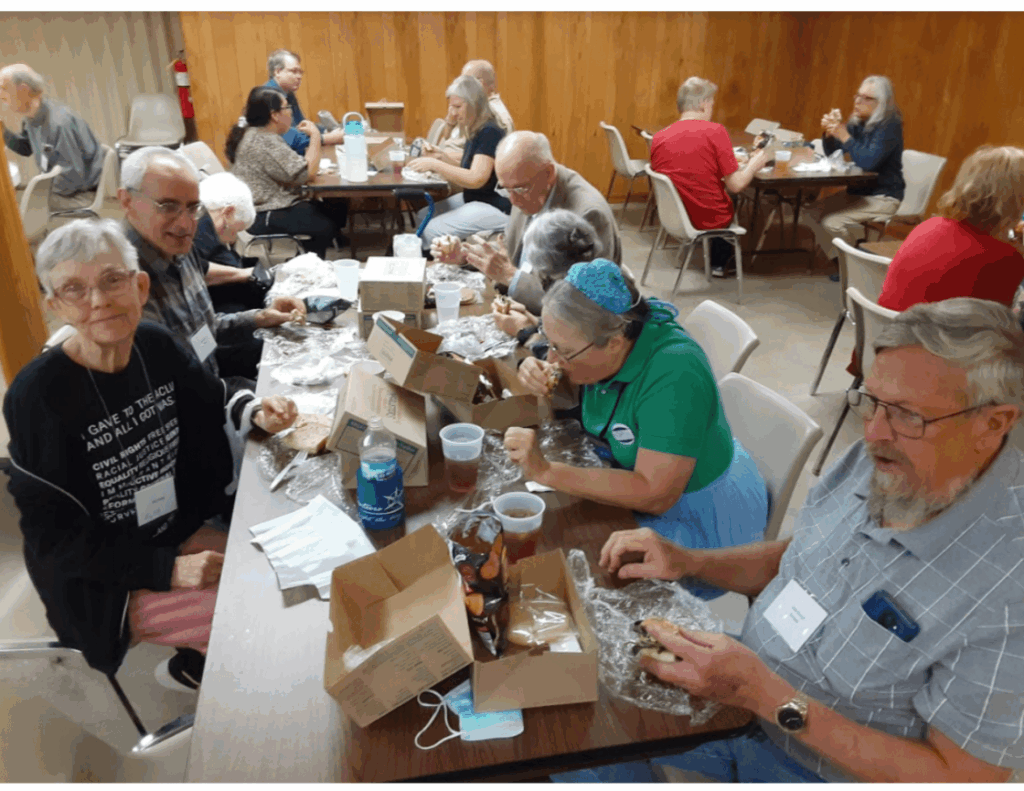
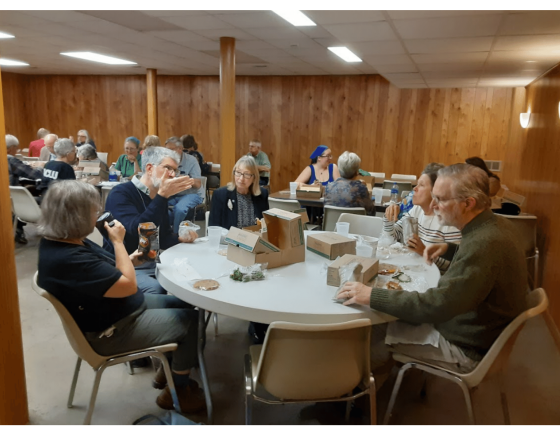
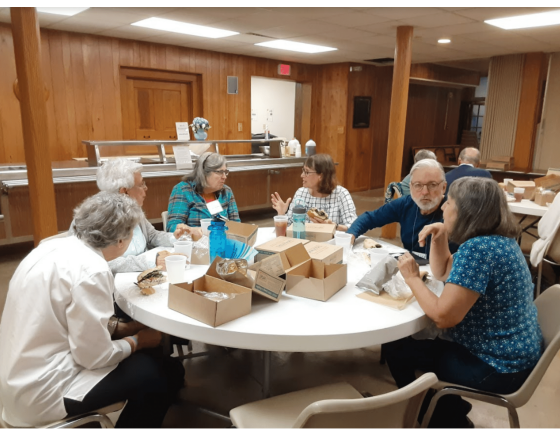
Patience finally paid off . . . and on Saturday, September 24th, 2022, in Plainfield, Indiana over 40 Friends gathered at the Plainfield Friends Meeting on U.S. 40 for the first “post COVID” hybrid FWCC-SOA gathering.
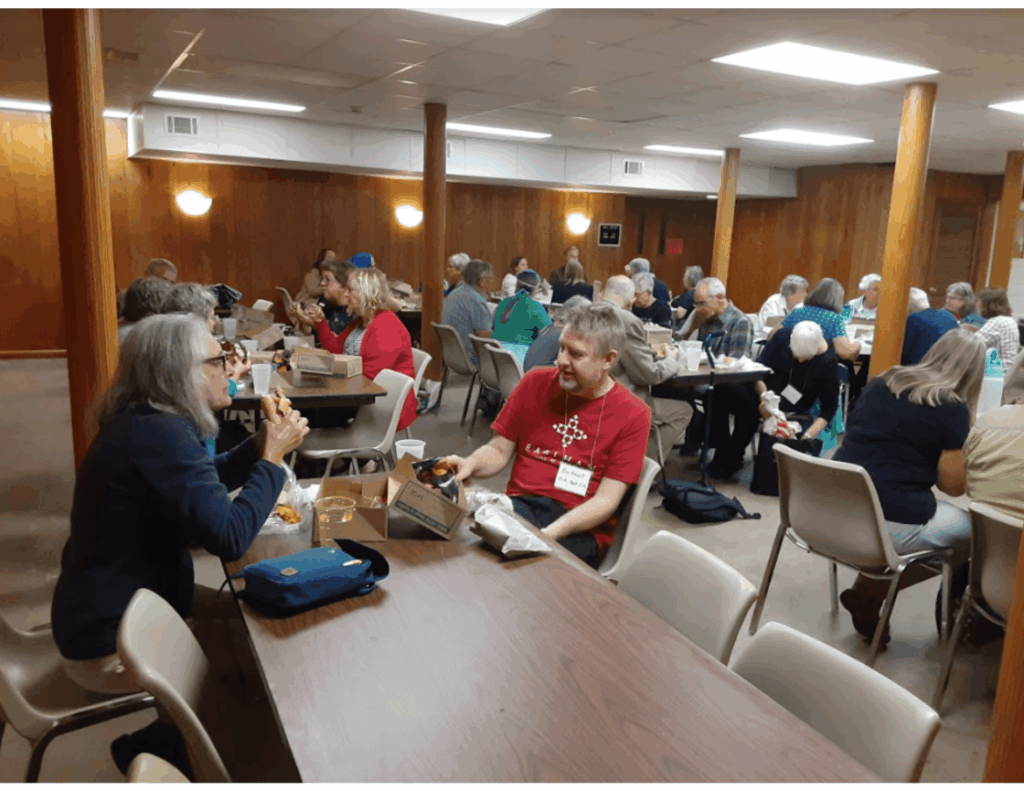
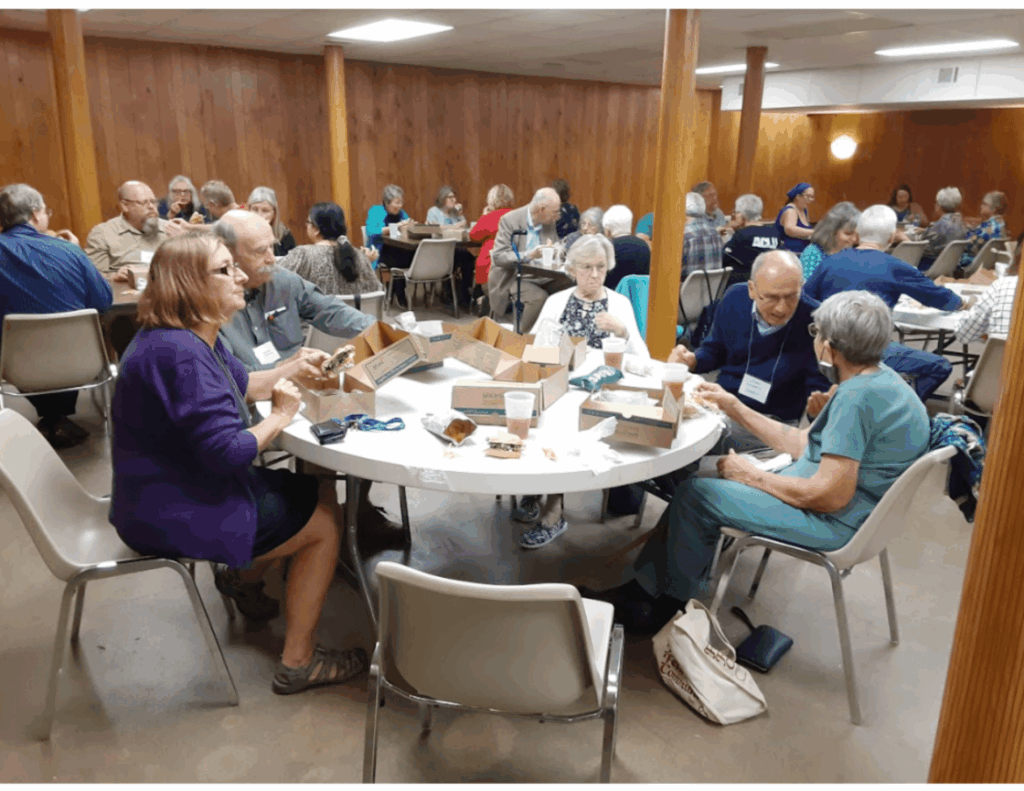
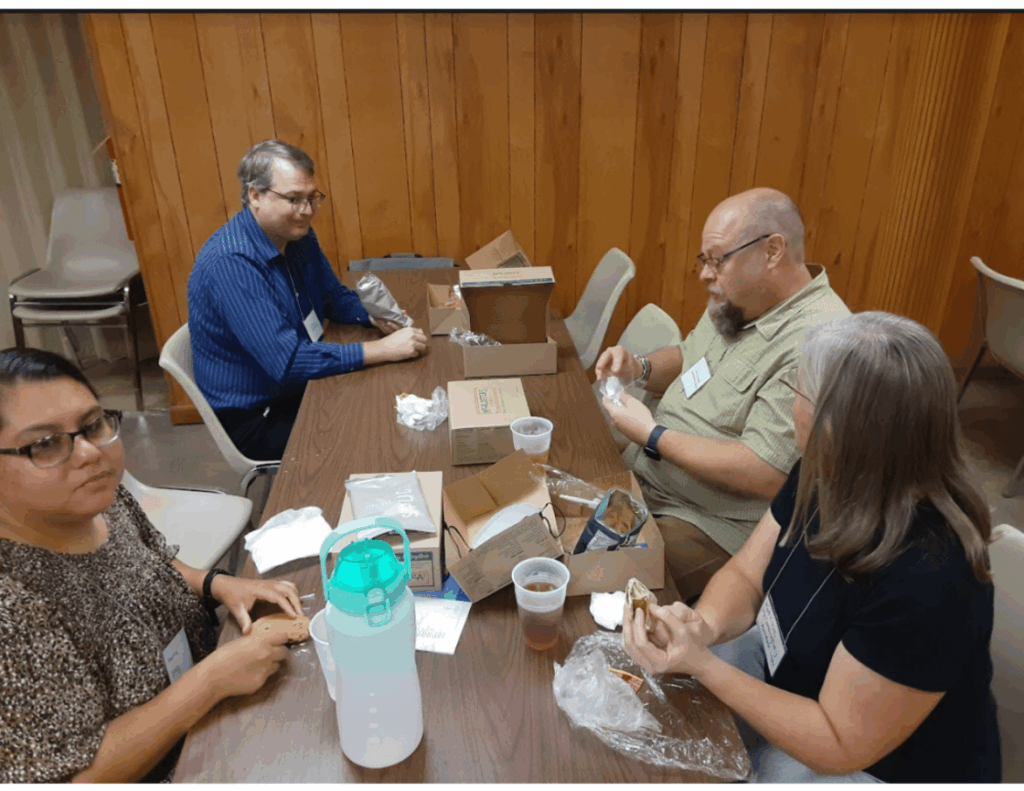
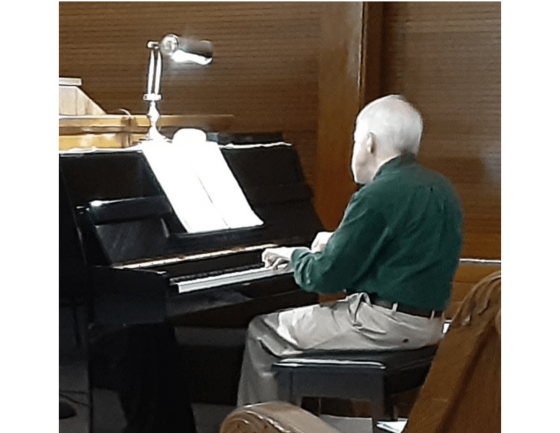
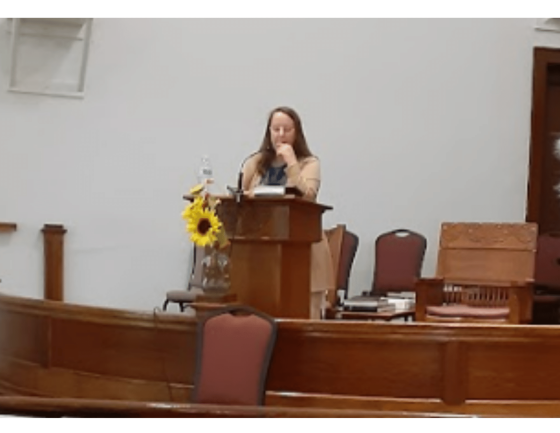
The afternoon began with a brief gathering in the Plainfield Friends Meeting Room then Friends were dismissed to the basement where a variety of box lunches from McAlister’s were available along with lemonade and ice tea. As Friends returned to the Meeting Room they were welcomed with Tom Roberts (Western YM) playing the piano. After a brief welcome to those in attendance both in the Meeting Room and virtually by our Midwest Regional Coordinator, David Edinger, Tom played a couple more tunes for us followed by a period of waiting worship.
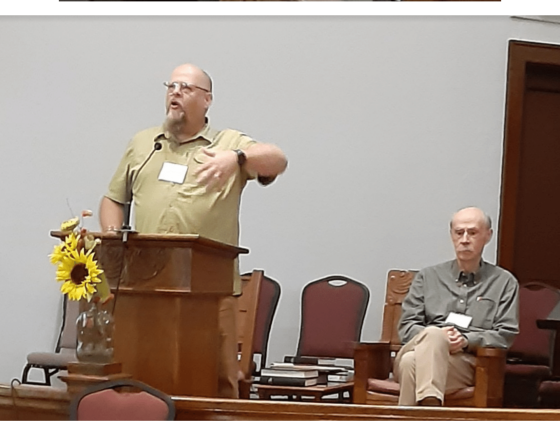
We then heard from two dynamic speakers – Shawn McConaughey, the new Western Yearly Meeting Superintendent, who had been serving on staff with Friends United Meeting in East Africa and Robin Mohr, Executive Secretary of FWCC-SOA. Shawn shared about the work he did while working on staff with Friends United Meeting serving in East Africa and Robin shared the ongoing work of FWCC around the world.
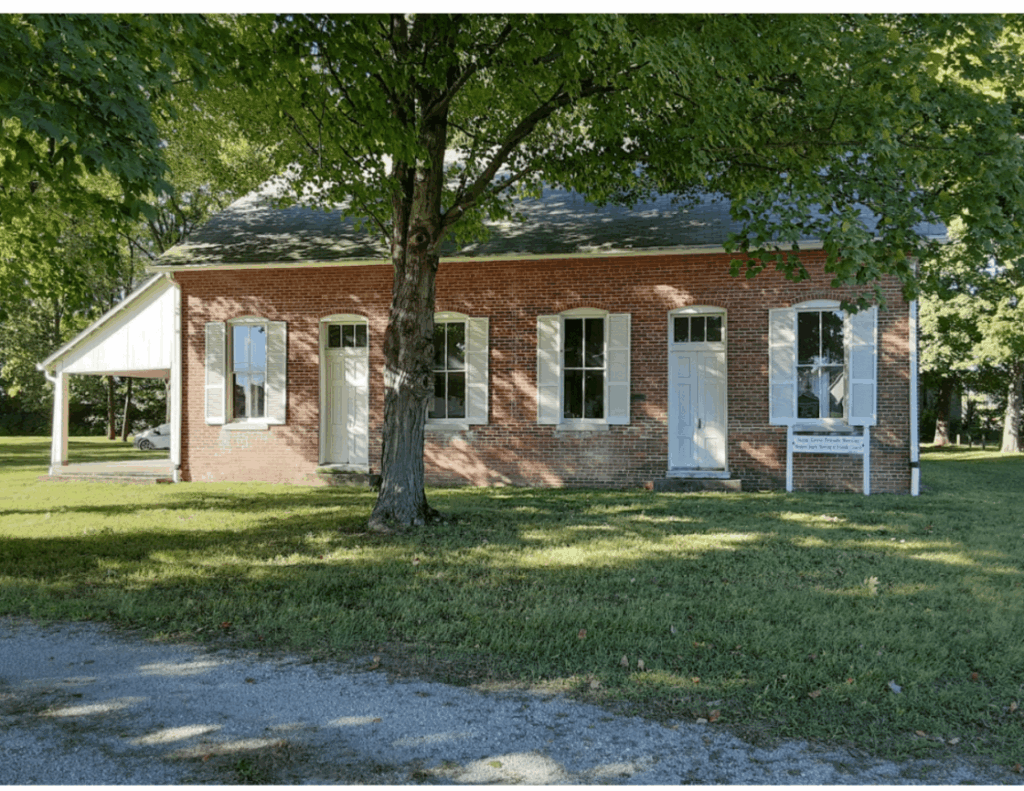
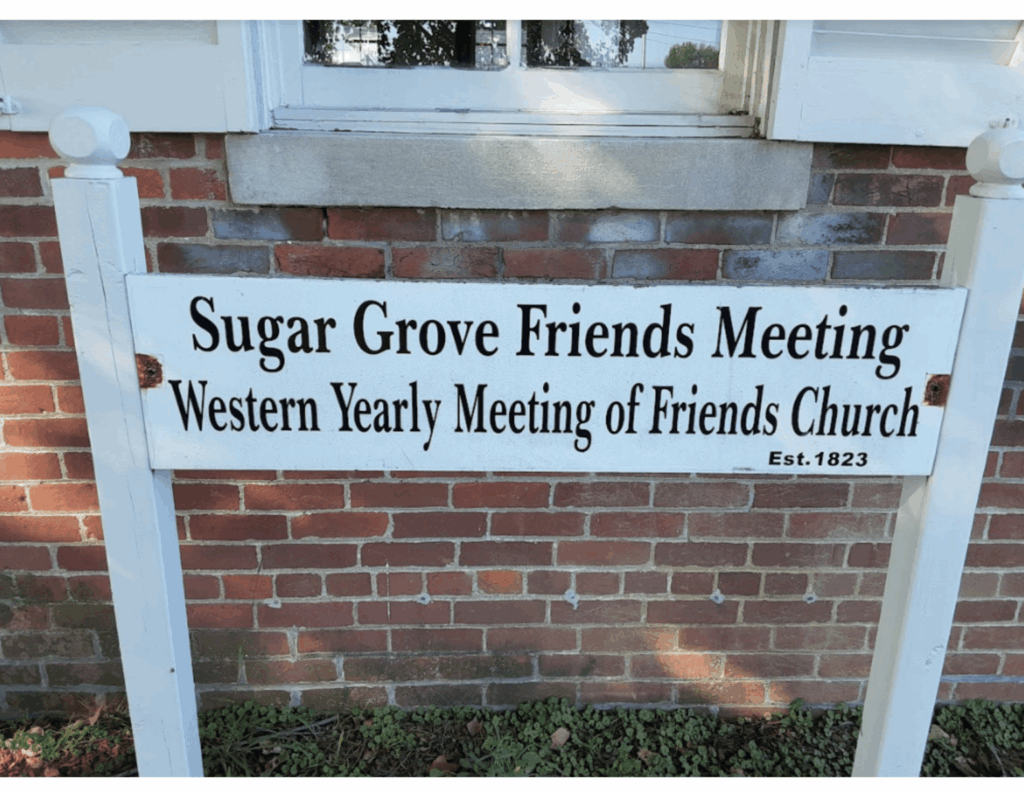
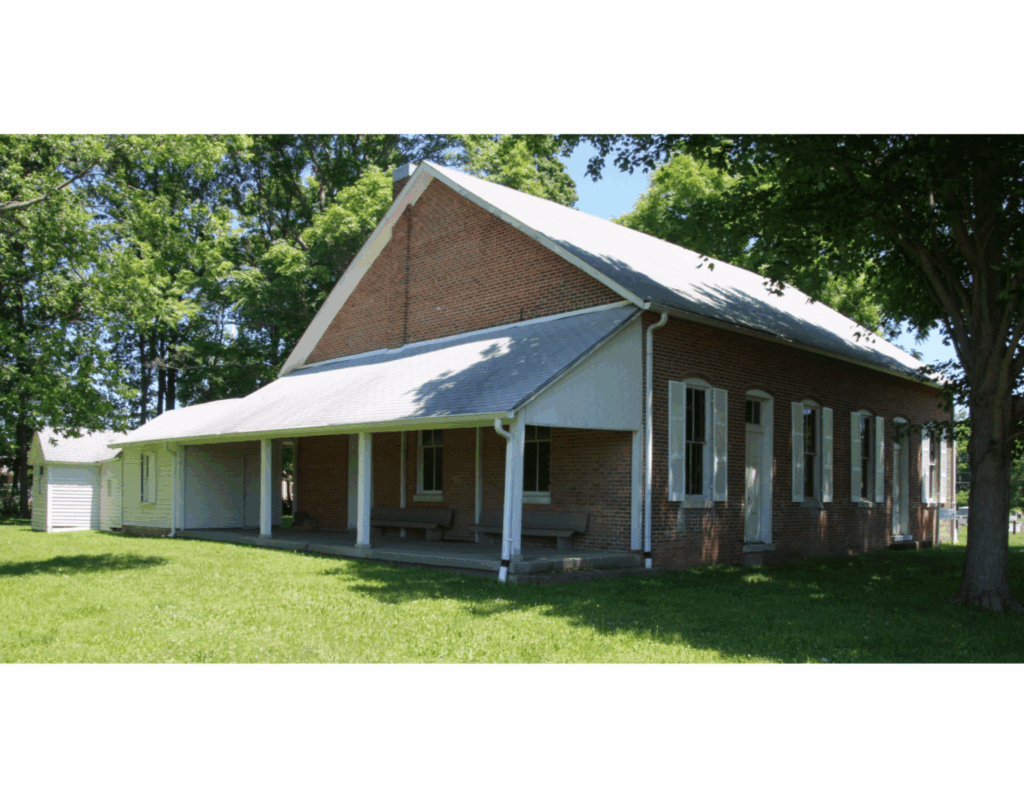
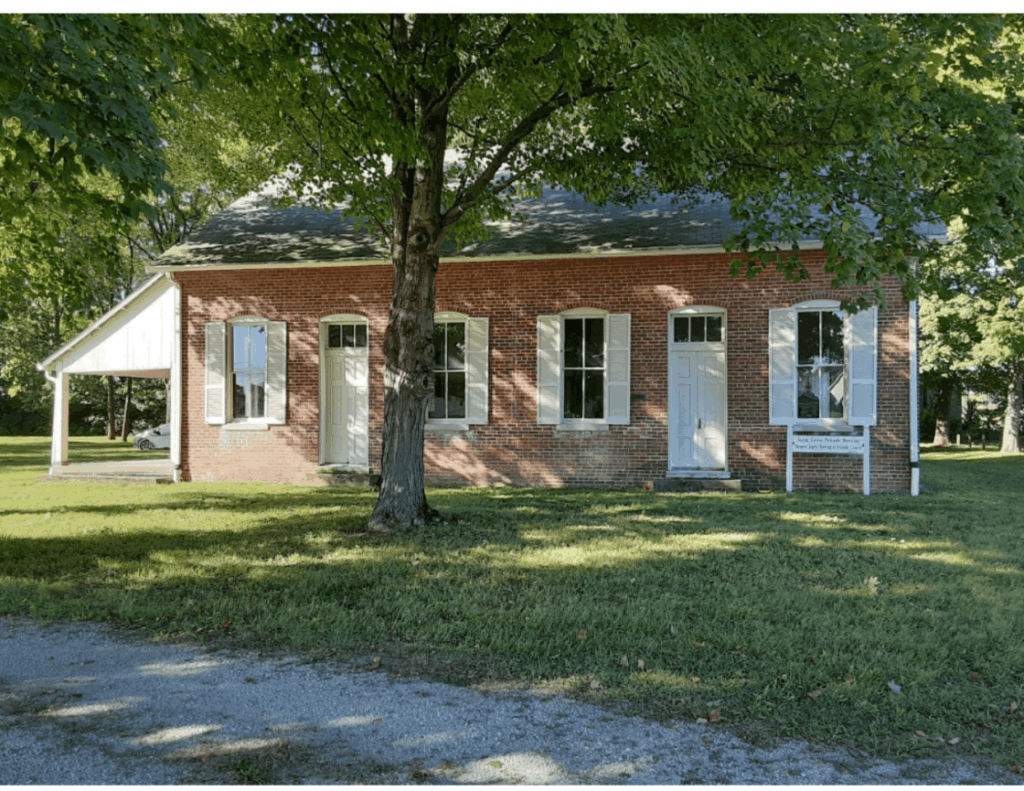
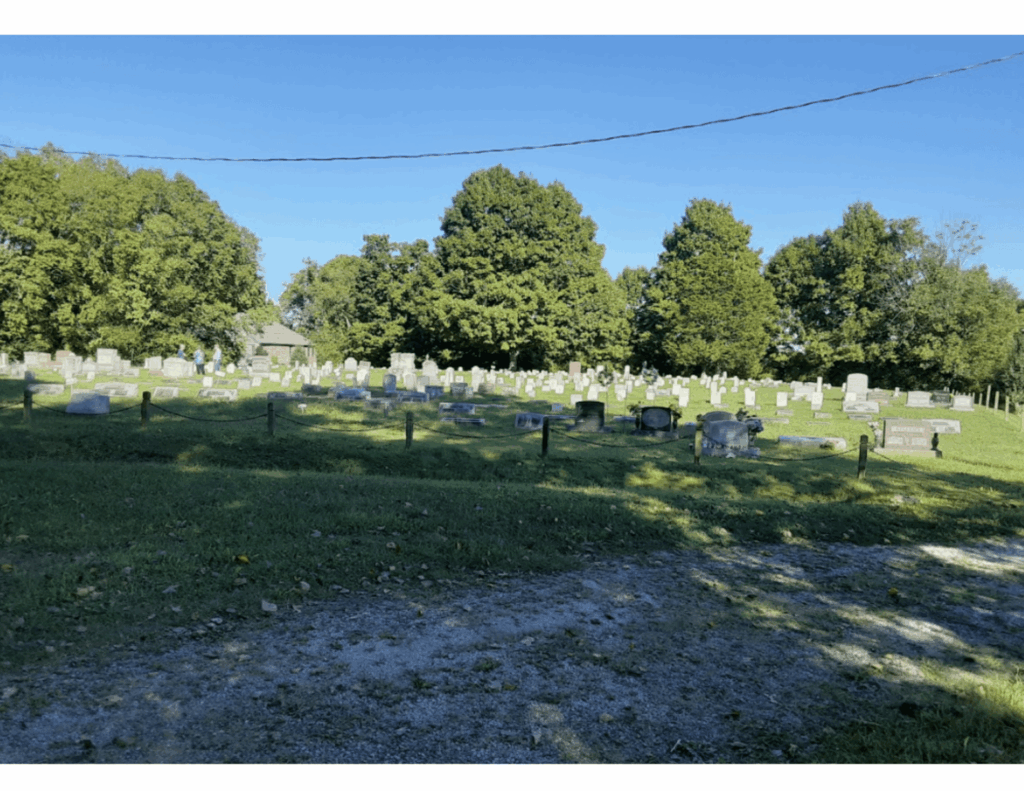
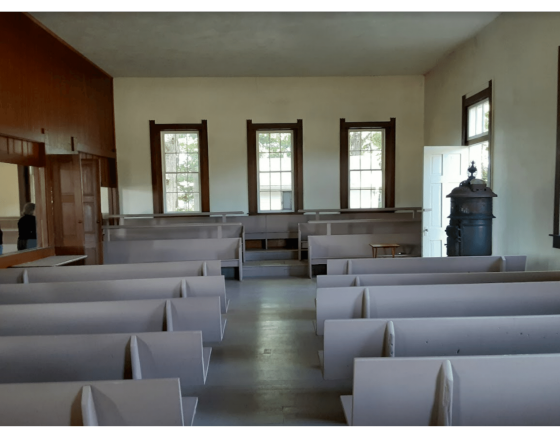
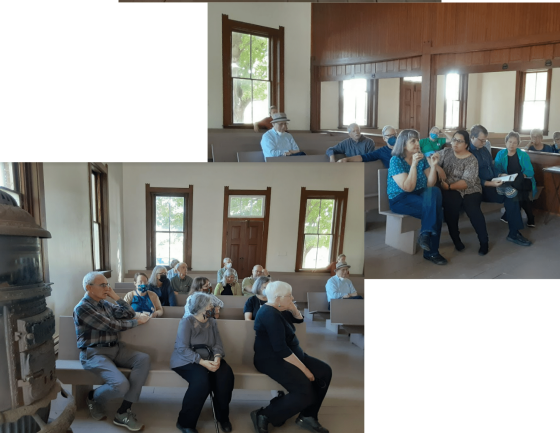
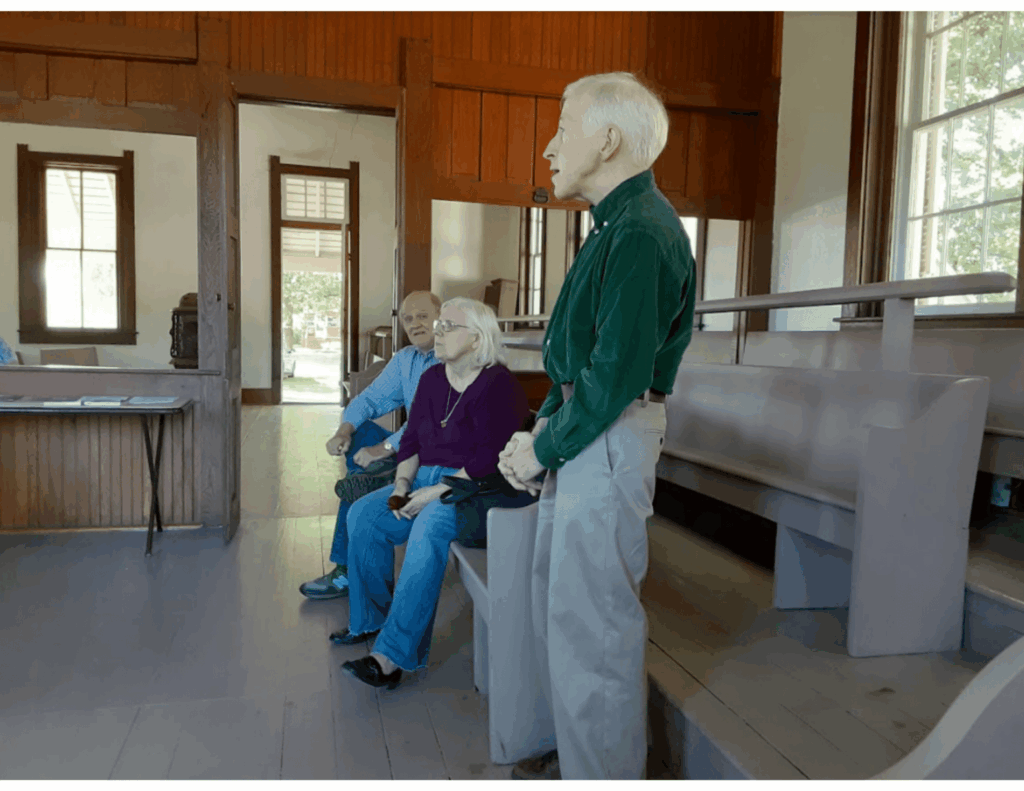
Tom Hamm, archivist at Earlham College, shared with Friends the history of the historic Sugar Grove Friends Meeting House. Sugar Grove Meeting House is currently used by local Friends for Easter Sunrise Service and a group currently meets there once a month on Sunday afternoon for worship in the manner of Friends – unprogrammed worship. The Meetinghouse still has the wooden panels that separated the men and women during Meeting for Worship. Twenty-nine Friends visited the Sugar Grove Meetinghouse where they heard a bit more about the history and how the Meetinghouse is being used today.
I enjoyed seeing so many of my FWCC Friends in person and having the opportunity to have conversations with them face-to-face and not virtually and getting a few hugs as well.
Thanks to Plainfield Friends for sharing their facilities with us, Pastor Cathy Harris, Bill Clendening and Tom Roberts for helping.
The afternoon program speakers and music were recorded and can be viewed at: FWCC Midwest Regional Gathering – 2022 – YouTube
Planning for this gathering began three and a half years ago and was over in the blink of an eye . . . but it was so worth the wait!

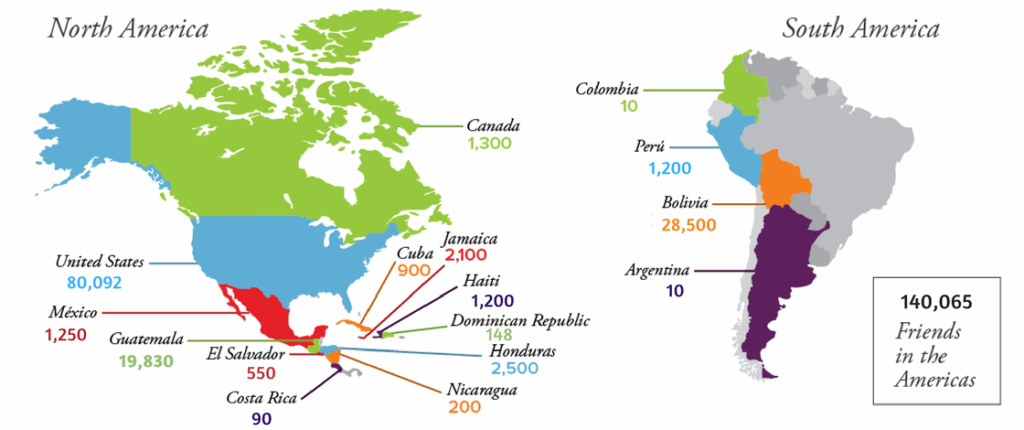
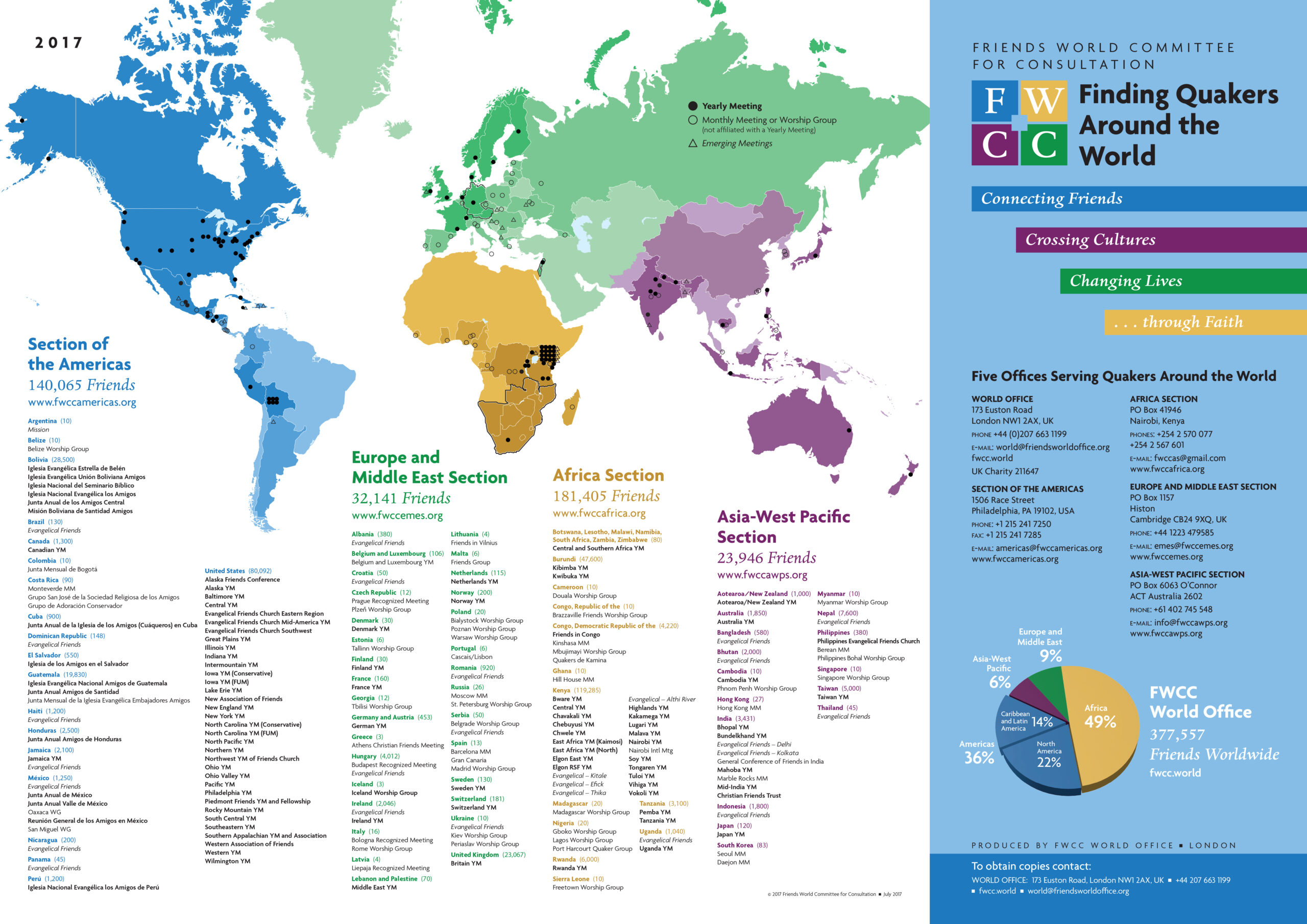
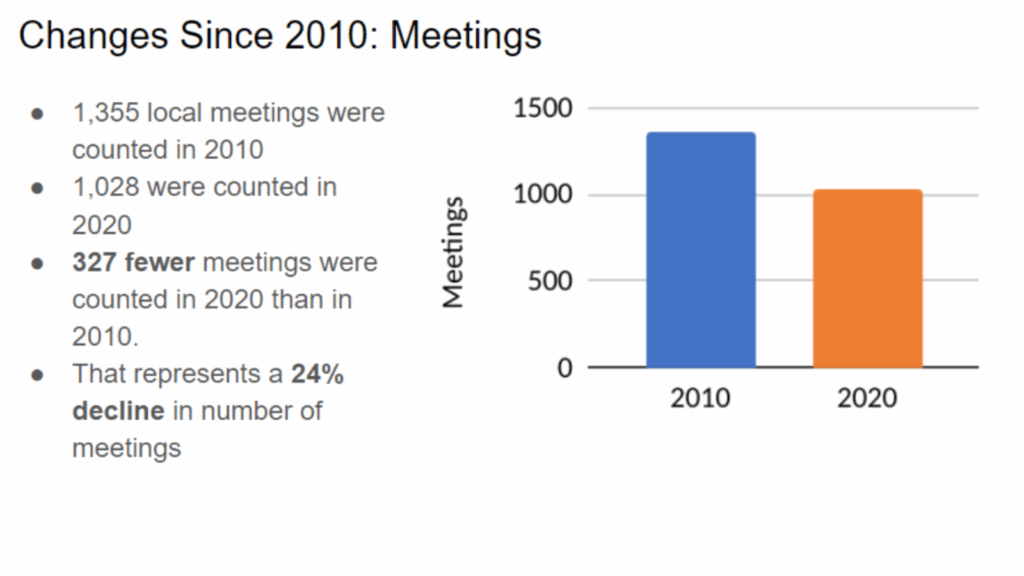
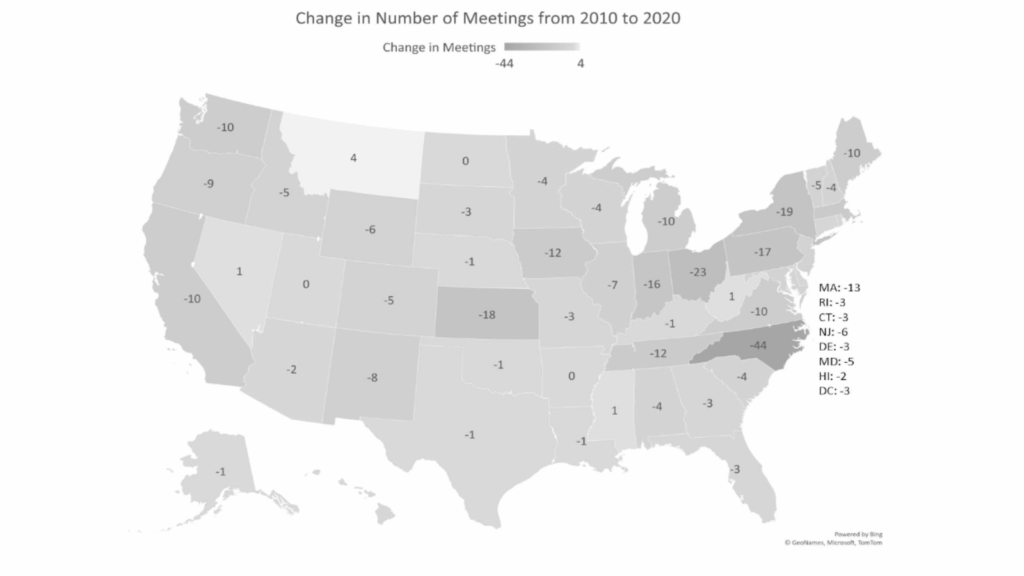
The Friends World Committee for Consultation collects membership data from yearly meetings around the world. Initial research from the most recent 2021 census suggests a decline of 24% in the number of Friends meetings and churches in the United States between 2010 and 2020. In addition, in that 10 year period there was a 12% decline in individual members and attenders, and an undocumented rise in Meetings that have no physical location and are held virtually.
Every ten years, FWCC Section of the Americas assists the Association of Statisticians of American Religious Bodies (ASARB) to conduct the US Religion Census. This is separate from the federal government’s population census, yet aims to be just as comprehensive in its reporting on religious congregations in the United States. Due to the pandemic, the data collection for the 2020 US Religion Census extended into early 2022.
From November 2021 until January 2022, FWCC gathered data on Friends of all branches throughout the United States. When possible, we received data on local congregations from the Yearly Meeting to which they belong. When that proved difficult, we contacted the local meetings themselves. Among the data we requested were counts of members and attenders. Some meetings reported both of these figures; some only reported one or the other. Some meetings didn’t report any figures at all.
So, here are the important things to keep in mind as we look at this data:
With those things in mind, here is a comparison of the 2010 and 2020 counts for Meetings:
FWCC is raising funds to further this work, identify trends, and build new online resources for Friends. In order to promote healthy growth in the future, Quakers need to understand our truth today.
A version of this article will appear in New York Yearly Meeting’s Spark to be released in September.


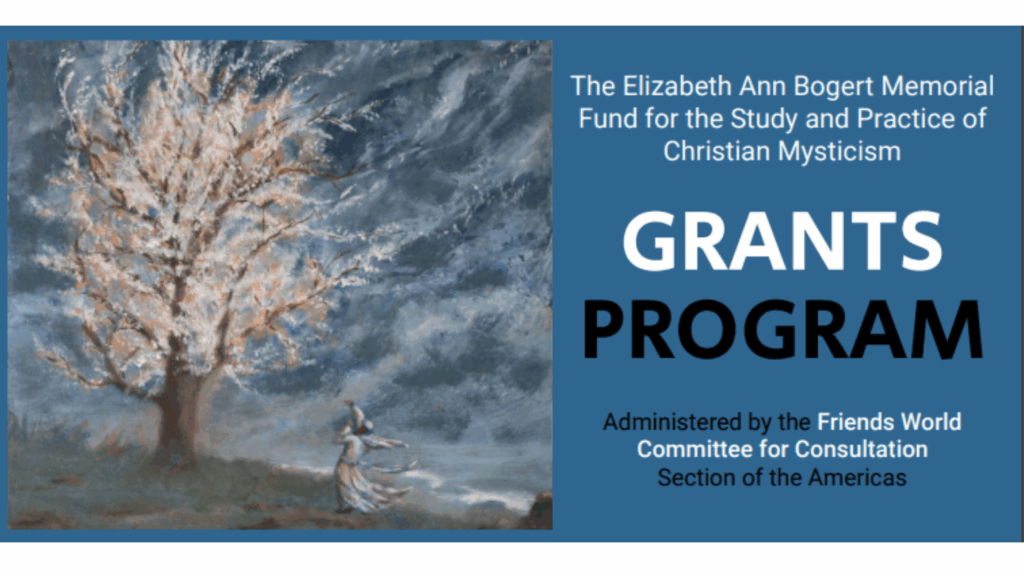
The Kairos experience these retreatants found so meaningful was led by Francisco Burgos, Pendle Hill’s Executive Director, and held virtually August 20-23, 2020. A substantial part of the funding was provided by the Elizabeth Ann Bogert Memorial Fund for the Study and Practice of Christian Mysticism (Bogert Fund), which is administered by the Friends World Committee for Consultation, Section of the Americas (FWCC Americas).
The annual Pendle Hill Kairos retreats have received such positive responses that the Bogert Fund has helped fund several of them, including in 2022. This year’s retreat is scheduled for July 29-31 and will take place in person on Pendle Hill’s campus in Wallingford, PA. Again led by Francisco Burgos, it will include “extended periods of intentional silence, contemplative reflection on Biblical texts, walking meditation, worship sharing, group chanting/singing to support centering prayer, and individual guidance.” The $1,000 grant from the Bogert Fund will support scholarships and program subsidies so the program is affordable to more potential participants.
The purpose of the Bogert Fund is to support the study and practice of Christian mysticism. Recognizing the rich variety of mystical experience within Christianity, the Bogert Fund understands the mystical element in Christianity to be that aspect of its belief and practices that relates to an immediate and direct sense of the presence of the Divine. The Bogert Fund seeks to further both experiential and scholarly exploration of Christian mysticism.
In 2022, the Bogert Fund also gave grants of $1,000 each to Quaker Earthcare Witness (QEW) for virtual Exploring Eco-Spirituality workshops and to Forward in Faithfulness for a Supporting Mystics workshop. Quaker Earthcare Witness seeks to engage new audiences and link eco-spirituality “to the realities of these pandemic times of climate crisis, economic inequality, threatened democracy, and structural racism in an accessible and embodied way.” Hayley Hathaway, QEW’s Communications Coordinator and an experienced workshop leader, will use the Bogert Fund grant to research the foundations of eco-spirituality, plan the workshop, create marketing materials, and offer the workshop virtually to Friends.
Forward in Faithfulness is a ministry of faithfulness, revitalization, and deep listening offered by Johanna Jackson and JT Dorr-Bremme, who carry a Letter of Introduction from Upper Susquehanna Quarterly Meeting in Philadelphia Yearly Meeting. The Supporting Mystics workshop they are planning with partial funding from the Bogert Fund will be offered initially to a network of some twenty younger Quaker mystics with whom they have worshiped and who carry gifts of healing, discernment, eldering, prophecy, gentleness, and service. The workshop is designed to encourage a mutually supportive sense of belonging and allow space for participants to share prayer requests and stories about their mystical experiences and practices, including those of transformation.
While all the 2022 grants went to Quaker organizations for experiential programming, the Bogert Fund also supports academic research related to Christian mysticism and provides grants to applicants of many faiths. In 2020 the Bogert Fund helped further research for a book on the mystic Thérèse of Lisieux. The grant recipient, a Sister of the Order of Julian of Norwich, wrote, “I was able to purchase several books which helped directly with this project…. I have been thrilled to find some excellent, very new French scholarship….” The literature she discovered proved useful in furthering the writing of her book.
The Bogert Fund was established in 1983 in memory of Elizabeth Ann Bogert who, while reading William James’s The Varieties of Religious Experience, had a powerful, profound change of consciousness that transformed her life. Previously self-centered, she became sensitive to other’s needs, enrolled in a theological school, and became a Congregational minister and prize-winning painter of mystical scenes. Walter Houston Clark, one of her professors who became her counselor and friend, played a key role in founding the Bogert Fund and working with FWCC to set up its administration. Today, as from the Fund’s inception, a board of five members, three of whom are Quakers, makes decisions regarding grants at their annual meeting in May.
For information on applying for a grant, please see the brochure, available via a link from FWCC’s Our Work webpage. The deadline for 2023 grants is March 1, 2023. Please share this information with scholars, retreat leaders, or anyone you believe might be interested.

by Karen Gregorio de Calderon, Coordinator for COAL-FWCC
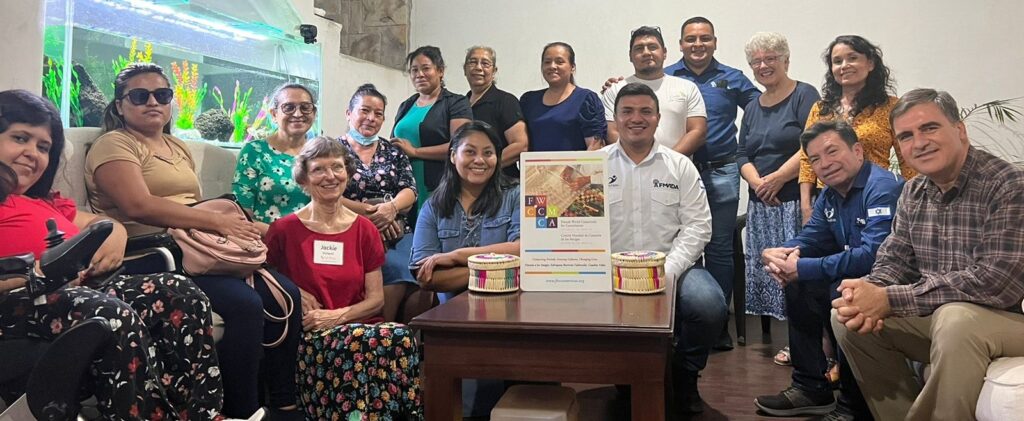
Right Sharing of World Resources (RSWR), a Quaker nonprofit, came to Guatemala from May 23-29, 2022 to investigate the potential for doing projects in Latin America and using Guatemala as a pilot project. For FWCC-COAL, it was beneficial for us to be a part of the working process for this visit because one of our objectives is to work on joint projects with a community improvement focus with Quaker organizations that wish to do this work in Latin American countries.
RSWR was for many years a program of the Friends World Committee for Consultation, but has now been an independent organization for over 20 years. RSWR works with marginalized women, offering them seed capital so that they can start their own businesses and become productive women, thus changing the lives of themselves and their families. This project would bring great benefits to the people of Guatemala.
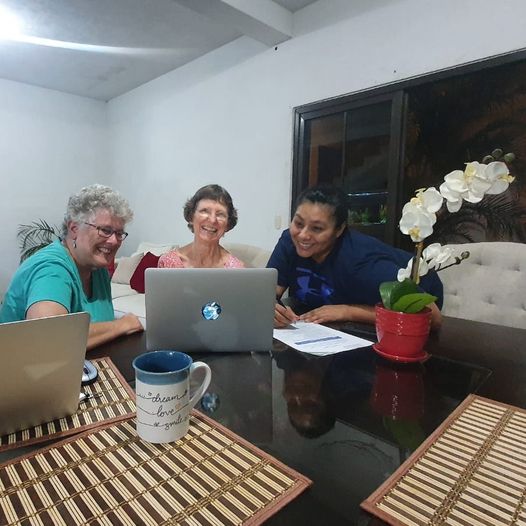
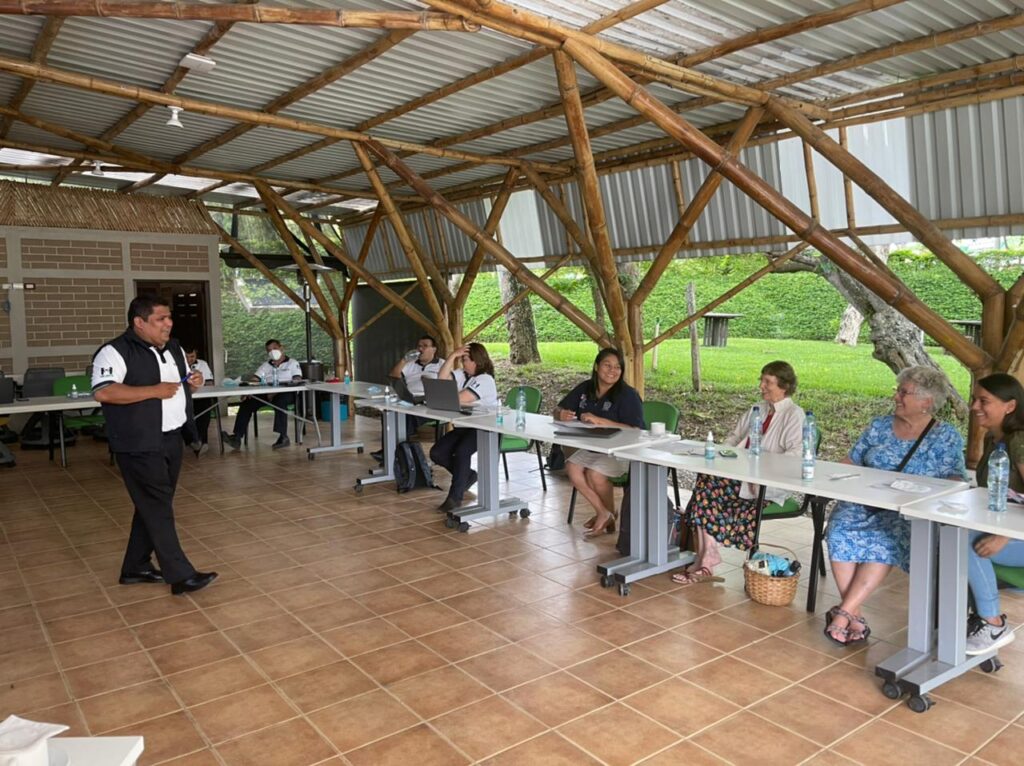
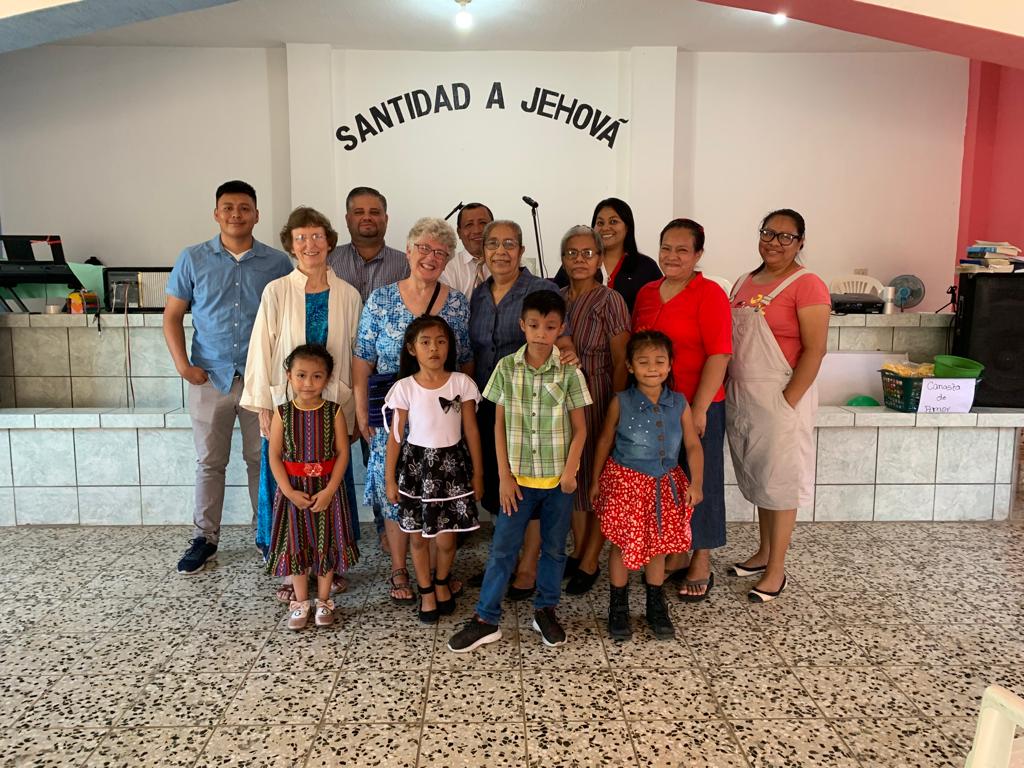
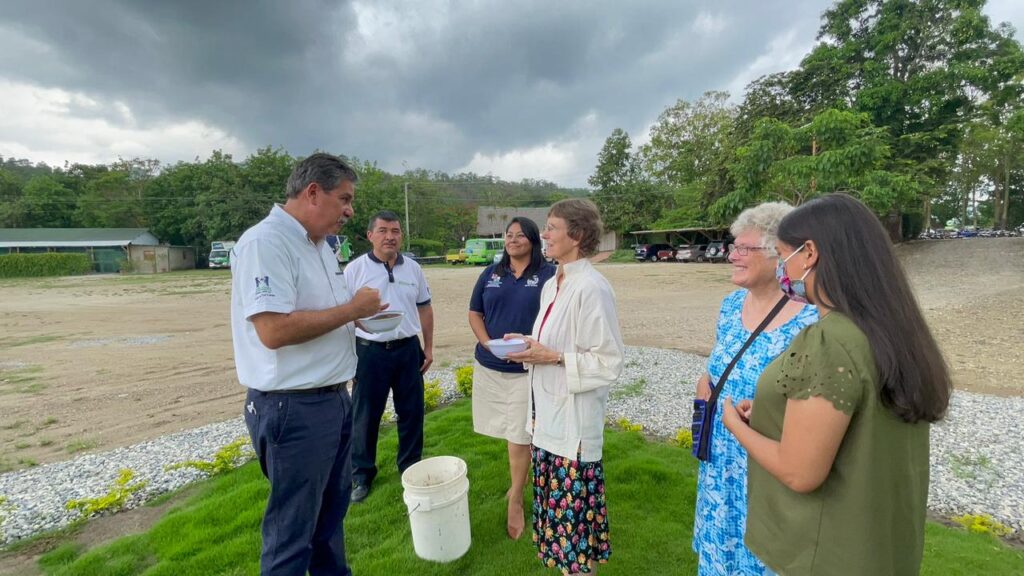
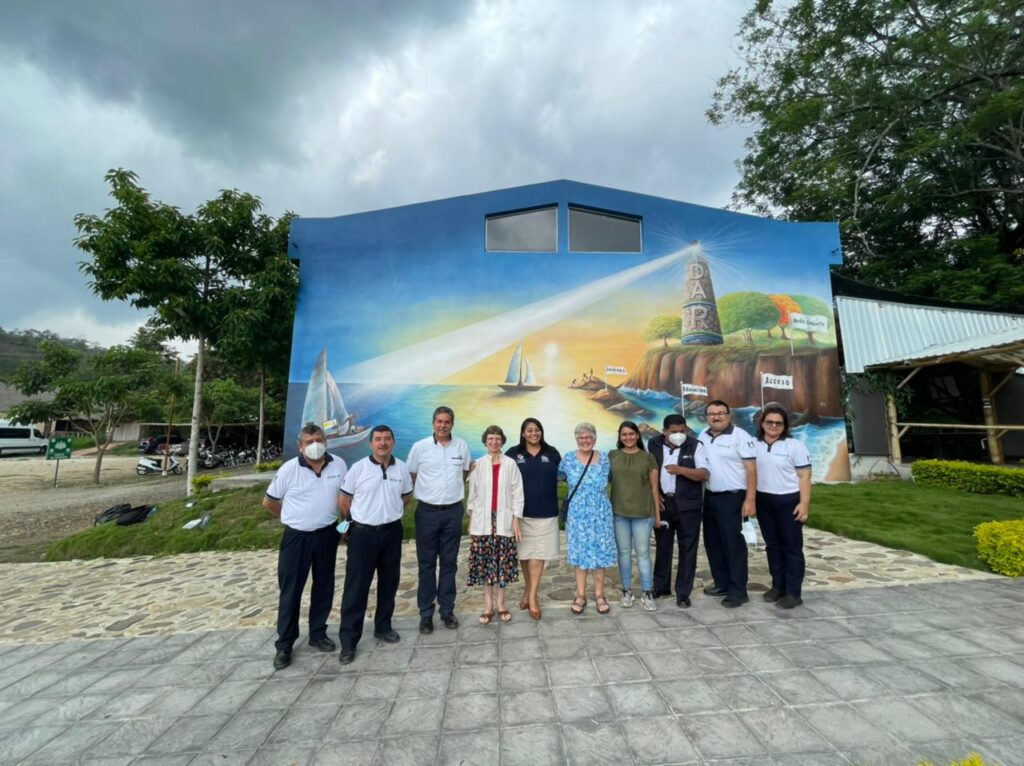
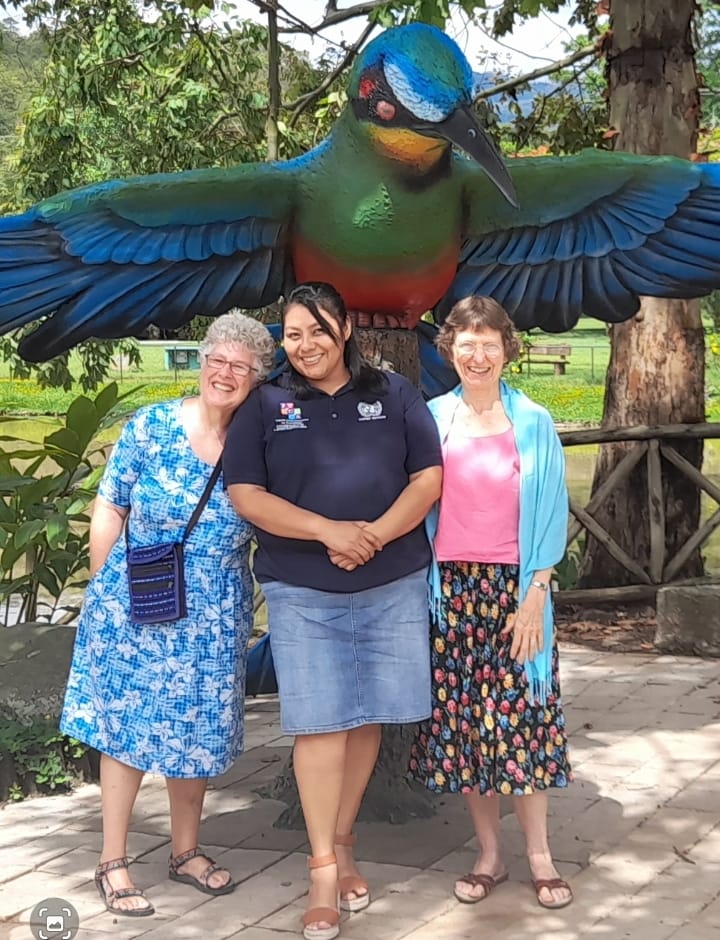
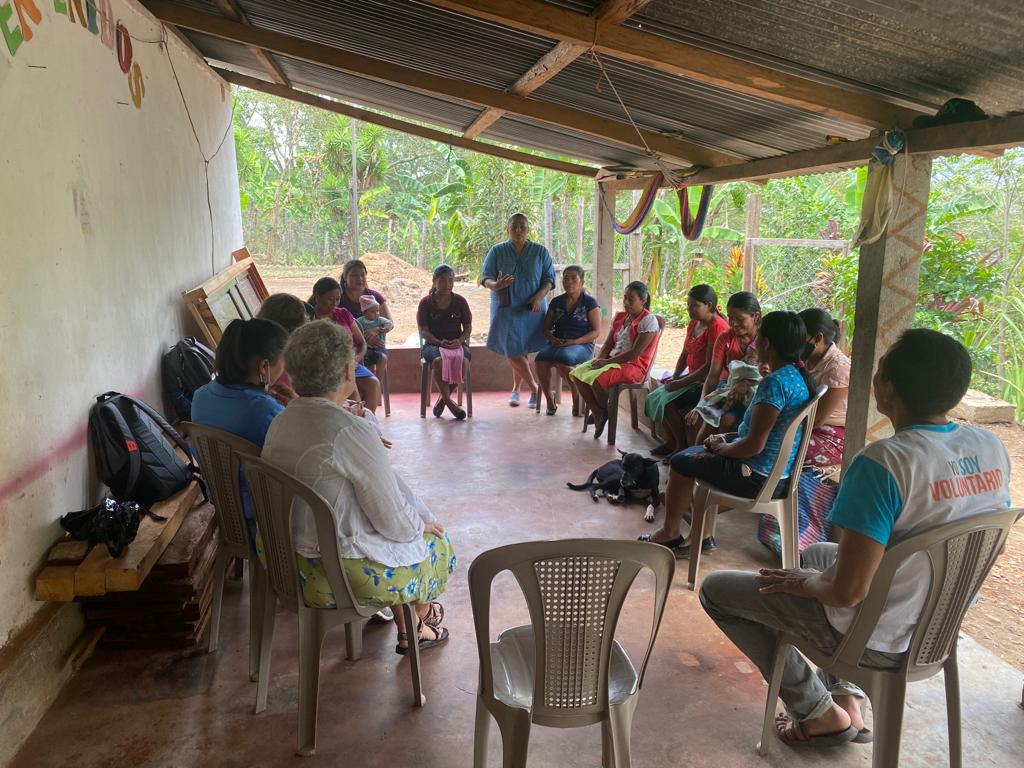
RSWR would work in conjunction with the COOSAJO Savings and Credit Cooperative located in Esquipulas, Chiquimula in eastern Guatemala. With this institution, the pilot project could be executed in the eastern region of the country. The staff of the Cooperative had the opportunity to learn who Quakers are worldwide and the work that Quakers do.
It is important to emphasize that the cooperative already carries out community work in the region with women, the pilot project would be a further development of their work. Two field technicians would be hired, who would form and train the women’s groups and accompany them in their training process, which is similar to RSWR’s work in Sierra Leone and India.
During RSWR’s visit, representatives and leaders from our affiliated and unaffiliated Yearly Meetings were invited to a meeting. At the meeting, the work of FWCC, the work of COAL, the future plans and an invitation to work together were announced. In addition, the RSWR project was presented to them, as a fulfillment of the mission and objectives of FWCC, making our slogan a reality: Connecting friends, crossing cultures and changing lives. This meeting was fruitful; we were together in harmony sharing the love of God that unites us.
Among attendees were:
All attendees were pleased and grateful for having been invited to the meeting and expressed their desire to be taken into account in the process of this project or others that we can work together as a region and as a church through FWCC.
Conclusions:
[Translation by Diane Zappas and Robin Mohr]
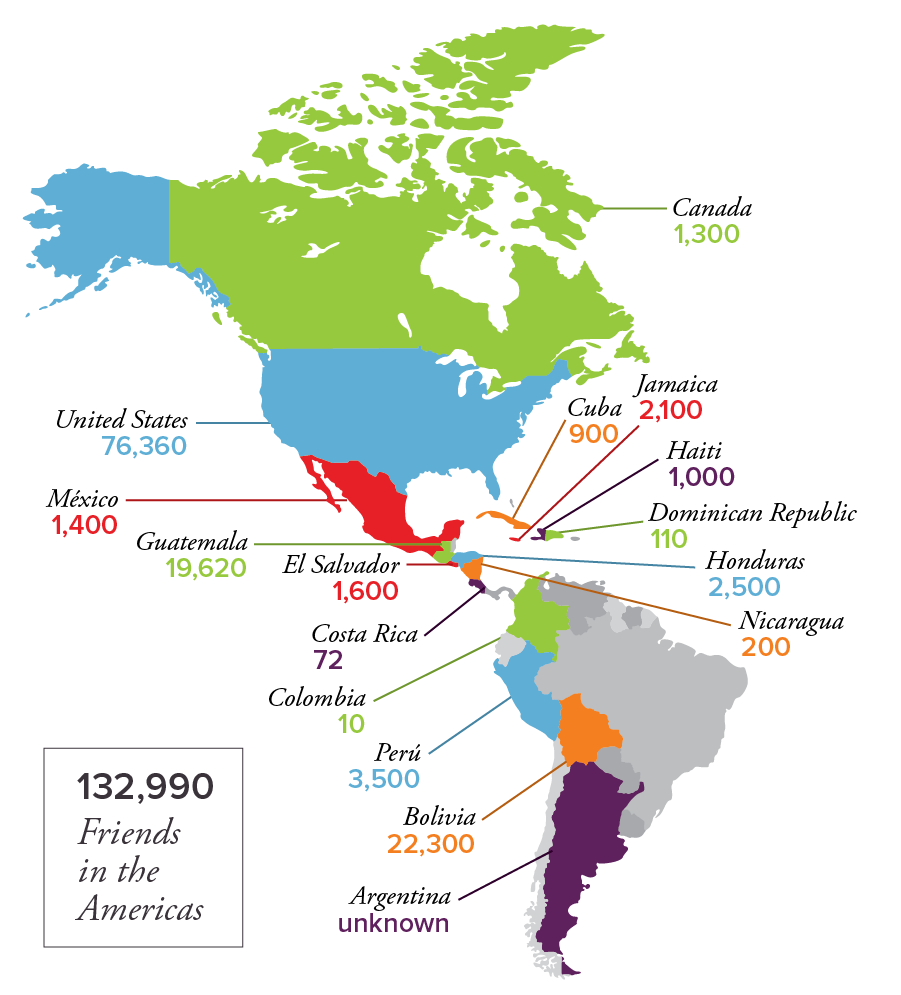
Have you ever asked, “How many Quakers are there in the world? In the United States? And how do we really know?” Most years, FWCC Section of the Americas asks each yearly meeting in the Americas for their membership statistics. This data is used to produce a statistical map of Friends Around the World every five years. This year, FWCC Americas is collecting more precise data on Quakers in the US in collaboration with the Association of Statisticians of American Religious Bodies.
The U.S. Religion Census was originally conducted by the U.S. government in five special reports from 1890 through 1936. In 1952, the National Council of Churches organized its own religion census, which was repeated in 1971 and 1980 with strong support from Glenmary Research Center.
Since 1990, this decadal census has been conducted by the Association of Statisticians of American Religious Bodies. Coverage now includes many non-Christian groups as well as special counts for religious traditions that do not have central data collection points, such as non-denominational churches or Muslim and Jewish communities. For more information about the census please visit them online at http://www.usreligioncensus.org/
All Yearly Meetings, Friends Churches, Monthly Meetings, Preparatory Meetings, Worship Groups, Independent Meetings, and Online Only gatherings are encouraged to participate in order for the Quaker/Friends testimony and presence to be accurately reflected to the world around us. To see the listings we have, please visit our Find Friends webpage. To update your Meeting’s information, please contact directory@fwccamericas.org
Data collected will not be used for purposes outside the work of the 2020 US Religious Census or the Friends World Committee for Consultation. We hope to expand this effort in coming years to include all the countries in the Americas.
If you are interested in helping us, connecting with other Quakers, and collecting this important data please check the job description and apply today by emailing a resume and cover letter to jobs@fwccamericas.org!

a) Get your phone up and working and install Smart Voice Recording app.
b) Arrange a time and place to meet the one to be interviewed- choose a time when the person being interviewed is most awake/alert if they are elderly
c) Make sure you arrive on time or slightly early
d) Test the phone, microphone, and the camera using your own voice (practice testing)
e) Make sure you open Voice recorder app on phone and then choose under setting WAV.
f) Take a recording and then play it back, so you can determine how close you need to be to get a good clear recording. Older people often speak softly, so make sure you can hear their voice before you start taping the interview.
a) Find a location where it will be least noisy. Avoid windy places, places that echo (empty buildings or ones with high ceilings), or places next to traffic or other noises. Or turn off all other cell phones in the room during taping.
b) Turn phone on the airplane mode to cut down distracting noises.
c) Set up the tripod so the phone is in a secure place. It should be not more than 6 feet
away from the person being interviewed. Make sure the microphone is facing the person being interviewed.
d) Attach microphone to shirt/collar of person to be interviewed.
e) Make sure there is no phone case, fingers, etc blocking the mic.
f) Do a 1 minute or less practice to make sure it is catching the sound before interviewing.
g) Take a photo of the person before taping.
a) Start the recording by indicating:
a) Take a photo of the person (often they will be more relaxed and smiling afterwards)
b) Thank the one being interviewed plus any family members who assisted.
c) Disinfect the phone after the interview
d) Wash your hands.
e) Check the photo taken and Play back part of the interview
Personal information:
Where were you born? Or where did you spend your childhood?
Did you attend any Quaker schools? What difference did it make to your life? Challenges faced when you were young?
History of Friends in your area:
Who was the earliest Quaker in your area or village? (or the first people to become Quakers in your area).
Which Quakers were your mentors? Describe why. How were the earliest Quakers in your area different from people from other churches/faiths ? How were they different from Quakers today?
What can we learn from the earliest Quakers in your region?
Leadings and challenges of being a Quaker:
How and where did you become a Friend?
Can you describe any callings or leadings you have had in ministry?
What challenges have you meet while being an adult Quaker or as a woman Quaker?
What are the most serious challenges of being a Quaker today?
How has Quakerism changed your life?
Joys of being a Quaker:
What has been the best thing about being a Quaker? How has it helped you?
Being a Quaker as a child:
If you have been a Quaker from childhood,
a) Describe what it was like to grow up in a Quaker home. How was it different from being brought up in another church?
b) Describe what you remember most about any Sunday school as a child.
c) What did Quakers offer to you as a child?
d) How did you find your wife/husband?
Message you have for future Friends:
What message would you like to give to young Friends today or to your grandchildren?
CREDITS: FWCC Section of the Americas is deeply grateful to the Quaker Religious Education Collaborative-Africa which developed this very useful guide to interviews which we have adopted for World Quaker Day 2021. May God continue to bless their ministry. https://quakerrecollaborative.org/
COVID PRECAUTIONS- wash your hands before you start- don’t touch your face.
Only one person should be using the phone- disinfect between users.
Maintain a safe distance. If the interviewee is ill, postpone the interview until they are better.

Peace is a desire and a necessity for all human beings. It is an essential condition for our personal and communal well-being. For the current moment in Cuba, marked by a crisis situation that affects the most sensitive areas of citizens’ lives, it is becoming something urgent.
Quakers, inspired by the teachings of Jesus, also seek to live and promote peace, through alternative ways, based on the principle of non-violence, to carry out civil justice and work within society to repair wrongs or errors.
Quakers believe in the Peace of Jesus. This Peace is not like what the world gives (John 14:27), from positions of power that exclude the voice of the least in the Kingdom. From this perspective, we Quakers know a Virtue that takes away the occasion of all war, and consequently, we do not support any way to solve conflicts that involves the use of force.
We therefore advocate for dialogue and for our authorities to recognize the tension and overwhelm of a people that feel vulnerable due to the precariousness of their economy, their health and their public services.
Likewise, we consider that the government must promote alternatives to violence in the face of other sectors of the people that, for various reasons, are fueled by positions of hatred that are encouraged from abroad and that in the current context of the crisis that we are experiencing, become breeding grounds for the emergence of violent demonstrations with unpredictable consequences.
We strongly encourage all the implicated parties to seek paths of dialogue that lead to peace and understanding in the future and the future and well-being of our country.
We desire and we work for peace and solidarity. We pray that all people may enjoy this blessing.
This is the time to open spaces for dialogue in the search for an answer to dissatisfaction and a solution to our problems. Let us all seek a common path that leads us to well-being and peaceful coexistence. Conflicts, if we address them with non-violent alternatives, are opportunities to find a peace that shelters all Cubans.
Shared by the Yearly Meeting of the Friends Church in Cuba, July 2021

Debbie Humphries
Prophetic ministry
Prophetic listening
Unwritten rules of unprogrammed Quakerism
Spiritual wrestling practices for Quakers
Deepening worship
Debbie Humphries grew up Mormon and came to Quakerism in the early 1990s. Since then she has been a member of Ithaca (NY) Monthly Meeting, Charleston (WV) Monthly Meeting; and currently Hartford (CT) Monthly Meeting. She is currently clerk of the Ministry and Counsel Committee of New England Yearly Meeting. Debbie teaches at the Yale School of Public Health and conducts research on public health nutrition and community health, both in the US and internationally.
Emily Provance
Discernment
Courage
Leadings & Concerns
Supporting ministry
Technology & algorithms in relation to social justice
Spiritual gifts & spiritual authority
Emily Provance is a member of Fifteenth Street Monthly Meeting in New York Yearly Meeting. She is engaged in vari-ous spiritual accompaniment and social media-based minis-tries, and she travels with a minute from her monthly and year-ly meetings. Emily brings workshops and discussions for all ages on a variety of topics in Quaker faith and practice, and she seeks to connect particularly with Friends who may be feeling called into ministry. She tutors children in reading.
Julie Peyton
Science & faith
Bible & Quaker faith
Prophetic ministry
Evangelicals & Quakers
Julie Peyton is a member of West Hills Friends in Portland, OR, where she clerks the EarthCare Committee, and in the past has served as presiding clerk and recording clerk. In Northwest Yearly Meeting, she has served on the Epis-tle Committee, Nominating, and as an FWCC rep. She cares deeply about a core belief of Friends: that we all have access to the same Spirit, the Spirit who was there at the beginning of creation, and the Spirit that gave forth the Scriptures; thus we can listen together and be led together. She teaches chemistry at the college level.
Chuck Schobert
Traveling Across Branches of Quakerism
Prophetic Ministry
Convergent Friends
Spiritual Deepening
Chuck Schobert is a member of Madison (WI) Monthly Meeting, an unprogrammed congregation within Northern Yearly Meeting. Active in his monthly and yearly meeting, he also clerks an FWCC committee that engages Friends about the work of FWCC. In his ministry, God has called him to travel across the diverse branches of Friends, listen-ing with his heart, seeking common ground and the joy of spiritual transformation. He works as a veterinarian.
Click below to download a printable flyer of these biographies:

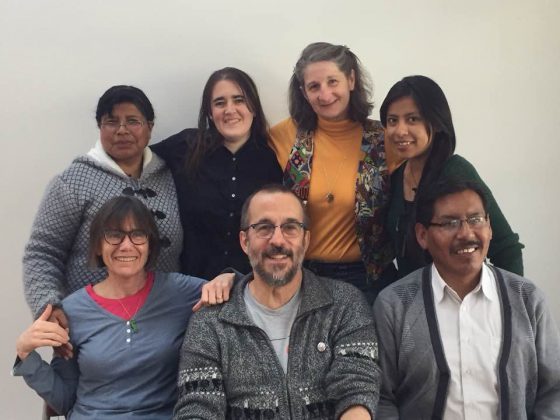
There were seven of us. Four North Americans and three Bolivians. Evangelical and unprogrammed worship styles. Different languages. Cultures. Social attitudes. We spent just over two FULL days together learning about each other’s spiritual journey’s, sharing worship “styles”, singing, trading experiences of traveling in the Quaker ministry, the joys and the pitfalls. We were the inaugural “class” of the Traveling Ministry Corps of the Friends World Committee for Consultation, Section of the America’s (FWCC-SOA). Despite this time together, we all knew the actual training would be in our travels, with God as our teacher.
We had three trainers, and two elders holding us in prayer (one of whom was NYM’s Susan Greenler). The work went prayerfully deep and God was with us throughout. As we grew closer, I felt God becoming nearer. We were often moved to tears, especially when we talked about the divisions among Friends. Those wounds. Our wounds. And yet, much hope……….embracing the opportunities, the possibilities of our common ground to explore what Friends can do as a prophetic people to bridge those divisions. We came to realize that by crossing our own Quaker divisions, we can take that healing knowledge out into a broken world and “be patterns, be examples”. No one pretended THAT would be easy! These Friends are living their faith into action. And I love them all, these sisters and brothers, even though we don’t agree on every thing. In a broken world, our allies in healing will not always be “like us”.
The FWCC Section of the America’s plans to make the Traveling Ministry Corps its major focus in 2017. Rather than organize large meetings requiring many Friends to travel great distances at great expense of money and cost to the environment from airplane travel, the intent is to send out ministers by twos, a minister and an elder as companion, to visit or connect with churches and meeting in the Section over the next five years. After a year, our group will meet again in community, to learn from each other and help train the next “class” of the Traveling Ministry Corps, which we hope to be primarily young adult Friends, if that is God’s will.
Immediately following the training, the biannual Section of the America’s meeting began. This rich time was chock full of plenary talks, worship, singing, committee work, good food and fellowship. In the midst of this meeting, the body held a blessing for the seven ministers. We sat in a ring together in the center of the auditorium, full of Friends in worship. The Clerk of the Section spoke of sending the ministers off from the “ring of fire” and shared his image that we were embarking in “little boats” to carry out the work God gives us. At this point, he invited the rest of the Friends, 100 or so, to lay hands on us and asked people approaching the growing circle to continue to lay hands on the people in front of them, forming concentric circles of humans, holding the seven ministers like a woven basket of concentric human circles, holding our little circle of seven in prayer.
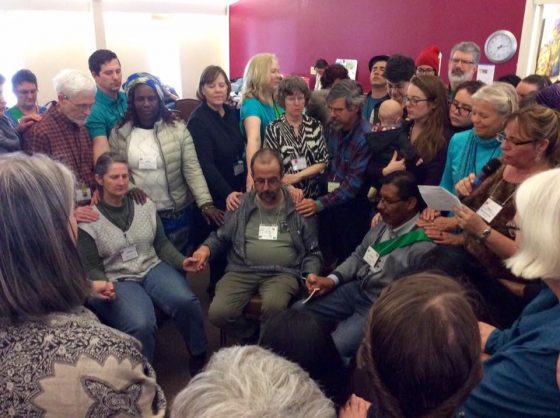
A beautiful blessing, writing by Susan Greenler, was read. We continued in silent prayer for several minutes. The circles created a spiritual, human well that was filled with the Living Water of God and love from our friends. I can’t say exactly what happened, but I was changed. Transformed? The quote from the journal of George Fox came to me: “All things were new, and all the creation gave another smell unto me than before, beyond what words can utter”. So I end with Susan’s blessing and the query that came to me after the blessing: “What just happened?”
BLESSING FOR TRAVELING MINISTRY CORPS
God of compassion,
God of love,
With Christ’s light, and with God’s love,
We send forth these seven traveling ministers, Part of our world community of Friends.
We send them forth on wings of love,
To share the Gospel ministry as they are called and led. As part of our beloved community.
We hold them tenderly in our hearts.
May they be graced with light and love
As they go forth – open vessels, giving and receiving.
May they be open, vulnerable, protected.
Building bridges of faith,
Opening us all to the power of God’s love and Christ’s spirit.
Blessed be.
—Susan Greenler

We are pleased to present all five of the QuakerSpeak – FWCC videos collected in one place, along with the Religious Education curricula that go along with each.
We are so happy with how these videos turned out, and the success with which they have been greeted, garnering many “views” and positive feedback from those who have watched and used the videos. “Are You A Quaker” is on track to be one of the most-watched QuakerSpeak videos yet!
If you do use one of these videos as part of your religious education classes at your church or meeting, please take a moment to complete our brief survey. This will help us plan for any future videos!
Curriculum – Quakers and Sustainability
Has your monthly meeting or annual meeting responded to the sustainability meeting? Let us know how!
Curriculum – Are You a Quaker?
Many thanks to our partners: Friends Publishing Corporation, Quaker Religious Education Collaborative, Friends International Bilingual Center, New England Yearly Meeting, and the Thomas H. and Mary Williams Shoemaker Fund.